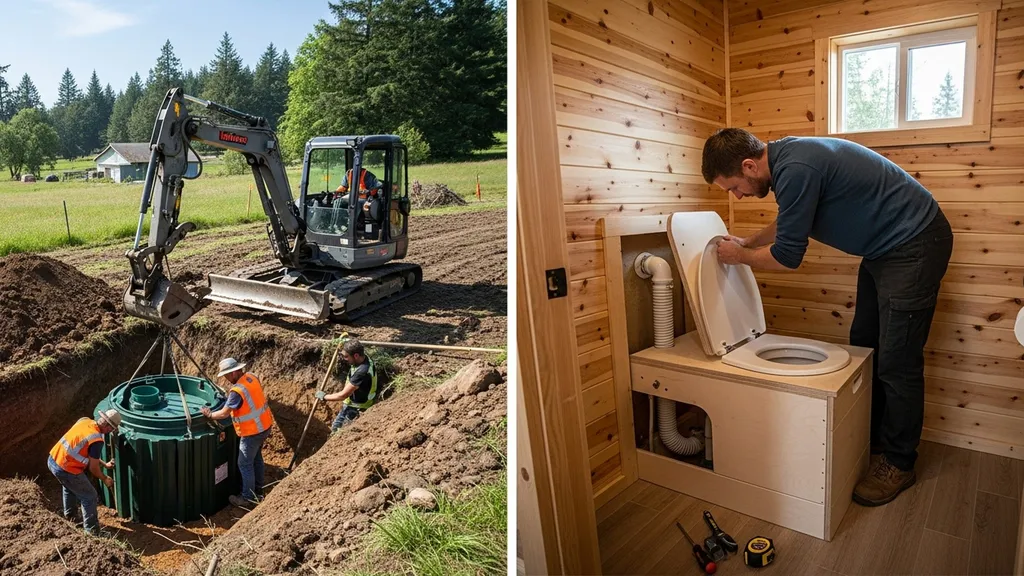
Compare off-grid septic systems and composting toilets: costs, siting, installation, maintenance, and which systems suit tiny homes, cabins, and homesteads.
Off-Grid Septic and Composting Toilet Options
Choosing the right off-grid septic or composting toilet system can save thousands of dollars, reduce water use, and make a remote cabin or homestead practical year-round. This guide lays out the most common off-grid sanitation choices, compares typical costs and footprints, explains siting and permit issues, and gives concrete installation and maintenance advice so you can pick a system that fits your budget, site, and skills. Expect specific numbers (tank sizes, cost ranges, pumping intervals) and clear next steps for tiny homes, cabins, and full-size off-grid houses.
TL;DR:
- Conventional septic typically costs $3,000–$15,000 installed for simple sites; composting toilets cost $800–$8,000 with near-zero pumping.
- Choose based on site constraints: do a perc test and check setbacks before budgeting; composting toilets often simplify permitting when code allows.
- For DIYers: assemble and install self-contained composting toilets and vents yourself; hire a pro for tank excavation, engineered drainfields, and systems that require permits.
Why Choose Off-grid Septic and Composting Toilets?
Remote properties need sanitation that doesn’t rely on municipal sewers. An off-grid septic system stores and treats household wastewater on-site, while a composting toilet treats human waste without conventional sewer plumbing. Typical household wastewater volumes range from about 50–80 gallons per person per day in water-conserving homes and up to 100+ gallons where older fixtures are used. For tiny homes and cabins, total daily wastewater can be under 30 gallons per person if low-flow fixtures and greywater reduction are used.
Common Off-grid Sanitation Goals:
- Reduce ongoing costs and dependence on municipal services.
- Lower potable water use by switching to waterless or low-flush fixtures.
- Reduce nutrient discharge to local soils and water bodies through better treatment or composting.
When a septic system makes sense vs composting toilets:
- Septic systems work well when you have adequate lot area, suitable soil percolation, and favorable groundwater depth. They are convenient (flush toilets) but require a drainfield and periodic pumping.
- Composting toilets make sense where soil or lot constraints prevent a drainfield, where water is scarce, or when you want nutrient reuse and minimal pumping. They require regular maintenance (adding bulking material, emptying compost) and reliable ventilation.
Key trade-offs include convenience, odors, maintenance effort, and nutrient handling. Research and government guidance are useful early steps; for [general septic planning see university [and agency resources such as this [DIY off-grid septic guide]]](https://dl.iir.edu.ua/iir-news/diy-off-grid-septic-system-a-complete-guide-1767646586) and your local codes. Also consider linking your sanitation choices to broader water-efficiency and indoor moisture strategies covered in the site’s water-efficient plumbing guide.
Types of Off-grid Septic Systems (and How to Choose)
Different on-site systems fit different soils, footprints, and budgets. Here are common options and what to consider.
Conventional Septic (tank + Drainfield) — Basics and Suitability
A conventional septic system uses a buried septic tank to separate solids and wastewater, then sends clarified effluent to a soil absorption drainfield. Typical installation cost ranges widely, often $3,000–$15,000 for straightforward sites; complex sites cost more. Conventional systems require a percolation (“perc”) test, a minimum setback from wells and water bodies, and a reasonably deep unsaturated soil layer. Tanks are commonly polyethylene, fiberglass, or concrete; for small homes, tanks can be 750–1,200 gallons, while 1,500–2,000 gallons are common for three-bedroom houses.
Alternative Systems: Aerobic Treatment Units, Mound Systems, Sand Filters, and Constructed Wetlands
- Aerobic treatment units (ATUs): Add oxygen to increase treatment efficiency, allowing smaller drainfields. Higher capital cost ($8,000–$20,000) and electric power for aeration.
- Mound systems: Raised sand/soil mounds used where groundwater is shallow. Larger footprint and construction cost than conventional fields.
- Sand filters and intermittent sand filters: Engineered filtration before dispersal; medium cost and reliable where soils are poor.
- Constructed wetlands: Use planted gravel beds to treat effluent; attractive and biological, but need design and space.
How Soil, Lot Size, Groundwater Depth, and Climate Affect Selection
Poorly draining clay, high groundwater, or steep slopes push you toward ATUs, mound systems, or composting toilets. Cold climates can slow soil treatment and require frost protection for drainfields or placing treatment components below frost depth. Always check setbacks and perc requirements — many decisions hinge on those site tests.
Comparison/specs table
| System Type | Typical Installation Cost | Required Footprint | Maintenance Frequency | Climate/Soil Suitability | Power Needs |
|---|---|---|---|---|---|
| Conventional septic (tank + drainfield) | $3,000–$15,000 | Moderate-large (drainfield) | Inspect/pump every 3–5 years | Needs permeable soil and separation from groundwater | Low (no power for basic) |
| ATU (aerobic) | $8,000–$20,000+ | Small-medium | More frequent service, electrical checks | Good for poor soils or small lots | Medium-high (continuous or intermittent power) |
| Mound system | $10,000–$25,000 | Large (mound footprint) | Regular inspection | For high water tables or shallow bedrock | Low (unless pump required) |
| Constructed wetland | $7,000–$20,000 | Large | Vegetation management annually | Works where space exists; biological process | Low-medium |
For more technical guidance on septic fundamentals and maintenance tips refer to the University of Georgia’s beginner guide to septic systems. Decision drivers are usually perc results, setbacks, contractor quotes, and whether your local authority allows alternatives.
Composting Toilet Options for Off-grid Homes
Composting toilets treat human waste through decomposition, reducing or eliminating the need for a septic drainfield. They come in several functional styles.
Self-contained Units (cabinet-style) — Pros and Cons
Self-contained units house the composting chamber inside the toilet cabinet. Brands like Nature's Head and Separett offer compact, user-friendly models. Pros: easy installation, ideal for tiny cabins and RV-style setups, typically waterless, and minimal plumbing. Cons: smaller capacity means more frequent emptying (weeks to months depending on use), and interior footprint matters for compost storage.
Centralized Composting Systems (vault or Drum Units) for Houses
Central systems place the composting chamber in a basement or exterior building; toilets connect via simple piping. These handle larger households, reduce emptying frequency, and often achieve better composting conditions. Costs vary from around $2,000 for simple drum systems to $8,000+ for engineered centralized units.
Urine-diverting and Vermicomposting Variants
- Urine-diverting toilets: Separate urine from solids at the source. Urine diversion reduces odor and nitrogen load in the solids chamber; urine can be managed separately as a diluted fertilizer where allowed.
- Vermicomposting: Uses worms (often Eisenia fetida) to accelerate decomposition. Works well at moderate temperatures but needs frost-protected spaces in cold climates.
Practical Considerations: Odor Control, Ventilation, Bulking Materials, Winter Use
- Odor control: Requires a small continuous ventilation fan or a passive vent stack with good airflow. Choose low-watt DC fans if off-grid power is limited.
- Bulking materials: Sawdust, coconut coir, or shredded cardboard are common. They balance moisture and encourage aerobic decomposition.
- Winter use: Cold slows decomposition. For cold climates, place a centralized compost chamber inside insulated, frost-protected space or ensure high insulation and use a heated room. For more on moisture in bathrooms near composting toilets, see moisture control options and bathroom vent sizing guidance at bathroom exhaust sizing.
A U.S. EPA overview of decentralized sanitation offers context on treatment options and public health considerations. For a practical visual guide, watch this video showing installation and routine care; viewers will get a clear sense of cabinet-style and centralized setups and ventilation layout: .
Sizing, Siting, and Permit Considerations for Off-grid Sanitation
Early site evaluation and checks with local authorities can save time and money.
How to Estimate System Size for Household Use
A simple sizing approach:
- Estimate occupants × gallons/person/day (use 50–80 gpd for water-conserving homes).
- For septic tank sizing, tiny or 1–2 bedroom dwellings may use 750–1,000 gallon tanks; 3-bedroom homes commonly start at 1,200–1,500 gallons as a ballpark. Drainfield sizing uses perc test results and designer tables — a designer or regulator typically finalizes exact footage.
Siting Rules: Setbacks, High-water Tables, and Lot Constraints
Setbacks from wells, property lines, and surface waters are statutory in many places. High groundwater or bedrock within a few feet often rules out conventional drainfields. A perc test is essential; if soils fail, consider mound systems, sand filters, ATUs, or composting toilets. The 30 Mile River Watershed Association’s study on septic vulnerability summarizes how soil performance affects system life expectancy and design.
Working with Local Authorities: Permits, Inspections, and Acceptable Alternatives
Permitting varies widely. Some jurisdictions accept composting toilets as an alternative to septic, others require engineered systems. Start with your local health or building department early. For an example of how jurisdictions handle off-grid permits, see the site's off-grid permit guide and the local permits resource at /guides/massachusetts/permits. Preparing a site plan, perc test report, and system specification speeds approvals. Where codes are silent, regulators may accept third-party performance data or pilot installations.
Design and Installation: DIY vs Hiring a Pro
Choosing what you can reasonably do yourself and where to hire a pro depends on the system and local rules.
Which Tasks Are Reasonable for an Experienced Diyer
- Installing and assembling self-contained composting toilets and vent fans.
- Routing vent pipes and installing small DC fans.
- Building above-ground composting chambers, bins, or insulated housings.
- Simple greywater diversion to planted beds (where allowed).
When to Hire Licensed Contractors or Designers
- Excavation and setting of septic tanks, especially when heavy equipment or engineered pads are required.
- Design and installation of engineered systems (ATUs, mound systems, constructed wetlands).
- Work that triggers permits and mandatory inspections. A University of Georgia study highlights that septic systems often need professional inspection to avoid premature failure.
Common Installation Pitfalls to Avoid
- Poor trench shoring and unsafe excavation practices — always follow OSHA-like safety practices and consider pro excavation.
- Incorrect invert elevations and poor slope on inlet/outlet pipes leading to backups.
- Compacting drainfields during installation, which reduces soil permeability.
- Forgetting inspection ports and access risers for pumping.
- Not sizing vent fans or ducts for composting toilet ventilation — see bathroom exhaust sizing and consider the plumbing basics for owner-builders primer before plumbing work.
Cost-saving tip: rent equipment for short tasks, but hire a licensed installer for permit-stamped components. For concrete pads and encasements used with tanks or equipment, follow proven techniques in the site's concrete work tips.
Operation, Maintenance, and Troubleshooting for Off-grid Systems
Proper operation extends system life and prevents failures.
Routine Maintenance Checklists (weekly, Monthly, Yearly)
- Weekly: For composting toilets, check moisture and add bulking material as needed; inspect vent fan function.
- Monthly: Inspect compost moisture, empty small self-contained bowls as required, check for unusual odors or leaks.
- Yearly: Inspect septic system components and choose pumping intervals based on inspection results.
Pumping and Compost Removal Schedules, and Safe Disposal
- Septic pumping: Typical intervals are every 3–5 years for small households, though higher occupancy or garbage disposal use shortens intervals. University of Georgia guidance recommends inspection before relying on a fixed schedule.
- Composting toilet emptying: Self-contained units may need emptying every few weeks to months. Centralized systems might be emptied once or twice a year depending on capacity. Ensure compost reaches safe temperatures or abide by local guidance for pathogen reduction before reuse; when in doubt, use compost on non-food landscaping or follow public health guidance from EPA/CDC.
Troubleshooting Common Problems (slow Drains, Odors, Saturated Drainfields)
- Slow drains: Check for clogged venting or solids accumulation in septic tanks; a professional inspection may be needed.
- Odors in composting toilets: Check vent fan, ensure correct bulking material and urine diversion if available, and avoid overfilling.
- Saturated drainfields: Reduce household water use, route roof/yard drainage away from the field, and evaluate whether an ATU or mound system is necessary.
Seasonal issues include freeze/thaw damage and reduced biological activity in cold months. Winterizing tips and heating strategies are discussed in the site's cold-climate insulation tips and related heating troubleshooting at off-grid heating problems. For practical troubleshooting guides, see this DIY-oriented operational guide.
Cost Comparison and Lifecycle Considerations
Compare upfront and ongoing costs, then weigh environmental effects and resilience.
Upfront Installation Costs vs Ongoing Operating Costs
- Conventional septic: Upfront $3,000–$15,000; pumping $200–$500 every 3–5 years; likely 20–40 year lifespan with proper care.
- ATU/alternative septic: Upfront $8,000–$25,000+; electrical operating costs (pumps, aerators) $100–$600/year depending on run time and power source.
- Self-contained composting units: Upfront $800–$3,000; ongoing costs low (bulking materials, small fan power) — often <$100/year excluding replacement parts.
- Centralized composting systems: Upfront $2,000–$8,000; moderate maintenance and occasional compost handling costs.
Lifecycle cost comparison table
| System | Upfront cost | Annual operating cost | Expected lifespan | Maintenance Notes | Environmental pros/cons |
|---|---|---|---|---|---|
| Conventional septic | $3k–$15k | $50–$200 | 20–40 years | Pump every 3–5 yrs | Reliable, but nutrient leaching possible if failing |
| ATU / alternative | $8k–$25k | $100–$600 | 15–30 years | More frequent service | Higher treatment quality, smaller footprint |
| Centralized composting | $2k–$8k | $50–$200 | 10–20 years | Compost handling | Low water use, nutrient reuse if safe |
| Self-contained composting | $800–$3k | <$100 | 5–15 years | Frequent emptying | Very low water use, small footprint |
Assumptions: household size 1–4, conservative energy costs, average usage. For powering fans and pumps in off-grid contexts, check energy plans and solar capacity; see the site's solar off-grid topic for battery and sizing implications.
Environmental Lifecycle: Nutrient Loads, Water Savings, and Greenhouse Gas Notes
Composting toilets reduce potable water use dramatically and return organic matter to soil when handled safely. Septic systems may introduce nitrogen and phosphorus to groundwater over time if drainfields are overloaded or poorly maintained; constructed wetlands and ATUs reduce nutrient loads. Methane emissions depend on anaerobic conditions; aerobic treatment reduces methane but uses electricity.
Return on Investment Scenarios for Tiny Homes, Cabins, and Full-size Off-grid Houses
- Tiny homes: Self-contained composting toilets often pay back quickly by avoiding drainfield costs.
- Small cabins: Centralized composting or small ATUs can be cost-effective if site conditions make conventional drainfields expensive.
- Family homesteads: Conventional septic with good maintenance often delivers the lowest ongoing hassle, unless site constraints force engineered alternatives.
Key Product Recommendations and Material Checklist
A concise list of components and tools will help when planning purchases or bids.
Essential Components for a Reliable System
- Septic tank: Polyethylene, fiberglass, or concrete tank sized to occupancy.
- Inspection risers and access ports: For safe pumping access.
- Vent pipe and low-watt DC fan: For composting toilet ventilation; select fan sized per bathroom exhaust sizing.
- Bulking materials: Sawdust, coconut coir, or shredded cardboard.
- Urine-diverting seats or inserts: For urine separation if chosen.
- Aeration equipment for ATUs: Blowers or aerators sized to system spec.
Tools and Consumables for DIY Installation and Maintenance
- Shoring and safety equipment for excavations.
- Pipe-cutting tools, solvent cement or mechanical couplings.
- Concrete tools for pads (see concrete work tips).
- Spare fan, replacement seals, basic compost monitoring thermometer.
Checklist for Site Handover: Permits, Manuals, Service Contacts
- Copies of permits and inspection sign-offs.
- Manufacturer manuals for tanks, ATUs, and composting units.
- Contact for licensed pumper and system service provider.
- Backup power plan for fans/pumps: battery bank or generator specs if off-grid.
For low-impact options and material selection, consult the site's sustainable materials guide.
The Bottom Line
Off-grid septic systems suit sites with good soils and space; conventional septic balances convenience and cost for many homes, while ATUs and mound systems solve poor soils at higher cost. Composting toilets are cost-effective for tiny homes and sites where drainfields are impractical, but require regular maintenance and good ventilation. The first practical steps are a perc test, a site plan, and a call to your local health authority; consider trialing a portable composting unit before committing to a full centralized system.
Video: THE BEST Off Grid Compost TOILET- No Smell, No Water,
For a visual walkthrough of these concepts, check out this helpful video:
Frequently Asked Questions
Can I legally install a composting toilet on my property?
Legal acceptance of composting toilets varies by jurisdiction. Some health departments accept them as an alternative to septic systems, others require engineered treatment or prohibit reuse of human-derived compost. Start by contacting your local health or building department with a system description and ask whether composting toilets are allowed and what documentation is required. Use example guidance in the site's off-grid permit guide to prepare permit applications.
How often does a septic tank need pumping off-grid?
Pumping frequency depends on household size, tank capacity, and solids load. A common guideline is every 3–5 years for small households, but inspection is the best practice to determine timing. Heavy use, small tanks, or food waste disposers shorten intervals. Refer to university guidance for inspection checklists and follow local regulations for licensed pumping services (see [A beginners guide to septic systems](https://fieldreport.caes.uga.edu/publications/B1421/a-beginners-guide-to-septic-systems/)).
Will a composting toilet smell or attract pests?
Properly designed composting toilets with urine diversion, adequate bulking material, and continuous venting should have minimal odor. Odors usually indicate too much moisture, insufficient bulking, or a failed vent fan. To reduce pest risk, secure lids, use fine-mesh vents where needed, and store compost in sealed containers or an enclosed, pest-proof chamber until it stabilizes.
Can I connect greywater from sinks to a separate system?
Yes, greywater from showers and sinks can be diverted to soakaways, mulch basins, or planted systems in many jurisdictions, reducing load on septic drainfields. Local codes regulate greywater use and require safe routing away from potable water sources. Simple diversion is typically DIY-feasible, but engineered greywater systems or those that reuse water for irrigation may need permits. Check local rules and best-practice guides before installation.
What are the winter considerations for composting toilets?
Cold slows decomposition, so in very cold climates place centralized compost chambers in insulated, frost-protected spaces or use supplemental heat if permitted. Self-contained units in unheated cabins may require more frequent emptying and insulated housings for the compost chamber. Also ensure vent pipes and fans are protected from freezing and that vents terminate above snow depth to maintain airflow; see the site's winterizing and insulation resources for detailed strategies.