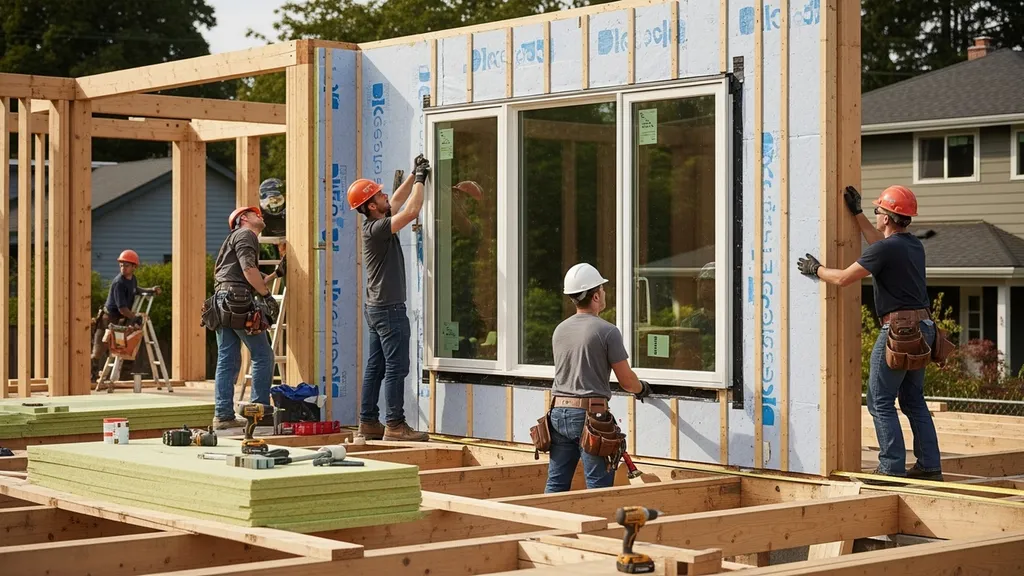
A practical guide to estimating green home cost per square foot, component breakdowns, cost drivers, and tips to lower build costs for DIYers.
Green Home Building Cost Per Square Foot Guide
Green home cost per square foot is a practical metric DIY builders use to compare budgets, plan upgrades, and make trade-offs between upfront capital and long-term savings. This guide explains what that number actually includes, breaks down typical ranges and components, shows how regional factors and design choices move the needle, and gives a step-by-step method you can follow to produce a realistic per-sq-ft estimate for a DIY sustainable build. Read on to learn where dollars go, what delivers the best value, and how to lower costs without undercutting performance.
TL;DR:
- Expect green home cost to be roughly the conventional build cost plus a 1–20% premium depending on performance goals; typical ranges are $150–$450/sq ft nationally.
- Prioritize envelope, ventilation (HRV/ERV), and modest renewables first—these usually offer the best lifecycle return per square foot.
- Use an itemized takeoff, add 5–15% contingency, credit DIY labor realistically, and run a tool such as the passive house cost calculator for tailored estimates.
What 'green Home Cost Per Square Foot' Really Includes
"Green home cost per square foot" is a normalized way to compare total project capital divided by the home's area. It can mean different things depending on accounting choices: finished floor area, conditioned area, or gross building area. For most DIY self-builders, conditioned floor area (heated/cooled space) is the most useful denominator because it links directly to performance measures and operating costs.
Typical line items included in a per-sq-ft green estimate:
- Foundation and slab: excavation, footings, insulation under slab or around perimeter.
- Structure and framing: timber frame, engineered lumber, or alternative systems.
- Envelope upgrades: continuous exterior insulation, high R-value cavity insulation, airtightness detailing.
- High-performance windows and doors: double- or triple-glazed units with low-e coatings.
- Mechanical systems: efficient heat pump, HRV/ERV balanced ventilation, right-sized distribution.
- Renewables: solar PV, battery storage (if included in the build scope).
- Plumbing and water-savings systems: low-flow fixtures, rainwater capture, filtration.
- Finishes and cabinetry: choose eco-friendly or recycled options.
- Soft costs: design, engineering, permits, inspections, and contractor margins.
Lifecycle and operating costs are often excluded from first-cost per-sq-ft figures but should be tracked alongside them. For example, a highly insulated, airtight shell may add $6–$20/sq ft upfront but reduce yearly energy bills by hundreds of dollars. For a 1,200 sq ft modest green build, a simple illustrative calculation:
- Total capital cost = $240,000 → cost per sq ft = $200
- If envelope premium is $12/sq ft ($14,400), consider payback from lower heating bills and maintenance.
Authoritative data for conventional baselines include U.S. Census construction spending and RSMeans cost indices; these can help calibrate local per-sq-ft benchmarks. For a broad reading on making homes more energy efficient and cost impacts, see this practical overview from the South Park Construction Guide: Is a "Green" Home for You?
Typical Green Home Cost Per Square Foot — Baseline Ranges and Regional Variation
National baseline ranges for new home construction vary widely. As of recent construction guides, conventional build costs in the U.S. typically run from about $130–$550 per sq ft depending on finish level and region. For green builds, expect one of three illustrative ranges:
- Low-budget green: $130–$200/sq ft — basic efficiency upgrades, good insulation, efficient heat pump, limited renewables.
- Mid-range green: $200–$325/sq ft — enhanced envelope (CI, higher R-values), HRV/ERV, higher-performance windows, small solar array.
- High-performance green (near Passive House/net-zero): $325–$450+/sq ft — rigorous airtightness, triple glazing, continuous insulation, larger PV and storage, possible certification costs.
Green builds do not always cost dramatically more. Studies indicate a small premium in many cases; one review reported green buildings average roughly 1.8–2% more than comparable non-green projects, translating to a few dollars per sq ft for many projects. However, high-performance targets such as Passive House can push premiums higher because of material upgrades, commissioning, and testing. For a focused look at Passive House premiums, see our passive house cost breakdown.
Regional factors matter:
- Climate: Cold climates need higher R-values and more robust foundations; warm-humid climates require moisture strategies and may need higher-cost ventilation.
- Labor market: Urban centers with labor shortages increase labor line items; remote sites raise mobilization costs.
- Site complexity: Sloped, rocky, or tree-cleared lots add site prep per sq ft.
For a quick state-by-state look at conventional construction pricing to anchor local expectations, consider regional construction guides such as this 2026 state-by-state cost guide: US Construction Costs by State: 2026 Guide & Pricing.
Typical Green Home Cost Per Square Foot — Breakdown by Major Components
Breaking the per-sq-ft number into components helps you see where gains are possible. The percentages below are illustrative; actual projects will vary.
- Envelope (walls, roof, insulation, windows): 20–35% — Continuous insulation, high-performance windows, air barrier work.
- Mechanical systems (HVAC, ventilation): 10–25% — Heat pumps, HRV/ERV, distribution.
- Renewables and electrification: 5–20% — PV panels, inverters, battery storage if included.
- Foundation and site systems: 10–20% — Footings, frost protection, drainage, retaining work.
- Water and waste systems: 1–6% — Rainwater capture, filtration, greywater, composting toilets.
- Finishes and cabinetry: 10–25% — Flooring, cabinetry, fixtures.
- Soft costs: 8–15% — Design, permits, testing, contractor fees.
Building a component-level estimate in $/sq ft:
| Component | Low-performance option | Mid-performance option | High-performance option |
|---|---|---|---|
| Envelope (incl. windows) | $20–$40/sq ft | $40–$70/sq ft | $70–$120/sq ft |
| Mechanical (HVAC + ventilation) | $10–$20/sq ft | $20–$35/sq ft | $35–$60/sq ft |
| Renewables (PV + inverter) | $5–$15/sq ft | $15–$30/sq ft | $30–$60/sq ft |
| Foundation & site | $15–$35/sq ft | $25–$50/sq ft | $40–$80/sq ft |
| Water systems | $1–$5/sq ft | $3–$10/sq ft | $10–$25/sq ft |
The table above helps compare options: for example, upgrading windows from double-glazed to triple-glazed might increase envelope cost by $8–$20/sq ft but reduce heating load and improve comfort. For more on insulation trade-offs that influence envelope $/sq ft, see our insulation cost comparison.
This DIY video shows you the hands-on process:
For renewable sizing on compact builds, see the 2 kW and 10 kW guides: 2kW solar sizing guide, 10kW solar guide. For off-grid electrification details, consult designing off-grid solar. GreenHome Institute tools also provide resources for efficient assemblies: GreenHome Institute resources.
Major Cost Drivers That Change Green Home Cost Per Square Foot
Several drivers have outsized influence on per-sq-ft cost:
- Site and foundation: Difficult excavation, deep footings, rock blasting, or retaining structures can add 10–30% or more to foundation line items. A steep lot increases access costs and machinery needs.
- Design complexity and building shape: More corners and roof planes raise exterior surface area relative to volume, increasing envelope costs per sq ft. A compact simple rectangular plan lowers perimeter and thus insulation, window, and air barrier costs.
- Certification, testing and quality control: Passive House certification, blower-door testing, and third-party commissioning add fees and may require remedial work (e.g., air-sealing repairs). Certification fees range from small administrative charges to several thousand dollars; remedial work can be $1,000–$10,000 depending on the issue.
- High-performance windows and doors: Triple-glazed units and specialty frames add significant per-sq-ft cost for fenestration, especially if custom sizes are needed.
- Mechanical choices and electrification: Switching to high-efficiency heat pumps plus balanced ventilation adds capital but reduces operating costs; including battery storage increases upfront capital sharply.
Research and industry surveys show the green premium varies; one analysis put average green building premiums at roughly $3–$5 per sq ft in many mainstream projects, while deep energy retrofits and certifications can be much higher. For common overlooked expenses that inflate per-sq-ft estimates, see our article on 10 hidden costs in DIY eco home building. Also, review aggregated findings about small average green premiums in broader surveys: Green building statistics - rubyhome.
Prioritization tip: Spend on airtightness detailing and continuous insulation before spending on high-end finishes. The former reduces operating costs and can reduce HVAC sizing, which in turn lowers mechanical capital requirements.
Material Choices and Their Effect on Green Home Cost Per Square Foot
Material decisions strongly affect both first cost and lifecycle costs. Compare common options with approximate cost and performance impacts.
Insulation types (examples):
- Spray polyurethane foam: Higher R-value per inch, excellent air sealing, higher embodied carbon and cost ($/sq ft depends on thickness and area; typically higher than blown options). See spray foam vs cellulose for trade-offs.
- Cellulose: Lower material cost, good thermal performance and low embodied carbon, requires careful installation to avoid settling.
- Mineral wool: Fire-resistant, good acoustic and thermal performance, moderate cost.
Wall and Foundation Systems:
- Insulated Concrete Forms (ICF): Adds cost in formwork but offers continuous insulation and thermal mass; foundation and wall line items can be higher per sq ft than a conventional framed wall.
- Hempcrete: Lower embodied carbon, good hygrothermal properties, but can be more labor-intensive and have higher upfront cost in some markets. See hempcrete vs ICF for a direct comparison.
- Timber frame with CI: Common for DIYs, can balance cost and performance when paired with continuous exterior insulation.
Low-carbon and Recycled Materials:
- Reclaimed timber, recycled-content finishes, and low-VOC products may cost slightly more or sometimes less (if reclaimed). Consider embodied carbon as a lifecycle metric—sometimes a small first-cost premium avoids higher lifecycle environmental cost.
When a higher first cost yields long-term savings:
- Extra insulation that reduces heating load by 40–60% can shrink HVAC equipment size and operational energy bills, paying back over 5–15 years depending on local energy prices.
- Window upgrades have longer paybacks but increase comfort and reduce draft-related issues.
For a broad materials reference, consult the sustainable materials guide. The U.S. Green Building Council also provides guidance on product selection and lifecycle impacts: Green home guide articles.
How to Estimate Green Home Cost Per Square Foot for Your DIY Build — Step-by-step
Follow a repeatable workflow to create a defensible per-sq-ft estimate.
- Define scope and calculate conditioned area
- Step 1: Decide what areas are included in conditioned area (finished basement, garages if heated, porches). Be consistent—this denominator directly affects $/sq ft.
- Step 2: Create a room-by-room floor area takeoff.
- Use unit costs, itemized takeoff, and tools
- Step 3: Break the project into components (foundation, shell, windows, mechanicals, renewables, finishes, soft costs). For each, list units (linear feet of foundation, sq ft of wall, number of windows).
- Step 4: Pull unit costs for materials and local labor. Sources include RSMeans, supplier quotes, and municipal permit fee schedules. For Passive House-level estimation, run the passive house cost calculator to test scenarios.
- Step 5: Estimate DIY labor value—credit your own labor by a realistic hourly rate or include it as saved cost with a cautionary contingency for rework.
- Add contingency, project overhead, and phasing
- Step 6: Add contingency: 5% for experienced DIYers on a detailed plan, 10–15% for first-time builders or complex sites.
- Step 7: Itemize soft costs separately (design, permits, inspections). Don’t bury them in a generic lump sum.
- Step 8: Consider phasing: install core high-value systems first (envelope, ventilation), defer PV or battery until later if cashflow requires.
Sample spreadsheet outline for a 1,200 sq ft DIY green build:
- Column A: Component
- Column B: Quantity
- Column C: Unit cost (materials)
- Column D: Unit cost (labor)
- Column E: Subtotal
- Totals row and divide by conditioned sq ft for $/sq ft
Research shows that airtightness testing and blower-door repairs can add modest amounts upfront but avoid costly retrofit air-sealing later. For guidance on practical testing and lifecycle implications, see the government-backed review of healthy, airtight homes: Bringing Green Homes within Reach (PMC).
Comparison: Green vs Conventional Cost Per Square Foot (side-by-side Table)
How do components stack up when compared side by side? The table below offers a practical comparison across typical components.
| Component | Conventional low-cost build ($/sq ft) | Mid-range green ($/sq ft) | High-performance green ($/sq ft) |
|---|---|---|---|
| Envelope (walls/roof/windows) | $25–$45 | $45–$75 | $75–$130 |
| HVAC/ventilation | $12–$25 | $25–$40 | $40–$70 |
| Renewables (PV) | $0–$10 | $10–$30 | $30–$60 |
| Water systems | $1–$4 | $3–$10 | $10–$25 |
| Foundation & site | $15–$35 | $20–$50 | $35–$80 |
| Finishes | $10–$40 | $15–$50 | $20–$60 |
| Soft costs | $8–$12 | $10–$20 | $12–$25 |
| Total (example) | $71–$171 | $128–$300 | $222–$450+ |
How to read the table: use it to compare trade-offs. Upgrading the envelope reduces future HVAC capital needs. Installing PV raises first cost but lowers net annual energy expenditures and can reduce payback if incentives exist.
Payback and Lifecycle View:
- Insulation and airtightness: Typical payback 5–15 years depending on climate.
- Triple glazing: Longer payback (10–25 years) but reduces peak load and improves comfort.
- Solar PV: Payback depends on incentives and retail electricity rates; often 6–12 years with favorable rebates.
For a lifecycle net-zero perspective and real-world monitoring, see our guide on how to build a net zero home.
Ways to Lower Green Home Cost Per Square Foot Without Sacrificing Performance
Actionable tactics to reduce per-sq-ft cost while preserving performance:
- Design for compactness: A simple rectangular plan with fewer corners reduces exterior wall area and roof complexity. That lowers envelope cost per sq ft.
- Prioritize high-impact upgrades: Spend on continuous insulation and airtightness detailing first. This often gives the best reduction in operating costs and can allow smaller HVAC systems.
- Choose affordable insulation wisely: Cellulose or mineral wool often delivers good cost-to-performance. See our budget-friendly green materials guide for swaps that save.
- Phase expensive systems: Install space and rough-in for PV later if current budget is tight; or size solar to essential loads and expand later.
- Use reclaimed or standard-size materials: Buying reclaimed timber or standard-size windows lowers cost compared with custom millwork.
- Do allowable DIY tasks: Save on labor for non-technical work (painting, landscaping, interior finishes). Hire professionals for airtightness, structural installs, and electrical work where code requires or where mistakes are costly.
Simple case example: On a 1,500 sq ft home, choosing cellulose instead of spray foam for wall cavities might save $6–$12/sq ft on the envelope—$9,000–$18,000 total—allowing budget for an ERV or a modest solar array that improves lifecycle performance.
When to hire pros: bring in certified HVAC technicians for heat pump commissioning, and a qualified air-sealing contractor for blower-door remediation if Passive House targets are pursued. Doing these poorly can cost more in the long run.
The Bottom Line
Green home cost per square foot varies widely with goals, site, and region; but focused spending on envelope, ventilation, and sensible renewables typically gives the best lifecycle returns. Start with an itemized takeoff, add realistic contingency, and prioritize three upgrades: continuous insulation, balanced ventilation (HRV/ERV), and right-sized efficient heating. Run the passive house cost calculator for project-specific numbers and refine with local supplier quotes.
Frequently Asked Questions
How much more does a green home cost per square foot compared with a conventional build?
It depends on the performance target. For modest green upgrades expect a small premium of a few dollars per sq ft; mid-range green builds commonly run $200–$325/sq ft versus conventional ranges of roughly $130–$300/sq ft. Deep energy-efficiency targets like Passive House or fully net-zero projects can increase first costs by 10–30% or more depending on certification, testing, and renewable inclusion.
Use local construction cost indices and an itemized takeoff to calculate your specific delta, and factor in incentives that reduce net first cost.
Does investing in a passive house always increase cost per square foot?
Not always, but often yes for upfront capital. Passive House-level airtightness, triple glazing, and continuous insulation add material and labor costs, plus testing and certification fees. Studies show small average premiums in some mainstream projects, yet properly optimized designs and simple plans can limit those premiums. The key is trade-offs: higher shell performance often shrinks HVAC capacity and operating costs, improving lifecycle economics.
Can DIY work significantly reduce green home cost per square foot?
Yes, DIY labor can lower first costs for many line items—painting, interior finishes, landscaping, and some installation tasks. However, DIY savings should be credited realistically: inexperienced work may require rework that erases savings. For technical tasks like airtightness detailing, electrical, and HVAC commissioning, hiring pros is usually the safer and more cost-effective option.
Which green upgrades give the best value per square foot?
High-impact upgrades with good value: adding continuous exterior insulation, improving airtightness, and installing balanced ventilation (HRV/ERV). These reduce energy use, allow smaller HVAC systems, and improve comfort. Small solar arrays sized to critical loads can also offer strong value when combined with efficiency measures.
How do I factor renewable systems (solar, batteries) into a per-sq-ft estimate?
Add renewables as a separate line item in $/sq ft based on panel cost, inverter, mounting, and battery storage if included. For example, a modest PV system might add $10–$30/sq ft depending on size and local prices; battery storage can add significantly more. Use solar sizing guides to match system size to household loads—see our 2kW solar sizing guide and 10kW solar guide for examples—and decide if you want to phase PV later to spread cost.