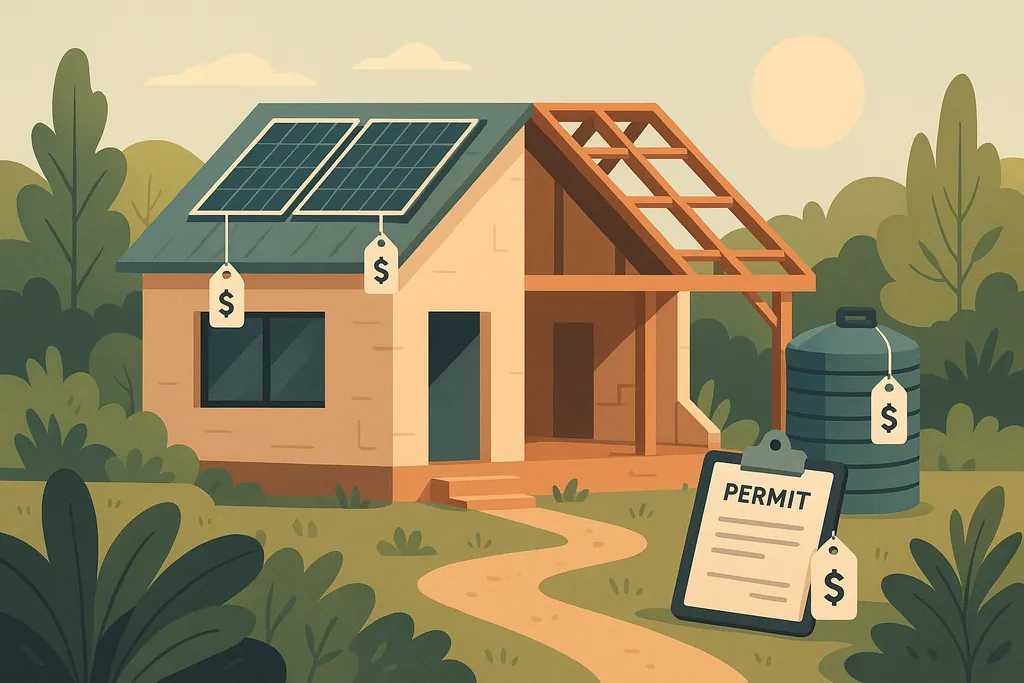
Discover hidden costs in DIY eco home building from permits to maintenance. Learn how to budget effectively and avoid costly surprises.
10 Hidden Costs in DIY Eco Home Building
Building an eco-friendly home might seem cost-effective, but hidden expenses can quickly add up. From permits to maintenance, here are the key costs you need to know:
- Permits & Inspections: Specialized permits for solar panels, greywater systems, and energy certifications.
- Land Prep: Soil assessments, terrain adjustments, drainage systems, and utility connections.
- High-Performance Materials: Triple-pane windows, advanced insulation, and air-sealing costs.
- Expert Services: Professional installation for geothermal, solar, HVAC, and rainwater systems.
- Eco-Friendly Materials: Higher upfront costs, shipping fees, and challenges with reclaimed materials.
- Waste Management: Sorting, recycling, and disposal fees for construction debris.
- Delays: Weather, supply chain issues, and design changes can extend timelines and budgets.
- Equipment Needs: Renting heavy machinery, specialized tools, and safety gear.
- Off-Grid Systems: Solar panels, battery banks, septic systems, and backup power setups.
- Maintenance: Ongoing costs for HVAC, solar, water systems, and green roofs.
Pro Tip: Budget for 15-20% extra to handle surprises and phase construction to spread costs over time. Smart planning and prioritizing long-term savings can help keep your eco-home project on track.
Trying To Build An Affordable & Eco Friendly House?
1. Building Permits and Inspections
Building permits and inspections can add unexpected costs to home projects. For eco-friendly projects, specific requirements often alter the usual permit processes. The fees and timelines for permits depend on the size of the project and local regulations.
You might need extra permits for things like:
- Solar energy systems
- Greywater systems
- Non-standard construction techniques
- Energy efficiency certifications
Inspections are typically required for key areas such as:
- Foundation stability
- Framing and structural components
- Solar or other renewable energy setups
- Water-saving installations
- Proper insulation and air sealing
- Final occupancy approval
It's smart to contact your local building department early to avoid setbacks. Scheduling inspections ahead of time can help control both costs and timelines. Knowing what permits and inspections are needed upfront can save you from unexpected expenses down the road.
2. Land Preparation Costs
Preparing a site for an eco-friendly home often comes with unexpected expenses.
Soil Assessment Before any work begins, a soil assessment is essential. This evaluates the soil's composition, stability, drainage, and overall suitability for a foundation.
Terrain Adjustments Challenging terrain may require clearing land, grading, removing trees and stumps, and using heavy machinery. Additional measures, like erosion control, might also be necessary.
Drainage Systems Proper drainage is crucial to prevent water issues. Solutions like French drains, swales, or rain gardens can address this. On top of that, setting up basic utilities can add to the overall cost.
Connecting Utilities If the site lacks existing utilities, you may need to budget for installing water lines, electricity, or even an on-site septic system.
Protecting the Landscape Eco-friendly preparation often involves preserving the natural environment. This could mean safeguarding topsoil and implementing erosion control strategies.
Accounting for these expenses early can help you avoid financial surprises.
3. High-Performance Windows and Insulation
Upgrading to high-performance windows and advanced insulation can be a pricey surprise for DIY eco builders. Here's what to know:
Energy-Efficient Windows Triple-pane windows with low-emissivity coatings and inert gas fillings come with a higher price tag than standard double-pane options. Energy Star–certified windows meet strict U-factor and SHGC ratings, which contributes to their premium cost.
Advanced Insulation Materials Materials like spray foam, mineral wool, and cellulose provide better thermal performance but come with steeper upfront costs. Proper installation is key to maximizing their effectiveness.
Hidden Installation Costs The installation process often includes additional expenses, such as air sealing materials, vapor barriers to manage moisture, and specialized tools or equipment.
Air Barrier System Details Areas like window and door openings, electrical outlets, plumbing penetrations, and structural connections need extra care. Addressing these spots properly ensures better energy efficiency and avoids unnecessary labor or material costs.
Quality Control Measures Tests like blower door assessments and thermal imaging inspections help confirm that the insulation is working as it should. While these add to the overall cost, they play a crucial role in preventing energy loss and ensuring long-term comfort.
4. Expert Installation Services
While DIY eco-building promotes self-reliance, some systems require professional installation to ensure safety, proper functionality, and compliance with local regulations. It's essential to plan for these costs, as each system - whether geothermal, solar, or HVAC - has its own specific requirements.
Geothermal System Installation Installing a geothermal system involves tasks like ground loop drilling, which require specialized tools and expertise that go beyond what most DIYers can handle.
Solar Panel Setup Although you can install solar panels yourself, the final electrical connections must be completed by a licensed electrician. Additional costs may include design, engineering, wiring upgrades, and adjustments for permits specific to your installation.
Rainwater Harvesting Systems These systems often need professional assistance for tasks such as tank installation, filtration setup, pump integration, and precise plumbing work.
HVAC Integration Energy-efficient HVAC systems demand professional installation to ensure they operate correctly and maintain warranty coverage. This may involve installing heat pumps, modifying ductwork, and integrating smart thermostats.
Certification Requirements For many eco-friendly systems, certified installers are necessary to meet Energy Star standards, adhere to local building codes, maintain warranties, and secure insurance coverage.
5. Eco-Friendly Material Costs
When planning an eco-friendly project, material choices can bring unexpected expenses. Being aware of these costs helps you set a realistic budget for sustainable building.
Upfront Costs of Sustainable Materials Materials like certified sustainable lumber or recycled steel are known for their durability and eco-conscious benefits. However, these often come with a higher price tag compared to standard materials.
Shipping and Handling Fees If certain materials, such as straw bales, bamboo flooring, or hemp-based products, aren't readily available locally, shipping costs can add up. Additionally, these materials may require specialized handling, further increasing expenses.
Challenges with Reclaimed Materials Reclaimed materials can be a cost-effective choice, but they often require additional processing or preparation before use. These extra steps can lead to higher costs, so it's important to factor them into your budget.
Material Waste and Sizing Issues Eco-friendly materials may not always follow standard sizing or may have stricter quality requirements. This can result in higher waste during installation or the need for extra protective measures, adding to the overall cost.
Potential for Long-Term Savings Although the initial costs for sustainable materials are often higher, they can lead to savings over time. Benefits like improved energy efficiency, lower maintenance needs, and better durability can offset the upfront investment. Additionally, these materials may enhance indoor air quality, adding value to your home.
6. Construction Waste Management
Managing construction waste isn't just about renting a dumpster - it involves specific disposal practices that can directly affect your budget. This ties into the broader challenges of eco-conscious budgeting mentioned earlier.
Sorting and Separating Waste Effective waste management begins with dividing materials into categories like recyclables, hazardous waste, and general debris. While this approach is necessary, setting up dedicated sorting areas can increase labor and operational costs.
Container Rentals and Disposal Costs Different types of waste require separate containers, each with its own rental and pickup fees. Recycling centers often have strict guidelines, and failing to meet them can lead to additional charges.
Recovering Materials Recyclable materials such as clean wood and scrap metal can help offset disposal costs. Assessing their value is a practical way to reduce overall expenses.
Regulations and Documentation Local laws may require you to track and document waste disposal. This might include filing reports or obtaining verification certificates, all of which should be accounted for in your budget.
Tips for Cutting Costs Here are some ways to manage costs while maintaining eco-friendly practices:
- Plan material purchases to avoid excess waste
- Schedule deliveries to reduce unnecessary packaging
- Set up an on-site sorting system early in the project
- Work with local recycling facilities for better rates
- Look into material exchange programs for unused supplies
While the upfront costs of waste management might be higher, efficient sorting, recycling, and on-site systems can minimize waste, support eco-friendly goals, and even contribute to green building certifications.
7. Project Delays and Changes
Delays and changes during eco-friendly home construction can quickly affect your budget. Being prepared for these challenges can help you manage costs more effectively. Here's what you need to know:
Supply Chain Issues Eco-friendly materials often take longer to source, which can delay construction and drive up labor costs as workers wait for supplies to arrive.
Weather Delays Natural building materials are sensitive to weather. Many require dry, stable conditions, which means bad weather can slow things down.
Design Changes Unexpected changes - like updated building codes, site issues, or adjustments for sustainable systems - can lead to higher material and labor costs due to reorders and extra work hours.
Additional Time Costs Longer construction timelines can result in extra expenses, such as extended equipment rentals, storage fees, and longer commitments from contractors.
Permit Reviews Using alternative building methods often requires extra reviews and consultations, which can stretch out approval times and add to your expenses.
How to Manage Costs
- Set aside a contingency fund for unexpected expenses.
- Keep detailed records of all changes and associated costs.
- Be flexible with your timeline, especially for tasks that depend on weather or seasons.
Delays early in the project can snowball, making it crucial to monitor timelines and expenses closely. Document everything to stay on top of your budget.
8. Construction Equipment Needs
Planning for equipment needs is just as important as budgeting for permits or material costs. Specialized equipment can increase the cost of building eco-friendly homes, so it's important to include these potential expenses in your budget early on.
Heavy Equipment Basics
Heavy machinery like excavators and skid steer loaders are often necessary for construction projects. Be sure to check local rental rates to get an accurate estimate of costs.
Tools for Eco-Friendly Construction
Building an eco-friendly home often requires tools that aren't part of a standard toolkit. Items like thermal imaging cameras, moisture meters, air infiltration testing devices, and solar panel installation tools can help ensure the quality and efficiency of your build. Renting these tools can be a cost-effective option.
Safety First
Personal safety should never be overlooked. Essential personal protective equipment (PPE) includes fall protection systems, respirators with the right filters, safety harnesses, and high-visibility clothing. These items help maintain a safe work environment throughout your project.
Securing Your Equipment and Materials
Protecting your tools and materials is crucial. Consider investing in durable storage solutions and reliable security measures, such as lockboxes or on-site security systems, to safeguard your investments during construction.
Tips to Save on Equipment Costs
- Partner with local builders to share expensive equipment and split rental costs.
- Schedule rentals carefully - many companies offer lower rates for longer rental periods.
- Stay on top of maintenance and repairs to avoid unexpected expenses.
Don't Overlook Hidden Costs
Additional expenses like transportation, fuel, insurance, training, and storage can add up quickly. Including these in your budget will help you avoid surprises.
Careful planning for equipment and related costs keeps your eco-friendly home project on track and within budget.
9. Off-Grid Systems Setup
Off-grid systems can be a significant upfront expense in eco-friendly home construction. While they promise independence from utilities and lower long-term costs, the initial setup can be pricey.
Solar Power System Costs
A standard 5kW off-grid solar system typically includes:
| Component | Cost Range |
|---|---|
| Solar panels | $8,000-$12,000 |
| Battery bank (lithium-ion) | $10,000-$15,000 |
| Inverter and charge controller | $3,000-$5,000 |
| Professional installation | $4,000-$6,000 |
Water Systems
Water systems for off-grid homes involve several components:
- Well drilling: $15-$30 per foot (100-400 feet deep), totaling $1,500-$12,000
- Water storage tanks (1,000-5,000 gallons): $2,000-$7,000
- Filtration and purification systems: $1,500-$3,000
- Pressure pump system: $800-$1,500
Septic System Installation
Septic systems are another key element:
- Septic tank installation: $3,000-$7,000
- Aerobic treatment units: $10,000-$20,000
- Leach field installation: $5,000-$10,000
- Permits and inspections: $500-$2,000
Backup Power Options
To ensure reliability, backup power is essential:
- Propane generator: $2,000-$4,000
- Automatic transfer switch: $500-$1,000
- Fuel storage system: $1,000-$2,000
Regular upkeep is critical for keeping these systems functional.
Ongoing Maintenance Costs
Be prepared for recurring maintenance expenses, such as:
- Annual solar panel cleaning and inspections: $200-$400
- Bi-annual battery maintenance: $300-$500
- Quarterly water quality tests: $100-$200
- Septic pumping every 3-5 years: $300-$600
Cost-Saving Strategies
To reduce expenses, consider these tips:
- Start with a grid-tied system and gradually shift to off-grid.
- Use pre-plumbed water storage systems to simplify installation.
- Opt for modular systems that can be expanded later.
- Schedule installations during off-peak times for better pricing.
- Combine multiple system installations to cut down on labor costs.
10. System Maintenance Requirements
Building an eco home is just the beginning - keeping it running smoothly requires consistent upkeep. Planning for these maintenance expenses can help you avoid unexpected costs down the road.
HVAC System Maintenance
Efficient HVAC systems need routine care to perform well:
- Annual heat pump service: $150–$300
- Air filter replacement: $20–$60 every three months
- Ductwork inspection and cleaning: $400–$700 per year
- Smart thermostat adjustments: $75–$150 per visit
Solar and Energy Systems
Solar and energy setups come with their own maintenance needs:
- Solar panel cleaning: $150–$350 twice a year
- Inverter inspections: $200–$400 annually
- Energy monitoring system updates: $100–$200 per year
- Battery system upkeep: $250–$500 annually
Water Conservation Systems
Water-saving systems also require periodic checks:
- Rainwater harvesting system cleaning: $300–$600 per year
- UV filter replacement: $100–$200 annually
- Water quality testing: $150–$300 every three months
- Pump servicing: $200–$400 annually
Green Roof Maintenance
Living roofs need specialized attention to stay in good shape:
- Vegetation care: $0.75–$1.50 per square foot annually
- Drainage system cleaning: $300–$500 twice a year
- Root barrier checks: $200–$400 per year
- Structural assessment: $500–$1,000 every two years
Smart Home Technology
Automated systems benefit from regular updates and checks:
- Software updates: $100–$300 annually
- Sensor recalibration: $150–$250 per visit
- Battery replacement: $50–$150 per year
- System tuning: $200–$400 annually
These maintenance tasks highlight the importance of staying organized and proactive to keep everything running efficiently.
Tips for Managing Maintenance Costs
- Schedule services during off-peak times to save money.
- Combine multiple tasks into one service visit to cut down on fees.
- Take care of simple maintenance tasks yourself when possible.
- Use smart monitoring tools to catch small problems before they become big ones.
- Consider service contracts to lock in better rates.
Price Comparison Guide
When considering eco-friendly upgrades, it's essential to weigh immediate costs against long-term savings. This guide breaks down key systems, highlights cost factors, and explores financing options to help you make informed decisions.
Solar Power Systems
When evaluating solar power, keep these cost factors in mind:
- Equipment costs: Includes solar panels, batteries, and inverters.
- Monthly energy savings: Potential reductions in utility bills.
- Payback period: How long it takes to recover your investment.
High-Performance Building Elements
Investing in premium materials and systems can lead to significant savings over time:
- Improved insulation and windows: Helps regulate indoor temperatures efficiently.
- Advanced HVAC systems: Reduces energy consumption and utility costs.
- Lower operational costs: Results from better energy efficiency.
Water Conservation Systems
Though initial costs may be higher, water-saving systems offer lasting benefits:
- Lower utility bills: Reduced water usage means lower expenses.
- Efficient water management: Systems like rainwater harvesting and low-flow fixtures help conserve resources.
- Long-term savings: Offsets the upfront investment over time.
Long-Term Value Factors
Look beyond upfront expenses to understand the broader value:
- Increased property resale value: Eco-friendly features can make your home more attractive to buyers.
- Protection from utility rate hikes: Greater energy and water independence shields you from rising costs.
- Lower maintenance needs: High-quality systems often require less upkeep.
Financing and Hidden Cost Offsets
Smart planning can help offset initial costs and unlock savings:
- Smart technology and passive design: Adds both energy efficiency and financial value.
- Government incentives: Tax credits, rebates, and green mortgages can reduce upfront expenses.
- Performance contracts: Incentive programs tied to energy savings can further ease costs.
Money-Saving Strategies
Building an eco-friendly home doesn't have to break the bank. With some smart planning and efficient strategies, you can keep costs under control while setting yourself up for long-term savings.
Build a Budget with a Safety Cushion
Always plan for the unexpected. Set aside 15-20% of your total budget for surprise expenses. Here's how the budget might break down:
- Foundation and site work: 25%
- Shell and exterior: 30%
- Interior systems: 25%
- Finishing touches: 20%
Break Construction into Stages
Tackle construction in phases to help spread out costs and avoid overspending:
- Focus on completing essential rooms first.
- Install basic energy systems early on.
- Save interior details for later stages.
Time Your Purchases Wisely
Timing can make a big difference in your expenses. Here are some tips:
- Buy materials between November and February when demand is lower.
- Schedule foundation work in early spring.
- Plan interior projects during winter months.
- Book contractors during off-peak seasons to negotiate better rates.
Source Materials Strategically
Finding the right materials at the right price is key:
- Purchase frequently used items in bulk.
- Look for locally sourced materials to save on shipping costs.
- Join building material co-ops for discounts.
- Keep an eye on fluctuating lumber prices to buy at the best time.
Opt for Affordable Alternatives
Consider swapping out expensive materials for cost-effective options:
- Replace concrete with rammed earth.
- Use bamboo instead of traditional hardwood for flooring.
- Install reclaimed windows to cut costs.
Learn DIY Skills
By learning some basic construction skills, you can save on labor costs. Consider training yourself in:
- Plumbing installation
- Electrical work
- Insulation setup
- Interior finishing tasks
Prioritize Energy Efficiency
Invest in features that will save on energy bills over time:
- Add passive solar design elements.
- Install high-performance insulation.
- Choose energy-efficient windows.
- Use smart home climate control systems.
Consult the Experts
Working with the right professionals can save money and headaches down the line:
- Hire an energy auditor to plan efficient systems.
- Work with green building specialists for eco-friendly designs.
- Consult eco-architects during the design phase.
- Get multiple estimates from contractors to ensure competitive pricing.
Plan for Long-Term Savings
Think beyond the initial build to keep costs low in the future:
- Use durable materials that last.
- Install systems requiring minimal maintenance.
- Plan for future upgrades during the design phase.
- Keep detailed documentation of all systems for easy reference.
With these strategies, you can build your dream eco-friendly home while keeping your finances in check.
Conclusion
Creating an environmentally conscious home involves considering both visible and less obvious expenses. Careful planning can transform these costs into savings over time.
Here are the key factors to focus on when building an eco-home:
- Thorough planning: Factor in permits, site prep, and possible delays.
- Smart material choices: Weigh initial costs against durability and efficiency.
- Skilled professionals: Hire experienced experts while taking on manageable DIY tasks.
Set a flexible budget with a 15-20% buffer and consider phasing construction to manage costs effectively while prioritizing energy-efficient upgrades.