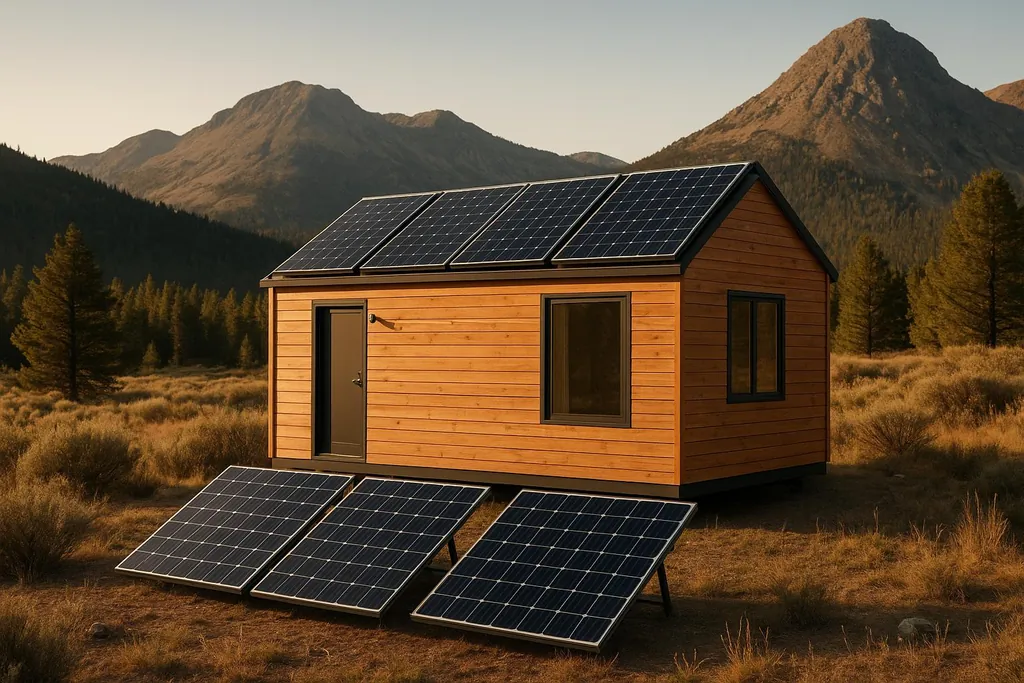
Learn how to design an off-grid solar system with this comprehensive guide. Discover solar panels, modules, materials, and efficient setup tips.
Complete Guide to Designing an Off-Grid Solar System
Living sustainably is no longer an elusive dream but an attainable goal for many eco-conscious homeowners in Canada and the United States. Off-grid solar power systems are at the forefront of this green revolution, offering self-sufficiency, affordability, and environmental benefits. However, setting up such systems can feel daunting without the right knowledge. This comprehensive guide demystifies the core principles of solar energy systems, the intricacies of generators, and the components that make these systems reliable. Whether you're a homeowner looking to embrace renewable energy or a DIY enthusiast exploring green technologies, this article is your transformative resource.
Start with the Solar System Sizing Calculator if you need a first-pass PV array, battery, inverter, and charge-controller estimate from your appliance list.
Understanding Solar Panels: Basics and Beyond
What Is a Solar Panel?
The term "solar panel" is commonly used, but technically, it refers to a "solar module." A solar module comprises several solar cells (the fundamental units) that convert sunlight into electricity via the photovoltaic (PV) effect. These solar cells are made of semiconductors, such as silicon, that generate electrical current under specific conditions. Here's a breakdown of the key terminology frequently used in solar technology:
- Solar Cells: The building blocks of solar modules.
- Semiconductors: Materials like silicon that conduct electricity under certain conditions.
- PV Modules: Another term for solar modules, interchangeable with "solar panels."
The Photovoltaic Effect: How Solar Modules Generate Power
At its core, the photovoltaic effect enables solar cells to convert sunlight into electricity. This process involves:
- Semiconductor Setup: Solar cells are designed with two chemically treated sides, creating a PN junction. One side is positively charged (P), and the other is negatively charged (N).
- Sunlight Activation: When sunlight hits the solar cell, electrons move across the PN junction, generating an electrical current.
- Wiring and Layers: A series of conductive materials and wiring connect these cells, collectively producing usable electrical energy.
Types of Solar Materials and Efficiency
Different materials affect the efficiency and cost of solar panels. Here's a quick comparison:
- Thin Film: Found in small applications like calculators, with efficiencies of just over 20%.
- Monocrystalline: The most efficient (up to 27%), recognized by its uniform dark appearance.
- Polycrystalline: Slightly less efficient (up to 23%) but cost-effective, with a characteristic flaky blue texture.
- Gallium Arsenide and Multi-Junction Cells: Rarely used due to high costs, these can achieve efficiencies of 30-50%, primarily for specialized projects like satellite systems.
From Solar Cells to Arrays
A solar system scales from small to large in the following order:
- Solar Cell: The smallest unit.
- Solar Module: Multiple cells wired together in one frame.
- Solar Panel: Pre-wired modules mounted on a rigid frame.
- Solar Array: Several panels connected to form a larger system.
Key Components of a Solar Module
Solar modules are constructed in layers for durability and functionality:
- Glass cover
- Encapsulant
- Solar cells
- Backing sheet
- Junction box (which houses bypass diodes to prevent total power loss in case a section malfunctions)
By understanding these components, you'll gain insight into how solar systems work and what to look for when purchasing or building one.
Generators: A Vital Backup for Off-Grid Systems
While solar energy is sustainable, incorporating a generator ensures reliable power during low sunlight periods. Here's an overview of generator types, fuel options, and operational principles.
Types of Generators
- Standard Generators: Conventional designs powered by internal combustion engines paired with electrical alternators.
- Inverter Generators: Advanced models that produce clean, stable electricity by converting AC power to DC and back to AC.
Advantages of Inverter Generators:
- Produce high-quality, stable power.
- Operate quietly at low loads due to variable engine speeds.
- Ideal for sensitive appliances like electronics.
Disadvantages:
- More expensive than standard generators.
- Additional components can make them more complex to repair.
Generator Power Ratings
When choosing a generator, consider these ratings:
- Rated Power (Nominal): The continuous power the generator can handle.
- Peak Power (Max): The maximum power output for short durations, typically for handling surges.
Fuel Options: Gasoline, Diesel, or LPG?
Each fuel type has its pros and cons:
- Gasoline: Affordable and widely available but less efficient and poses a higher fire risk.
- Diesel: Offers superior fuel efficiency and energy density, making it ideal for large setups.
- LPG (Bottled Gas): Cleaner burning but typically more expensive and harder to store.
When selecting a generator, consider noise levels, fuel availability, and fire hazards. Diesel generators, for instance, are noisier but safer in terms of fire risk.
Connecting It All: Electrical Fundamentals
Voltage, Amperage, and Power
Understanding these basics is crucial for setting up your system:
- Voltage (V): The electrical pressure or force.
- Amperage (A): The flow rate of electricity.
- Power (W): The product of voltage and amperage (W = V × A).
Imagine a hose connected to a water tank:
- Voltage is the water pressure.
- Amperage is the water flow.
- Power is the total water released.
Power Factor and Efficiency
The power factor (a value between 0 and 1) determines how efficiently energy is used. Appliances with motors, like refrigerators, tend to have lower power factors. For example:
- LED lights: Power factor close to 1.
- Older refrigerators: Power factor as low as 0.5.
When choosing a generator, match its rated capacity to your appliances' power factor for optimal performance.
Key Takeaways
- Solar Systems:
- Photovoltaic cells convert sunlight into electricity via the PN junction.
- Monocrystalline panels are the most efficient for residential setups.
- Bypass diodes in solar modules prevent total power loss in case of shading or malfunction.
- Generators:
- Inverter generators are quieter and produce cleaner power but are more expensive.
- Diesel generators offer the best fuel efficiency and are ideal for larger systems.
- Match generator capacity to your load for maximum fuel efficiency.
- Electrical Basics:
- Power (W) = Voltage (V) × Amperage (A).
- High power factors improve energy efficiency and reduce waste.
- Understanding generator ratings (kW vs. kVA) helps in selecting the right system.
- Practical Advice:
- Avoid oversizing generators to reduce fuel inefficiency.
- Opt for generators with essential features like fuel valves and electric start for convenience.
- Consider fuel availability, noise levels, and fire safety when choosing between gasoline, diesel, or LPG.
Conclusion
Designing an off-grid solar system and integrating a reliable generator involves understanding technical details and making informed choices. By mastering key concepts like the photovoltaic effect, generator types, and power ratings, you can create an energy-efficient, sustainable, and cost-effective solution tailored to your needs. Whether you're reducing your reliance on the grid or building a completely self-sustaining home, this guide equips you with the foundational knowledge to succeed in your journey toward greener living. Embrace renewable energy and take control of your home’s power future.
Source: "🌞 Step-by-Step Guide to Designing Your Own Off-Grid Solar System | Complete Solar Energy Course" - isim Content, YouTube, Aug 26, 2025 - https://www.youtube.com/watch?v=c0S80Q1i_sQ