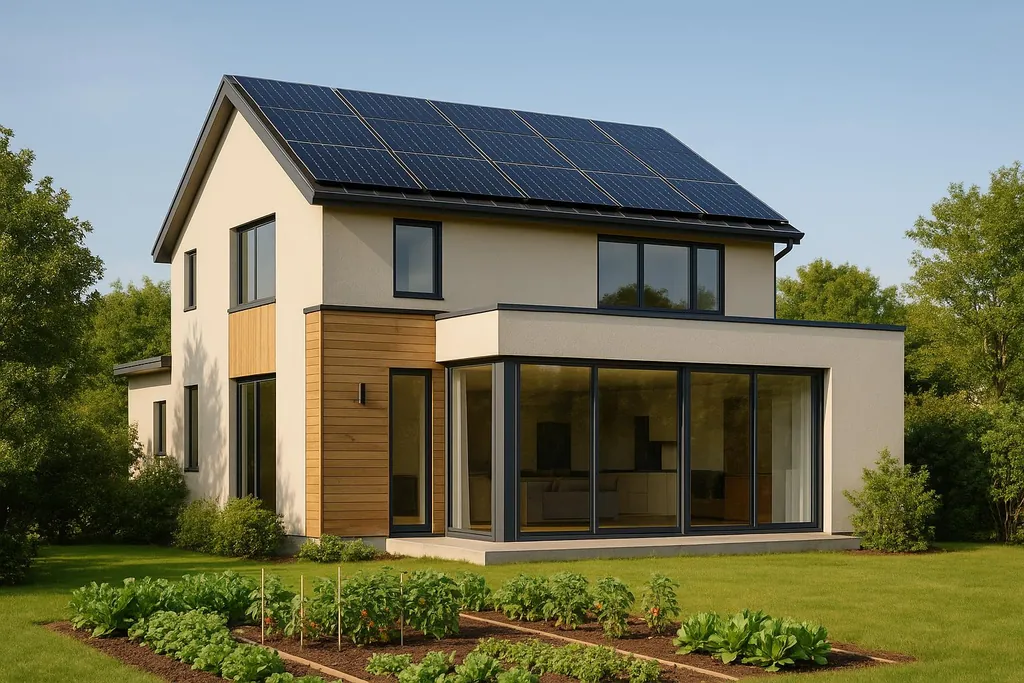
Learn how to build a net zero home that balances energy consumption and production through efficient design and renewable energy systems.
How to Build a Net Zero Home
Net zero starts at the envelope. Use the Air Sealing ROI Calculator to translate an ACH50 target into annual energy and dollar savings before sizing PV or heat pumps.
Want to build a home that generates as much energy as it uses? Here's how:
A net zero home combines efficient design with renewable energy systems to balance energy consumption and production. Key steps include:
- Energy Efficiency: Start with airtight insulation, high-performance windows, and efficient HVAC systems to cut energy demand by 60-80%.
- Renewable Energy: Add solar panels (6-10 kW for most homes) and consider battery storage for backup power.
- Smart Design: Position the home for optimal sunlight, use energy modeling tools, and select materials that reduce heat loss.
- Eco-Friendly Materials: Choose recycled, locally sourced, or carbon-negative materials like cellulose insulation or FSC\-certified wood.
- Maintenance: Use energy monitoring systems and schedule regular HVAC tune-ups to keep everything running efficiently.
While the upfront cost may be higher, energy savings and tax incentives (like a 30% federal tax credit for solar) help offset expenses. Building a net zero home is a practical way to reduce energy bills, improve indoor comfort, and lower carbon emissions.
Planning and Design
Site Selection and Home Orientation
When choosing a site for a net zero home, prioritize one with clear southern exposure to ensure your solar panels operate at their best. Watch out for potential shading from trees, nearby buildings, or landscape features, especially during peak sunlight hours.
The land's natural shape plays a big role in energy efficiency. A gentle south-facing slope is ideal - it captures winter sunlight and ensures proper drainage. On the other hand, avoid low-lying areas where cold air can settle, as they can increase heating demands.
To optimize energy use, orient your home so the longest wall faces south, and limit the number of windows on the north side to minimize heat loss. Planting deciduous trees on the south or west sides provides shade during the summer, keeping your home cooler, while letting in sunlight during the winter when the leaves fall.
A compact home design reduces the exterior surface area, which helps lower heating and cooling needs. Once you’ve found the perfect site, use energy modeling tools to fine-tune your efficiency plans and budget.
Energy Modeling and Budget Planning
Energy modeling tools, like BEopt, are invaluable for tailoring your home’s energy profile. By inputting details like your local climate, home size, and planned efficiency features, these tools give you a clear picture of your home’s energy demands before construction even starts.
Energy needs can differ significantly depending on your location and climate. As you budget, account for both standard construction costs and any upgrades for efficiency or renewable energy systems. Don’t forget to explore federal and state incentives - they can significantly reduce the cost of renewable energy installations. Tools like PVWatts are handy for estimating solar energy production based on your specific site.
Set clear performance targets early on. These benchmarks will guide your choices for materials and systems, ensuring you stay on track.
Setting Energy and Material Goals
To achieve net zero status, it’s crucial to set firm energy and material goals right from the start. Net zero homes typically have much lower Energy Use Intensity (EUI) compared to conventional homes.
Insulation needs vary depending on your region’s climate. For example, homes in moderate climates may require less insulation than those in colder areas, where thicker insulation is essential for walls, floors, and attics. Seal all gaps and openings to prevent air leakage, which can undermine your efficiency efforts.
When selecting windows, consider both your home’s orientation and the local climate. In colder regions, windows that allow solar heat gain can help reduce heating costs, while in warmer areas, opt for windows designed to block excess heat.
Sustainable materials also play a key role in reducing your home’s environmental impact. Look for materials with recycled content, source locally to cut transportation emissions, and choose certified sustainable products whenever possible.
Finally, set a renewable energy goal that matches your home’s energy consumption, including future needs like charging an electric vehicle. Battery storage systems can provide backup power and help balance energy production with daily use, ensuring your home stays efficient and self-sufficient.
Net-Zero 101 - A guide to building your future-proofed dream home
Energy Efficiency Methods
Cutting energy consumption starts with reducing demand. A tightly sealed, well-insulated building envelope can lower heating and cooling needs by 60-80% compared to standard construction methods.
Insulation and Air Sealing
Effective insulation and air sealing are key to energy efficiency. Continuous insulation eliminates thermal bridges - those pesky spots like studs and joists where heat sneaks out.
- Spray foam insulation: This option provides excellent air sealing along with high R-values, ranging from R-3.7 per inch for open-cell foam to R-6.5 per inch for closed-cell foam. Although it’s pricier upfront (costing between $4,000-$8,000 for a 2,000 sq ft home), closed-cell spray foam doubles as a moisture barrier, making it a one-step solution.
- Dense-pack cellulose: Made from recycled newspaper, this eco-friendly material offers an R-value of about R-3.8 per inch. It’s about 40% cheaper than spray foam, resists pests and fire, and works well in walls and attics when installed correctly.
- Mineral wool batts: With an R-value of R-4.3 per inch, mineral wool is a good choice for areas requiring a precise fit, like around electrical boxes and pipes. It also resists moisture and retains its insulating properties even when compressed.
Air sealing is just as important as insulation. Use acoustical sealant to seal gaps around electrical boxes, pipes, and rim joists. Don’t forget to seal the top plates of interior walls to stop air from escaping into the attic. To ensure airtightness, aim for 1.5 air changes per hour at 50 pascals (ACH50) or lower, verified through a blower door test.
Once the envelope is insulated and sealed, upgrade to high-performance windows and doors to further reduce energy loss.
High-Performance Windows and Doors
Windows and doors can be major sources of heat loss, so choosing energy-efficient options is critical. Look for triple-pane windows with U-factors below 0.20 and adjust the Solar Heat Gain Coefficient (SHGC) based on your climate zone:
- Northern climates: Higher SHGC values (0.40-0.55) allow beneficial solar heat in winter.
- Southern climates: Lower SHGC values (0.25-0.40) help keep cooling loads down.
Low-E coatings on glass surfaces reflect infrared heat while letting in natural light, improving energy performance.
For window frames, fiberglass outperforms vinyl and aluminum because it expands and contracts at the same rate as glass, maintaining a tight seal over time. Though fiberglass windows cost 15-20% more than vinyl, they last longer and perform better in the long run.
When it comes to doors, opt for models with polyurethane foam cores and magnetic weatherstripping. Insulated steel doors can achieve U-factors as low as 0.15, while fiberglass options offer similar performance with added resistance to warping and cracking.
Proper installation is just as important as product choice. Use low-expansion foam to seal gaps around the frame, apply flashing tape to direct water away, and ensure the window or door is perfectly aligned before securing it.
Efficient HVAC and Appliances
After tightening the envelope, focus on energy-efficient heating, cooling, and appliances. Since HVAC systems account for 40-50% of home energy use, upgrading to high-efficiency models can make a huge difference.
- Air-source heat pumps: Modern models perform well even in cold climates, staying efficient down to \-15°F.
- Variable-speed heat pumps: These adjust output to match demand, saving more energy than single-speed systems. Look for models with HSPF ratings above 10 for heating and SEER ratings above 18 for cooling.
- Ductless mini-split systems: These eliminate duct-related energy losses, which can account for 20-30% of heating and cooling energy in traditional systems. Multi-zone systems allow precise temperature control in different areas of the home.
- Ducted systems: If you need ducts, make sure they’re sealed, insulated, and located within conditioned spaces to minimize energy loss.
For ventilation, Energy Recovery Ventilation (ERV) systems maintain indoor air quality while recovering 70-80% of heat from outgoing air. This keeps fresh air flowing without sacrificing efficiency.
Water heating is the second-largest energy use in most homes. Heat pump water heaters consume 60-70% less energy than traditional electric units and work well in spaces like basements, where they can capture waste heat.
Upgrade to ENERGY STAR certified appliances to save energy across the board. Prioritize energy-intensive items like:
- Induction cooktops: Use 50% less energy than standard electric ranges.
- ENERGY STAR refrigerators: Consume 15% less energy than non-certified models.
- LED lighting: Cuts lighting energy use by 75% and lasts 25 times longer than incandescent bulbs.
Smart home tech like programmable thermostats and energy monitoring systems can further optimize energy use. For example, programmable thermostats adjust temperatures based on your schedule, reducing heating and cooling costs by 10-15%.
Renewable Energy Systems
Once you've reduced your home's energy consumption, the next logical step is to address the remaining demand with renewable energy sources. Solar panels are often the go-to solution for net zero homes, but depending on your location and property, there are other renewable options worth considering.
Solar Panel Systems
Solar panels are the backbone of most net zero homes. The average American household consumes about 10,500 kWh annually, which typically requires a solar system between 6-10 kW to meet energy needs. The exact size depends on factors like your local sunlight levels and how much energy your home uses after efficiency upgrades.
For homes with limited roof space, monocrystalline panels are the most efficient choice, delivering 20-22% efficiency. If you're looking for a lower upfront cost, polycrystalline panels are about 10-15% cheaper, though they come with slightly lower efficiency at 15-17%. Installing a 7 kW system will generally cost between $14,000-$21,000 before incentives, with pricing influenced by regional labor rates and roof complexity.
When it comes to inverters, you have several choices:
- String inverters: The most budget-friendly option, costing $0.15-$0.25 per watt. However, shading on one panel can lower the performance of the entire string.
- Power optimizers: These cost $0.30-$0.50 per watt more than string inverters but allow each panel to function independently, boosting system output by 5-15% in partially shaded conditions.
- Microinverters: These convert DC to AC at each panel, offering better monitoring and safety. They cost $0.40-$0.70 per watt more than string inverters but can increase energy production by 10-20% in challenging setups.
Adding battery storage to your solar system ensures power during outages but comes at a premium - expect to pay $10,000-$15,000. Lithium iron phosphate (LiFePO4) batteries, while 15-20% more expensive than standard lithium-ion batteries, last much longer with 6,000-8,000 cycles compared to 3,000-5,000 cycles.
For properties where rooftop installations aren't ideal due to shading or orientation, ground-mount systems are a practical alternative. They cost about $1-$3 per watt more but allow for optimal panel placement and easier maintenance.
Other Renewable Energy Options
If solar panels aren't enough or aren't feasible, there are other renewable energy systems to consider:
- Small wind turbines: These can complement solar panels in areas with average wind speeds above 10 mph. Turbines range from 1-10 kW and cost $3,000-$8,000 per kW installed. However, they’re less practical in most residential areas due to inconsistent wind conditions.
- Geothermal heat pumps: These systems can cut HVAC energy use by 40-60%. Installation costs range from $15,000-$25,000, but they significantly lower operating costs compared to traditional HVAC systems.
- Micro-hydro systems: If your property has a stream with at least 2-3 feet of head and a flow rate of 5-10 gallons per minute, a micro-hydro system can generate 100-300 watts continuously. Installation costs range from $1,000-$5,000 per kW, and unlike solar panels, these systems provide power around the clock.
- Solar water heating: For $3,000-$6,000, a solar water heating system can offset 50-80% of your water heating needs. In sunny areas, this can be more cost-effective than installing additional solar panels, especially when paired with a heat pump water heater.
Tax Credits and Rebates
The cost of renewable energy systems can be significantly reduced through tax credits and rebates. The federal Investment Tax Credit (ITC) covers 30% of solar system costs through 2032, dropping to 26% in 2033 and 22% in 2034. For example, a $18,000 solar system would qualify for a $5,400 federal tax credit.
Many states offer additional incentives. For instance:
- California's Self-Generation Incentive Program: Provides rebates up to $1,000 per kWh for battery storage.
- New York's NY-Sun program: Offers rebates ranging from $0.40-$1.20 per watt depending on system size and location.
Net metering policies also play a crucial role. Some states offer a 1:1 credit for excess solar power sent back to the grid, while others only pay the wholesale rate of $0.03-$0.06 per kWh, which is much lower than typical retail rates of $0.12-$0.25 per kWh. Understanding your utility’s net metering rules is essential for determining the financial returns of your system.
Additional benefits include property tax exemptions in 35 states, which prevent renewable energy systems from increasing your home’s taxable value. Some utilities also offer time-of-use rates, paying higher prices for solar energy produced during peak demand hours, usually 2-8 PM on weekdays.
For financing, PACE programs available in 36 states let homeowners spread the cost of renewable energy upgrades over 10-25 years through property tax assessments. This financing option stays with the home if sold, making it easier to invest in larger systems.
Local rebates and incentives can further reduce costs. Check with your state energy office or utility company for programs that might include battery storage, EV charging stations, or comprehensive energy efficiency packages. Combining these incentives ensures your renewable energy system works effectively toward achieving net zero goals.
Eco-Friendly Materials and Building Methods
Creating a net zero home goes beyond upgrading energy systems - it’s about using materials and techniques that minimize waste, boost efficiency, and reduce environmental harm.
Choosing Green Building Materials
When it comes to eco-friendly materials, there are four main categories to consider: rapidly renewable resources, recycled content materials, carbon-negative options, and durable, low-maintenance choices.
Rapidly renewable materials like bamboo and cork stand out for their renewability. Bamboo, for instance, grows at an incredible rate - up to 1.5 inches per day - making it one of the most sustainable flooring options out there . Cork is another great choice. It’s harvested every 9–12 years from cork oak trees without harming them, making it a gentler alternative to traditional hardwood.
For wood products, look for FSC-certified lumber. While it may cost more, it ensures the wood comes from responsibly managed forests.
Recycled content materials are another smart choice. Recycled steel, for example, is not only highly durable but can also be recycled endlessly. It’s also pest-resistant, making it a practical option for structural components . Recycled glass countertops are another eco-friendly pick, offering a stylish alternative to natural stone while keeping waste out of landfills.
Carbon-negative materials are leading the way in sustainable construction. Hempcrete - a mix of hemp hurds and lime - absorbs more CO₂ than it emits over its lifecycle, making it a standout choice . It also provides excellent insulation and helps regulate indoor humidity, though it does require specialized installation skills.
For finishes, natural options like linseed oil, beeswax, or shellac are durable, non-toxic, and help maintain healthy indoor air quality.
Pairing these materials with waste-conscious building techniques can further enhance the overall efficiency and sustainability of your home.
Waste-Reducing Construction Methods
Reducing construction waste starts with smarter building methods. Advanced framing, for example, uses less lumber by spacing studs further apart and simplifying structural components. This approach includes using a single top plate instead of a double one, two-stud corners instead of three, and ladder blocking at interior intersections.
Prefabricated and modular construction is another excellent option. These methods generate less than 5% material waste compared to traditional building techniques . By producing components like wall panels and roof trusses in controlled factory settings, these methods not only cut waste but also speed up construction while allowing for design flexibility.
Panelized construction offers a balance between traditional stick-built homes and fully modular designs. Wall panels are pre-made off-site with windows, doors, and insulation already installed, then assembled on-site, streamlining the process.
For concrete work, insulated concrete forms (ICFs) are worth considering. These forms combine insulation and structure into one system, reducing concrete usage while providing continuous insulation.
Insulation Material Comparison
Choosing the right insulation is essential for energy efficiency. Here’s a quick comparison of common insulation materials:
| Material | R-Value per Inch | Environmental Impact | Lifespan |
|---|---|---|---|
| Fiberglass Batts | R-3.2–3.8 | Moderate (some options use recycled content) | 50+ years |
| Cellulose | R-3.6–3.8 | Low (made from recycled newspaper) | 50+ years |
| Spray Foam (Closed Cell) | R-6.0–6.5 | High (petroleum-based, high global warming potential) | 50+ years |
| Mineral Wool | R-3.0–3.3 | Low (uses recycled slag) | 50+ years |
| Natural Fiber (Sheep's Wool) | R-3.5–3.8 | Very Low (renewable and biodegradable) | 50+ years |
| Cork Board | R-3.6–4.0 | Very Low (renewably harvested) | 50+ years |
Each option has its strengths. For example, cellulose insulation, made from recycled newspaper, not only provides solid thermal performance (R-3.8 per inch) but also enhances airtightness and soundproofing. Mineral wool is fire-resistant, moisture-tolerant, and made from recycled materials like steel mill slag. Sheep’s wool, on the other hand, offers natural humidity control, fire resistance, and biodegradability. Cork board is another renewable option, providing excellent acoustic properties and natural pest resistance.
When selecting insulation, think about the entire lifecycle - manufacturing, transportation, installation, and eventual disposal. Opting for locally sourced materials can cut transportation emissions and support nearby businesses, making your project even more sustainable.
Monitoring, Maintenance, and Certification
Once your net zero home is built, keeping it running efficiently requires smart monitoring and consistent upkeep.
Energy Monitoring Systems
Smart energy monitoring systems are essential for maintaining net zero performance. These tools provide real-time data on both energy consumption and production, helping you identify ways to optimize your home's energy use .
An Energy Management System (EMS) plays a central role in solar-plus-storage setups. It decides when to charge your batteries, use stored energy, or send power back to the grid, factoring in weather forecasts, utility rates, and your energy habits . Many modern systems come with smartphone apps, allowing you to monitor energy usage, control circuits, and review consumption patterns remotely. This data can guide you in scheduling maintenance and ensuring your home stays aligned with net zero goals .
Regular Maintenance Tasks
Your HVAC system is likely the biggest energy user in your home, so keeping it in top shape is crucial. During high-use seasons, replace HVAC filters monthly to prevent unnecessary strain on the system . Check outdoor units regularly, clearing away any debris that could block airflow. Adjust thermostat settings to balance comfort with energy efficiency .
Plan for professional HVAC tune-ups twice a year - once before the heating season and again before cooling season. This helps catch potential problems early. Pay attention to signs like strange noises, frequent cycling, unexpected increases in energy bills, or persistent dust and odors. These could signal that your system needs expert attention .
Summary and Next Steps
Building a net zero home is more than just a commitment to sustainability - it's a wise financial investment for the future. While the process requires thoughtful planning, the rewards make the effort well worth it.
Key Steps for Building Net Zero
The cornerstone of a successful net zero home is efficient energy use. Start by focusing on reducing your overall energy demand before introducing renewable energy systems. Key steps include:
- Installing proper insulation and air sealing to minimize energy loss.
- Choosing high-performance building materials and efficient HVAC systems to optimize energy use.
Once your home is as energy-efficient as possible, it's time to integrate renewable energy systems. Solar panels are a popular choice, especially with federal tax credits that can help offset the cost. Pairing these with battery storage systems ensures you can store surplus energy for use during times when solar generation is lower.
To keep everything running smoothly, regular monitoring and maintenance are essential. Smart energy monitoring systems can help you track energy consumption and production, while routine maintenance, especially for HVAC systems, ensures optimal performance over time.
With these principles in place, you're ready to embark on your net zero journey with confidence.
Getting Started with Your DIY Project
If you're taking the DIY route, start with a clear plan and phased budgeting. A DIY approach can save you a significant amount of money compared to traditional construction methods, but it requires careful planning and a realistic assessment of your skills.
Evaluate your abilities and bring in professionals for tasks that require licensing, such as electrical work or HVAC installation. Resources like [DIY Eco Homes](/) provide step-by-step guides, cost breakdowns, and tutorials to help you navigate each phase of construction.
Breaking the project into manageable phases can make budgeting easier. Many homeowners begin with building the home's shell and installing basic systems, adding renewable energy components like solar panels as finances allow. Federal and state incentives can also help cover the cost of renewable energy installations.
Over time, energy savings can offset your initial investment. A well-designed net zero home can significantly reduce monthly energy bills, and in some cases, excess solar energy can even earn you utility credits. Plus, as energy efficiency becomes more desirable, your home's value may increase.
The tools, materials, and technologies needed for net zero construction are more accessible than ever. With careful planning, smart material choices, and a willingness to learn, you can build a highly energy-efficient home that aligns with your budget and goals.
FAQs
What are the most affordable ways to build and maintain a net zero energy home?
Achieving a net zero energy home doesn’t have to drain your wallet. Start with high-quality insulation - it’s one of the easiest ways to cut down on energy loss and trim heating and cooling expenses. Combine this with energy-efficient appliances and LED lighting, which not only reduce electricity usage but also help keep utility bills under control.
Consider installing solar panels or other renewable energy systems to offset your energy consumption. Many federal and state programs offer incentives that can make these upgrades more budget-friendly. For even greater savings, opt for durable, sustainable building materials that require minimal upkeep, and schedule regular energy audits to ensure everything is running smoothly. These thoughtful steps can help you achieve a net zero energy home without overspending.
How can I choose the right size and type of renewable energy system, like solar panels or wind turbines, for my home and energy needs?
To figure out the best renewable energy system for your home, start by calculating how much energy your household uses annually, measured in kilowatt-hours (kWh). For solar panels, most U.S. homes need systems in the 6 kW to 8 kW range, depending on energy consumption and available roof space. If you're considering wind turbines, your energy needs and the local wind conditions are key factors, as residential turbines typically range from 400 watts to 10 kW.
Your location's natural resources play a big role - look at how many sunlight hours your area gets for solar or the average wind speeds for turbines. Placement is another critical factor; the system needs to be positioned to work as efficiently as possible. To ensure the system fits your energy needs, budget, and sustainability goals, it’s a good idea to consult with a local energy expert. They can provide tailored advice to help you make the right choice.
What challenges might arise when building a net zero home, and how can they be managed effectively?
Building a net zero home isn’t without its hurdles. You’ll likely encounter higher upfront costs, the need to navigate complex building codes, and the challenge of ensuring that high-performance materials stand the test of time. But with the right approach, these challenges can be tackled head-on.
When it comes to costs, look into financial incentives like federal or state tax credits for renewable energy systems or energy-efficient upgrades. Pair that with careful budgeting and choosing materials that offer the best balance of performance and affordability. For regulatory challenges, stay up to date with local building codes and collaborate with professionals who specialize in sustainable construction. This expertise can make the process much smoother. Lastly, prioritize quality - invest in durable materials and skilled labor to minimize risks, whether it’s for insulation or renewable energy installations.
With thoughtful design, smart technology choices, and proactive financial planning, building a net zero home can be both achievable and practical.