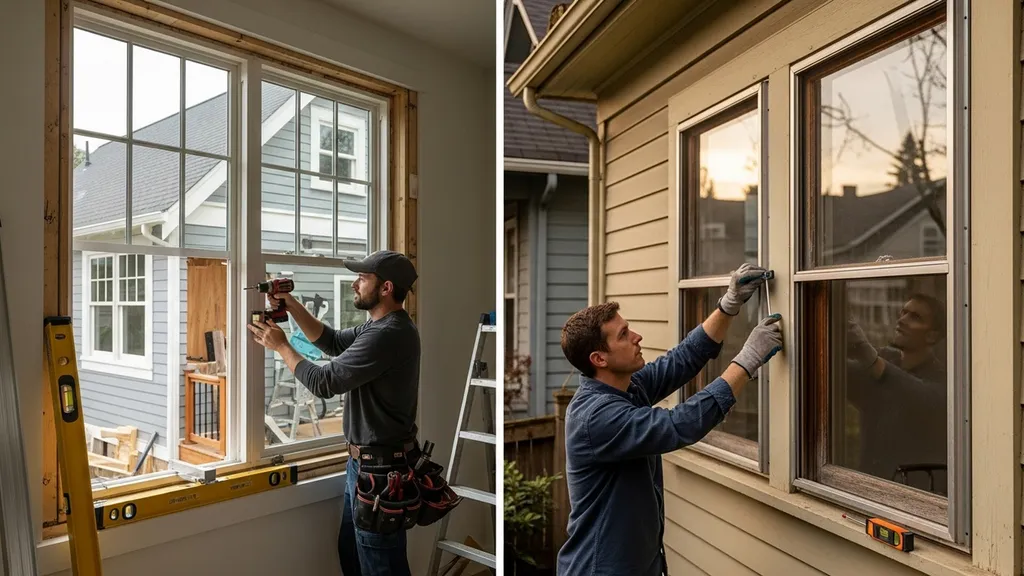
Compare storm windows and full replacement windows — costs, energy savings, payback, and when each option makes sense for DIY eco-builds.
Storm Windows vs Replacement: Cost-Benefit Analysis
Storm windows vs replacement is a common decision for budget-conscious DIY and self-build projects: add an outer layer to existing frames, or remove and install full replacement windows. This article compares costs, energy savings, payback period, installation complexity, and which option fits different climates and building conditions. You’ll get practical numbers, a worked payback example, retrofit and hybrid options, and scenario-based recommendations so you can choose the right path for a sustainable, budget-aware build.
TL;DR:
- Storm windows typically cost $50–$300 material ($100–$400 installed) and can cut effective U-value by about 10–40%, offering paybacks of 3–12+ years depending on climate and fuel price.
- Full replacement ranges widely: $300–$1,200+ material ($400–$1,800+ installed) per window; high-performance units (low-e, gas fill, thermally broken frames) give larger energy savings and longer lifespans, but longer payback.
- Recommendation: For sound historic frames or tight budgets, start with storms plus air sealing; for out-of-square openings, rot, or net-zero goals, prioritize high-performance replacement windows.
Storm Windows vs Replacement: TL;DR + Quick Comparison Table
One-paragraph summary for busy DIYers: Storm windows are a lower-cost retrofit that add glazing and an air layer to reduce convective and radiative losses from existing sashes. Full replacement removes old frames and installs new glazing and frames with modern thermal breaks and coatings. Choose storms when frames are sound and you need fast, low-disruption savings; choose replacement when frames are failing, openings need resizing, or you’re pursuing the highest long-term efficiency.
| Option | Typical material cost per window | Typical installed cost per window | U-factor improvement (typical ranges) | SHGC change | Installation difficulty | Typical lifespan | Best for |
|---|---|---|---|---|---|---|---|
| Storm windows (exterior/interior) | $50–$300 | $100–$400 | 10–40% improvement vs single-pane | Small change, can slightly reduce solar gain | Low–moderate (DIY possible) | 10–30 years | Historic frames, tight budgets, quick retrofit |
| Replacement windows (double/triple glazed) | $300–$1,200+ | $400–$1,800+ | 30–70% improvement vs single-pane; more vs poor frames | Can be tailored (low-e coatings) | High (pro recommended for full-frame) | 20–30+ years | Rot/out-of-square frames, net-zero builds, long-term investments |
Note: Prices and improvements vary by climate, opening size, and product. Check local quotes and material trends before budgeting; see our note on materials cost trends. For local design constraints and finish guidance on storms, see this technical guide to storm windows and doors from a municipal preservation resource.
Storm Windows vs Replacement: What Are Storm Windows and How Much Do They Really Save?
How Storm Windows Work (single/double Pane, Interior vs Exterior)
Storm windows add a second layer of glazing outside or inside the existing sash. The added air gap reduces convective currents and provides an insulating layer; for glass storms the gap also reduces radiative losses. Interior options include acrylic or polycarbonate inserts and magnetic systems. Exterior storms are typically aluminum frames with glass or insulated glazing. The effectiveness depends on gap width, seal quality, and the baseline window (single-pane, thin glass, or older double-hung).
Research and industry guides indicate storm windows can reduce effective U-factor by roughly 10–40% compared to single-pane originals, with the lower end for poor seals and the higher end for well-installed sealed storms. These figures align with field measurements summarized by energy-efficiency sources and practical installation guides such as the Craftsman Blog overview on storms and historic windows (see guide to storm windows).
Typical Materials and Mounting Methods
- Exterior aluminum framed glass storms: common, durable, visible from outside.
- Interior acrylic/polycarbonate inserts: lightweight, lower cost, easy to store seasonally.
- Magnetic or snap-in interior systems: fast install, minimal hardware.
Mounting can be permanent (screws, full frames) or seasonal (clips, magnetic strips). Seal type (compression, gasket) matters: a tight perimeter seal reduces convective bypass.
Strengths
- Low upfront cost and minimal disruption; many DIYers can install storms.
- Preserve historic sash and trim while improving energy use.
- Protect original windows from weather and extend their life.
Weaknesses
- Condensation can increase between panes if humidity isn’t managed; storms can hide but not fix failing sash seals.
- Exterior storms change curb appearance; interior inserts affect sightlines and operation.
- Limited improvement if frames are extremely leaky or if thermal bridging dominates.
Best for — Use Cases and Building Types
- Owners of historic homes who want to keep original sash.
- Properties with solid frames but single-pane glazing.
- DIYers on a tight budget, or as a first-phase retrofit while planning replacements.
For airtightness and sealing around frames, check common air leakage points and address them before or during storm installation to maximize benefit.
Storm Windows vs Replacement: What Full Window Replacement Entails and When It's Justified
Scope of a Full Replacement (frame, Sash, Glazing Options)
Full replacement can be a retrofit insert (sash/frame removed but jamb left) or full-frame replacement (rough opening reworked). Options include double- or triple-glazed units, low-e coatings, argon or krypton gas fills, and thermally broken frames (vinyl, fiberglass, wood-clad, aluminum with thermal break). Full-frame work often includes new flashing, trim, and insulation at the jamb to improve the whole-wall performance.
Cost Components: Product, Labor, Disposal, Flashing and Trim Work
Costs include factory unit price, on-site labor for removal and installation, flashing to meet water management requirements, trim repair, disposal of old materials, and any structural repair. Full-frame installs add time and cost but allow correction of out-of-square openings and frame rot. More complex wall connections (siding removal, re-flashing) increase labor hours.
For step-by-step retrofit details and budgeting, our window replacement energy guide explains planning and common cost drivers. Practical installation steps are outlined in general installation guides such as the This Old House storm and replacement walkthrough (see This Old House installation guide).
Strengths
- Largest and most permanent energy and comfort gains when done properly.
- Opportunity to fix water intrusion, air sealing, and to upgrade jamb insulation.
- Manufacturer warranties and long expected lifespans for quality units.
Weaknesses
- High upfront cost and greater disruption to finishes.
- Risk of poor installation causing thermal or moisture issues if not done correctly.
- Longer payback if the existing windows are in reasonable condition.
Best for — Use Cases and Building Types
- Frames with rot, major warping, or out-of-square openings.
- Self-builders targeting net-zero where whole-window performance and frame thermal properties matter.
- Projects that require egress upgrades or where code-compliance drives replacement.
Storm Windows vs Replacement: Retrofit & Hybrid Options to Get the Best of Both
Interior Glazing Inserts and Magnetic Storm Systems
Interior acrylic inserts (rigid polycarbonate or plexiglass) provide an inexpensive, DIY-friendly option. Magnetic or snap-in systems offer fast seasonal installation. These can improve comfort and reduce drafts at a fraction of replacement cost, though they may not look as refined.
Sash Replacement or Inserting New Sashes Into Existing Frames
Replacing only the sash or installing modern insulating sashes into an existing frame is a hybrid that preserves trim and reduces waste. This works when the frame is structurally sound but the insulator performance needs upgrading.
Temporary or Seasonal Storm Panels (DIY Kits)
Removable exterior or interior storm panels are a low-cost seasonal approach for cold months. They’re often used on vacation properties or where visual impact must be reversible.
Strengths, Weaknesses, and Cost Brackets
- Hybrid options: $50–$400 per opening for inserts or sash retrofits; mid-range in performance between storms and full replacement.
- Strength: lowest environmental impact and useful for phased upgrades.
- Weakness: Some hybrid options leave thermal bridging at the frame; long-term durability varies.
Hybrid choices interact with wall upgrades — if you plan exterior cladding and continuous insulation upgrades, coordinate with exterior insulation methods and rain screen details to maintain proper moisture control. For product selection, compare low-e coating, solar transmittance, air leakage, climate-zone suitability, durability, maintenance, and comfort using the U.S. Department of Energy storm-window purchasing guidance.
Storm Windows vs Replacement: High-performance Replacement Windows — When Upgrading Makes Energy Sense
What "high-performance" Means: U-factor, SHGC, Low-e, Gas Fills, Thermal Breaks
High-performance windows are rated by U-factor (heat transfer), solar heat gain coefficient (SHGC), and visible transmittance. Low-e coatings reduce long-wave radiative losses; argon and krypton reduce conduction between panes; thermal breaks in frames reduce edge heat loss. Look for NFRC labels and ENERGY STAR qualifiers appropriate for your climate zone.
For comparison guidance, see our coverage of replacement window efficiency. Manufacturers provide NFRC test values; Energy Star publishes zone-based maximum allowable U-factors for certified products.
Typical Energy Savings vs Efficient Storm Combinations
Compared to single-pane historic windows, a high-performance double-glazed low-e unit can cut window heat loss by 40–60%. Triple-glazed units add more saving in very cold climates, particularly when frames have low thermal conductance. However, a well-sealed storm plus air sealing can capture a large portion of near-term savings at a lower cost. The tradeoff is long-term durability and appearance.
Strengths
- Best long-term energy performance and comfort, especially in cold climates.
- Reduced condensation risk when combined with good indoor humidity control.
- Often better acoustic performance.
Weaknesses
- High upfront cost; diminishing returns where heating loads are small relative to other envelope losses.
- Frame choice matters: aluminum without thermal break performs poorly even with triple glazing.
Best for — Climates and Building Envelopes
- Cold climates benefit most from low U-factor frames and glazing.
- Net-zero and passive-house projects often require high-performance replacements and airtight installation to meet targets.
For DIYers evaluating high-performance glazing details, general how-to and measurement resources exist, and some storm-window vendors offer data and installation tips (see an installation how-to at AffordableStormWindows for measuring and ordering guidelines: How to guide for storm windows).
Storm Windows vs Replacement: Installation, DIY vs Professional Costs and Risks
DIY Installation Steps and Common Pitfalls for Storm Windows
Typical DIY storm installation steps:
- Measure window opening and select correct storm size.
- Remove paint or rot at attachment points and repair as needed.
- Install perimeter weatherstripping or gaskets.
- Fit and secure storm frame; test operation and seal.
Common pitfalls: poor perimeter seal, incorrect gap size, and using the wrong fasteners for cladding. Working at height and cutting glass require care; use safety equipment and proper glazing handling.
Labor Factors for Full Replacement (prep, Flashing, Finishing)
Full replacement often requires:
- Removing existing unit and preparing the rough opening.
- Installing flashing and a sill pan to manage water.
- Installing the new unit and shimming for square and level.
- Insulating and air-sealing the jamb, reinstalling interior trim.
A professional crew may take several hours per window for retrofit inserts and a full day or more for full-frame installs, depending on complexity.
Permits, Codes, and Historic-preservation Considerations
Some municipalities require permits for full-frame replacement, and historic districts may restrict exterior changes. Check local requirements and consult building officials where necessary. For permit basics, see local guide posts and our note on local code requirements. Historic windows may require specific finishes—see the Rockville technical guide linked earlier for finish suggestions.
When to Hire a Pro
Hire a pro when:
- The rough opening requires structural repair or flashings must be integrated into siding.
- You need airtight, tested installation for high-performance goals.
- Warranty coverage requires certified installation.
For preservation-minded installations and rare hardware, consult historical-window specialists; historical supplier notes and guides can give restoration tips (see a resource at Historic House Parts).
Storm Windows vs Replacement: Energy Savings, Payback, and Climate-based Decision Rules
How to Estimate Simple Payback (formula and Worked Example)
Simple payback = Project cost / Annual energy cost savings. Worked example (cold climate, heating by natural gas):
- Baseline: single-pane double-hung, heat loss through one window = 600 kWh equivalent/year (convert to therms/kWh per local climate; illustrative only).
- Storm retrofit cost: $300 installed.
- Estimated energy savings with storm: 25% → saves 150 kWh/year.
- Energy price: $0.12/kWh → annual savings $18.
- Payback = $300 / $18 ≈ 16.7 years.
By contrast, replacement double-glazed low-e window:
- Installed cost: $900
- Estimated savings vs single-pane: 50% → saves 300 kWh/year → $36/year
- Payback = $900 / $36 ≈ 25 years.
The short answer: storms often pay back faster where baseline windows are single-pane and energy prices are high, but replacement gives bigger comfort and long-term gains. Use the formula above with measured heat loss or NFRC U-factors and local energy prices to get a site-specific number. For baseline performance data, consult DOE, ENERGY STAR, and the Efficient Windows Collaborative for climate-specific numbers.
Climate Examples: Cold (zone 6), Mixed, and Hot Climates
- Cold (Zone 6+): Prioritize U-factor reduction and frame thermal breaks. Replacement with low U-values yields larger percent heating-load reductions; storms help but may be a stopgap if frames are failing. See guidance on designing for cold climates.
- Mixed: Balance U-factor and SHGC; seasonal gains matter. Consider selective low-e coatings.
- Hot: SHGC reduction can be more valuable than ultra-low U-factor. Interior storms that reduce solar gain may help, but shading and glazing coatings are often better investments.
Other Value Factors: Comfort, Condensation, Noise, Maintenance
- Comfort and reduced drafts often produce homeowner satisfaction beyond measured energy savings.
- Replacement with low-e glazing reduces condensation risk when paired with good ventilation and humidity control.
- Storms can improve noise reduction noticeably for window-dominant façades.
Which Data Points to Measure Before Deciding
Measure or document:
- Existing glazing type and U-factor (if known).
- Frame condition and extent of rot or warping.
- Air leakage rates around sash and jamb.
- Local energy prices and dominant heating fuel.
Also consider shell insulation levels — improving wall insulation (see mineral wool options) can change the relative value of window upgrades.
For a visual demonstration, check out this video on this new glass-on-glass technology makes existing windows energy:
Storm Windows vs Replacement: Which Should You Choose? Scenario-based Recommendations
Historic Home Owner Focused on Preservation
Recommendation: Install exterior or interior storm windows that match finish guidance and preserve sash. Use storms where frames are sound and add focused sealing at sash to reduce drafts. Consider professional consultation if in a historic district.
Budget-limited Diyer in a Cold Climate
Recommendation: Prioritize airtightness and insulation first. Add storms to the worst windows (north and east exposures) and seal sash gaps. Replace only the worst-performing, rotted frames first. This phased approach stretches budget while delivering comfort wins.
Self-builder Planning a Net-zero Tiny Home
Recommendation: Invest in high-performance replacement windows with low U-factors, thermally broken frames, and careful airtight installation. Spend the installation labor to achieve continuous insulation and proper flashing; windows are harder to upgrade later without disruption. For net-zero planning, consult our net-zero planning resource.
Off-grid Cabin or Homestead Where Airtightness is Critical
Recommendation: Use high-performance replacements on primary living facades, and storms on secondary windows. Balance spending between windows and heating/solar systems; see tradeoffs in our off-grid heating solutions and solar system troubleshooting guides.
Checklist: Decision Flowchart (diagnose → Prioritize → Choose)
- Diagnose: Inspect frames for rot, measure drafts, note glazing type.
- Prioritize: Fix water intrusion and air leakage first; address worst-performing openings.
- Choose: If frames are sound and budget low → storms; if frames fail or goal is highest long-term performance → replacement.
- Verify: Get NFRC ratings for replacements; document installed performance.
For sustainable material choices when budgeting, see our sustainable materials guide. If you need to free up budget, consider other envelope measures such as installing recycled metal roofing that may reduce total energy needs and change window ROI.
The Bottom Line
Storm windows offer a fast, lower-cost route to measurable energy and comfort gains and are a strong first step for historic homes or limited budgets. Full replacement is justified when frames are failing, code or egress changes are needed, or the project targets net-zero performance. Use measured U-factors, frame condition, and local energy prices to calculate payback before committing.
Frequently Asked Questions
Will storm windows reduce condensation?
Storm windows can reduce condensation on the interior surface of historic single-pane glass by increasing the surface temperature of the interior glazing system. However, if indoor humidity is high or the existing sash has water intrusion or rot, storms alone may not eliminate condensation. A long-term solution combines lower indoor humidity, improved ventilation, and, where appropriate, higher-performing replacement glazing.
Can I install storms myself and keep warranties?
Most storm-window manufacturers allow DIY installation without voiding factory warranties, but full replacement window warranties often require installation per manufacturer instructions; improper installs can void some coverage. Always read the warranty fine print and follow recommended flashing and sealing practices. For airtight installs that meet performance targets, consider hiring a certified installer.
How long until replacement windows pay for themselves?
Payback varies widely with climate, baseline window performance, energy prices, and installation cost. Simple payback estimates using NFRC U-factors and local energy costs often show storm retrofits pay back in the mid-single-digit to mid-teen years, while full replacements can take longer—often 15–30 years—unless energy prices are high or the upgrade addresses major envelope defects. Use the simple payback formula in the article with local numbers for a site-specific estimate.
Are interior acrylic inserts as good as exterior storms?
Interior acrylic inserts are a low-cost, DIY-friendly option that improve comfort and reduce drafts, but they typically offer less insulating performance than sealed exterior glass storm windows. Inserts are ideal where exterior appearance must remain unchanged or when seasonal removal is desirable. Performance depends on seal quality and gap size.
Do storm windows help with noise reduction?
Yes. Adding an exterior or interior layer of glazing increases the overall glazing mass and air gap, which reduces airborne noise transmission. The degree of improvement depends on glass thickness, gap width, and how well the storm is sealed. For significant acoustic improvement, laminated glass or thicker multiple-glazed replacement windows perform best, but storms deliver noticeable, cost-effective noise reduction in many retrofit scenarios.