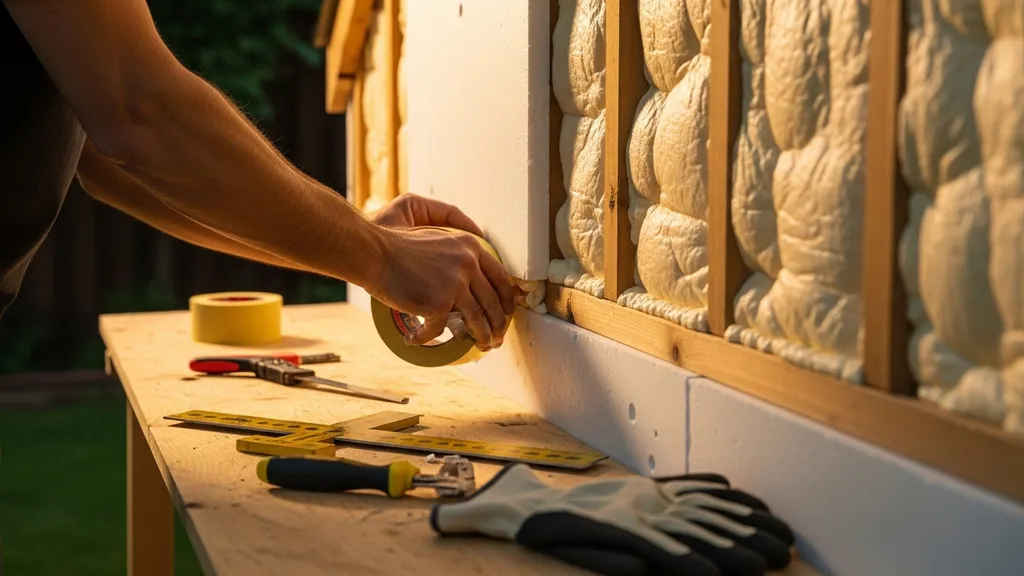
Practical, budget-friendly methods to insulate a shed for year-round comfort — materials, R-values, moisture control, and step-by-step installs.
Shed Insulation Guide: Best Methods for Year-Round Use
A properly planned shed insulation job converts a noisy, temperature-extreme garden box into a comfortable year-round workshop, studio, or storage space. This guide covers shed insulation options, R-values, moisture control, and step-by-step DIY installs so readers can choose practical, budget-minded methods for insulating a shed for year-round use. Expect to learn how heat and moisture move through small buildings, which materials fit framed, metal, or concrete sheds, and the exact sequence—air sealing, drying, then insulating—that keeps condensation and mold at bay.
TL;DR:
- Prioritize air sealing first, then insulation: sealing gaps can cut heat loss by 20–40% on small sheds.
- Aim for sensible R-targets: walls R‑13 to R‑20 in cold zones, R‑7 to R‑13 in warm zones; roof/ceiling gets the highest R-value.
- Best starter method for many DIYers: fill wall cavities with batts or blown insulation, add continuous exterior foam if budget allows, seal penetrations, and ventilate.
Why Proper Shed Insulation Matters for Year-round Use
A shed without insulation often tracks outdoor swings closely: interior temps can be 15–30°F (8–17°C) warmer on hot days and equally colder on winter nights. Insulating a shed reduces those swings, lowers fuel or electricity needed to heat or cool the space, and protects stored items and tools from moisture damage. For example, a small heated workshop that’s air-sealed and insulated to modest R-values typically uses less than half the energy of the same space left uninsulated.
Key terms to know:
- R-value: Resistance to heat flow; higher is better per inch.
- Thermal bridge: A conductive path (metal stud, exposed framing) that bypasses insulation.
- Vapor control: Managing moisture flow by diffusion and air movement.
Federal guidance on effective insulation strategies and R-value targets is available from the Department of Energy, which explains how to match insulation to climate and assembly type (DOE insulation guide). For climate-specific R targets, see the DOE climate-zone mapping for the International Energy Conservation Code (IECC climate zones).
How Insulation Changes a Shed's Function
Insulation turns a shed from storage-only into a usable conditioned space. It stabilizes interior temperatures, reduces condensation risk on cold surfaces, and makes small mechanical systems (a 1,500–4,000 BTU space heater, mini-split) effective and economical. That matters when converting a shed into a workshop or hobby room where tool longevity and comfort matter.
Common Year-round Problems: Cold, Heat, and Condensation
Uninsulated metal roofs and single-skin walls are especially prone to condensation when warm humid air meets a cold metal surface. In winter, warm interior air can hit the cold inner wall and deposit moisture at the dew point, triggering mold. The EPA provides guidance on mold prevention and the role of moisture control in buildings (EPA on mold basics).
How Sheds Lose Heat and Develop Moisture — What to Diagnose First
Sheds lose heat through conduction (walls, roof, floor), convection (air leaks), and radiation (sun-facing surfaces). Diagnosing where heat and moisture go first saves wasted effort.
Thermal Bridges, Gaps, and Common Leak Points
Common leak points and bridging examples:
- Door perimeters and single-pane windows
- Gaps around electrical, plumbing, and HVAC penetrations
- Exposed framing and purlins that connect cold cladding to interior finishes
- Concrete slabs and block walls without a capillary break
A metal shed often transfers heat directly through the cladding; in wood-framed sheds framing members create thermal bridges. Exterior continuous insulation reduces bridging by covering studs and sheathing.
Condensation and Mold Risk in Sheds
Condensation occurs when warm, moist air contacts a surface cooler than the dew point. Small heated sheds accumulate humidity from occupants, plants, or stored wet gear. Use a moisture meter and monitor relative humidity: indoor RH over 60% raises mold risk. For guidance on vapor retarder placement and moisture control strategies, the Whole Building Design Guide offers clear principles (WBDG vapor barrier guidance).
A Simple Diagnostic Checklist
- Check for open seams around windows and doors; seal those first.
- Use a non-contact infrared thermometer (or rental thermal camera) to find cold spots.
- Use a moisture meter on walls and the floor to detect hidden damp.
- Measure indoor RH and compare with outdoor values; if indoor RH stays high, add ventilation or a dehumidifier.
Start with air sealing and drying. Fix bulk water (roof leaks, poor grading) before adding impermeable insulation layers that could trap moisture.
Best Insulation Materials for Sheds — Pros, Cons, and R-values
Choosing insulation depends on shed type, budget, and moisture risk. Below is a compact comparison to guide trade-offs.
| Material | Typical R/inch | Moisture tolerance | DIY ease | Cost / ft² (installed) | Best use |
|---|---|---|---|---|---|
| Fiberglass batts | 2.9–3.7 | Low tolerance if wet | Easy | $0.30–$0.75 | Framed walls and ceilings (fiberglass batts) |
| Mineral wool | 3.0–3.3 | High (resists water) | Moderate | $0.60–$1.00 | Cavity fill, sound control, fire resistance (rigid mineral wool boards) |
| Blown fiberglass | 2.6–2.7 | Moderate | Moderate | $0.75–$1.25 | Attics and retrofits (blown fiberglass options) |
| EPS / XPS / Polyiso boards | 3.6–6.0 | Varies (XPS resists moisture) | Moderate | $0.50–$2.00 | Continuous exterior insulation, foundation walls (XPS foam board) |
| Open-cell spray foam | ~3.6 | Low to moderate | Hard (DIY kits exist) | $0.90–$1.50 | Interior cavity fill, needs vapor control (open-cell spray foam) |
| Closed-cell spray foam | 6.0–7.0 | Excellent (vapor barrier) | Hard | $1.50–$3.00 | High-performance, metal sheds, floors (closed-cell spray foam) |
| Cellulose (recycled) | 3.2–3.8 | Moderate (requires dryness) | Moderate | $0.80–$1.40 | Blown into cavities or attics (natural fiber insulation guide) |
| Sheep's wool | 3.5–3.8 | Good (breathable) | Moderate | $1.50–$3.00 | Sustainable option for framed walls |
Industry groups and manufacturers have detailed material guides; the Insulation Institute provides homeowner-facing summaries of common materials and their performance (insulation materials guide).
Fiberglass, Mineral Wool, and Blown Fiberglass
Fiberglass batts are cheap and widely available. Install carefully: compressing batts reduces R-value. Mineral wool accepts moisture and holds R-value better when damp; it’s a good choice near potential moisture. Blown fiberglass is useful for attic retrofits and irregular cavities.
Rigid Foam Boards: EPS, XPS, Polyiso
Rigid board gives continuous insulation that reduces thermal bridging when installed over sheathing or on the exterior of metal siding. Polyiso has the highest R/inch in moderate climates but loses performance at low temps; XPS resists moisture better than EPS. For metal sheds, exterior continuous foam plus an interior air gap reduces condensation. See product details for XPS foam board.
Spray Foam (open-cell vs Closed-cell)
Closed-cell spray foam provides both high R-value and an air/moisture barrier, which is useful for metal or difficult assemblies. Open-cell is cheaper and vapor-permeable; it can be paired with interior vapor control layers. See the tradeoffs in our open-cell spray foam and closed-cell spray foam resources and the wider comparison with cellulose (spray foam vs cellulose comparison).
Natural and Recycled Options (cellulose, Wool)
Cellulose offers decent R-values from recycled fibers and is good for retrofits. Wool is breathable and forgiving in wet/dry cycles but costs more. For readers focused on low embodied-carbon choices, our natural fiber insulation guide covers sourcing and installation tips.
Quick Comparison Table: Recommended Methods by Shed Setup
| Shed setup | Recommended methods (priority order) | Climate adjustments |
|---|---|---|
| Wood-framed shed | 1) Cavity insulation (batts/mineral wool), 2) Add 1–2" continuous exterior foam, 3) Air-seal doors/windows | Cold: thicker exterior CI, walls R‑13–R‑20. Warm: R‑7–R‑13 is fine. |
| Metal-clad shed | 1) Continuous exterior foam + ventilated air gap, 2) Interior framing with closed-cell spray or batts, 3) Seal penetrations | Cold: use closed-cell foam on interior to prevent condensation. Warm: use vapor-permeable interior finishes, allow drying outward. See detailed metal building guidance (insulating metal buildings). |
| Concrete block or masonry | 1) Interior insulated stud wall with capillary break, 2) Rigid foam on interior, 3) Seal sill/footing | Cold: insulate and air-seal interior, add slab edge insulation. Mixed: consider continuous foam outside if possible. See cabin/garage examples (insulating small cabins). |
General R-value targets by broad climate:
- Cold climates (IECC zones 5–8): Walls R‑13–R‑20; roof R‑30–R‑49.
- Mixed climates (zones 3–4): Walls R‑13–R‑20; roof R‑30–R‑38.
- Warm climates (zones 1–2): Walls R‑7–R‑13; roof R‑19–R‑30.
Trade-offs: continuous exterior foam reduces thermal bridging but raises cost and requires careful flashing at openings. Closed-cell foam reduces condensation but is more expensive and harder to retrofit.
Insulating Walls, Roof, and Floor — Step-by-step DIY Methods
This section describes two practical wall methods, roof options (vented vs unvented), and floor approaches with concrete and suspended floors.
Walls: Cavity Fill vs Exterior Foam Approach
Option A — Framed cavity fill (common, budget):
- Remove interior finish or open access panels.
- Air-seal gaps and penetrations using low-expansion foam and backer rod around larger openings.
- Install fiberglass batts or mineral wool snugly between studs; avoid compressing the insulation (fiberglass batts).
- Install a low-perm or vapor-permeable interior finish depending on climate (see vapor rules below).
- Seal and insulate around windows and doors with flashing and foam sealant.
Option B — Exterior continuous foam (best for thermal bridging mitigation):
- Install 1–2" rigid foam (polyiso, XPS, EPS) over sheathing or directly over metal cladding framing as appropriate.
- Tape seams with manufacturer-approved tape and seal around openings.
- Install furring strips through the foam to create a cladding attachment (screws must be long enough for structural backup).
- Finish the exterior with siding or metal panels using flashing details.
Material takeoff example: For a 120 ft² wall using 1" polyiso panels (4' x 8'), each board covers 32 ft². Boards needed = 120 / 32 = 3.75 → round up to 4 boards.
Common mistakes: compressing batt insulation, failing to tape foam seams, and neglecting drainage/flashings around windows.
Roof/ceiling: Rafter-bay Insulation and Ventilation
Two assemblies:
- Vented attic (cheaper): Install baffles at eaves, fill rafter bays with batts or blown insulation to recommended depth, ensure continuous soffit-to-ridge airflow, and air-seal ceiling plane.
- Unvented conditioned roof (less common for sheds): Apply closed-cell spray foam to underside of roof deck or install continuous exterior foam above sheathing per industry practices. For guidance on exterior foam on roofs, see exterior foam roof installation tips.
When vented, maintain at least 1"–2" clear airflow spaces above insulation. When unvented, use a vapor-closed layer (closed-cell foam or interior vapor retarder) and ensure roof sheathing stays warm enough to avoid condensation.
Watch this step-by-step guide on insulating a shed - thrift diving:
This video shows step-by-step cutting and installing rigid foam, sealing seams, and combining cavity insulation with exterior foam—useful to watch before cutting panels.
Floor: Insulating Over Slab vs Suspended Floors
- Over a concrete slab: Add rigid foam under a floating subfloor (2" XPS or EPS), or insulate slab edges with vertical foam to reduce edge losses. Ensure capillary breaks and a vapor-permeable finish if moisture is present.
- Suspended floor: Insulate between joists with batts or mineral wool and install an air-sealed subfloor above. For unheated crawlspaces, insulate the walls of the crawlspace and vent or condition the space.
When working on existing finished interiors, blown-in insulation can fill cavities without major demolition—see blown fiberglass options for retrofit techniques.
Safety reminders: wear an N95 or better respirator when cutting batts, and follow manufacturer PPE for spray foam. For complex spray-foam installs or structural roof/roofline changes, consult a pro.
Air Sealing, Vapor Control, and Ventilation for Year-round Performance
Sequence: air-seal first, fix bulk water problems, then insulate. Sealing stops most energy loss and prevents moist air from reaching cold surfaces where it condenses.
Where to Air-seal First: Doors, Windows, Facade Penetrations
Start at the biggest gaps:
- Door thresholds and jambs: install threshold seals and continuous weatherstripping.
- Window frames: seal frames to rough openings with low-expansion foam and install proper flashing (window sealing for airtightness).
- Electrical boxes, conduit, and plumbing penetrations: use grommets, foam, or sealants.
For a step-by-step approach, see the air sealing DIY guide.
Vapor Barriers vs Vapor-permeable Assemblies
Rules of thumb:
- Cold climates: keep the warmer interior side relatively impermeable so vapor doesn't travel into cold assemblies and condense on cold sheathing—use low-perm interior layers or closed-cell foam as needed.
- Warm climates: avoid interior vapor barriers that trap moisture; allow assemblies to dry outward. Use vapor-permeable materials.
The Whole Building Design Guide provides practical vapor retarder placement guidance (WBDG vapor barrier guidance).
Avoid double vapor barriers—having impermeable layers on both sides of a wall can trap moisture. If in doubt, prioritize drying to the exterior and use vapor-open finishes.
Adding Ventilation: Passive Vents and Small Mechanical Options
Small heated sheds benefit from controlled ventilation:
- Passive trickle vents or rotary vents can exchange fresh air without huge energy penalties.
- For mechanically controlled ventilation, a small exhaust fan with a timer or humidity sensor is inexpensive and effective.
DOE guidance on air sealing and ventilation explains balancing airtightness with adequate fresh air (air sealing and ventilation guidance).
If plan includes combustion appliances, ensure proper makeup air and follow local codes.
Budget-friendly Tools, Materials, and Safety Tips for Diyers
Stretching a tight budget while avoiding mistakes is about prioritizing actions that deliver the largest gains per dollar.
Cost-saving Material Choices and Salvage Options
- Prioritize air sealing and roof insulation first—these often give the biggest comfort gains per dollar.
- Buy rigid foam off-cuts from local suppliers or salvage yards for patchwork exterior continuous insulation.
- Reclaimed lumber can be used for furring strips when installing exterior foam, but ensure it’s dry and straight.
- Consider blown insulation for attic/loft retrofits as it fills gaps efficiently.
Rough installed cost ranges for common options: batts $0.30–$1.00/ft², rigid foam $0.50–$2.00/ft², spray foam $1.50–$3.00/ft².
Essential Tools and PPE
- Tools: utility knife, t-square, caulk gun, spray foam gun (or cans), tape measure, hammer drill for fasteners, respirator for chemical work, and thermal camera rental for diagnostics.
- PPE: N95 or elastomeric respirator for dust, full-face or goggles, nitrile gloves for adhesives/foam, and long sleeves when cutting mineral wool.
For spray foam safety and product selection, consult guidance on safer alternatives and application practices (safer spray foam options) and OSHA respirator requirements for worker protection (OSHA respiratory protection).
When DIY is and Isn't Appropriate
DIY is appropriate for: installing batts, cutting and fitting rigid foam, basic air sealing, and blown-in attic insulation (with rental equipment). Hire a pro for: large spray-foam jobs, structural modifications, complicated roof assemblies, or when local code requires certified installers. Complex moisture or drainage problems also merit professional assessment.
The Bottom Line
For most DIYers, start by air-sealing the shed, add roof insulation to the highest practicable R-value, insulate the floor or slab edges, and consider continuous exterior foam to reduce thermal bridging if the budget allows. For metal sheds or high-moisture sites, favor closed-cell foam or an exterior foam plus ventilated air gap to control condensation. Use the diagnostic checklist, comparison table, and step-by-step methods above to pick the right approach for your shed and climate.
Frequently Asked Questions
What is the best insulation for a metal shed?
Metal sheds have a high condensation risk because the metal rapidly cools and gives up heat. The recommended method is continuous exterior rigid foam with a ventilated air gap, or interior closed-cell spray foam that provides both insulation and an air/moisture barrier. Both approaches reduce thermal bridging and limit surfaces that reach the dew point. For installation details tailored to metal buildings, see industry guidance on insulating metal buildings.
Do I need a vapor barrier in a shed?
Whether to install a vapor barrier depends on climate and assembly. In cold climates, a low-perm interior layer (or closed-cell foam) helps keep vapor from migrating into cold walls; in warm climates a vapor barrier can trap moisture. The safer route is to air-seal and allow assemblies to dry toward the exterior when possible. The Whole Building Design Guide has practical vapor-retarder placement rules for different situations (WBDG vapor barrier guidance).
What R-value should I aim for in my climate?
Targets vary by climate zone: cold zones (IECC 5–8) typically aim for wall R‑13 to R‑20 and roof R‑30 to R‑49; mixed zones (3–4) often use wall R‑13 to R‑20 and roof R‑30 to R‑38; warm zones (1–2) can be satisfied with wall R‑7 to R‑13 and roof R‑19 to R‑30. Use the DOE climate-zone mapping to confirm your local zone (IECC climate zones).
Is spray foam overkill for a small shed?
Not necessarily. Spray foam can be a good solution when space for insulation is limited or when an integrated air/moisture barrier is required—common in metal sheds and renovations with irregular cavities. However, spray foam costs more and requires strict safety and application control. Budget-conscious DIYers often get the best value by air-sealing, using batts or blown insulation, and adding exterior foam where thermal bridging is a concern. See the trade-offs in spray foam vs cellulose comparison.
How can I insulate an existing finished shed without gutting it?
Common retrofit options include blown-in cellulose or fiberglass into cavities, installing rigid foam on the interior (followed by a new finish), or adding continuous foam to the exterior if cladding can be removed. Blown insulation works well for attic/loft spaces and behind finished walls if you can access cavity tops or drill small holes. For attic and loft-focused retrofits, explore blown fiberglass options for stepwise guidance.