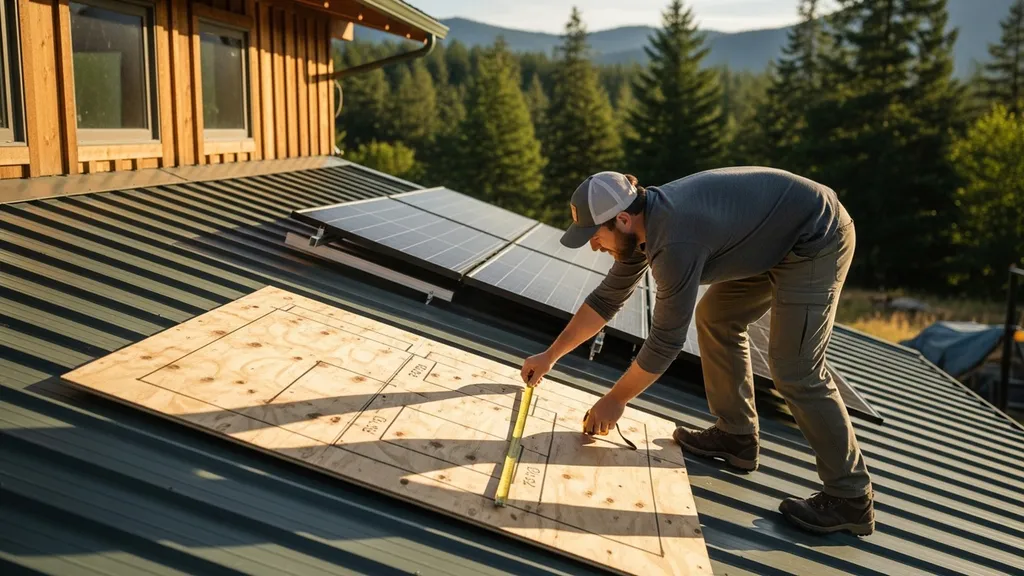
Step-by-step guide to calculate how many solar panels you need for grid-tied or off-grid homes, with examples, a calculator workflow, and sizing tables.
How Many Solar Panels Do I Need? Calculator Guide
Finding out how many solar panels you need starts with one clear question: how much electricity do you actually use each day? This guide explains how to calculate the number of solar panels for grid-tied and off-grid homes, shows worked examples, and walks you through a practical calculator workflow so you can size a system that matches your budget and goals. Read on to learn the core formula, production assumptions, roof and shading limits, battery impacts, and quick rules of thumb you can use today.
TL;DR:
- A simple formula: Required system kW = (daily kWh ÷ peak sun hours) ÷ system efficiency — e.g., a 30 kWh/day house needs ~7.1 kW at 60% system efficiency.
- Typical panel counts: a 5 kW array uses ~16–20 panels (270 W) or ~12–14 panels (400 W); round up for EVs or future loads.
- Use 10–25% derating for real-world losses, check roof area and shading, and test assumptions with the solar sizing calculator.
How Many Solar Panels — Basic Calculation Explained
Convert average daily energy use (kWh/day) into the required DC capacity (kW) with:
Required system kW = (daily kWh ÷ peak sun hours) ÷ system efficiency
Definitions
- Daily kWh: average kWh used per day (12 months of utility bills).
- Peak sun hours: equivalent hours/day of 1,000 W/m² solar irradiance; typical U.S. range 2.5–6.0 (varies by location).
- System efficiency: accounts for losses (inverter, temperature, wiring, soiling). Use 70–85% as a practical range; ~75% is a conservative planning value.
Panel count Number of panels = (Required system kW × 1000) ÷ panel wattage
Typical panel wattages today: ~250–410 W. Common reference values for planning: 270 W and 400 W.
Regional peak sun-hour examples (approximate)
- Seattle, WA: ~2.5–3.5
- Denver, CO: ~4.0–5.5
- Phoenix, AZ: ~5.0–6.0
Losses and derating Real systems produce less than nameplate. Typical losses:
- Inverter efficiency: 2–5%
- Temperature: 5–10% (higher in hot climates)
- Soiling (dust, pollen): 1–5%
- Wiring and mismatch: 1–3%
- Shading & tilt mismatches: 2–8%
Net derate: optimistic ≈10%, conservative ≈20–25%. National lab data and tools like NREL’s PVWatts are commonly used for production modeling; Energy.gov provides homeowner guidance on panel basics and system sizing.
Worked example: 30 kWh/day home
- Daily kWh: 30 kWh
- Peak sun hours: 5.0
- System efficiency: 0.75 (25% total derate)
Required system kW = (30 ÷ 5) ÷ 0.75 = 6 ÷ 0.75 = 8.0 kW With 300 W panels: 8,000 W ÷ 300 W = ~26.7 → round to 27 panels
External source: For general homeowner guidance on solar basics, see the Department of Energy's homeowner guide to solar.
Step-by-step Calculator Guide (use This Workflow)
Follow this workflow when you use a solar panel calculator or do the math by hand.
1) Gather Your Energy Data (bills and Loads)
- Collect 12 months of utility bills and note each month's kWh. Use the annual total ÷ 365 for daily average.
- If off-grid or without bills, estimate loads: fridge (150–800 Wh/day depending on type), well pump (depends on duty cycle), heat pump or space heater (major draws). For precise off-grid sizing, list each device, watts, hours/day, and duty cycle.
2) Choose Production Assumptions and Panel Specs
- Pick panel wattage (e.g., 270 W or 400 W) and orientation/tilt. South-facing at tilt equal to latitude often maximizes year-round output.
- Select peak sun hours using an online map or the calculator's location input (NREL PVWatts is a trusted source).
- Set system efficiency/derating (10–25%). If shading or high temps are expected, use a higher derate.
3) Run the Math or Use a Solar Sizing Tool
- Plug the numbers into the formula from the previous section, then convert kW to panel count.
- For convenience, use the site's interactive solar sizing calculator to test scenarios and see monthly production estimates.
- When running a tool, enter: average daily kWh, location (for peak sun), preferred panel wattage, and derating percent. Round up panel count to allow for future loads.
4) Adjust for Grid-tied vs Off-grid Needs
- Grid-tied with net metering: many homeowners size to match annual kWh rather than worst-month; seasonal mismatch is handled by the grid.
- Off-grid: size to cover worst-case days and battery charging needs; include days of autonomy.
- For systems with batteries, include the battery round-trip efficiency (typically 80–90%) and charge rates in your calculations.
Worked example: 4 kW system
- System size: 4 kW DC
- Panel wattage: 300 W
- Panel count = 4000 ÷ 300 = 13.3 → 14 panels
- If peak sun = 4 hours and system efficiency = 0.8, daily production ≈ 4 kW × 4 h × 0.8 = 12.8 kWh/day
Watch this step-by-step guide on calculating the maximum number of solar panels - including cold weather calculation:
Tip on rounding: Round up panels when you expect future loads (EVs, heat pumps). That avoids retrofits and higher labor costs later.
Typical System Sizes and How Many Panels That Equals (comparison Table)
This table shows common system sizes and the panel counts for 270 W and 400 W modules. Daily kWh is estimated using 4 peak sun hours and a 75% system efficiency; roof area is a rough footprint estimate (panel footprint ~1.9 m² for modern panels, with spacing/tilt accounted).
| System size (kW) | Panels (270 W) | Panels (400 W) | Est. daily kWh (4 PSH, 75% eff) | Est. roof area (m²) |
|---|---|---|---|---|
| 1 kW | 4 | 3 | 3.0 kWh | 7.5 m² |
| 2 kW | 8 | 5 | 6.0 kWh | 15 m² |
| 3 kW | 11 | 8 | 9.0 kWh | 23 m² |
| 5 kW | 19 | 13 | 15.0 kWh | 38 m² |
| 7 kW | 26 | 18 | 21.0 kWh | 53 m² |
| 10 kW | 37 | 25 | 30.0 kWh | 75 m² |
Practical examples:
- Tiny house, low use: 1 kW system might be enough in mild climates; see our 1kW tiny-house guide.
- Small workshop or shed: 2 kW systems are common — reference the 2kW workshop guide.
- Cabin: many cabins use 3–5 kW; see the 5kW cabin guide and the cabin system sizing.
- Tiny-house with larger loads: 7 kW is a popular mid-size option — see the 7kW tiny-house guide.
- Larger homes or EV + house loads: 10 kW systems are used for significant offsets; consult the 10kW tiny-house guide.
For context on module efficiencies and industry facts, the University of Michigan's solar PV energy factsheet summarizes panel efficiencies and trends.
How Roof, Orientation and Shading Affect How Many Panels You Need
Proper site assessment often changes the number of usable panels.
Tilt, Azimuth, and Roof Area Calculations
- Azimuth: In the Northern Hemisphere, true south (180°) produces the highest annual energy. East- or west-facing roofs reduce output; roughly, a 90° shift to east or west can reduce annual output by ~20–30%, depending on hours.
- Tilt: Optimal fixed tilt is often near latitude to balance winter and summer production. Flat or low-slope roofs can use rack-mounted tilt for better yield.
- Roof area math: Modern modules occupy about 1.7–2.2 m² each depending on size and frame. For layout:
Usable panels ≈ usable roof area (m²) ÷ panel footprint (m²)
- Structural: Confirm roof load capacity for panels and racking with a structural engineer if unsure.
Layout tips:
- Use portrait or landscape mounting depending on rafter spacing and roof features.
- Avoid placing panels across multiple roof planes that are shaded at different times.
Shading, Partial Shading Strategies, and Microinverters
Shading can drastically reduce string inverter system output if one panel drags the whole string down. Mitigation:
- Use module-level power electronics (microinverters or power optimizers) to limit shading impact.
- Reconfigure strings to group similarly shaded panels.
- Consider small ground mounts for unobstructed arrays.
For advice on orientation and homeowner-focused guidance, see Enphase's homeowner-focused article on choosing panel counts and layout strategies: a homeowner's guide for choosing the right number of solar panels.
If roof area is tight, ground-mounted or tilt-up racks can increase effective panel count at the cost of fencing/land use.
Grid-tied vs Off-grid: How the Calculator Changes the Panel Count
Sizing differs depending on whether you rely on the grid.
Sizing for Grid-tied with Net Metering
- Many grid-tied systems aim to offset annual kWh usage rather than match worst-month production. With full retail net metering, a smaller array can “sell back” excess in summer against winter shortfalls.
- For partial net meter or time-of-use billing, size to minimize highest-cost energy periods if possible.
Sizing for Battery-backed Systems and Fully Off-grid Setups
- Off-grid systems must cover loads during low-production periods and recharge batteries. That raises required panel capacity.
- Days of autonomy: if you want 3 days of autonomy, size batteries for daily consumption × 3 (then adjust for depth of discharge). Then size PV to recharge batteries within available sun hours, accounting for battery round-trip efficiency (80–90% typical).
- Example: 2 kWh/day cabin with 3-day autonomy:
Battery capacity required = 2 × 3 ÷ 0.8 ≈ 7.5 kWh usable → choose a bank sized for depth of discharge (e.g., 10–12 kWh nominal). PV to recharge after 3 days = 6 kWh needed (3 days × 2 kWh) ÷ (peak sun × efficiency). If 4 PSH and 0.8 efficiency, PV kW ≈ (6 ÷ 4) ÷ 0.8 = 1.875 kW → round up and add margin.
Battery/inverter Sizing's Effect on Panel Count
- Battery charging rate: batteries require a certain current to recharge quickly. If charging needs exceed inverter or charge controller capacity, more panels may be needed or different wiring/topology chosen.
- Inverter continuous and surge ratings determine what loads can run at once. Higher inverter capacity can increase solar input needs if you want to run big loads during low sun.
- System topology: AC-coupled (batteries/inverter on AC side) vs DC-coupled (charge controller on DC side) changes how PV array power is delivered to batteries and how many panels may be needed to meet charging targets; see our ultimate guide to AC and DC coupling in hybrid systems.
- For wiring and connection specifics when sizing for hybrid systems, consult our guides on how to connect panels to a hybrid inverter and step-by-step hybrid system wiring.
For off-grid examples and deeper reading, see the site’s solar off-grid topic and a detailed walkthrough of a 7kW off-grid guide. If your design includes well pumps or refrigerators, consult our sections on off-grid water pumps and off-grid refrigeration options to size appropriately.
External resource: For practical guidance on how many panels typical systems need, SolarReviews offers a homeowner-oriented calculator and article that aligns with grid vs off-grid distinctions: how many solar panels do I need? home solar calculator.
Practical Losses, Real-world Productivity, and Derating Factors to Include
Real production differs from ideal because of climate, system components, and maintenance.
Temperature, Soiling, Mismatch, and Inverter Losses
- Temperature: Panels lose efficiency as cell temperature rises. Typical loss estimates are 5–10% annually in hot climates.
- Soiling: Dust, pollen, bird droppings, and snow reduce production. Regular cleaning mitigates this; plan for 1–5% loss depending on site.
- Mismatch & shading: Manufacturing tolerance and mixed module ages can cause 2–8% loss. Partial shading can cause higher localized loss.
- Inverter efficiency: Modern string inverters and microinverters typically have 95–98% efficiency at rated loads; plan 2–5% for conversion losses.
- Wiring and connections: Voltage drop and poor terminations add 1–3% loss.
Sample derating scenarios:
- Optimistic: 10% total derate (clean site, cool climate, good design).
- Typical: 15% total derate (average conditions).
- Conservative: 25% total derate (shading, high temp, long wiring).
Seasonal Variability and Worst-month Planning
- Some systems produce much more in summer than winter. If grid reliability is a concern or you're off-grid, size to the worst month rather than the annual average.
- Many online tools (including the NREL PVWatts model) use monthly insolation data to show month-by-month production; check those charts when planning.
If production looks short of expectations after installation, consult a troubleshooting guide for common faults and measurement techniques: how to troubleshoot solar power systems.
External reference: Consumer-facing estimates and examples of typical losses are summarized in industry sites such as EnergySage's guide on solar panel performance: how many solar panels do I need for my home?.
Costs, Incentives, and Payback — How Panel Count Affects Economics
Panel count directly affects upfront cost and future savings.
Rough Cost Per Panel and Installed $/W Ranges
- Module price per panel varies by wattage and brand. As of recent market ranges (subject to regional variation), DIY module prices can be lower but expect to pay for balance-of-system (racking, inverter, wiring).
- Installed system prices commonly fall between $2.00–$3.50 per watt for full installs in many U.S. markets; DIY can reduce labor costs but still requires paying for inverters, racking, permits, and inspections.
- Example: a 5 kW system at $2.50/W installed ≈ $12,500 total. A 10% increase in panels raises the bill by that percent.
How Incentives and Net Metering Change Payback
- Federal Investment Tax Credit (ITC) reduces project cost by a percentage of eligible costs (check current program limits and eligibility). State and utility rebates or performance-based incentives also lower payback time.
- Net metering or net billing policies determine value of exported energy; favorable net metering improves payback dramatically.
- Simple payback example: If your system produces 8,000 kWh/year and your retail electricity rate is $0.15/kWh, annual value = $1,200. Divide installed cost (after incentives) by annual value to estimate payback years.
For current incentive information, check DSIRE or state-specific resources; for a larger case study and larger system costs, see our 10kW tiny-house guide.
Trade-offs:
- More panels = higher upfront cost but greater self-sufficiency and potential future-proofing for EV charging.
- Smaller array with grid reliance reduces capital but increases monthly bills.
Key Points: Quick Checklist Before You Size Your Array
Immediate Checklist (5 Items)
- Gather 12 months of utility bills to get an accurate annual kWh.
- Decide grid-tied, hybrid, or fully off-grid and list critical loads.
- Choose a panel wattage target (e.g., 270 W or 400 W) and check roof area.
- Select peak sun hours for your location (use NREL PVWatts or the solar sizing calculator).
- Pick a derating percentage (10–25%) and plan to round up panels for future loads.
Common Beginner Mistakes to Avoid
- Using billed kW demand instead of billed kWh consumption.
- Ignoring the worst-month production for off-grid systems.
- Underestimating battery round-trip losses when sizing PV for charging.
- Assuming ideal orientation or full-sun conditions without assessing shading.
Keep these steps in hand when you test different scenarios in the calculator.
The Bottom Line: Choosing the Right Number of Solar Panels
The straightforward formula—daily kWh divided by peak sun hours, then adjusted for system efficiency—gives a reliable starting point for deciding how many solar panels you need. Use conservative derating (10–25%), check usable roof area and shading, and plan for future loads like EVs or heat pumps. After running numbers, validate your design with the interactive solar sizing calculator and consult local professionals for permits and structural checks.
Frequently Asked Questions
How many solar panels do I need for an average home?
Average U.S. homes typically need between 15 and 25 panels to cover most electricity use, depending on panel wattage and location. That range is consistent with homeowner calculators and industry summaries which show typical systems of 5–8 kW using 270–400 W panels. Exact needs depend on your annual kWh, peak sun hours, and derating assumptions.
External calculators and guides such as the Nexamp homeowner guide provide quick ballpark estimates to compare against your bill data: [How many solar panels do i need](https://www.nexamp.com/blog/how-many-solar-panels-do-i-need)
Does panel wattage change how many panels I need?
Yes. Higher-wattage panels produce more power per panel, so you need fewer modules for the same system kW. For example, a 5 kW array requires about 19 panels at 270 W but only about 13 panels at 400 W. Panel choice affects roof layout, mounting, and sometimes cost per watt, so balance footprint and budget when choosing module size.
How do I size a system to charge batteries or be fully off-grid?
For battery-backed or off-grid systems, size for worst-case usage and desired days of autonomy. Calculate daily load, multiply by days of autonomy, divide by usable battery DoD (depth of discharge) and battery efficiency, then size PV to recharge that battery bank within available sun hours accounting for round-trip loss. Off-grid setups often require substantially more PV and battery capacity than grid-tied systems sized for annual offset.
See our guides on coupling and hybrid wiring for technical details: [/blog/ultimate-guide-to-ac-and-dc-coupling-in-hybrid-systems](/blog/ultimate-guide-to-ac-and-dc-coupling-in-hybrid-systems), [/blog/how-to-connect-solar-panels-to-a-hybrid-inverter](/blog/how-to-connect-solar-panels-to-a-hybrid-inverter).
Should I use microinverters or a string inverter?
Microinverters or power optimizers help when panels face different directions or when shading is present because they perform module-level MPPT (maximum power point tracking). String inverters can be more cost-effective on unshaded, uniformly oriented arrays. Choose microinverters for partial shading, complex roofs, or when you want panel-level monitoring.
How should I plan for future expansion like an EV or heat pump?
Plan by reserving roof/ground space and designing the electrical layout so adding panels is straightforward. When sizing initially, consider adding 10–25% more capacity or leave room in your inverter/charge controller specifications for future additions. Using the solar sizing calculator to model an EV charging profile helps estimate required additional kW and panels.