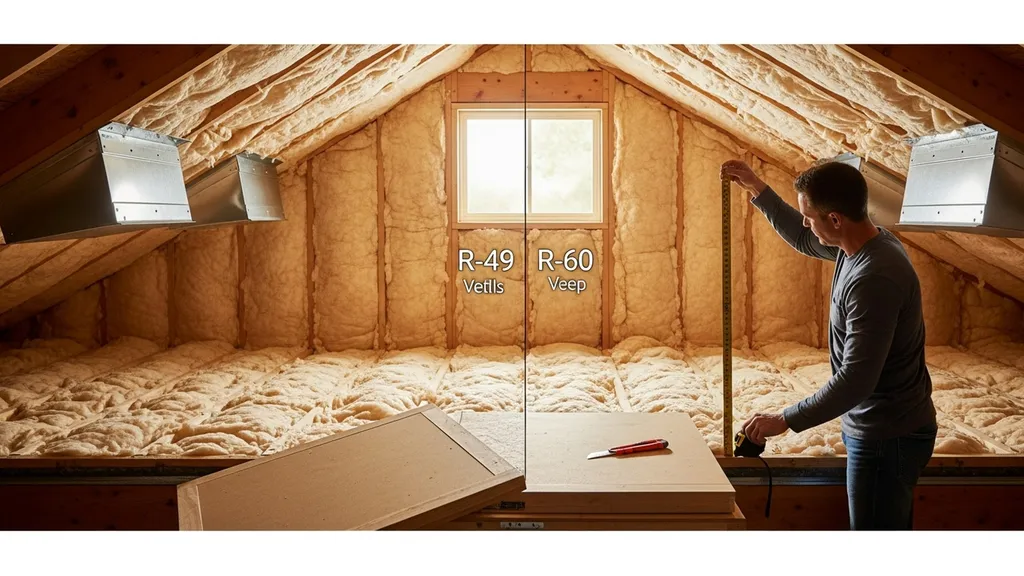
Compare R-49 and R-60 insulation for attics and roofs — pros, cons, thickness, and scenario-based recommendations for DIY builders.
R-49 vs R-60 Insulation: Which Do You Need?
Choosing between R-49 and R-60 insulation for an attic or roof is a common decision for DIY eco homebuilders planning a new self-build or a retrofit. This article compares R-49 and R-60 insulation choices, explains how R-value affects heat flow and payback, and gives scenario-based recommendations so you can pick the right depth and material for your climate, budget, and heating fuel. Read on to learn the practical thickness ranges, installation trade-offs, and retrofit steps that matter most when you’re doing the work yourself.
TL;DR:
- R-49 usually requires ~14–16 in blown cellulose or ~15–16 in fiberglass; R-60 adds ~3–5 in more, typically ~17–20 in depending on material.
- Choose R-60 for cold climates or electric-resistance heating when budget allows; choose R-49 for moderate climates or budget-limited retrofits when paired with tight air sealing.
- For best results, focus on airtightness and correct ventilation or use a hybrid (spray foam air barrier + blown insulation) rather than relying on thicker R alone.
Quick Comparison: R-49 vs R-60 Insulation — TL;DR and Table
Short TL;DR Answer
R-49 and R-60 refer to the thermal resistance of an assembly. R-60 gives noticeably better resistance to heat flow than R-49, but the incremental energy savings shrink as R rises. In cold zones and for homes using electric heat, R-60 is often worth the extra material and labor. In milder climates or tight, well-sealed envelopes, R-49 paired with good air sealing can be a more cost-effective choice.
Comparison Table: R-49 vs R-60 (material, Typical Thickness, Best Uses, Pros/cons)
| Material | Typical inches for R-49 | Typical inches for R-60 | Weight / settling | Installation difficulty | Typical best use |
|---|---|---|---|---|---|
| Fiberglass batts (lofted or unfaced) | ~15–16 in | ~18–20 in | Low weight, minimal settling | Moderate (batts sag if compressed) | New builds with clear joist bays |
| Blown cellulose | ~13–15 in | ~16–18 in | Heavier, some settling (dense-pack reduces settling) | Higher (blower required, better at filling voids) | Retrofit attics, irregular spaces |
| Mineral wool (rock wool) | ~14–16 in | ~18–20 in | Stable, resists settling | Moderate to high (cut and fit) | Fire-resistance and moisture-tolerant builds |
| Hybrid (spray foam + blown) | 1–2 in closed-cell + blown top-up | Same + extra blown | Depends on foam density | High (spray requires pro or rented rig) | Cold climates or passive-house targets |
Energy Star and DOE guidance show recommended attic R-values vary by climate; many cold-zone recommendations fall in the R-49 to R-60 range (Energy Star attic R-value guidance). Keep in mind that numeric R is only part of the result — airtightness, ventilation, and thermal bridging change real-world performance.
What 'r-value' Means for a DIY Homebuilder Choosing Between R-49 and R-60
How R-value Scales with Heat Flow
R-value measures resistance to heat flow per unit area. Higher R reduces heat transfer, but it does not scale linearly in terms of energy savings. Doubling R does not halve heat loss; the heat flow reduction follows the inverse relationship of R totals. For example, raising attic insulation from R-25 to R-50 yields larger savings than raising from R-50 to R-75.
The Department of Energy explains typical recommended attic ranges and how additional layers combine in assembly R totals (Department of Energy insulation guide). Use R totals for assemblies—not just material R/inch—when comparing options.
Why Increasing R Gives Diminishing Returns
Each added inch delivers the same incremental R per inch for a given material, but the relative percentage change shrinks. That means the first layers of insulation save more energy per dollar than later layers. That’s why homeowners often get better value from fixing air leaks, sealing ductwork, and improving ventilation before chasing very high R numbers.
Climate, Heating Fuel, and Payback Considerations
Colder climate zones (IECC zones 6–8) and homes heated with electric resistance or heat pump backup gain the most from extra attic R. In milder climates or gas-heated homes, the payback for moving from R-49 to R-60 is longer. Energy Star’s climate-based recommendations show R60 is targeted for colder regions where heating dominates (Energy Star attic R-value guidance). Always evaluate heating fuel and local climate when making the choice.
R-49 Insulation: Overview, Strengths, Weaknesses, Best For
Overview and Typical Materials Used to Achieve R-49
R-49 is commonly achieved with blown cellulose around 13–15 inches, fiberglass batts at roughly 15–16 inches (depending on product), or layered systems such as a bottom layer of unfaced batt plus a top-up of blown insulation. Mineral wool can also reach R-49 within similar thicknesses.
A 2025 industry guide explains practical installation thicknesses and material choices for R60 targets, which helps when planning R-49 layered options and how much extra depth you’d need to reach R-60 later (see a detailed thickness breakdown at this R60-specific guide) (R60 attic insulation thickness explained).
Strengths
- Lower material and labor compared with R-60.
- Easier to fit in attics with limited headroom or obstructions.
- Blown cellulose at R-49 often costs less than deep fiberglass batts when factoring coverage and air-sealing steps.
- Good option when combined with a strong air barrier and proper venting.
Weaknesses
- Less thermal resistance in very cold climates; may increase heating loads.
- If installed as batts and then compressed or layered poorly, effective R can fall below rated values.
- Cellulose can settle over time if not dense-packed, reducing R unless allowance is made for settling.
Best For: Scenarios and House Types
- Moderate-cold climates where code or budgets target R-49.
- Budget-conscious retrofits where attic depth is limited.
- Homes with planned improvements to air sealing and ventilation.
For a deeper discussion comparing R-19 and R-49 trade-offs, see the R-19 vs R-49 comparison.
Practical DIY tips: measure the clear joist bay depth before buying; add baffles at soffits to preserve vent flow; avoid compressing batts under storage. If topping up an existing layer, check for signs of moisture or mold before adding depth.
R-60 Insulation: Overview, Strengths, Weaknesses, Best For
Overview and How Builders Typically Reach R-60
Builders reach R-60 by adding deeper blown cellulose (roughly 16–18 inches depending on settled depth and target density), layering fiberglass batts to reach 18–20 inches, or combining a thin continuous spray foam air barrier with blown insulation on top. Mineral wool can work too but will need added thickness.
Industry discussion shows R-60 is becoming standard in very cold zones and for assemblies targeting low heating loads (Green Building Advisor thread on R38 vs R49/60). That thread also outlines practical install issues that affect choice.
Before the embedded video below, readers will learn practical visual cues for managing depth and ventilation and see the extra work required to go to R-60 in a real attic.
Watch this step-by-step guide on installing blown-in or loose fill insulation:
Strengths
- Provides better resistance to heat flow where heating demand is high.
- Useful for electric-heated homes, cold rural houses, or projects targeting passive-house-like heating loads.
- When combined with airtight detailing, R-60 can significantly lower seasonal heating demand.
Weaknesses
- Increased material, labor, and sometimes access equipment (blowers) or scaffolding.
- Thicker insulation can interfere with soffit vents and attic features without careful baffle installation.
- More attic hatch insulation and detailing required; attic devices (fans, recessed lights) may need upgrades to IC-rated or relocation.
Best For: Scenarios and House Types
- Cold-climate homes (IECC zones 6–8) with long heating seasons.
- New builds aiming for low heating loads or high-performance targets.
- Houses using high-cost heating sources where deeper R pays back faster.
Related reading: compare R-21 alternatives when considering deep attic R in small assemblies in our R-21 vs R-60 comparison and read about trade-offs from low R to high R in low R to high R trade-offs.
Practical note: installing R-60 is often straightforward with blown cellulose if soffit ventilation and baffles are in place. For fiberglass batts, you’ll need long, uninterrupted runs and careful handling to avoid compression.
Alternatives & Hybrid Approaches: When an R-number Alone Isn't the Answer
- Spray-foam air barrier + blown top-up: A 1–2 inch closed-cell or 2–3 inch open-cell layer at the roof/ceiling plane provides airtightness and reduces air leakage; blown cellulose or fiberglass on top adds bulk R. This reduces the amount of blown material needed and controls condensation risk in cold climates. For comparisons see spray foam vs cellulose pros and cons.
- Sealed conditioned attic (hot roof): Instead of deep insulation at the ceiling plane, bring roof deck insulation into the conditioned envelope with spray foam or rigid continuous insulation. This approach may reduce mechanical duct losses and is useful on tricky roofs.
- Thermal-bridge mitigation: Use continuous exterior insulation on walls or add a thermal break at ceiling connections. A thinner, high-quality air barrier plus moderate R in the attic can outperform a thicker but leaky assembly.
- Larsen truss or deep-assembly methods: For cold-climate projects, assembly strategies like Larsen trusses allow thick cavity insulation and continuous exterior layers without sacrificing interior space; see the Larsen truss cold-climate guide.
Trade-offs: hybrids add complexity and cost, and closed-cell foam raises embodied carbon. For many DIYers, the best route is to fix air leaks and vents first, then top up with blown insulation to hit the desired R.
Cost, Thickness and Installation Differences Between R-49 and R-60
Material and Labor Considerations for DIY vs Hired Installers
- R-60 requires roughly 15–30% more material volume than R-49 depending on material; blown cellulose usually delivers the most material per dollar and fills voids well, but it requires a blower (rental or pro).
- Hiring a professional for dense-pack or deep fills reduces settling risk and can be faster, but adds labor cost.
- DIY installers can often achieve R-49 with hand-laid batts or a single blower rental session; R-60 sometimes requires additional blower time and more careful baffle work.
Typical Thickness Comparisons by Material Type
- Fiberglass batts: R-49 ≈ 15–16 in; R-60 ≈ 18–20 in.
- Blown cellulose: R-49 ≈ 13–15 in (as-installed loose-fill); R-60 ≈ 16–18 in (allow for settling; dense-pack targets slightly less settling).
- Mineral wool: R-49 ≈ 14–16 in; R-60 ≈ 18–20 in.
Thickness varies by product R/inch; check manufacturer R-per-inch when ordering.
Air Sealing, Ventilation, and Attic Detailing That Change the Choice
- Door and hatch seals matter more as insulation depth increases—seal the hatch and add an insulated cover that maintains R continuity (door and hatch sealing tips).
- Baffles at soffits are mandatory when depth exceeds vent plane; without baffles you risk blocking ventilation and trapping moisture.
- For framing and whole-wall savings, see advanced framing considerations — wall R and framing strategy reduce whole-house heating demand and may change attic targets.
Safety and prep: check attic wiring and recessed fixtures before blowing insulation. See guidance on checking attic electrical and systems before insulation work at troubleshoot attic wiring risks.
How to Decide: Which Do You Need? Scenario-based Recommendations
Decision Flow: Climate, Heating Fuel, Budget, and Attic Configuration
- Step 1: Note IECC climate zone and your heating fuel. If in zones 6–8 or using electric resistance heat, favor R-60.
- Step 2: Test or estimate airtightness. If leakage is high, fix air sealing first; you may get better results from reducing leakage than from adding the top inches of insulation.
- Step 3: Measure clear cavity depth, check vents, and confirm hatch and penetrations can be sealed.
- Step 4: Choose material considering DIY skills: cellulose for irregular spaces, batts for simple joist bays, hybrid for cold-climate performance.
Scenarios (4 Distinct Examples with Clear Picks)
- Small passive house under 1,500 sq ft aiming for very low loads: Pick R-60 or hybrid (thin continuous spray foam + blown) to minimize thermal bridging and reach low heating loads — see the small passive house guide.
- Budget retrofit in a moderate climate with existing settled insulation: Top up to R-49 with blown cellulose, fix major air leaks, and avoid R-60 unless you can seal and vent properly — prioritize cost-effective steps over chasing deep R.
- Cold rural home with electric heat: Choose R-60. The higher R reduces operating cost faster when electricity is the primary heating fuel.
- Mild-climate eco-cabin used seasonally: R-49 is usually adequate; focus on airtightness and moisture control rather than extreme depth. If space is tight, use dense-pack cellulose or insulated roof sheathing.
Additional resource for tight-space builds: best insulation for mobile homes.
Checklist DIY Builders Can Use at Measurement Time
- Measure existing insulation depth in multiple bays.
- Inspect soffit vents and confirm room for baffles.
- Locate and note all penetrations (wiring, flues, chimneys).
- Run a simple blower-door test or hire an auditor if leakage seems high.
- Decide on material and blower rental needs.
Retrofit and Long-term Maintenance: Adding R-60 Over Existing Insulation or Upgrading From R-49
Assessment Steps Before Adding Insulation
- Check for moisture stains, mold, or past roof leaks.
- Confirm attic ventilation paths and soffit clearance.
- Identify knob-and-tube wiring, loose wiring, or other safety hazards; consult an electrician if needed — see tips on troubleshooting attic wiring at troubleshoot attic wiring risks.
- Measure settled depth and estimate material required.
Common Retrofit Methods and Pitfalls
- Dense-pack cellulose: Good for filling cavities and minimizing settling; requires pro or experienced operator.
- Topping up with blown loose-fill: Cost-effective, but you must allow for settling and avoid burying vents or flues.
- Over-batting (placing new batts over old batts): Avoid compressing older batts; compression reduces effective R.
- Pitfalls: blocking soffit vents, compressing batt insulation, and failing to seal attic hatches and duct runs.
Monitoring and Maintenance Tips After Upgrade
- Re-check soffit and ridge vents annually for blockages.
- Inspect attic hatch seals and add an insulated cover if missing.
- Watch for new moisture issues after insulating; install vapor control measures if condensation appears. For guidance on moisture-control during retrofits see vapor barrier tips.
Which Should You Choose? Final Recommendations for DIY Eco Homebuilders
Simple Rule-of-thumb Recommendations
- Choose R-60 for cold climates (IECC zones 6–8), electric-resistance heated homes, or projects targeting very low heating loads.
- Choose R-49 for moderate climates, budget-conscious retrofits, or when superior air sealing and ductwork fixes are the priority.
- Use a hybrid strategy (air barrier + blown top-up) when you need both airtightness and bulk R without extreme thickness.
When to Consult a Pro or Energy Auditor
- If you have complex roof geometry, high existing moisture, knob-and-tube wiring, or multi-zone HVAC systems, get a blower-door test and a pro audit.
- Call an electrician if any attic wiring or fixtures appear unsafe before insulating.
Next Steps and Quick Action Plan
- Measure attic depth and document vent paths.
- Fix major air leaks and ensure soffit baffles.
- Decide material and rental needs; get two quotes if hiring installers.
- If the project is large or affects structural elements, consult building authorities and follow the permit checklist.
The Bottom Line
For most budget-conscious DIYers, R-49 delivers good performance when paired with thorough air sealing and ventilation controls. Choose R-60 when you’re in a cold climate, rely on electric heat, or aim for passive-house-like performance. The key is matching R targets with airtightness and proper attic detailing — the R-49 vs R-60 decision is best made with climate, heating fuel, and envelope quality in mind.
Frequently Asked Questions
Will adding more insulation always save money on my energy bills?
Adding insulation reduces heat flow but returns diminish as R increases. Early layers typically give the biggest savings per dollar. Research and DOE guidance show that fixing air leakage and duct losses often produces larger, quicker savings than adding the final inches of insulation. If you heat with expensive electricity, deeper insulation pays back faster.
Can I mix insulation types to reach R-60?
Yes. Common mixes include a thin spray foam or rigid layer for air sealing, topped with blown cellulose or fiberglass to reach the target R. Dense-pack cellulose over a foam air barrier is a common professional approach for cold climates. Mixing is practical and often more effective than only adding bulk, but ensure proper installation to avoid moisture and settling problems. For a comparison of options see spray foam vs cellulose pros and cons.
Do I need to change attic ventilation if I go to R-60?
Yes. Increasing depth can block soffit vents unless you install baffles or vent chutes. Maintain a continuous air channel from soffits to ridge or attic vents. If you convert to a sealed conditioned attic, ventilation strategy changes; follow best-practice guidance and check local code. The retrofit section above explains key checks before adding significant depth.
Is there a moisture or mold risk when adding more insulation?
Risks increase if you add insulation without addressing roof leaks, poor ventilation, or high attic humidity. Always inspect for existing moisture or mold before topping up. Use vapor control strategies where appropriate and ensure mechanical systems (bath or kitchen fans) are vented to the exterior. See vapor barrier tips for retrofit moisture-control guidance.
How thick will insulation be for R-49 vs R-60 in my attic?
Thickness depends on the material: fiberglass batts typically need ~15–16 in for R-49 and ~18–20 in for R-60. Blown cellulose is usually ~13–15 in for R-49 and ~16–18 in for R-60. Mineral wool sits in a similar range to fiberglass. Check manufacturer R-per-inch and account for settling in loose-fill materials when planning depth and ordering.