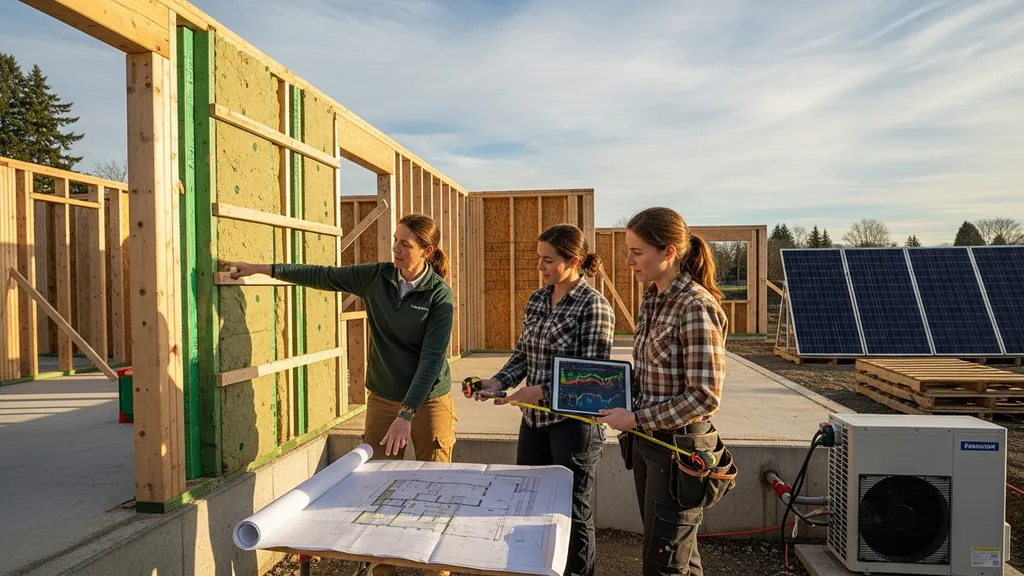
A practical budget planning guide to estimate, reduce, and manage net zero home cost for DIY and self-build projects.
Net Zero Home Cost: Budget Planning Guide
Building a net zero home starts with one question: what will it cost? This guide breaks down net zero home cost into clear categories, offers practical sizing rules for solar and storage, and shows where DIY effort or design choices can cut price without sacrificing performance. Read on to learn how to estimate a realistic net zero home budget, compare low-, mid- and high-performance scenarios, and create a phased plan that fits a self-build or small-crew project.
TL;DR:
- Aim to reduce energy demand first: a 20–40% smaller PV array is typical when upgrading the envelope, saving $2,000–$8,000 in PV hardware on a 4 kW baseline.
- Budget tiers: expect net zero premium of roughly 5–15% over conventional construction; renewables and batteries often take 10–25% of total project cost.
- Prioritize airtightness, continuous exterior insulation, and a right-sized heat pump—then stage PV or batteries to spread capital costs.
How to Estimate Your Net Zero Home Cost
A starting rule: define your target. There are three common targets — site net-zero (annual energy balance at the meter), net-zero-ready (high-performance shell ready for future renewables), and lifecycle net-zero (including embodied carbon). Your chosen target drives cost choices and timing; see our explanation of net-zero vs net-zero-ready for more on trade-offs.
Major Cost Categories to Estimate First
- Shell and envelope: foundation, framing, continuous exterior insulation, high-performance windows.
- Mechanical, electrical, plumbing (MEP): efficient heat pump, ventilation with heat recovery (HRV/ERV), distribution.
- Renewables and storage: PV array, inverter, battery, mounting, wiring.
- Site and foundations: grading, septic/utility runs, foundation type.
- Finishes and interior: cabinetry, flooring, fixtures.
- Permits and soft costs: design fees, engineering, permits, utility interconnection.
Quick Sizing Rules for Energy Systems
- PV sizing: Estimate annual consumption (kWh/year) then divide by average annual peak sun hours for your site (kWh/m²/day × 365 gives annual production per kW). A simple rule: kW needed ≈ annual kWh ÷ (365 × peak sun hours per day × system derate ~0.8). Use online tools or solar cost calculators for finer math.
- Batteries: Size by usable kWh (DoD × nominal capacity). For daily time-shift, 1–2 kWh per 100 sq ft is a rough starting point; for full backup, size to cover critical loads.
- Heat pumps: Right-size after you calculate heat loss for your chosen envelope and airtightness target — oversizing raises cost and reduces efficiency.
Estimating shares rather than exact national prices helps: shell/envelope often represents 30–40% of a net zero project’s marginal premium, MEP 15–25%, renewables/storage 10–25% (depends whether batteries are included), and soft costs 10–20%. Research from agencies and industry guides supports using percentage breakdowns when early-stage budgeting; see the Department of Defense/NRL cost-control best practices for net zero projects for formal methods and case studies (cost control best practices for net zero energy building projects).
Key points to capture before pricing
- Climate zone: Heating-dominated zones favor higher insulation; cooling-dominated zones change glazing and shading priorities.
- House size: Scale matters — small, compact designs reduce both construction and PV costs per square foot.
- Airtightness target: Moving from 5 ACH50 to 1.5 ACH50 changes ventilation system requirements and reduces PV needs.
- Ownership model: DIY labor reduces hard costs but not permit or engineering fees.
Typical Budget Breakdown for a Net Zero Build (comparison Table)
Below is a compact comparison of three representative budget tiers. Percent ranges show the share of incremental budget tied to each line item in a net zero-focused build. Use these ranges to create a first-pass net zero home budget or to compare bids.
| Line item | Low-cost net-zero-lite (percent of budget) | Mid-range net zero (percent of budget) | High-performance net zero (percent of budget) |
|---|---|---|---|
| Envelope (CI, windows, air barrier) | 20–30% — basic CI, double-pane windows | 25–35% — thicker CI, low-e triple-pane | 30–40% — deep insulation, high-end triple-pane |
| HVAC & ventilation | 10–15% — small heat pump, basic HRV | 15–20% — ductless or ducted heat pump, HRV with controls | 18–25% — oversized efficiency, integrated controls |
| Renewables (PV, inverter) | 8–15% — smaller PV array, staged install | 12–18% — full-year PV sized to demand | 15–25% — oversized PV, feed-in, higher-tier panels |
| Battery storage | 0–5% — none or small backup | 5–10% — 5–10 kWh usable | 8–20% — 10–20+ kWh for resilience |
| Site & foundation | 10–20% — slab or simple foundation | 10–20% — moderate site work | 12–25% — complex site or special foundations |
| Finishes | 12–20% | 10–18% | 8–15% |
| Permits, design, contingencies | 10–15% | 12–18% | 12–20% |
Estimated component ballpark costs (2025–2026 context)
- Solar PV hardware: roughly $900–$1,800 per kW installed for DIY-friendly systems; turnkey installer rates often $1,500–$3,000/kW depending on location and incentives. See the 10 kW example in our 10kW sizing guide.
- Battery: $300–$900 per kWh installed usable capacity depending on chemistry and balance-of-system; Tesla Powerwall and LG Chem RESU are common reference products for system sizing discussion.
- Heat pump installation: $5,000–$15,000 depending on system type (mini-split vs. ducted) and complexity; compare options in our heat pump cost comparison.
Soft costs and contingency
- Budget 10–20% contingency for unexpected site or supply issues. Soft costs (design, permitting, utility interconnection) often add 8–15% to the project. Material price volatility can shift totals — see recent analysis on green building materials cost trends.
For a conservative estimate of the premium to expect over a conventional build, industry summaries show a typical net zero premium in the 5–15% range, depending on scope and whether you phase renewables later (see third-party guides summarized here: Net-Zero homes: what they cost and how they work).
Design Choices That Reduce Net Zero Home Cost
Good design reduces the systems you must buy. Even small orientation or form-factor changes alter PV and HVAC sizing.
Form, Orientation and Passive Solar Strategies
- Compact footprint: A compact plan reduces envelope area and heat loss. A 20% reduction in heated area can lower both construction and PV needs.
- South-facing glazing: In heating climates, orient glazing to the south with proper shading to reduce heat loss and cooling load.
- Roof pitch and PV: Plan roof angles and ridgelines to maximize unshaded south-facing roof area and simplify PV installation (fewer mounting details equals lower labor).
Right-sizing and Compact Footprints
- Right-size by calculating expected internal gains and losses. When a house reduces heating demand through insulation and airtightness, heat pump capacity drops — lower upfront cost and better seasonal efficiency. Industry guidance from NIST emphasizes site selection, passive design, and daylighting as low-cost levers to reach net zero performance (Strategies to achieve net-zero energy homes: a framework for future ...).
Material Choices That Cut First-costs and Lifecycle Costs
- Spending a bit more on continuous exterior insulation often reduces blower-door leakage, lowering PV and MEP costs later. Use the net zero features checklist to prioritize passive measures early in design. Examples: Moving to a 2x6 wall with exterior polyiso can reduce annual heating load enough to shrink a PV array by 10–30% compared with a 2x4 wall with no CI; for detailed wall trade-offs, see the wall assembly comparison.
Design trade-offs: spend now or later?
- Spending more on the shell saves operating costs and PV capacity. That said, a net-zero-ready approach can be more affordable if capital is limited: build a high-quality shell first, add PV and batteries when prices fall or incentives are available.
Energy Systems: Sizing, Cost-saving Options, and What to Buy
An energy systems strategy balances cost, resilience, and timing.
Solar PV Sizing and Inverter Choices
- Work from annual kWh: If your design yields 8,000 kWh/year, and your site averages 4.0 peak sun hours/day, rough system size: 8,000 ÷ (365 × 4.0 × 0.8) ≈ 6.8 kW. Factor inverter/array derate (~0.8–0.85).
- Inverters: Choose between string inverters (SMA, Fronius), microinverters (Enphase), or hybrid inverters (SolarEdge, GoodWe) depending on shading and expansion plans. Microinverters cost more but simplify panel-level monitoring and staged additions.
Battery Storage: Usable Capacity and Chemistry Trade-offs
- Chemistry options: Lithium-iron-phosphate (LFP) offers long cycle life and thermal stability; nickel-manganese-cobalt (NMC) has higher energy density but shorter cycle life. For long-lived home systems, many installers now recommend LFP.
- Usable capacity: Batteries list nominal capacity; multiply by usable DoD (e.g., 90% for LFP) to get usable kWh. Consider round-trip efficiency (80–95%) for payback and sizing.
Heat Pumps, Ventilation, and System Integration
- Right-size heat pumps to the improved envelope: A smaller unit will cycle less and operate in the efficient portion of its curve. Use Manual J heat loss calculations or hire a certified contractor.
- Ventilation: Mechanical ventilation with heat recovery (HRV/ERV) is a must for airtight homes. Include controller capabilities for demand-based ventilation to cut electricity use.
- Integration: Plan wiring, conduit, and combiner locations during construction even if PV and batteries are staged later — it’s much cheaper to run conduit now.
Cost-saving tactics
- Staged PV installation: Build conduit and roof penetrations now, add panels later as budget or incentives permit. See our guide on adding solar to an existing home for retrofit tips.
- Grid-tied with battery-ready design: Install a grid-tied inverter now and add batteries later; hybrid inverters simplify this path.
- Time-of-use optimization: If your utility offers TOU rates, battery storage can be sized for arbitrage to reduce bills.
This DIY video shows you the hands-on process:
For shopping, compare panel options in our budget solar panel options and test scenarios with the solar cost calculators.
Low-cost Sustainable Material Choices: Where to Save and Where to Invest
Choosing the right materials reduces upfront cost and long-term expense.
Insulation Options and Their Trade-offs
- Mineral wool: Mid-range cost, good fire performance, biodegradable options, and DIY-friendly batts for cavities. See our deep dive on mineral wool pros and uses.
- Cellulose: Good for retrofits and fills cavities well; lower embodied carbon but needs careful moisture management.
- Spray foam: High R-value per inch, airtight, but higher embodied carbon and cost; consider closed-cell foam where structural support or vapor control is required.
- Continuous exterior insulation (CI): Often the best value for net zero performance by eliminating thermal bridging. For installation techniques see exterior insulation guide.
Windows, Doors and Airtightness Priorities
- Invest in quality windows with low U-value and appropriate SHGC for your climate. High-performance windows reduce heating loads and lower PV requirements more than many upgrades to finishes.
Local, Recycled and Alternative Materials
- Reclaimed timber, recycled-content insulation, and local stone reduce embodied carbon and transport cost. Alternative foundation methods — limecrete, rammed earth, or earthbag — can be lower cost on appropriate sites but require local expertise. The Green Building Advisor roadmap offers guidance on choosing materials that match the climate and budget (A Roadmap for Getting to Net-Zero).
Permits, Incentives, and Soft Costs That Shift Net Zero Home Cost
Soft costs can move totals more than hardware choices.
Finding and Stacking Rebates, Tax Credits and Grants
- Start with federal incentives (for example, the Investment Tax Credit or heat pump tax credits where applicable), then check state and utility programs. The DSIRE database and state energy office sites are primary sources. Local utility rebates can reduce PV cost by several hundred to a few thousand dollars per kW in many territories. Read summaries of incentive impacts and stacking options in industry analyses like the one at Ankersolix for trends on net-zero cost offsets (Understanding net zero homes: features, benefits, and design plans).
Permitting, Inspections and Common Zoning Surprises
- Budget for plan checks, inspections, and potential zoning hearings. Off-grid and tiny-home projects commonly face additional permit complexity; see common zoning issues in our dedicated guides. Permit fees vary widely by jurisdiction — request a fee schedule early in the design phase.
Budgeting for Design and Engineering
- Structural engineering, electrical design for PV interconnection, and HVAC load calculations add predictable costs. For many DIY builders, hiring an engineer for key milestones is cheaper than rework. Factor 5–12% of construction cost for design and engineering in early budgets.
Build Strategies for DIY and Small Crews to Lower Costs
DIY approaches can significantly reduce cash outlay when done safely.
Phased Construction and Owner-supplied Labor
- Phase 1: Build high-performance envelope and basic MEP stub-outs. Phase 2: Add PV and batteries when funds or incentives arrive. Phasing reduces initial capital and allows learning from early operations.
- Owner-supplied labor: Tasks like framing, insulation, sealing, and finishes are good subjects for owner labor savings. Keep a detailed skills and schedule plan to avoid slowing contractors.
Tasks to DIY Safely Versus Tasks to Subcontract
- Good DIY tasks: framing, installing insulation (batts, blown cellulose), interior finishes, painting, basic carpentry.
- Subcontract: utility-tied electrical work (PV interconnection and main service work), structural connections requiring engineering sign-offs, complex HVAC refrigerant work, and final commissioning of systems that need certified technicians.
Tools, Training, and Community Resources
- Invest in essential tools: a blower-door for airtightness testing (rental is fine), an infrared camera for thermal checks, and good safety equipment. Join local self-build co-ops, Habitat for Humanity workshops, or online communities to learn techniques and find labor-trade opportunities. For DIY battery work, follow safety protocols and consult our DIY battery enclosure tutorial.
Safety and inspections
- Always coordinate with your AHJ (authority having jurisdiction) for required inspections. For PV tie-ins, a licensed electrician is usually required to sign off the work.
Monitoring, Maintenance, and Lifecycle Costs to Protect Your Budget
Performance over time determines real net zero success.
How Ongoing Monitoring Preserves Net Zero Performance
- Install metering and panel-level monitoring to compare expected vs actual production and consumption. Early detection of underproduction (soiling, shading, inverter fault) prevents long-term revenue loss. Our guide on tracking energy use covers recommended metrics and platforms.
Typical Maintenance and Replacement Timelines
- Inverter: 10–15 years typical; expect replacement in a 20-year lifecycle.
- Batteries: LFP often 10–15+ years with warranted cycles; expect gradual capacity fade.
- Heat pumps: 10–15 years with regular service; seasonal checks cut failure risk.
- Windows/doors seals: Inspect annually, reseal as needed to keep airtightness.
Simple Metrics to Track ROI and Payback
- Track levelized cost of energy (LCOE) for installed PV and battery (include incentives), and compute payback as installed cost minus incentives divided by annual bill savings. Monitor system availability and degradation rates (1–2% per year for panels; battery degradation varies by chemistry). Businesses and homeowners find that conservative assumptions (3% annual degradation for panels, inverter replacement cost at year 12) give more reliable cash-flow models.
The Bottom Line: Building an Actionable Net Zero Home Budget
A practical budget starts with a clear target and a priority list. Set a net zero home budget by: choose your target (site, ready, or lifecycle), map envelope-first investments, size PV and battery from calculated annual loads, include permits and contingencies, and plan staged investments where needed. Investing in airtightness and continuous exterior insulation yields the best cost-to-performance return for most DIY and self-build projects.
Frequently Asked Questions
What is the average cost to build a net zero home?
There’s no single national number. Industry surveys and guides typically show a net zero premium of roughly 5–15% over comparable conventional construction, depending on location, size, and whether renewables are installed at build time. Smaller homes and compact designs tend to show lower absolute premiums because less envelope area and fewer systems are required. For planning, use percent-share budgeting (envelope, MEP, renewables, site, finishes) and validate with local quotes.
For system-specific costs, expect PV installed in the $900–$3,000 per kW range and battery installed costs from $300–$900 per kWh depending on chemistry and install complexity; local incentives can shift those numbers significantly.
Can I phase a net zero build to spread costs?
Yes. A common approach is to build a high-performance shell and MEP stub-outs first, then add PV and batteries later. Design for future installs by running conduit, planning roof and ground-mount locations, and selecting an inverter that supports battery add-ons. Phasing reduces up-front capital and lets you wait for better battery prices or new incentives.
How much should I budget for solar and batteries?
Budget depends on target capacity. Ballpark: a modest 5–7 kW PV array might cost $6,000–$15,000 installed before incentives; a 10 kW array $9,000–$30,000. Batteries vary: a usable 10 kWh LFP system could run $3,000–$9,000 installed. Use the annual kWh method (annual kWh ÷ peak sun hours) and test scenarios with solar cost calculators to produce accurate quotes for your site.
Is net zero always cheaper over the long term?
Often, but not always. Net zero homes reduce operating cost and exposure to rising utility rates; payback depends on local electricity prices, incentives, and the quality of the envelope. Upfront investments in insulation, airtightness, and efficient systems usually have shorter simple paybacks than optional comforts or high-end finishes.
What permits or incentives should I check first?
Start with local building permit fees and interconnection requirements for PV; talk with the AHJ early. Then check federal tax credits and state/utility rebates — databases such as DSIRE and state energy office sites provide current listings. Early research helps you stack incentives and avoid permit surprises that can delay construction or add cost.