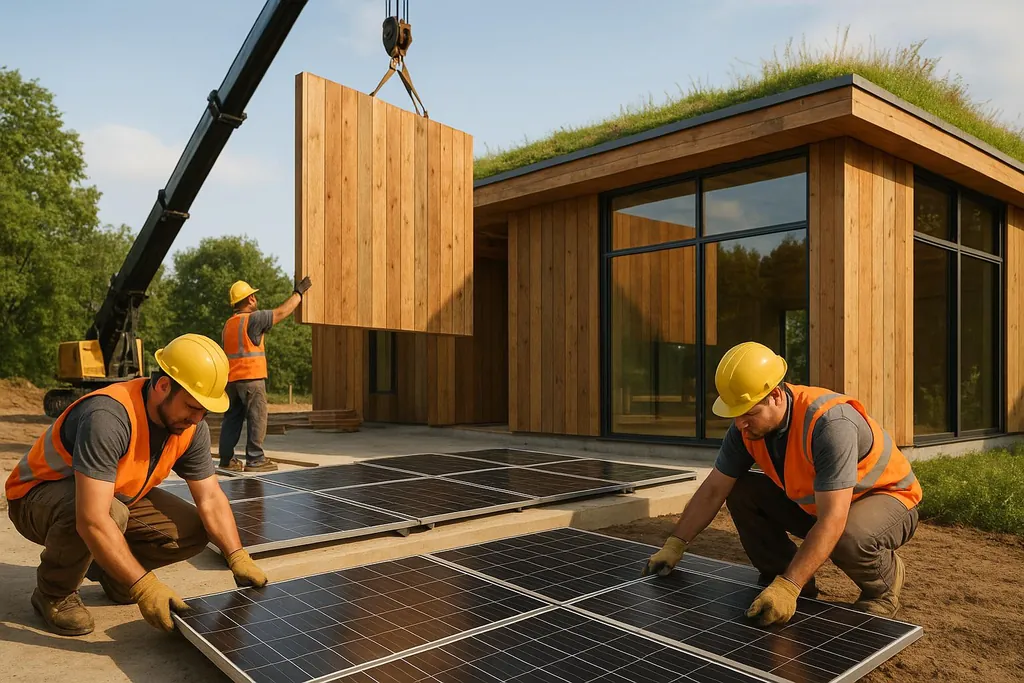
Explore the rising market for green building materials, their long-term savings, and the environmental benefits that make them a smart investment.
Green building materials are growing fast but cost more upfront. Here's what you need to know:
- Market Growth: In 2024, the U.S. green building materials market reached $84.2 billion and is growing at 10.8% annually through 2034.
- Cost Comparison: Green materials cost $150–$250 per square foot, compared to $125–$200 for standard materials. But the price gap is shrinking, with premiums as low as 0–2%.
- Long-Term Savings: Green buildings cut operating costs by 10.5% in the first year and up to 37% over time, while increasing property values by up to 10%.
- Environmental Impact: They reduce CO₂ emissions by 35% and use significantly less energy and water.
- Government Incentives: Tax credits like the 45L ($5,000 per unit) and 179D ($5.65 per square foot) help offset higher initial costs.
Quick Comparison:
| Aspect | Green Materials | Standard Materials |
|---|---|---|
| Initial Cost | Higher ($150–$250/sq ft) | Lower ($125–$200/sq ft) |
| Long-Term Savings | Up to 37% on costs | Higher maintenance costs |
| Energy Efficiency | 25–50% better | Standard efficiency |
| Property Value | Up to 10% higher | Standard appreciation |
| Environmental Impact | 35% fewer emissions | Higher carbon footprint |
Green materials are an investment in long-term savings, energy efficiency, and environmental benefits. While they cost more upfront, incentives and reduced operating expenses often make them worth it.
Green Building Materials: Innovations for Sustainable Construction
Cost Trends and Initial Investment
The cost landscape for construction materials has been changing significantly, particularly with the rise of sustainable options. These shifts are shaping the way we compare green materials to traditional ones, especially when it comes to initial investments and long-term value.
Take steel, for example. While the price of virgin steel has been unpredictable, recycled steel offers a much steadier alternative. Plus, it uses 60–75% less energy during production, which can help offset its higher upfront costs over time [[12]](https://www.gordian.com/resources/steel-price-updates)[[13]](https://www.sciencedirect.com/science/article/pii/S2590123024017729)[[14]](https://www.encardio.com/blog/sustainable-building-materials).
The low-carbon construction material market is also booming, with projections estimating it will hit $587.8 billion by 2034, growing at a compound annual growth rate (CAGR) of 8.0% [[11]](https://www.insightaceanalytic.com/report/low-carbon-construction-material-market/2201). Manufacturers are increasingly turning to local sourcing and ramping up production to help stabilize costs [[15]](https://www.linkedin.com/pulse/outlook-construction-costs-2025-trends-predictions-john-dragone-ts0he).
Government policies and shifting consumer preferences are also influencing pricing. Although sustainable materials often cost more initially, they address major environmental concerns - such as the 50% of global resource extraction and 30% of waste generation tied to traditional construction [[16]](https://www.arizton.com/market-reports/green-building-materials-market).
Energy savings are another major factor. For instance, recycled aluminum uses about 95% less energy compared to producing it from raw bauxite [[13]](https://www.sciencedirect.com/science/article/pii/S2590123024017729). Similarly, recycled glass reduces energy consumption by roughly 30% versus making new glass [[13]](https://www.sciencedirect.com/science/article/pii/S2590123024017729). These efficiencies not only benefit the environment but can also lower operational costs over time.
Technological advances are also playing a big role in cost trends. Innovations like 3D printing and modular construction are making both traditional and green materials more efficient and affordable [[15]](https://www.linkedin.com/pulse/outlook-construction-costs-2025-trends-predictions-john-dragone-ts0he). Emerging materials, such as mycelium-based insulation and bio-bricks, could further influence pricing in the future [[14]](https://www.encardio.com/blog/sustainable-building-materials).
Regional factors add another layer of complexity. In North America, for instance, green building materials are expected to generate $756 billion in revenue by 2037, driven by increased construction activity and rising energy demands [[9]](https://www.researchnester.com/reports/green-building-materials-market/6372). Costs are also shaped by factors like local material availability, processing capabilities, and transportation expenses.
To put these cost differences into perspective, consider this: a 10,000-square-foot office building would cost approximately $1.5 million to construct using traditional materials, compared to $1.8 million with sustainable ones [[7]](https://sigmaearth.com/traditional-vs-sustainable-building-materials-cost-and-performance). However, the gap between these initial costs is narrowing. According to the World Green Building Council, the premium for green building materials has dropped to just 0–2% above traditional construction costs, a significant improvement from earlier years [[10]](https://www.greendesignconsulting.com/single-post/sustainable-development-demystifying-the-costs-of-green-construction).
Manufacturers are helping to close this gap by focusing on local production and diversifying their sourcing strategies, which helps stabilize pricing.
While green materials still tend to cost more upfront, their long-term savings on energy and maintenance, combined with increasing regulatory support, make them an increasingly appealing choice for sustainable construction projects. Over a building's lifecycle, these benefits often outweigh the initial investment.
Long-Term Financial Impact and Benefits
Now that we've covered the upfront costs, let's dive into the long-term financial perks of sustainable construction. While green building materials may cost more initially, they pay off in the long run through lower operating expenses, increased property values, and enticing government incentives.
Energy and Operational Savings
Green buildings start saving money almost immediately. On average, they cut operating costs by 10.5% in the first year and by 16.9% over five years[[2]](https://resimpli.com/blog/green-building-statistics). LEED-certified buildings are especially efficient, using 25% less energy, 11% less water, and producing 34% fewer CO₂ emissions. Plus, they cost nearly 20% less to maintain than traditional buildings[[2]](https://resimpli.com/blog/green-building-statistics).
Take The Bullitt Center in Seattle as an example. Its energy and water-saving features are expected to cover the extra upfront costs within a decade. Similarly, the PNC Tower in Pittsburgh uses natural ventilation and a double-skin façade, helping reduce energy costs by about 30%[[17]](https://constructestimates.com/sustainable-construction-costs-roi).
Property Value Appreciation
Sustainable buildings tend to be more valuable and command higher rents. Homes with green certifications sell for about 9% more, with high energy ratings adding nearly 3% - equivalent to around $35,000 more - compared to homes without such ratings[[20]](https://www.drawplan.co.uk/how-green-building-can-boost-your-property-values)[[19]](https://www.hibbshomesusa.com/green-home-building/do-green-homes-have-a-higher-resale-value). In rental markets, LEED-certified spaces in Los Angeles average $2.91 per square foot, compared to $2.16 for non-certified properties[[2]](https://resimpli.com/blog/green-building-statistics).
Over time, green homes appreciate faster. Research shows that green-certified homes appreciated 17% more over five years, while homes with Energy Star appliances saw a 9% higher appreciation rate[[18]](https://www.navigatehousing.com/green-building-how-it-increases-home-value-over-time). These gains are further amplified by government incentives, making green construction an even smarter investment.
Government Incentives and Tax Benefits
Federal and state programs help offset the higher initial costs of green construction. For instance, the Energy Efficient Home Improvement Credit provides up to $3,200 annually for qualifying upgrades, including $1,200 for energy-efficient property costs and specific limits for items like exterior doors, windows, and home energy audits[[22]](https://www.irs.gov/credits-deductions/energy-efficient-home-improvement-credit). Homeowners can also claim $2,000 per year for systems like heat pumps, biomass stoves, or water heaters[[22]](https://www.irs.gov/credits-deductions/energy-efficient-home-improvement-credit).
For developers, the 45L Tax Credit offers up to $5,000 per energy-efficient unit, while the 179D Tax Deduction provides up to $5.65 per square foot for energy-efficient commercial projects[[21]](https://www.kbkg.com/179d/green-building-tax-incentives-and-how-the-inflation-reduction-act-expanded-them)[[24]](https://www.kbkg.com/green-building-tax-incentives). In 2023 alone, over 2.3 million households took advantage of the 25C efficiency credit, and nearly 350,000 new homes qualified for the ENERGY STAR builder credit under the 45L program[[23]](https://www.usgbc.org/articles/us-green-building-council-urges-congress-reject-proposed-repeal-buildings-related-tax). These programs make green building more accessible and financially appealing.
Financial Summary
The long-term financial benefits of sustainable construction are clear. Green buildings can slash operational costs by up to 37%[[17]](https://constructestimates.com/sustainable-construction-costs-roi) and increase property values by an average of 20%[[20]](https://www.drawplan.co.uk/how-green-building-can-boost-your-property-values). Many owners report that green renovations and construction boost asset values by more than 9%[[2]](https://resimpli.com/blog/green-building-statistics). For homeowners and DIY builders, using sustainable materials from the start can lead to significant savings, often recouping the higher initial investment within the first decade.
1. Green Building Materials
Cost Trends
The market for green building materials is on a steady rise, with demand and pricing trends shifting significantly as we move into 2025. In 2023, the global market was valued at $423.10 billion, and projections suggest it will soar to $1,352.12 billion by 2033, reflecting an impressive 12.32% annual growth rate [[2]](https://resimpli.com/blog/green-building-statistics). This growth is largely fueled by advancements in technology, which are helping to reduce production costs. Additionally, an oversupply of these materials is expected to bring prices down further, making eco-friendly options more competitive with traditional building materials [[8]](https://www.globenewswire.com/news-release/2025/01/16/3010889/28124/en/Green-Building-Materials-Industry-Report-2025-2030-Competitive-Analysis-of-Amvic-PPG-Industries-Alumasc-BASF-Binderholz-GreenPatch-and-Owens-Corning.html).
> "Oversupply of green building materials is expected to lower product price which is expected drive the market growth over the forecast period." - Research and Markets [[8]](https://www.globenewswire.com/news-release/2025/01/16/3010889/28124/en/Green-Building-Materials-Industry-Report-2025-2030-Competitive-Analysis-of-Amvic-PPG-Industries-Alumasc-BASF-Binderholz-GreenPatch-and-Owens-Corning.html)
This surge in demand is driven by a mix of government regulations, consumer preferences for healthier living spaces, and a growing recognition of the long-term financial benefits of sustainable construction. Understanding these trends is key to navigating the higher upfront costs often associated with green materials.
Initial Investment
It's no secret that green materials often come with higher upfront costs, but these expenses are increasingly justifiable thanks to their long-term benefits. Studies show that building with green materials typically costs 1% to 12% more than comparable non-green projects [[2]](https://resimpli.com/blog/green-building-statistics). However, this gap is narrowing as the industry matures. For instance, 38% of builders report that green construction costs 11–20% more, while 45% of dedicated green builders say the added expense is 10% or less [[2]](https://resimpli.com/blog/green-building-statistics).
For [DIY eco home builders](/), materials like recycled steel, bamboo, reclaimed wood, and energy-efficient insulation may carry a higher price tag initially. However, these materials often outperform conventional options in terms of durability and energy efficiency. The key is to identify materials that offer the best return on investment for your project's specific needs.
Long-Term Financial Impact
The long-term financial benefits of green materials are hard to ignore, especially when considering their impact on property value and operational costs. For example, homes built to LEED standards between 2008 and 2016 experienced an 8% increase in value [[6]](https://www.usgbc.org/press/benefits-of-green-building). Additionally, green buildings can sell for up to 10% more than their traditional counterparts [[26]](https://coastalcustomproducts.com/the-economics-of-sustainability-how-investing-in-green-building-materials-benefits-builders-and-buyers). Since 2012, the percentage of property owners reporting a 10% or greater increase in asset value has nearly doubled [[6]](https://www.usgbc.org/press/benefits-of-green-building).
The rental market also favors green buildings. LEED-certified spaces command higher rents, with tenants paying an average of $2.91 per square foot, compared to $2.16 per square foot for traditional buildings [[6]](https://www.usgbc.org/press/benefits-of-green-building). These financial incentives make green materials a smart investment for both homeowners and developers.
Benefits
The advantages of green building materials extend beyond financial gains. They also contribute to healthier living environments and increased durability. For example, these materials can improve indoor air quality, regulate temperature more effectively, and reduce exposure to harmful chemicals. Over time, these factors can enhance occupant well-being and even help lower healthcare costs.
Durability is another major selling point. Some green materials, like rammed earth, can last for centuries. While rammed earth construction can cost as much as $750 per square meter, compared to brick at $20 or less per square meter, its longevity and performance make it a worthwhile investment for many [[5]](https://www.unsustainablemagazine.com/4-sustainable-construction-materials). For DIY eco home builders, the benefits include energy savings, higher property values, reduced maintenance, and better overall health outcomes. To help you make informed choices, DIY Eco Homes provides detailed guides and cost breakdowns tailored to sustainable, high-performance materials that align with your project goals.
2. Standard Building Materials
Standard building materials, unlike their green counterparts, are facing rising costs in 2025. According to JLL's 2025 Construction Outlook, construction costs are expected to increase by 5% to 7% this year [[27]](https://www.mastt.com/research/construction-cost-trends). Price instability continues to be a major issue. For example, steel rebar prices surged from $425 per ton in mid-2020 to $950 per ton in March 2022, before settling at $709 per ton by the end of 2024. Similarly, lumber prices, which peaked at over $1,500 per thousand board feet during 2021–2022, now sit at $576.07 per thousand board feet as of January 29, 2025 [[27]](https://www.mastt.com/research/construction-cost-trends). Electrical components have also seen sharp price hikes, with some items increasing by 20% to 100% in 2022. The Producer Price Index for electrical equipment and appliance manufacturing has doubled since December 2003, reaching 202.03 as of January 2025 [[27]](https://www.mastt.com/research/construction-cost-trends). Regional differences and labor shortages add to these challenges, with U.S. material prices rising 0.6% year-over-year and construction loan rates averaging 7.5% [[27]](https://www.mastt.com/research/construction-cost-trends). These fluctuations are critical when comparing the upfront costs of standard materials to green alternatives.
Initial Investment
Traditional building materials typically cost less upfront compared to sustainable options. Standard materials range from $125 to $200 per square foot, while sustainable materials fall between $150 and $250 per square foot [[7]](https://sigmaearth.com/traditional-vs-sustainable-building-materials-cost-and-performance). For a 2,000-square-foot home, this translates to a savings of $50,000 to $100,000 when opting for traditional materials. However, these initial savings may be offset by higher utility bills and maintenance expenses over time [[27]](https://www.mastt.com/research/construction-cost-trends).
Long-Term Financial Impact
While standard building materials may be cheaper upfront, their long-term costs can add up significantly. Wood, for instance, is prone to warping, splitting, rotting, and pest infestations, leading to frequent and costly repairs [[28]](https://www.vikingmfg.net/blog/the-long-term-maintenance-savings-of-steel-structures-vs-wood-and-concrete). Concrete, another common material, can crack due to temperature swings and moisture, requiring proper sealing and reinforcement to prevent structural issues [[28]](https://www.vikingmfg.net/blog/the-long-term-maintenance-savings-of-steel-structures-vs-wood-and-concrete).
Here's a breakdown of typical maintenance costs over 30 years:
| Material | Initial Cost | Annual Maintenance | 30-Year Total |
|---|---|---|---|
| Wood | Low | High ($2,000–$4,000) | $60,000–$120,000 |
| Concrete | High | Moderate ($1,000–$2,000) | $30,000–$60,000 |
These numbers underscore the hidden costs that come with using traditional materials over the lifespan of a home.
Data from Angi's 2023 "State of Home Spending" report shows that homeowners, on average, spend $2,458 annually on maintenance projects, with an additional $1,667 for emergency repairs [[29]](https://www.weabenefits.com/putting-off-home-maintenance-may-cost-you-more-than-you-think). A 2024 Hanover study revealed that many homeowners neglect routine upkeep - only 38% inspected their roofs, 39% checked water heaters, and 40% cleaned gutters in the past year [[29]](https://www.weabenefits.com/putting-off-home-maintenance-may-cost-you-more-than-you-think). This lack of maintenance can lead to larger problems, such as wasting nearly 10,000 gallons of water annually due to leaks and reducing a home's resale value due to visible wear and tear [[29]](https://www.weabenefits.com/putting-off-home-maintenance-may-cost-you-more-than-you-think).
Benefits
Despite the long-term costs, standard materials offer clear advantages in terms of affordability and reliability. Their lower upfront costs make homeownership more attainable for a wider range of people. Additionally, their availability through established supply chains can lead to faster construction timelines and potential savings on labor. Decades of data on their performance also give builders confidence in predicting maintenance needs and material behavior. For DIY builders or those working with limited budgets, traditional materials can be a practical choice - as long as the ongoing maintenance and energy expenses are factored into the decision.
Pros and Cons
Choosing between green building materials and standard options involves weighing their respective advantages and disadvantages to match your budget and long-term goals. Each choice impacts costs, timelines, and how satisfied you'll be with your project in the years ahead.
| Aspect | Green Building Materials | Standard Building Materials |
|---|---|---|
| Initial Cost | Higher upfront investment | Lower initial expense |
| Long-Term Savings | 16.9% reduction in operating costs over 5 years [[2]](https://resimpli.com/blog/green-building-statistics) | Higher ongoing utility and maintenance costs |
| Maintenance Costs | Nearly 20% lower than typical buildings [[2]](https://resimpli.com/blog/green-building-statistics) | Generally higher maintenance expenses |
| Energy Efficiency | 25–50% improvement in efficiency [[17]](https://constructestimates.com/sustainable-construction-costs-roi)[[30]](https://www.researchgate.net/publication/384639708_Green_Buildings_vs_Conventional_Buildings_A_Comparative_Analysis_of_Cost-Effectiveness_Power_Consumption_Construction_Materials_Environmental_Hazards_and_Livelihood_Impact_in_Bangladesh) | Standard efficiency with higher utility bills |
| Property Value | Up to a 10% increase in asset value [[17]](https://constructestimates.com/sustainable-construction-costs-roi) | Standard market value appreciation |
| Availability | Limited supply chains and longer lead times [[4]](https://www.businessresearchinsights.com/market-reports/green-building-materials-market-118592) | Readily available supply chains |
| Environmental Impact | Up to a 35% reduction in CO₂ emissions [[2]](https://resimpli.com/blog/green-building-statistics) | Higher carbon footprint throughout lifecycle |
| Market Growth | Rapid growth: $301.6B to $907.1B by 2034 [[3]](https://www.globenewswire.com/news-release/2025/05/01/3072635/0/en/Sustainable-Construction-Materials-Market-Report-2025-2034-Bamboo-Emerges-as-214-3-Billion-Star-in-Sustainable-Construction-as-Builders-Seek-Fast-Growing-Low-Carbon-Alternatives.html) | Mature market with price fluctuations |
These comparisons highlight how each material type influences both initial expenses and long-term performance.
Green materials stand out for their long-term benefits, offering up to 50% higher energy efficiency and nearly 20% lower maintenance costs. They also align with environmental goals, reducing carbon emissions by as much as 35% over their lifecycle [[2]](https://resimpli.com/blog/green-building-statistics)[[17]](https://constructestimates.com/sustainable-construction-costs-roi)[[30]](https://www.researchgate.net/publication/384639708_Green_Buildings_vs_Conventional_Buildings_A_Comparative_Analysis_of_Cost-Effectiveness_Power_Consumption_Construction_Materials_Environmental_Hazards_and_Livelihood_Impact_in_Bangladesh). However, the higher upfront costs and limited availability can be challenging, even as the sustainable building market is expected to grow significantly, with an 11.90% annual growth rate forecasted through 2034 [[3]](https://www.globenewswire.com/news-release/2025/05/01/3072635/0/en/Sustainable-Construction-Materials-Market-Report-2025-2034-Bamboo-Emerges-as-214-3-Billion-Star-in-Sustainable-Construction-as-Builders-Seek-Fast-Growing-Low-Carbon-Alternatives.html).
On the other hand, standard building materials are easier to source and often more affordable initially. Their established supply chains allow for quicker project timelines and predictable performance. That said, they tend to involve higher energy consumption and maintenance costs over time, which can offset the initial savings.
For DIY builders following DIY Eco Homes' guides, the choice boils down to your immediate budget versus long-term value. Green materials are ideal for projects that focus on energy efficiency and passive house principles, while standard materials may be a better fit for those prioritizing affordability and speed.
Conclusion
Green building materials, though initially 20–25% more expensive, offer undeniable long-term value. The upfront costs - ranging from $150 to $250 per square foot compared to $125 to $200 for traditional materials - may seem steep, but the long-term savings and benefits make them a smart investment over time [[7]](https://sigmaearth.com/traditional-vs-sustainable-building-materials-cost-and-performance).
These materials can slash energy consumption by 25% to 50%, cut maintenance expenses by nearly 20%, and even increase property values by up to 10% [[6]](https://www.usgbc.org/press/benefits-of-green-building)[[7]](https://sigmaearth.com/traditional-vs-sustainable-building-materials-cost-and-performance). With the green building materials market expected to hit $1,222 billion by 2035, growing at 11.2% annually, adopting sustainable practices now puts both builders and homeowners ahead of the curve [[1]](https://www.futuremarketinsights.com/reports/green-building-materials-market).
> "Today, green buildings can be delivered at a price comparable to conventional buildings and investments can be recouped through operational cost savings and, with the right design features, create a more productive workplace." - World Green Building Council [[25]](https://worldgbc.org/article/the-business-case-for-green-building-a-review-of-the-costs-and-benefits-for-developers-investors-and-occupants)
For DIY builders and homeowners, the choice often comes down to balancing upfront costs with long-term savings. Fortunately, government incentives and evolving regulations are helping to narrow the cost gap, especially as 80% of industry professionals still cite initial expenses as a major barrier [[1]](https://www.futuremarketinsights.com/reports/green-building-materials-market).
Beyond cost savings, green materials significantly lower energy usage and carbon emissions - up to 50% in buildings, which currently account for 40% of global energy-related CO₂ emissions and 70% of electricity use in the U.S. [[6]](https://www.usgbc.org/press/benefits-of-green-building)[[7]](https://sigmaearth.com/traditional-vs-sustainable-building-materials-cost-and-performance)[[31]](https://homewrights.com/green-home-design).
DIY Eco Homes provides step-by-step guides, detailed cost breakdowns, and practical advice for creating energy-efficient homes. Whether you're planning a new construction or retrofitting an existing property, the blend of financial incentives, environmental gains, and market momentum makes 2025 an ideal time to embrace green building materials.
Shifting to sustainable construction isn't just an environmentally conscious choice - it's a forward-thinking investment that lowers costs, improves quality of life, and supports a healthier planet.
FAQs
What is causing the cost difference between green and traditional building materials to shrink?
The price gap between eco-friendly and conventional building materials is shrinking, and several factors are driving this shift. Advances in technology and manufacturing have made materials like recycled steel and low-carbon concrete just as durable and dependable as their traditional counterparts, all while bringing down production costs.
On top of that, the growing demand for sustainable materials is creating economies of scale. As more builders and developers turn to green options, higher production volumes are helping to push prices down. Government incentives and stricter environmental regulations are also playing a role, encouraging the use of sustainable materials by offering financial benefits and promoting long-term savings on energy and operational costs. These combined forces are making green building materials not only more affordable but also a practical choice for many projects.
How can government incentives and tax credits help reduce the upfront costs of eco-friendly building materials?
Government incentives and tax credits can play a big role in making eco-friendly building materials more budget-friendly. For example, the Inflation Reduction Act (IRA) brings valuable perks like the 179D Tax Deduction, which allows up to $5.65 per square foot for energy-efficient commercial properties. Similarly, the 45L Tax Credit offers up to $5,000 per unit for energy-efficient residential properties.
On top of that, federal tax credits can cover as much as 30% of the costs for energy-efficient upgrades, helping to ease the financial load of sustainable construction. These programs don't just cut down initial costs - they also lead to long-term savings through lower energy bills and reduced operational expenses, making eco-friendly building materials a smart choice for both homeowners and developers.
What are the long-term financial advantages of using green building materials over traditional ones?
Choosing green building materials isn't just about being environmentally conscious - it can also lead to big financial advantages over time. While the initial investment might be higher, the long-term payoff often makes it well worth the cost. For instance, homes constructed with eco-friendly materials tend to use 30–50% less energy, which means noticeably lower utility bills and operating expenses.
On top of that, homes with sustainable features often see a boost in property value, with some owners reporting increases of 10% or more. Maintenance costs can also drop significantly - by as much as 20% - when compared to traditional building methods. When you add up the savings on energy, the potential for higher resale value, and reduced upkeep costs, it's clear that green building materials aren't just good for the planet - they're a smart financial choice, too.