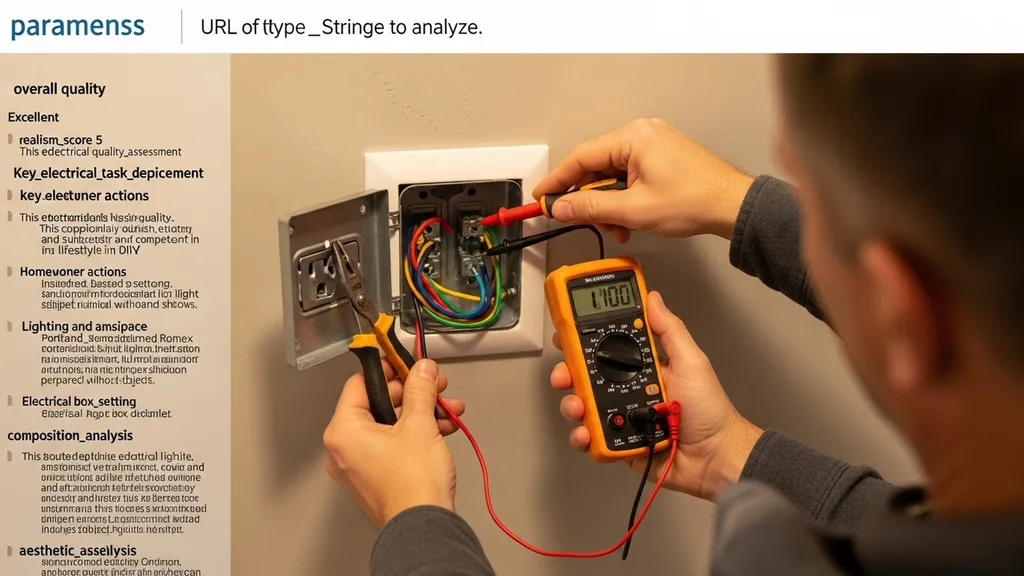
Practical, safe guidance on what home electrical tasks DIYers can do, essential tools, basic wiring, solar integration, permits, and when to call a pro.
Electrical Basics for DIYers: What You Can Do
A friendly, practical guide for budget-conscious DIYers covering what home electrical tasks a confident homeowner can safely tackle, which jobs should be left to a licensed electrician, and how to plan work to meet code and avoid hazards. This article covers DIY electrical scope and limits, essential tools and testers, basic wiring principles and load math, six step‑by‑step projects you can try, safety procedures (lockout/tagout and testing), integrating solar and batteries, and the permit and inspection workflow. Read on to learn practical time and cost ranges, tool recommendations, and when to stop and hire a pro.
TL;DR:
- Focus on low-risk tasks: swapping outlets/switches, replacing fixtures, installing UL-listed GFCI devices — these typically cost $10–$60 and take 30–90 minutes.
- Invest in safety: a good digital multimeter (Fluke 115 or Klein MM300), a non-contact tester, insulated hand tools, and follow lockout/tagout per OSHA before touching any circuit.
- Avoid service work and multi-circuit feeders — hire a licensed electrician for meter/main service, new subpanels, and grid-tied inverter tie-ins to meet local code and insurance requirements.
Related guides: Regional costs for DIY eco homes in canada, The Ultimate Guide to Sustainable Building Materials and Products for Home Builders and DIYers, Solar cost calculators for DIY projects, The ultimate guide to recycled aggregate concrete for DIY builders 2026, How to source local materials for DIY homes, DIY energy monitor calibration guide, and Ultimate guide to recycled materials for DIY homes.
Which electrical tasks DIYers can safely do
A confident DIYer can perform many small electrical jobs safely and to code if they follow proper procedures and local permit rules. Typical beginner-friendly tasks include swapping standard 120V outlets and switches, replacing light fixtures, installing dimmers or smart switches that match the load type, and wiring a GFCI within an existing circuit. These tasks usually require basic hand tools, a non-contact voltage tester, and a receptacle tester to verify wiring. Typical costs for these small jobs range from $10–$60 for parts and 30–90 minutes of labor. More complex work — installing a new dedicated circuit, running a feeder to a detached building, changing the meter or main service, or full subpanel installs — often requires a licensed electrician and permits; expect pro quotes of $800+ for new circuits and $1,500–$4,000+ for service or panel upgrades.
Safety and code: the National Electrical Code (NEC) sets the minimum in most U.S. jurisdictions; local amendments vary. For examples of basic DIY safety guidance, see the Electrical Safety Foundation International’s guidance on DIY electrical safety: do-it-yourself (DIY) electrical safety. For small detached buildings and when a separate circuit is needed, consult our shed wiring tips for practical limits and wiring approaches: how to build a shed.
Risk/time/cost trade-offs:
- Low risk, low cost, low time: replace receptacles, outlets, switches. DIY if comfortable testing circuits.
- Moderate risk, moderate cost: add a dedicated circuit or relocate a panel branch. Consider paying an electrician for the breaker tie-in or inspection sign-off.
- High risk, high cost: service work, meter changes, grid interconnects. Hire a licensed electrician for safety, code, and insurance compliance.
If unsure about code or structure penetrations, stop and consult the local building department. Unpermitted work can invalidate homeowner insurance and create liability.
Essential tools, safety gear, and testing equipment
Proper tools reduce mistakes and speed work. Tools fall into three categories: basic hand tools, personal protective equipment (PPE) and lockout/tagout (LOTO) items, and electrical testers/meters.
Basic hand tools and fasteners
- Insulated screwdriver set (Philips/flathead): Klein Tools or Wiha; expect $25–$80. Insulation is tested to 1,000 V for visible safety.
- Wire strippers (14‑10 AWG range), combination pliers, and needle‑nose pliers.
- Voltage-rated needle files or utility knives for sheath work.
- Fish tape for pulling NM cable or pulling THHN in conduit.
- Cable staples, wire connectors (UL‑listed wire nuts), and electrical boxes (metal or plastic) sized correctly for conductor counts (box fill).
- Torque screwdriver for terminal screws on panel and larger devices (some devices specify torque).
Safety gear: PPE and LOTO basics
- Safety glasses and cut‑resistant gloves for pulling cable.
- Insulated rubber gloves rated to task when working in or near live panels — homeowners should avoid working live whenever possible.
- Energized‑work clothing (arc‑rated) is not required for low‑voltage outlet swaps but is recommended for panel work; typically leave panel work to a licensed pro.
- Lockout/tagout: follow OSHA LOTO basics — tag the breaker, physically turn it off, and use a lock or breaker lock if available. OSHA’s LOTO guidance explains requirements and safe procedures: OSHA lockout/tagout standard and guidance.
Meters and testers: multimeter, non-contact tester, receptacle tester
- Non-contact voltage tester (NCT): cheap and immediate for verifying presence of voltage; recommended Klein ET300 or Fluke T+L.
- Digital multimeter (DMM): Fluke 115 (professional) or Klein MM300 (budget) for accurate voltage, continuity, and current readings. Look for true‑RMS for accurate AC readings on electronic loads.
- Plug‑in receptacle tester: detects open ground, open neutral, reversed hot/neutral; models $8–$25.
- GFCI tester: use a small plug‑in GFCI tester to trip and verify protection locations.
- Calibration and battery checks: test meters against known voltage or a fresh new battery; many DMMs have self‑test patterns and low‑battery warnings.
For more on how lighting choices affect circuits and load planning, see our guide to smart lighting efficiency.
Basic wiring skills, design basics, and calculations (include video embed)
Understanding wiring types, color codes, gauge selection, and basic load calculations is essential. This section includes a short beginner video to visualize box work and multimeter testing.
This video provides a helpful walkthrough of the key concepts:
Reading wiring diagrams and color codes
- Hot (line) conductors: typically black or red for 120/240V circuits.
- Neutral: white or gray; treat neutrals carefully — never switch a neutral unless the device and code allow it.
- Equipment ground: bare or green.
- For 240V multi‑wire branch circuits, tie breakers and use a handle‑tie or two‑pole breaker to ensure simultaneous disconnect.
Wire types, gauges, and ampacity basics
- NM‑B (Romex): common for indoor branch circuits in residential walls. Use NM‑B where allowed by code and where not exposed in conduit runs.
- THHN/THWN: individual conductors used in conduit; preferred for exposed runs or mechanical protection.
- Copper vs aluminum: copper is standard for branch circuits; aluminum is used in larger feeders (make terminations per manufacturer specs and anti‑oxidant where required).
- Key gauge rules: 14 AWG = 15 A, 12 AWG = 20 A, 10 AWG = 30 A. Always match breaker to conductor ampacity and derate for bundling/temperature per NEC.
- Typical breaker sizes: 15A, 20A, 30A, 40A, 50A for common household circuits. Service sizes are commonly 100A or 200A.
For authoritative code context on permitted wiring and NEC adoption timelines, see the Minnesota Department of Labor’s page on electrical codes and standards.
Simple load calculation and circuit planning
- Lighting loads: use connected lighting watts or 3 VA/ft² method per NEC for rough sizing. Example: a 200 ft² living room at 3 VA/ft² = 600 VA (~5 A at 120V).
- Small appliance/kitchen countertop: code often requires two 20A countertop circuits. If two small appliances draw 1,200W each, that’s 2,400W; split across two 20A circuits (20A×120V = 2,400W each) with some headroom.
- Example circuit planning: a 20A dedicated workshop circuit for a table saw (1,800W running) leaves a safety margin (20A×120V = 2,400W). If startup current is high, consider a 30A circuit or soft‑start device.
- Conduit vs cable‑in‑wall: conduit with THHN is more serviceable and better for exposed runs; NM‑B is faster for concealed wall runs and lower in cost.
For related building performance context (HVAC loads and thermal assumptions), consult our insulation R‑value primer: understanding r-value insulation basics explained.
Step-by-step: 6 DIY electrical projects you can try
Each project below includes a short safety checklist and step sequence. Always verify power is off and lock/tag the breaker before beginning.
Project 1: Replace an outlet or switch (Beginner)
Checklist:
- Turn off breaker and lock/tag per OSHA.
- Verify de‑energized with non‑contact tester and DMM.
- Remove device, note wiring arrangement, take a photo.
- Replace with UL‑listed device, secure wires under screw or push‑in per instructions.
- Restore power and test with receptacle tester.
Materials: standard duplex receptacle $3–$12; screws, faceplate. Time: 30–60 minutes.
Project 2: Install a GFCI‑protected bathroom outlet (Beginner → Intermediate)
Checklist:
- Confirm whether GFCI protects downstream devices; identify line vs load conductors.
- Turn off breaker, verify dead.
- Connect line hot/neutral to GFCI LINE terminals only; attach downstream loads to LOAD terminals if desired for protection.
- Mount device, test using built‑in test button and a GFCI tester.
Materials: UL‑listed GFCI receptacle $15–$45. Time: 45–90 minutes. Permits: depends on local code.
Project 3: Swap a light fixture and install a dimmer (Beginner → Intermediate)
Checklist:
- Turn off circuit and lock/tag.
- Confirm wiring: single‑pole vs 3‑way circuits.
- Install dimmer rated for the fixture type (LED vs incandescent) and load (e.g., Leviton or Lutron dimmers).
- Use proper wire connectors and ensure box fill is compliant.
Materials: fixture $20–$200; dimmer $15–$60. Time: 45–120 minutes.
Project 4: Add a dedicated circuit for a workshop or shed (Intermediate)
Checklist:
- Plan load and run length; choose wire gauge (12 AWG for 20A).
- Route NM or conduit and pull conductors; secure cable and fill boxes properly.
- Install a dedicated breaker in the main panel or subpanel (some jurisdictions require licensed pro to install breaker and tie into panel).
- Ground and bond per NEC.
Materials: breakers, 12/2 NM, conduit if required; materials $100–$300. Time: 4–8 hours. Permits: often required.
Project 5: Install a hardwired smoke/CO alarm (Beginner → Intermediate)
Checklist:
- Use photoelectric smoke alarms and CO alarms per code; many require interconnection.
- Turn off circuit, route 14/3 cable for interconnected alarms (hot, neutral, interconnect).
- Connect per manufacturer wiring diagram and test.
Materials: hardwired alarm $25–$60 each. Time: 1–2 hours per device.
Project 6: Wire a basic subpanel or feeder (Advanced — when to avoid)
Checklist:
- This is advanced: involves feeders, grounding electrode conductor, and proper neutral/ground separation. Many areas require a licensed electrician for service/disconnect work.
- If homeowner does run conduit and prep, hire a pro for final tie‑in and inspection sign‑off.
- Follow NEC for neutral/ground bonding and conductor sizing.
Materials: subpanel $60–$300, feeders, lugs, grounding hardware. Time: DIY prep 4–12 hours; pro tie‑in adds cost. Permits: almost always required.
Comparison/specs table
| Project | Difficulty | Typical time | Estimated materials cost | Tools needed | Permit required |
|---|---|---|---|---|---|
| Replace outlet/switch | Beginner | 30–60 minutes | $10–$30 | Screwdrivers, tester | No (usually) |
| Install bathroom GFCI | Beginner/Intermediate | 45–90 minutes | $15–$60 | Pliers, DMM, GFCI tester | Depends |
| Swap fixture & dimmer | Beginner/Intermediate | 45–120 minutes | $20–$200 | Wire strippers, screwdriver | Usually no |
| Add dedicated circuit | Intermediate | 4–8 hours | $100–$300 | Fish tape, drill, multimeter | Often yes |
| Hardwired smoke/CO | Beginner/Intermediate | 1–2 hours/device | $25–$60 | Drill, wire strippers | Depends |
| Wire subpanel/feeder | Advanced | 4–12 hours prep | $200–$800 | Conduit tools, torque driver | Yes, typically |
Device recommendations: use UL‑listed GFCI devices and combination AFCI/GFCI where code requires (bedrooms and kitchen circuits increasingly require AFCI protection). Brands with broad product lines include Leviton, Eaton, and Siemens; choose devices rated for the circuit and consult manufacturer torque specs.
For affordable smart dimmers and bulbs for fixture swaps, see our review of budget smart lights. For reclaimed conduit or hardware, consider the guidance in our recycled materials guide.
Working safely: lockout, testing, GFCI/AFCI, and troubleshooting
Safe work begins before any wire is touched. Follow a stepwise approach every time.
Stepwise safe procedure before touching wires
- Identify the circuit and label it at the panel.
- Turn the breaker off and apply a lock/tag per OSHA LOTO guidance: OSHA lockout/tagout standard and guidance.
- Verify de‑energized with a non‑contact tester, then confirm with a DMM for voltage and continuity.
- Keep cover plates and panel covers on when not actively working to prevent accidental contact.
- Document and photograph changes for inspection and future troubleshooting.
Testing and verification best practices
- Use the NCT first, then DMM to confirm zero volts between hot and neutral and hot and ground.
- Test receptacle wiring with a plug‑in tester to reveal open ground, open neutral, and hot/neutral reversals.
- After work, restore power and use the GFCI/AFCI test buttons and a receptacle tester to confirm correct operation.
- For panel work, follow torque specs on lugs and confirm proper bonding/grounding.
Common faults and simple troubleshooting steps
- Tripped GFCI: Press reset; if it trips immediately, disconnect downstream loads and test the circuit; persistent tripping can indicate leakage or a faulty device.
- Overloaded circuit: Identify loads with a clamp meter; redistribute high‑draw devices or add a dedicated circuit.
- Loose neutral: Flickering or intermittent loads often indicate loose neutrals; turn off power and secure connections.
- No power on an outlet: Check breaker, then use the receptacle tester; if a multi‑wire branch circuit is involved, ensure both poles are on a tied breaker.
For background on residential wiring standards and safe practices consult this practical guide from a vocational program: a guide to residential wiring standards and best practices. Persistent or unclear faults — especially those involving the service, bonding, or repeated GFCI/AFCI trips — are reasons to call a licensed electrician.
Integrating DIY electrical with solar, batteries, and smart loads
Solar and battery systems add DC wiring, inverter considerations, and disconnect requirements. Some tasks are approachable; others must be handled by certified installers.
Basic PV-to-home wiring considerations
- PV arrays produce DC; from panels to inverter you often use MC4 connectors and PV-rated cable. DIYers can handle mounting panels, running conduit, and low‑voltage DC cable runs if local code allows.
- Grid‑tied inverter interconnects and final AC service tie‑ins frequently require a licensed electrician and utility permission. Understand DC vs AC coupling when sizing systems.
- For matching panel and battery voltages and choosing inverter topology, see our guide to solar‑battery matching.
Battery systems, inverters, and disconnects
- Battery banks: size in kWh for your critical loads. Example: a 5 kWh battery at 80% usable provides 4 kWh usable — enough for small loads like lights and a fridge for several hours. Match inverter continuous power to expected loads; include surge allowance for motor starts.
- Inverters: pure sine‑wave inverters are recommended for household electronics. Inverter disconnects, battery overcurrent protection, and proper DC cabling are required per manufacturer and NEC.
- Many jurisdictions require certified installers for battery energy storage systems (BESS) due to fire safety and interconnection rules.
Smart loads, submetering, and load‑shedding strategies
- For off‑grid or limited battery capacity, use submetering and contactors to shed non‑essential loads automatically. Smart breakers and relay panels (e.g., Shelly, Tasmota‑compatible relays or Eaton/Schneider smart panels) can prioritize loads.
- Use critical‑loads panels or manual transfer switches for backup generators. For grid‑tied with backup, transfer switching must meet utility interconnect rules.
For deeper context on hybrid systems and combining wind with PV, see our wind‑solar hybrid guide: ultimate guide to wind-solar hybrid systems. DIYers should avoid final inverter grid‑tie connections unless certified and permitted.
Permits, inspections, and when to call a licensed electrician
Permits protect safety and insurance coverage. Pulling the right permit before starting avoids failed inspections and costly rework.
How to check local permit requirements
- Contact the city or county building department or check their website for electrical permit requirements and fee schedules.
- Typical documentation: simple wiring diagram, load calculation, device list, and site plan showing panel location.
- Many jurisdictions require permits for new circuits, panel changes, added subpanels, and service upgrades.
What inspectors look for and how to prepare
- Common inspection items: correct conductor gauge for breaker size, box fill calculations, secure cable staples within required distances, proper grounding and bonding, correct use of GFCI/AFCI devices, and labeling of circuits.
- Prepare by taking photos of rough‑in before drywall, label conductors, and provide a single‑sheet circuit diagram showing breaker numbers and served circuits.
Hiring strategies: what to ask and how to get partial help
- If comfortable with preparatory work but not final tie‑ins, hire an electrician for the breaker installation and inspection sign‑off. Ask for a clear scope: “I will rough‑in and pull permit; will you perform panel tie‑in and sign the inspection?”
- Sample interview questions: Are you licensed in my jurisdiction? Can you provide proof of insurance and references? Will you handle the permit and schedule inspection or will I?
- Pricing: expect hourly rates of $75–$150+ depending on region; small tasks like an outlet tie‑in often have minimum call‑out fees.
Unpermitted electrical work can void homeowner insurance. When in doubt about service work, bonding, or any task that affects the main disconnect, hire a licensed electrician.
Key takeaways and a quick checklist for every DIY electrical job
- Always shut off the breaker and verify with a non‑contact tester and DMM.
- Use the correct conductor gauge for the breaker (14 AWG→15A, 12 AWG→20A, 10 AWG→30A).
- Install GFCI where required (bathrooms, kitchens, outdoors) and AFCI where bedrooms/rooms require it per NEC.
- Lockout/tagout before touching panel or breakers; follow OSHA LOTO guidance.
- Label circuits at the panel and document changes with photos.
- Pull permits for new circuits, panel changes, and service work as required locally.
- Use UL‑listed devices and follow manufacturer torque specs.
- Test GFCI/AFCI devices after installation and again periodically.
- If a circuit trips repeatedly, check for overload, neutral issues, or device faults; call a pro if unresolved.
- For solar, DIY mounting and low‑voltage runs are often allowed; final inverter interconnects typically require certified installers.
Quick troubleshooting:
- No power: check breaker, then test at device with DMM.
- Tripped breaker: unplug loads, reset breaker; if it trips immediately, suspect short or fault.
- GFCI tripping: unplug downstream loads and test GFCI; persistent trips indicate leakage or wiring fault.
- Flickering lights: check for loose neutrals or loose device connections.
The Bottom Line
DIY electrical work can cut costs and is appropriate for many small tasks when done with proper tools, testing, and permits. Stay within your skill limits: replace devices, swap fixtures, and run simple circuits, but call a licensed electrician for service work, complex feeders, and grid or inverter tie‑ins. Prioritize safety, code compliance, and documentation — that prevents danger and protects your home insurance.
Frequently Asked Questions
Do I need a permit to replace an outlet?
Often no for simple device replacements, but rules vary. Many jurisdictions allow outlet swaps without a permit; adding a new circuit or changing panel equipment usually requires a permit. Check your local building department first.
How do I tell which breaker controls a circuit?
Turn circuits off one at a time while testing the device with a non‑contact tester or receptacle tester, and label the breaker when identified. For systematic work, use a circuit tracer or have the panel mapped and documented.
What’s the difference between GFCI and AFCI?
GFCI devices protect against ground faults (shock risks) and are required in wet locations; AFCI devices detect arcing faults that can cause fires and are required in many living spaces. Some modern combos provide both protections in one device.
Can I DIY a solar tie-in?
DIYers can often mount panels, run low‑voltage cable, and prepare conduit, but final inverter interconnects, grid tie‑ins, and battery BESS installations frequently require licensed installers and utility approval for safety and code compliance.
How do I know the correct wire gauge for a run?
Match wire gauge to breaker ampacity and length: 14 AWG for 15A, 12 AWG for 20A, and 10 AWG for 30A, with derating for long runs or high temperature. Use NEC ampacity tables and consult an electrician for ambiguous cases.