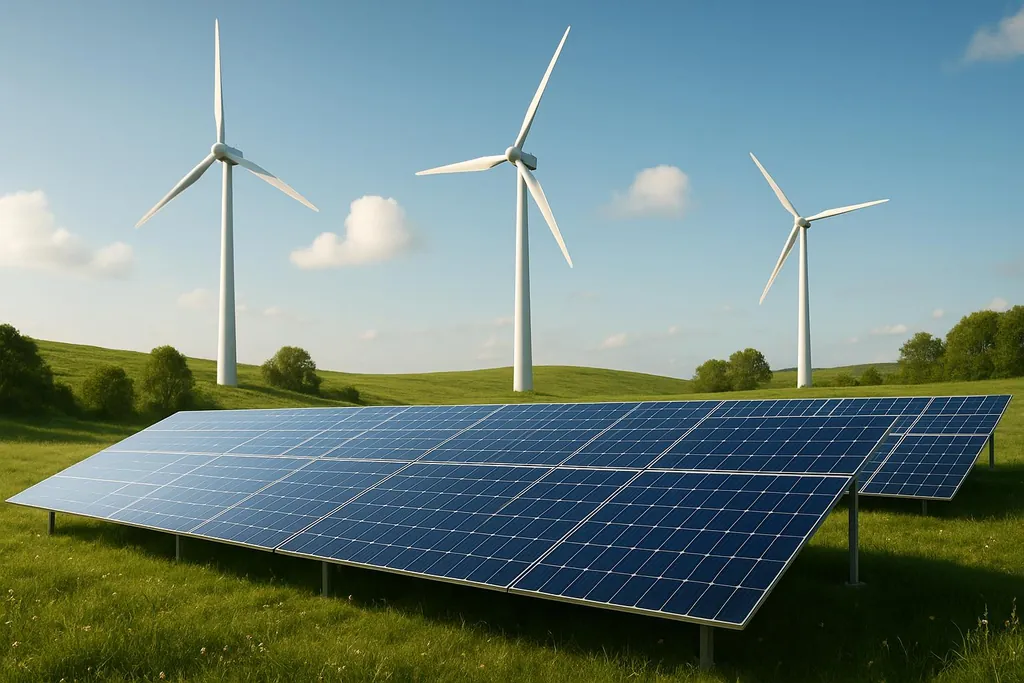
Explore the benefits, components, and maintenance of wind-solar hybrid systems for reliable and cost-effective energy solutions.
Ultimate Guide to Wind-Solar Hybrid Systems
Wind-solar hybrid systems combine solar panels and wind turbines to provide reliable, year-round energy. Solar panels work best during sunny days, while wind turbines excel at night or in cloudy, windy conditions. Together, they ensure steady power, reduce reliance on the grid, and can save significant costs for off-grid homes.
Key Benefits:
- Consistent Energy Supply: Solar peaks during the day, wind often at night.
- Cost Savings: Avoid grid connection costs ($15,000–$50,000 per mile) and reduce energy bills.
- Energy Independence: Perfect for rural areas or remote locations.
- Increased Efficiency: Combining wind and solar can double electricity output in the same space.
Core Components:
- Solar Panels & Wind Turbines: Generate power from sunlight and wind.
- Hybrid Charge Controllers & Inverters: Manage and optimize energy flow.
- Energy Storage (Batteries): Store excess energy for later use.
Costs:
- Battery Storage: $450–$1,100 per kWh installed.
- Complete System: $15,000–$22,000 (solar array, battery, inverter).
Maintenance Tips:
- Clean solar panels regularly to avoid efficiency loss.
- Inspect wind turbines for wear, especially after storms.
- Monitor batteries to maintain proper charge cycles.
Hybrid systems are an effective way to achieve energy independence, lower costs, and reduce emissions. With proper design, installation, and maintenance, they can provide reliable energy for decades.
DIY Solar And Wind Power Hybrid System
Key Components of a Wind-Solar Hybrid System
A wind-solar hybrid system relies on several essential components that work together to harness, convert, and store energy from both wind and sunlight. Each part plays a critical role in ensuring the system runs smoothly and delivers dependable power for your home.
Wind Turbines and Solar Panels: The Energy Producers
At the core of any hybrid system are the wind turbines and solar panels. Solar panels generate electricity during sunny days, while wind turbines step in to produce power when it's windy, especially during the night or winter months when sunlight is limited [\[1\]](https://waaree.com/blog/can-solar-and-wind-power-work-together). This combination ensures a steady flow of energy throughout the year.
When choosing these components, it's important to assess your local conditions. Solar panels work best in areas with plenty of sunlight, while wind turbines are most effective in regions with consistent, moderate winds. Keep in mind that wind turbines require regular maintenance, such as rotor inspections, to stay in good working order [\[1\]](https://waaree.com/blog/can-solar-and-wind-power-work-together).
Hybrid Charge Controllers and Inverters: The System's Brain
Hybrid charge controllers and inverters act as the control center, managing energy from both wind and solar sources. These devices use advanced algorithms to regulate voltage, convert DC power to AC, and optimize energy output in real time [\[2\]](https://www.altenergymag.com/news/2024/10/15/does-hybrid-inverter-need-solar-charge-controller/43527)[\[3\]](https://amplussolar.com/blog/a-comprehensive-guide-to-hybrid-wind-and-solar-systems). Choosing the right controller is key to synchronizing the two energy sources and ensuring your system runs efficiently.
When selecting a hybrid controller, consider factors like system voltage, charge/discharge currents, and whether it uses PWM or MPPT control methods. Additional features such as temperature compensation, data logging, and overall durability should also be evaluated [\[5\]](https://energy-elege.com/the-core-of-the-wind-solar-hybrid-system-a-complete-guide-to-controller-selection-connection-and-debugging).
Real-world examples highlight their benefits: in one instance, a remote village paired a hybrid controller with solar panels and a backup diesel generator to cut fuel costs. Similarly, a manufacturing plant combined wind turbines, a controller, and energy storage to reduce reliance on the grid and save on energy expenses [\[4\]](https://www.ampinvt.com/2024/09/14/case-studies-successful-implementations-of-hybrid-solar-charge-controllers).
Energy Storage: Battery Options
Batteries play a crucial role in storing excess energy and providing power during periods of low production [\[6\]](https://www.cnet.com/home/energy-and-utilities/best-solar-batteries). For residential systems, lithium-ion batteries are a popular choice due to their high efficiency and long lifespan, typically lasting 10 to 15 years. However, they are more expensive than lead-acid alternatives [\[6\]](https://www.cnet.com/home/energy-and-utilities/best-solar-batteries).
The cost of home battery storage generally ranges from $450 to $1,100 per kilowatt-hour (kWh) installed, with a 10 kWh system averaging around $7,000 before installation costs. Fully installed systems - including a 10 kWh battery, a hybrid inverter, and an 8–10 kW solar array - typically cost between $15,000 and $22,000 [\[7\]](https://www.cleanenergyreviews.info/blog/best-solar-battery-systems).
| Battery Type | Cost Range | Lifespan | Efficiency | Maintenance |
|---|---|---|---|---|
| Lithium-Ion | $1,000–$2,000 per kWh | 10–15 years | High | Low |
| Lead-Acid | Lower initial cost | Shorter | Lower | Higher |
Some standout battery options include the Bluetti EP900, which CNET named the best overall pick for 2025 due to its strong performance, solid warranty, and modular design [\[6\]](https://www.cnet.com/home/energy-and-utilities/best-solar-batteries). The Tesla Powerwall 3 is notable for its unlimited cycle warranty and improved power output, while the Enphase IQ Battery 5P is ideal for smaller energy needs, offering high power output and reliable customer support [\[6\]](https://www.cnet.com/home/energy-and-utilities/best-solar-batteries).
When sizing your battery system, consider your household's energy consumption and the appliances you want to power during outages. Many modern batteries are modular, allowing you to start small and expand capacity as needed [\[7\]](https://www.cleanenergyreviews.info/blog/best-solar-battery-systems). Recent market trends have also made 48V batteries more affordable, thanks to advancements in energy density, increased production, and growing competition [\[7\]](https://www.cleanenergyreviews.info/blog/best-solar-battery-systems). Be sure to compare warranty terms, including duration, cycle count, and capacity guarantees, to ensure your investment meets your long-term goals [\[6\]](https://www.cnet.com/home/energy-and-utilities/best-solar-batteries)[\[7\]](https://www.cleanenergyreviews.info/blog/best-solar-battery-systems).
Understanding these components is the first step toward creating an effective and reliable wind-solar hybrid system.
How to Design and Install a Wind-Solar Hybrid System
Planning a wind-solar hybrid system starts with understanding your energy needs and ensuring compliance with local rules. This careful preparation helps you save both time and resources.
Sizing Your System for Best Energy Production
The first step is to figure out how much energy your household uses. In the U.S., the average home consumes about 10,649 kWh annually, or roughly 877 kWh per month [\[10\]](https://windexchange.energy.gov/small-wind-guidebook). Reviewing a year's worth of electricity bills can give you a clearer picture of your energy consumption.
Before diving into system sizing, consider ways to reduce your energy use. Small upgrades like switching to LED bulbs, using energy-efficient appliances, and improving insulation can significantly cut down the size - and cost - of your hybrid system [\[10\]](https://windexchange.energy.gov/small-wind-guidebook).
Once your energy needs are clear, size your wind and solar components accordingly. For instance, a 1.5-kW wind turbine can supply about 300 kWh per month in a location with an average annual wind speed of 14 MPH [\[10\]](https://windexchange.energy.gov/small-wind-guidebook). There are several sizing methods to choose from - such as graphic construction, probabilistic, analytical, iterative, and artificial intelligence-based approaches. These methods account for factors like wind speeds, solar radiation, battery storage, and system efficiency [\[8\]](https://pmc.ncbi.nlm.nih.gov/articles/PMC11364774).
After sizing your system, the next step is to evaluate your site and follow best installation practices to maximize energy output.
Site Selection and Installation Best Practices
Picking the right location is key to getting the most out of your hybrid system. Use tools like solar pathfinders or wind assessment kits to assess your site's solar and wind potential [\[11\]](https://www.inverter.com/how-to-install-a-wind-solar-hybrid-system).
For solar panels, position them facing south with a tilt angle equal to your latitude to capture maximum sunlight. Make sure they're free from obstructions like trees or buildings during peak sun hours.
Install wind turbines high above ground and away from obstacles to ensure they catch steady wind [\[11\]](https://www.inverter.com/how-to-install-a-wind-solar-hybrid-system).
Before installation, research local zoning laws, permits, and utility company requirements. The Small Wind Guidebook emphasizes:
> "Practices vary dramatically across the country so becoming familiar with the local regulations, authorities, and general requirements is helpful." [\[10\]](https://windexchange.energy.gov/small-wind-guidebook)
Be aware of setback rules, height restrictions, and noise ordinances, as these can impact your plans. Always prioritize safety - work with licensed electricians for electrical work, use proper fall protection when working at heights, and follow manufacturer instructions for assembling towers and turbines [\[11\]](https://www.inverter.com/how-to-install-a-wind-solar-hybrid-system).
Connecting Wind and Solar Components
Efficiently connecting wind and solar components is vital for a well-functioning hybrid system. Place the battery bank in a ventilated, temperature-controlled space to protect it from extreme conditions [\[11\]](https://www.inverter.com/how-to-install-a-wind-solar-hybrid-system).
A hybrid charge controller regulates energy inputs from the wind turbine and solar panels, preventing the battery from overcharging [\[11\]](https://www.inverter.com/how-to-install-a-wind-solar-hybrid-system). When wiring the system, connect components in this order: battery, solar panels, wind turbine, and then the load [\[5\]](https://energy-elege.com/the-core-of-the-wind-solar-hybrid-system-a-complete-guide-to-controller-selection-connection-and-debugging). Use the correct cable specifications, secure all connections, and install a fuse on the positive pole for added safety [\[5\]](https://energy-elege.com/the-core-of-the-wind-solar-hybrid-system-a-complete-guide-to-controller-selection-connection-and-debugging). For solar panels, anti-reverse diodes help safeguard the system, and the wind turbine's output voltage should match the controller's requirements [\[5\]](https://energy-elege.com/the-core-of-the-wind-solar-hybrid-system-a-complete-guide-to-controller-selection-connection-and-debugging).
Your inverter, which converts DC power into AC for household use, must handle the combined output of both the wind and solar systems. Choose an inverter that meets your peak power needs while maintaining efficiency during regular use [\[11\]](https://www.inverter.com/how-to-install-a-wind-solar-hybrid-system).
Additional safety measures include installing lightning protection and ensuring the load stays within the controller's capacity [\[5\]](https://energy-elege.com/the-core-of-the-wind-solar-hybrid-system-a-complete-guide-to-controller-selection-connection-and-debugging). For managing high-power loads, consider relay control systems [\[5\]](https://energy-elege.com/the-core-of-the-wind-solar-hybrid-system-a-complete-guide-to-controller-selection-connection-and-debugging).
After installation, double-check all connections, test indicator lights, and monitor charging and discharging functions [\[5\]](https://energy-elege.com/the-core-of-the-wind-solar-hybrid-system-a-complete-guide-to-controller-selection-connection-and-debugging). Regularly review system data to spot areas for improvement.
System Maintenance and Troubleshooting
After installing a hybrid energy system, keeping it in good shape through regular maintenance and troubleshooting is essential for long-term performance. This not only extends the lifespan of components but also ensures you're getting the most energy out of your investment.
Regular Maintenance for Wind and Solar Components
With proper care, a hybrid system can deliver reliable performance for decades. Routine maintenance is key to keeping everything running smoothly, minimizing downtime, and maximizing energy production [\[12\]](https://www.tx-solarsystem.com/news/maintenance-methods-of-hybrid-solar-system).
Solar Panel Maintenance
Dust and grime can significantly impact solar panel efficiency. For example, just 4.5 grams of dust per square meter can reduce efficiency by as much as 12% [\[13\]](https://fluix.io/blog/solar-farm-operations-and-maintenance). To prevent this, clean your panels with a soft brush or sponge, using mild soap and water. Avoid abrasive materials that could scratch the surface. Additionally, inspect the panels for physical damage, loose connections, or any signs of wear [\[12\]](https://www.tx-solarsystem.com/news/maintenance-methods-of-hybrid-solar-system).
Check that all fittings and cables are secure, and ensure isolator switches remain accessible, free from obstructions like vegetation or debris [\[14\]](https://www.hybridsolarsolutions.com.au/blog/how-to-maintain-your-solar-system).
Wind Turbine Care
Although many wind turbines require minimal upkeep [\[15\]](https://www.pvmars.com/ultimate-guide-how-wind-turbines-troubleshooting-and-maintenance), regular inspections are still necessary. Ensure the wind wheel and tail rudder automatically align with the wind direction, and confirm the rotor spins smoothly and without resistance [\[15\]](https://www.pvmars.com/ultimate-guide-how-wind-turbines-troubleshooting-and-maintenance).
Keep the exterior clean, especially in dusty or sandy areas, and schedule inspections every six months. During these checks, tighten bolts and nuts, look for tower vibrations, and inspect cables for wear. After severe weather, disconnect the turbine from the batteries and inverters before conducting any inspections [\[15\]](https://www.pvmars.com/ultimate-guide-how-wind-turbines-troubleshooting-and-maintenance).
Battery System Maintenance
Battery banks need consistent monitoring to check for corrosion, secure connections, and proper charge/discharge cycles [\[12\]](https://www.tx-solarsystem.com/news/maintenance-methods-of-hybrid-solar-system). Avoid deep discharging, as this can cause irreversible damage to the batteries.
Store batteries in a temperature-controlled space since extreme heat or cold can shorten their lifespan and reduce efficiency.
Essential Maintenance Schedule
| Task | Frequency |
|---|---|
| Remote monitoring | Daily |
| Visual inspection | Monthly |
| Module cleaning | Quarterly |
| Inverter maintenance | Semi-annually |
| Grounding system inspection | Annually |
| IV curve testing | Annually |
| Thermography inspection | Annually |
| Vegetation management | Quarterly |
| Safety drills | Annually |
It's a good idea to schedule professional maintenance at least once a year. This helps identify issues you might miss during routine checks. Keep detailed records of all maintenance activities to spot patterns and plan for future needs [\[12\]](https://www.tx-solarsystem.com/news/maintenance-methods-of-hybrid-solar-system).
Fixing Common System Problems
When issues arise, addressing them quickly can prevent minor problems from turning into costly repairs. Most hybrid system issues fall into common categories that are relatively easy to troubleshoot.
Low Power Output Issues
If your system isn't generating enough power, start with the basics. Check solar panels for dirt, debris, or shading that could be reducing their output. For wind turbines, use a multimeter to check generator voltage and ensure the turbine spins freely without obstructions [\[15\]](https://www.pvmars.com/ultimate-guide-how-wind-turbines-troubleshooting-and-maintenance).
Also, verify that your hybrid charge controller is working correctly. Faulty controllers can disrupt power output by failing to manage inputs from the wind and solar components [\[9\]](https://windandsolar.com/blog/wind-turbine-solar-panel-combinations-a-guide-to-hybrid-systems).
Controller and Inverter Errors
Modern controllers and inverters often display error codes to help pinpoint problems. Check for these codes or warning lights regularly, and ensure the cooling vents aren't blocked [\[12\]](https://www.tx-solarsystem.com/news/maintenance-methods-of-hybrid-solar-system). Follow the troubleshooting steps in the user manual to resolve any faults [\[14\]](https://www.hybridsolarsolutions.com.au/blog/how-to-maintain-your-solar-system).
Grounding problems can also cause controller errors. Make sure the controller is properly grounded to a dedicated rod or busbar. Poor grounding can lead to electrical noise, reduced efficiency, and even safety risks [\[16\]](https://www.ampinvt.com/blog/troubleshooting-common-issues-with-hybrid-solar-charge-controllers).
Battery Performance Problems
Battery issues are often linked to improper charging or extreme temperatures. Monitor charge and discharge cycles to identify underperforming batteries. For flooded batteries, regularly check electrolyte levels and top them off with distilled water when necessary.
If performance issues persist, consider whether your battery bank is appropriately sized for your energy needs. An undersized battery bank or oversized energy loads can cause problems that maintenance alone won't resolve.
Always follow safety protocols when working with batteries to prevent accidents.
Safety First Approach
> "Always disconnect the turbine from power sources and secure safety measures before inspection [\[15\]](https://www.pvmars.com/ultimate-guide-how-wind-turbines-troubleshooting-and-maintenance)."
When working on electrical components, always use lockout/tagout procedures and avoid repairs during storms or high winds.
Improving System Performance
Using smart monitoring tools and upgrading components strategically can enhance efficiency and extend the life of your system.
Performance Monitoring Tools
Modern monitoring software provides real-time insights into system performance. These tools track power generation, battery health, and component status, making it easier to spot potential issues early [\[12\]](https://www.tx-solarsystem.com/news/maintenance-methods-of-hybrid-solar-system). Set up alerts for unusual activity, like sudden drops in energy output or irregular battery behavior.
Real-time data analytics and sensors can also support predictive maintenance, helping you address problems before they escalate.
System Optimization Strategies
Energy management systems use advanced algorithms to balance energy supply and demand. These systems can dynamically adjust charging and discharging schedules to improve overall performance. Pairing different battery types can also be beneficial. For example, combining high-capacity batteries with supercapacitors that handle rapid cycling can optimize both energy storage and power delivery.
Upgrading Components
As your energy needs grow or technology evolves, upgrading specific components can boost your system's efficiency. Newer charge controllers and inverters often come with better performance and monitoring features. Advanced inverters, for instance, offer improved grid-tie capabilities and higher efficiency.
When upgrading, consider using materials and technologies that reduce your system's environmental impact. Regularly reviewing your system's performance against manufacturer specifications can help you decide when it's time to replace components or expand the system.
These approaches ensure your hybrid system stays efficient and ready for future demands.
Key Takeaways for Building a Wind-Solar Hybrid System
A wind-solar hybrid system is a smart choice for achieving reliable energy independence. By combining the strengths of wind and solar energy, these systems ensure steady power generation throughout the year, making them a practical and efficient solution.
> "By leveraging the complementary nature of wind and solar resources, PV hybrid systems offer a compelling solution for off-grid energy independence, reducing reliance on fossil fuels and minimizing environmental impact." > - Mose Solar [\[18\]](https://www.moserbaersolar.com/blog/harness-the-hybrid-power-wind-solar-off-grid-systems-unleashed)
The numbers back it up. Between 2010 and 2021, solar PV costs dropped by 88% (from $0.055 to $0.048 per kWh in 2020), while onshore wind costs fell by 15% [\[20\]](https://link.springer.com/article/10.1007/s10311-022-01532-8). These cost reductions make renewable energy systems more accessible than ever.
The environmental benefits are just as striking. Hybrid systems can cut fuel usage and CO₂ emissions by up to 80% when paired with a diesel generator. Better yet, when powered solely by renewable sources, they offer a zero-emission energy solution. For example, one contractor reduced over 9,920 pounds of CO₂ emissions in a single week using a battery storage system [\[17\]](https://powr2.com/environmental-advantages-of-using-hybrid-energy-systems). Such outcomes highlight the importance of precise system design.
Designing an effective hybrid system starts with understanding your energy needs, evaluating site conditions, and properly sizing the components. Wind and solar complement each other naturally - wind speeds are often higher during times of low sunlight, like cloudy days or early mornings. This ensures consistent power generation, even when one source is less productive [\[3\]](https://amplussolar.com/blog/a-comprehensive-guide-to-hybrid-wind-and-solar-systems).
The long-term advantages extend far beyond cost savings. By 2050, renewable energy sources could decarbonize 90% of the electricity industry, making hybrid systems a forward-thinking investment. They also provide reliable backup power during emergencies, increase property values, and can scale to meet growing energy demands [\[20\]](https://link.springer.com/article/10.1007/s10311-022-01532-8).
> "By combining solar and wind power, you're not only maximizing energy production but also future proofing your energy supply." > - KPI Green Energy Ltd. [\[19\]](https://www.kpigreenenergy.com/9-advantages-of-solar-hybrid-system)
Proper upkeep is key to ensuring the system's longevity. Routine cleaning, regular inspections, and consistent monitoring can keep your system running efficiently for its 25–30 year lifespan [\[18\]](https://www.moserbaersolar.com/blog/harness-the-hybrid-power-wind-solar-off-grid-systems-unleashed).
If you're ready to take the plunge, [DIY Eco Homes](/) offers step-by-step guides and detailed cost breakdowns to help you get started. With practical advice and transparent budgeting, building your own wind-solar hybrid system is not only feasible but also an affordable way to achieve energy independence - empowering homeowners across the United States to take control of their power needs.
FAQs
How can I figure out the right size for a wind-solar hybrid system for my home?
To figure out the right size for a wind-solar hybrid system for your home, the first step is to calculate your daily energy consumption in kilowatt-hours (kWh). You can usually find this information on your electricity bill, or you can estimate it by adding up the energy usage of your household appliances.
Next, take a close look at your local environment. This includes average wind speeds and the amount of sunlight (solar irradiance) your area gets. For wind turbines, having at least a year's worth of wind speed data is ideal for accurate planning. Solar panel output, on the other hand, depends on how much sunlight your location receives throughout the year.
With your energy needs and local conditions in mind, you can then choose the right mix of solar panels and wind turbines to cover your energy demand. Adding batteries to the system is a smart move, as they can store any extra energy produced. This stored power can be used during cloudy days or when the wind isn't blowing, ensuring a steady electricity supply. A hybrid system combines the benefits of both solar and wind, making it a dependable option even when the weather changes.
What should I consider when choosing a location for a wind-solar hybrid system?
When choosing a location for a wind-solar hybrid system, several factors play a crucial role in ensuring the system operates efficiently and delivers optimal energy output. Start by assessing resource availability - this means looking at the area's average wind speeds and year-round sunlight exposure. The best locations typically have consistent winds and abundant sunshine throughout the year.
Next, examine geographical and environmental considerations like land elevation, slope, and orientation, as these can significantly influence system performance. You'll also want to ensure the site is accessible to existing infrastructure, such as power lines and roads, to keep installation costs reasonable and make maintenance easier. Finally, don't overlook local regulations and community sentiment. Make sure the project complies with zoning laws and is welcomed by the local community to avoid potential setbacks.
What maintenance is needed to keep a wind-solar hybrid system running efficiently?
To keep your wind-solar hybrid system working smoothly, regular upkeep is essential. Begin by inspecting key components like solar panels, wind turbines, batteries, and inverters at least twice a year. Look for any signs of wear, damage, or corrosion that might affect performance.
Make it a habit to clean your solar panels every few months to clear away dust and debris, which can block sunlight and lower energy production. A soft brush or sponge with mild soap and water works well for this task.
Don't forget to check your battery connections frequently. Ensure they're clean, tight, and in good condition. It's also a good idea to monitor the system's energy output regularly - this can help you catch any unusual drops in performance early. Taking these steps not only keeps your system running efficiently but also helps it last longer.