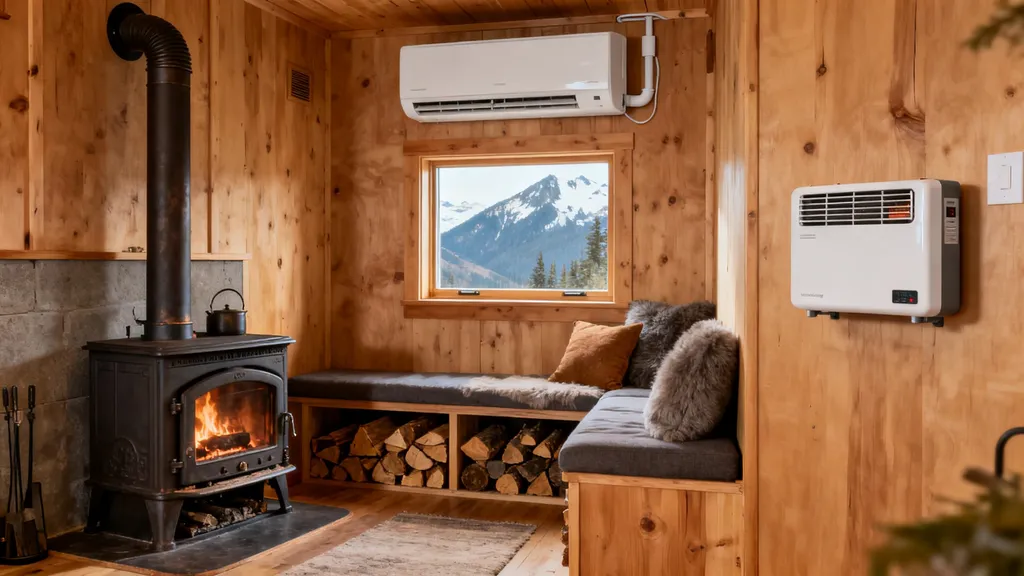
Compare practical off-grid cabin heating options—wood, heat pumps, propane, solar-thermal—and how to choose, size, and maintain systems for remote cabins.
Cabin Heating Options: Off-Grid Solutions
Heating a remote cabin raises a lot of practical questions: what fuel will be available, how much electrical generation and storage you can afford, and how much labor you want to commit to daily heating chores. This guide on cabin heating options lays out the main off-grid choices—wood and biomass, electric heat pumps and resistance, propane and liquid fuels, plus solar-thermal hybrids—then shows how to choose, size, install, and maintain systems for small cabins. Read on to compare costs, efficiency metrics (COP, HSPF, AFUE), and the safety issues that matter for remote installs.
TL;DR:
- Choose the smallest heating system you can by reducing demand first (insulation, air sealing, passive solar).
- Where wood is plentiful, wood or masonry heaters are lowest-cost per delivered heat; where reliable electricity and PV exist, cold-climate mini-splits give the best comfort-to-energy ratio.
- Size to real loads: run a simple heat-load example, compare daily kWh or cord-year estimates, and shortlist two systems to price and test for your site.
How to Choose Cabin Heating Options for Off-grid Use
Choosing among cabin heating options starts with a handful of site- and use-specific questions: how cold are winters, how large and insulated is the cabin, how many occupants and how often is it occupied, and what fuels are realistically available or affordable?
Key Decision Factors: Climate, Cabin Size, and Occupancy
- Climate: Use your local design winter temperature (from NOAA or local building authorities) to estimate peak load. Cold, snowy zones push you to high-output systems (large wood stoves, cold-climate heat pumps, or backup fuel).
- Cabin size and insulation: Typical heat loads for small cabins vary widely. Example (illustrative only): a well-insulated 300 ft² cabin in a moderate climate might need ~3,000–6,000 BTU/hr continuous; a poorly insulated 400 ft² cabin in a cold zone could need 20,000+ BTU/hr peak. Label these as estimates and run a simple heat-loss calc before buying.
- Occupancy pattern: Part-time use favors quick-response systems (mini-splits, propane wall heaters, small wood stoves). Full-time use benefits from high-mass solutions (masonry heaters, radiant floors).
Power Budget and Fuel Access
- Fuel access matters as much as efficiency. If you own a woodlot, cordwood or masonry heaters often beat delivered fuels. If grid or reliable fuel deliveries aren’t possible, factor in PV production and battery storage for heat pumps.
- Metrics to compare: COP (coefficient of performance) for heat pumps, HSPF/SEER for unit performance over a season, AFUE for combustion appliances, and EPA emissions guidance for wood heaters. Use these when estimating yearly energy or fuel needs.
- Daily use ranges (illustrative): A small cabin with a 6k BTU mini-split may use 3–8 kWh/day depending on insulation and temperature setpoints; the same cabin with electric resistance heat could use 10–20 kWh/day. These are rough numbers—calculate with your local conditions.
Matching Comfort Goals to System Tradeoffs
- Decide whether priority is low operational cost, low maintenance, convenience, or minimal onsite fuel handling. For example:
- Low recurring cost where wood is free: wood stove or masonry heater.
- High comfort, low work: cold-climate mini-split with PV + battery backup.
- Simplicity and predictable delivery: propane furnaces or wall heaters.
- Refer to ACCA recommendations for sizing HVAC and system design considerations in off-grid and small-space settings: ACCA HVAC standards.
Passive and Low-energy First Steps (reduce the Heat You Need)
Before sizing heaters, reduce heating needs. Lower demand shrinks upfront heater size, PV array, or fuel consumption.
Insulation, Air Sealing, and Windows
- Insulation targets: Use R-values matched to your climate zone. As an illustrative rule: colder zones need higher R-values in walls (R-21–R-30 or more), roof (R-40+), and continuous insulation where possible.
- Air sealing: A targeted air-sealing campaign (caulking, gasketing, sealing penetrations) can reduce heat loss substantially. Blower-door testing helps find leaks—see our guide on blower-door airtightness testing for test targets and methods.
- Windows: Choose high-performance windows (double or triple glazed depending on climate) and place them for passive solar gains where practicable.
Passive Solar Design and Thermal Mass
- Passive solar: South-facing glazing and shading strategies can supply midday heat on sunny winter days. Pair glazing with thermal mass (stone floors, masonry bench) to store heat and reduce spikes in energy use.
- Thermal mass: Even modest mass—water tanks, masonry surfaces, or thick stone—smoothes temperature swings and reduces runtime for active heaters.
Ventilation: Controlled Fresh Air and Heat Recovery
- Controlled ventilation: An HRV/ERV preserves heat while providing fresh air. For occupied cabins, a properly sized HRV can cut ventilation heat loss by 50–80% versus open-window ventilation.
- Construction tips: Follow ASHRAE guidance for ventilation rates; see ASHRAE standards for specifics: ASHRAE technical standards.
- Minor upgrades to insulation and sealing often reduce the required heater size by 20–50% (illustrative range). For build or retrofit strategies in cold weather, see our winter construction tips.
Wood and Biomass Heating Options for Cabins
Wood remains the dominant off-grid fuel where supply and storage are manageable. Options range from small EPA-certified wood stoves to masonry heaters and pellet systems.
Traditional Wood Stoves: Sizing, Installation, and Chimney
- Sizing: Match stove output to the cabin’s heat loss. Stoves are rated in BTU/hr or kW; a typical small stove for a tiny cabin might be 20,000–40,000 BTU/hr peak, but average burn rates are much lower.
- Installation: Follow manufacturer clearances, use proper hearths, and install approved stainless or class-A chimneys. Creosote buildup requires periodic sweeping—monthly checks during heavy use are common.
- Efficiency: EPA-certified stoves typically run 60–80% efficiency; older stoves can be much lower.
Masonry Heaters and Rocket Mass Heaters: Pros and Cons
- Masonry heaters: Store heat in thick masonry, releasing it slowly over 12–24 hours after a short, hot burn. They use less total wood for the same delivered comfort but require masonry skill and high upfront labor/material cost.
- Rocket mass heaters: Highly efficient wood-burning systems that route combustion gases through mass; often built by experienced DIYers. Local codes or insurance may restrict use—check before committing.
Pellet Stoves and Automated Feeding Options
- Pellet stoves: Convenient, with thermostatic control and automated feed. They require consistent pellet supply and some electricity for augers and fans; pairing with a small battery backup or inverter is common in off-grid settings.
- Fuel logistics: Pellets are delivered in bags and need dry storage; pellets burn cleaner than cordwood but are a purchased fuel.
Maintenance, Emissions, and Fuel Logistics
- Emissions & standards: Use EPA-certified appliances where possible and follow local emission guidance. ENERGY STAR has resources on efficient appliances: EPA's energy star program.
- Safety: Install CO alarms, maintain clearances to combustibles, and follow chimney sweep schedules. Store dry fuel off the ground and under cover to avoid rot and poor combustion.
- Comparison/specs table for common wood/biomass options:
| Type | Typical output | Efficiency range | Electricity needed | Storage needs |
|---|---|---|---|---|
| Small EPA wood stove | 10,000–40,000 BTU/hr | 60–80% | None | Cordwood, covered dry area |
| Masonry heater | 20,000–80,000 BTU/hr (batched) | 70–90% delivered heat | None | Cordwood (seasoned), large storage |
| Rocket mass heater | Varies | High delivered efficiency | Minimal (fans optional) | Cordwood, dry |
| Pellet stove | 8,000–40,000 BTU/hr | 70–85% | Yes (low) | Pellets, dry storage |
Electric Heating Off-grid: Heat Pumps, Resistance, and Electric Boilers
Electric options can be very clean and comfortable but depend on your PV and battery budget.
Ductless Mini-split Heat Pumps—cold-climate Models and COP
- Mini-splits: Modern cold-climate mini-splits maintain good COPs at sub-freezing temps. COP measures heat delivered per unit electrical input (e.g., COP 3 = 3 kWh heat per 1 kWh electricity).
- Ratings: Look at HSPF and SEER for seasonal performance and manufacturer cold-climate ratings. For more on how these metrics affect off-grid sizing, see our explainer on heat pump efficiency ratings.
- Advantages: Rapid control, zoned comfort, and high delivered efficiency versus resistance.
Electric Resistance, Baseboard, and Storage Heaters
- Resistance heaters: Simple and low-cost to install but expensive to operate on limited PV/battery systems. Useful as emergency backup or where brief, high-output heat is required.
- Storage heaters: Charge during sunny hours or generator runtime and release heat overnight—works well with predictable solar surplus.
Sizing Electric Systems for Off-grid PV and Batteries (example)
- Illustrative example (labelled example): A 300 ft² well-insulated cabin using a mini-split averaging 4 kW of heating per cold day for 6 hours equals ~24 kWh/day. A comparable resistance system might need ~60 kWh/day for the same delivered heat. These are examples showing how heat pump efficiency lowers daily kWh.
- PV mapping: For winter-focused systems, use conservative solar production values and assume battery storage for multi-day cloudy stretches. Our 3kW cabin solar sizing guide helps translate daily kWh into array and battery size.
- For DIY installers, consult our mini-split installation guide before planning, and account for electrical inrush and inverter sizing. Also consider Department of Energy guidance on electric heating technology: DOE building technologies office.
Before the video below, note: watching a concise installation clip clarifies outdoor unit siting, indoor placement, and line-set penetration details.
Watch this step-by-step guide on installing a $360 mini split heat pump — complete DIY guide:
Propane, Kerosene, and Liquid-fuel Options for Remote Cabins
Liquid fuels are often chosen where wood isn’t available and PV/battery costs are prohibitive.
Propane Options: Wall Heaters, Furnaces and Indirect-fired Systems
- Types: Direct-vent wall heaters, vented furnaces, and indirect-fired water heaters can heat air or hydronic systems. Vented systems that exhaust combustion outside are required for safety.
- Efficiency: AFUE ratings apply to furnaces; high-efficiency propane furnaces reach mid-80s AFUE. Wall heaters and direct-vent units vary—check manufacturer specs.
- Appliances: For appliance selection guidance, see our roundup of best propane stove options.
Kerosene and Diesel Heaters: Use Cases and Drawbacks
- Kerosene/diesel: Often used in very cold, remote areas. They provide high heat output but emit combustion byproducts and require disciplined storage and handling. Many are unvented; avoid unvented combustion for occupied cabins.
Fuel Storage, Safety, and Delivery Logistics
- Storage: Follow local code for tank sizing, siting, and spill containment. Plan delivery logistics—remote roads can make regular refills costly.
- Safety: Always use CO alarms and ensure proper venting for combustion appliances. Compare operating costs (fuel price per BTU delivered) vs labor and convenience of wood systems.
Off-grid Solar & Thermal Hybrid Solutions
Hybrid strategies pair PV-driven electric heating with passive solar or solar-thermal collectors to reduce fuel dependence.
PV + Heat Pump Combos: How to Size for Winter Loads
- Use winter daily kWh estimates from your heat-load example to size PV plus battery. For cabins that need steady winter heat, oversize battery capacity to cover multi-day periods or include generator backup. The 3kW cabin solar sizing guide is a practical starting point when estimating array size for small cabins.
- Include battery enclosure best practices if building your own: see how to build a DIY battery enclosure.
Solar Thermal Collectors for Space Heating and DHW
- Collectors: Flat-plate and evacuated-tube collectors can supply space heating and domestic hot water. Solar thermal often outperforms PV-to-heat conversion in direct-heat tasks but is seasonal—efficiency drops on overcast winter days.
- Integration: Pair collectors with hydronic distribution or domestic hot-water preheat. Add freeze protection (glycol loops) where temps drop below freezing.
Thermal Storage: Water Tanks, Phase-change Materials, and Mass
- Water tanks: Large insulated water tanks act as simple heat batteries. Rule of thumb: 1 kWh ~ 0.086 gallons at 40°F temperature change—useful for rough sizing.
- Phase-change materials (PCM): PCMs store more heat per volume but are more complex and costly.
- Mass: Incorporate thermal mass directly into the building (stone, masonry) for inexpensive storage.
Comparison table: solar-thermal vs PV + heat pump
| Feature | PV + heat pump | Solar thermal |
|---|---|---|
| Winter performance | Depends on PV winter production and heat pump cold performance | Good on sunny days; poor on overcast winter days |
| Storage needs | Batteries, generator backup | Water tanks, glycol loop, tank insulation |
| Complexity | Electrical system, inverter, controls | Hydronic plumbing, collectors, freeze protection |
| Site suitability | Works on varied slopes; needs clear solar access | Best with direct sun and simple plumbing runs |
Quick Comparison, Key Points, and Sizing Examples
At-a-glance Comparison Table
| Option | Upfront cost | Operating cost | Off-grid reliability | Maintenance | Skill to install |
|---|---|---|---|---|---|
| Wood stove | Low–medium | Low if wood free | High (fuel on-site) | Chimney sweep, ash removal | Moderate |
| Masonry heater | High | Very low | High | Minimal daily; needs expert build | High (masonry skill) |
| Pellet stove | Medium | Medium–high | Depends on pellet delivery | Auger, hopper cleaning | Low–moderate |
| Mini-split heat pump | Medium–high | Low (per delivered heat) | Depends on PV/battery | Filter, annual service | Moderate |
| Electric resistance | Low | High | Depends on PV/battery | Minimal | Low |
| Propane furnace | Medium | Medium–high | Good with delivery | Tank inspection, annual service | Moderate |
| Solar thermal | Medium–high | Low | Seasonal | Pump and glycol maintenance | Moderate–high |
Five Quick Decision-making Bullet Points
- Reduce demand first: Insulate, seal, and add passive solar before buying a big heater.
- Fuel availability wins: Choose wood where you own supply; choose propane or electric where deliveries or PV are reliable.
- Plan backups: Even robust systems need generator or alternate heat for prolonged outages.
- Prioritize safety: Vented combustion and CO detection are non-negotiable.
- Compare lifecycle: Look at lifetime fuel and maintenance costs, not just purchase price.
Two Short Sizing Examples (labeled Examples)
- Example 1 — 300 ft² well-insulated cabin, moderate zone: Assume a 6,000–9,000 BTU mini-split could cover heating needs. Illustrative daily energy: 4–10 kWh/day depending on setpoints and solar gain. Assumptions: R-20 walls, R-40 roof, moderate night temps.
- Example 2 — 400 ft² cold-climate cabin relying on wood stove: Illustrative cord use: 2–4 cords/year depending on insulation and burn practices. Assumptions: frequent occupancy, long cold season, stove-rated for peak loads.
(These are illustrative estimates—run a simple heat-loss calculation for accurate sizing using local climate data, cabin dimensions, and insulation levels.)
Installation, Safety, and Maintenance for Off-grid Cabin Heaters
Proper installation and ongoing care keep systems safe and reliable.
Permits, Inspections, and Code Basics
- Check local building departments before installing fixed systems—permits are commonly required for structural changes, chimneys, fuel tanks, and permanent heating equipment. See our off-grid permit guidance: off-grid permit requirements.
- Manufacturers’ installation manuals and NFPA standards (e.g., NFPA 211 for chimneys) set clearance and venting rules.
Carbon Monoxide and Fire Safety Checklist
- Minimum safety items:
- At least one CO alarm on each level and within sleeping areas.
- Smoke alarms per code.
- Fire-resistant hearths and required clearances around stoves.
- Regular chimney inspections and sweeps during heavy-use seasons.
- Combustion ventilation: Prefer sealed-combustion (direct-vent) appliances for indoor air quality. Never use unvented combustion in sleeping areas.
Seasonal Maintenance Tasks and Long-term Care
- Wood stove: Clean ash weekly during use; sweep chimney annually or more depending on creosote buildup.
- Pellet stove: Clean auger and burn pot monthly during use; inspect gaskets annually.
- Mini-split: Clean filters monthly; professional check every 1–3 years. Replace refrigerant leaks promptly.
- Propane systems: Inspect tanks, regulators, and vents annually; keep lines clear and protected from freezing.
- Keep a maintenance log and checklists near the main panel for seasonal tasks.
The Bottom Line
- Reduce the heat you need first through insulation, air sealing, and passive measures; that shrinks every downstream cost.
- Choose based on fuel availability and power budget: wood is lowest recurring cost when plentiful; cold-climate mini-splits are the most efficient electric option where PV/battery support exists; propane and kerosene provide convenience but need strict venting and storage controls.
- Next steps: run a simple heat-load example for your cabin, evaluate your fuel delivery or wood supply, and price two shortlisted systems (one primary, one backup).
Frequently Asked Questions
How much wood will a small cabin use in winter?
That varies with cabin size, insulation, climate, and heating habits. As an illustrative estimate, a 400 ft² cabin in a cold climate might use 2–4 cords per winter; a smaller, well-insulated 300 ft² cabin could use significantly less. Treat these as ballpark figures and calculate expected consumption from your heat-load estimate and stove efficiency.
Seasoned hardwood burns longer and cleaner than wet or softwood; store wood covered and elevated to keep moisture low for best combustion and lower creosote buildup.
Can a mini-split run on solar power alone?
Yes, a mini-split can run on solar power if the PV array and battery bank supply the needed winter kWh and inverter can handle the unit's surge. Efficiency is high, so heat pumps often require less PV capacity than resistance heating for the same comfort. Use conservative winter production figures and include generator or additional battery capacity for multi-day cloudy stretches.
Are unvented propane heaters safe for cabins?
Unvented propane heaters release combustion byproducts, including water vapor and small amounts of CO, into the living space and are generally not recommended for sleeping areas or small airtight cabins. Whenever possible, use direct-vent or sealed-combustion units and install CO alarms and adequate ventilation to protect indoor air quality.
What maintenance does a wood stove need?
Routine maintenance includes daily or weekly ash removal during heavy use, monthly checks for creosote, and annual chimney inspections and sweeps. Replace gaskets and door seals as needed, and inspect the stove and flue for cracks or corrosion. Follow manufacturer guidance and local code for inspection intervals.
Do I need a permit to install a fixed heater in a remote cabin?
Often yes—permits are commonly required for installed heating systems, chimneys, fuel tanks, and significant electrical work. Requirements vary by jurisdiction, so check with your local building department early in the planning stage. Our guide to off-grid permit requirements outlines typical triggers and paperwork.