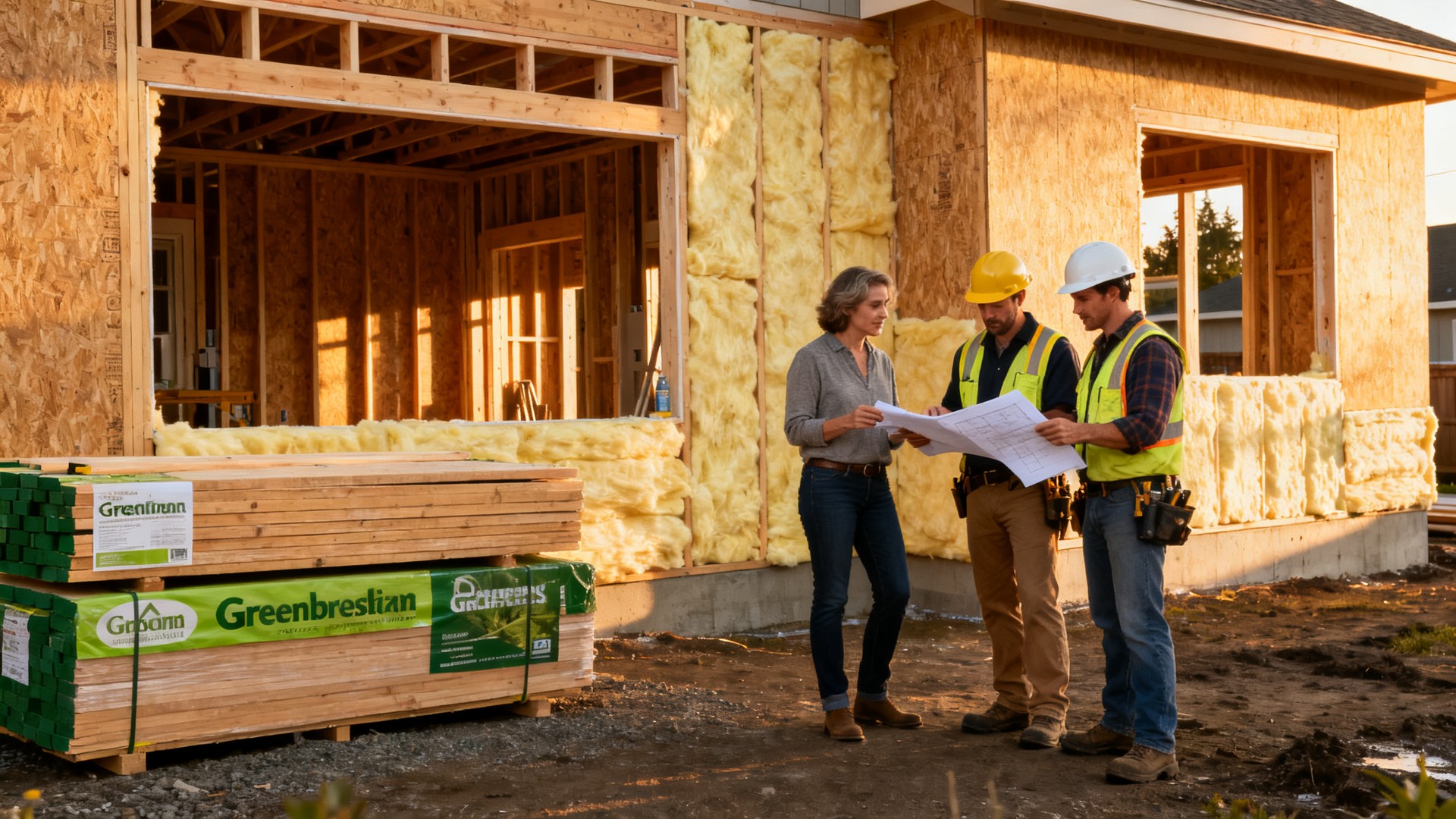
Practical guide to the NGBS (ICC 700): what it covers, who it applies to, how certification works, and whether it's right for budget-minded self-builders.
National Green Building Standard: ICC 700
The National Green Building Standard (NGBS), also known by its code designation ICC 700, is a residential green building guideline and certification route that helps builders and homeowners measure and verify sustainable performance. For budget-conscious DIY builders, NGBS offers a practical, residential-focused alternative to some high-cost programs by covering energy, water, materials, site, and indoor air quality under a single framework. This guide explains what the NGBS requires, how scoring and verification work, which projects qualify, and step-by-step actions a self-builder can take to prepare for certification.
TL;DR:
- NGBS is a residential green home certification (ICC 700) that scores projects across energy, water, site, materials, and indoor air quality.
- Engage a verifier early, document installations with invoices and photos, and prioritize low-cost, high-impact measures: air sealing, insulation, efficient HVAC, low-flow fixtures.
- For many self-builds and renovations, NGBS is a good fit because it’s residential-focused and accepts retrofit measures; verify level thresholds and verifier requirements in the official guides.
What is the National Green Building Standard (NGBS) / ICC 700?
Origins and Who Manages the Standard
The NGBS is an American residential green building standard recognized as an ICC standard (ICC 700). Home Innovation Research Labs administers the NGBS program and publishes guidance, checklists, and the Reference Guide for builders. For practitioners preparing to certify, the NGBS builder resource guide is the primary technical starting point.
Scope: Residential Focus and Program Goals
The standard targets residential construction: single-family homes, multifamily buildings, and qualifying renovations. It awards credits across multiple areas including lot design and development, energy efficiency, water efficiency, resource efficiency (materials and waste), indoor environmental quality, and operation/maintenance. The intent is to provide a balanced, practical path to measurable performance rather than an aspirational or highly prescriptive checklist.
Why DIY Builders Should Care
For self-builders, NGBS offers three practical benefits:
- Residential focus: Criteria are written with houses and small multifamily projects in mind, so requirements map closely to common construction tasks.
- Verification and credibility: Third-party verification gives a marketable, verified green label that can help with resale or incentive qualification.
- Retrofit-friendly options: NGBS tends to include renovation-specific credits, making it a realistic choice for phased self-builds, additions, or ADUs.
Research and program materials show that NGBS can be used alongside energy-focused programs to document energy performance while covering water and materials, so it’s a useful multi-disciplinary standard for small teams and owner-builders.
How ICC 700 Scoring and Certification Levels Work
Scoring Categories and Typical Credits
NGBS organizes its credits into the major categories already mentioned: site, energy, water, resource efficiency, indoor environmental quality, and operation/maintenance. Each category contains measurable credits—examples include improved insulation and air sealing (energy), low-flow plumbing fixtures (water), construction waste diversion (resource efficiency), and ventilation strategies (IAQ). Projects earn points by meeting prescriptive measures or documenting performance-based outcomes.
For an authoritative walkthrough of certification steps and how scoring is assigned, the overview at AttuneIOT explains the program basics and verification needs in accessible terms: what NGBS certification is and how to get it.
Certification Levels — How They Are Earned
NGBS assigns certification at multiple levels to reflect the cumulative points a project earns. Exact point thresholds vary by edition of the standard, so confirm numeric targets in the current Reference Guide. The table below describes the common idea of tiered levels (label names and thresholds should be verified in official documentation):
| Level | What it signals | Typical focus areas |
|---|---|---|
| Entry | Basic verified green practices | Water fixtures, basic insulation, construction waste sorting |
| Targeted | Documented energy and resource improvements | Enhanced air sealing, improved windows, efficient mechanicals |
| Advanced | Strong performance across categories | High efficiency HVAC, extensive water savings, material reuse |
| Exceptional | Top-tier residential performance | Comprehensive measures including advanced IAQ and resource sourcing |
Note: Confirm level names and score thresholds in the NGBS Reference Guide before budgeting or marketing.
Documentation and Verification Basics
Third-party verification is central. A certified verifier reviews plans, inspects work in progress, and verifies final documentation. Typical documentation a self-builder will prepare:
- Construction drawings and specifications highlighting targeted NGBS measures.
- Invoices and manufacturer data for installed systems (windows, HVAC, appliances).
- Photographs of installed insulation, air barrier details, and waste diversion practices.
- Test results where required (blower-door, duct leakage, or commissioning documents).
A typical flow: register the project, submit plans to the verifier, schedule a rough-ins inspection (air barrier, insulation), record test results during construction, and request a final inspection and documentation review.
Which Projects Can Use NGBS: New Homes, Multifamily, and Renovations
New Single-family and Detached Homes
New single-family homes are a core fit for NGBS. The standard’s prescriptive and performance-based options allow builders to choose measures that match budget and skill level. For self-builders, focusing on high-impact, lower-cost measures—air sealing and insulation first—gives the best chance of earning meaningful credits without large upfront expense.
Multifamily Buildings and Units
NGBS supports multifamily certification at either unit level or project level, depending on the scope. Multifamily projects often involve mixed compliance paths: common areas and mechanical systems may require different documentation than individual units. Small-scale builders tackling a few units should confirm whether they will certify units individually or as a project, as verifier requirements and paperwork differ.
Major Renovations and Additions
Renovations and additions are explicitly covered by the standard, which makes NGBS a useful choice for retrofit-focused self-builders. Programs typically allow credits for improved systems, water-efficiency retrofits, and material reuse. For ADUs and tiny houses, eligibility can depend on local code recognition and verifier acceptance—check official rules and discuss project details with a verifier early.
Guidance from industry analysts suggests NGBS can be a better fit than broader commercial programs when the project is residential and focused on practical, verifiable upgrades. For a review of changes that affect project teams, see commentary on recent NGBS editions and implementation considerations: What should project teams expect from the 2025 NGBS?
Key NGBS Requirements Relevant to DIY and Budget-conscious Builders
Energy-efficiency Measures That Matter Most
Energy categories typically reward airtightness, insulated assemblies, efficient heating and cooling, and efficient domestic hot water. For DIYers, prioritize:
- Air sealing: Use tape, gaskets, and continuous air barrier strategies at the framing stage. Follow detailed sequences and photo documentation.
- Insulation: Install full-depth cavity insulation and consider continuous exterior insulation where affordable.
- Right-sized HVAC: Choose appropriately sized heat pumps or high-efficiency furnaces; oversized systems reduce efficiency and comfort.
- Efficient water heating: Consider heat pump water heaters if local incentives apply.
Small investments in blower-door testing and basic duct testing often pay back through better comfort and energy bills. For practical airtightness tips that help meet NGBS energy expectations, our guide on window sealing tips is a useful companion.
Water Savings, Site, and Landscaping Practices
Water-efficiency credits commonly reward low-flow fixtures, efficient irrigation, and stormwater management. Budget-friendly measures include:
- Low-flow faucets and showerheads: Replace fixtures with WaterSense-rated models.
- Efficient irrigation: Use drip systems and timers or manual irrigation to avoid complex smart systems.
- Permeable surfaces and native planting: Reduce stormwater runoff with small-scale permeable pavers and drought-tolerant native plants.
Materials, Waste Reduction, and Low-toxicity Choices
Materials and resource credits look at recycled content, local sourcing, waste diversion, and low-toxicity finishes. Tactics for DIY:
- Reuse and salvage: Use reclaimed lumber or fixtures where safe and documented.
- Waste sorting on site: Set up labeled dumpsters and photograph quantities diverted.
- Low-VOC finishes: Choose paints and sealants with low volatile organic compounds and save receipts for verification.
Indoor Air Quality and Ventilation Basics
IAQ measures include ventilation, filtration, and combustion safety. For most tight homes, mechanical ventilation is required to ensure healthy indoor air. Practical steps:
- Install a balanced ventilation system: A simple energy recovery ventilator (ERV) or heat recovery ventilator (HRV) is often used in cold climates; simple exhaust-plus-passive-inlet may work in milder regions.
- Use quality filtration: Fit central systems with MERV-rated filters suitable for the system.
- Ensure combustion safety: Test combustion appliances and provide sealed combustion where possible.
After occupancy, track ongoing performance: see our guide on monitoring your net-zero home and tracking energy use for post-certification practices.
NGBS Compared with LEED, ENERGY STAR, HERS, and Living Building
NGBS vs LEED for Homes — Focus and Fit
Both NGBS and LEED for Homes provide a residential certification path, but they differ in emphasis and verification approach. NGBS is often seen as more directly tied to common home-building practices and renovation credits, while LEED has stronger ties to commercial protocols and may include more prescriptive documentation.
For a deeper program-level comparison, see our LEED for homes comparison.
NGBS and ENERGY STAR / HERS — Energy Pathways
ENERGY STAR Homes and HERS ratings focus narrowly on energy performance. NGBS covers energy but also water, materials, and IAQ. That means projects sometimes pursue a HERS rating or ENERGY STAR certification to meet energy credits within NGBS. Using energy programs in parallel can reduce risk on the energy category but may increase total verification costs.
Read more about how energy verification programs intersect with residential standards in our primer on HERS rating basics and ENERGY STAR homes.
When to Choose NGBS: Practical Decision Checklist
Use the checklist below to decide if NGBS is a good fit:
- Project type: Residential new build, multifamily, or retrofit.
- Desire for broad coverage: Want water, materials, and IAQ addressed as well as energy.
- Budget for verification: Comfortable allocating some funds for a verifier and paperwork.
- Incentive alignment: Local rebates or tax credits recognize NGBS certification.
Comparison table: program contrast
| Program | Program scope | Verification approach | Best-use case |
|---|---|---|---|
| NGBS | Residential: single-family, multifamily, renovations | Third-party plan review and site inspections | Balanced residential projects seeking broad sustainability coverage |
| LEED for Homes | Residential with commercial methodology influence | Third-party certification, sometimes more prescriptive | Projects seeking a widely recognized commercial-grade rating |
| ENERGY STAR Homes | Energy-focused residential standard | HERS testing and verifier inspection | Projects prioritizing energy savings and efficiency verification |
| HERS | Home energy rating system | Field testing (blower door, duct test) and modeling | Energy performance benchmarking |
| Living Building | Very prescriptive, performance-driven | Intensive documentation and performance proof | Highly ambitious projects aiming for net-positive results; usually higher cost |
For context on more prescriptive standards that aim beyond code, see our article on the living building challenge.
The Certification Process: Step-by-step for Self-builders
Preparing Plans and Registering the Project
Start by reviewing the NGBS Reference Guide and registering the project with the program administrator. Prepare construction drawings that call out targeted NGBS measures so the verifier can review them. Early tasks:
- Register the project: Confirm which edition of ICC 700 applies and register with the program.
- Create a compliance plan: Mark measures you intend to pursue and list required documentation.
- Engage a verifier early: A pre-construction review reduces surprises.
For project teams wanting a practical checklist and templates, Home Innovation’s overview of the NGBS standard is a useful read: NGBS: the standard for sustainable building certification.
Working with a Verifier and Completing Inspections
A verified NGBS project follows a sequence of site inspections and documentation submissions:
- Pre-construction/plan review: Verifier confirms plans and required documentation.
- Rough-in inspection(s): Verifier checks air barrier, insulation, and system installations.
- Testing: Blower-door and duct tests may be requested depending on energy credits pursued.
- Final inspection: Verifier confirms installed products, review invoices, and closes out the project.
Common Documentation Checklists for DIY Projects
A typical DIY documentation file should include:
- Construction drawings and specifications showing proposed measures.
- Receipts and product data sheets for windows, insulation, HVAC, and fixtures.
- Photographs of exposed work: insulation in cavities, air-barrier detailing, and waste-sorting areas.
- Test reports (blower-door, duct leakage) where applicable.
- A completed checklist or scoring worksheet from the NGBS guide.
Example timeline (illustrative): Pre-construction registration and plan review (2–4 weeks), construction with staged inspections (depends on build speed), final inspection and document submission (2–4 weeks). Actual durations vary widely by verifier availability and project complexity.
Cost, Incentives, and Financing Considerations for NGBS Projects
Where Certification Adds Cost and Where It Saves Money
Certification costs fall into a few buckets:
- Administrative fees: Project registration and verifier fees for plan review and site visits.
- Required upgrades: Measures needed to achieve a chosen certification level (e.g., better windows, mechanical ventilation).
- Time and documentation effort: Owner- or builder-time to collect invoices, take photos, and file paperwork.
Savings occur through lower operating costs—reduced energy and water bills—and through incentives or rebates that may offset upgrade costs. Which effect dominates depends on the measures selected and local utility programs.
Potential Incentives and Tax Credits That Apply
Many local and state programs, and some federal incentives, recognize certified green projects or specific eligible measures. For a current roundup of incentives and tax credits that could apply to NGBS projects, consult our green building tax credit article and check local utility portals. Incentive availability changes frequently, so confirm current programs before final budgeting.
Budget-friendly Strategies to Reduce Certification Costs
Consider these approaches:
- Bundle upgrades: Implement several measures at once to reduce incremental costs.
- Stage certification: Pursue a modest certification level now and upgrade performance over time.
- Do documentation in-house: Save on administrative fees by preparing clear invoices and photo logs.
- Target low-cost, high-impact measures first: Air sealing and insulation often deliver the best performance per dollar.
For help estimating how green upgrades affect build cost, see our green home cost per square foot.
Practical Checklist and Sample Upgrade Plan for Pursuing NGBS
A One-page Checklist for Registration and Inspection Readiness
- Register the project: Confirm edition and register with the program administrator.
- Hire a verifier: Contact and schedule a plan review.
- Prepare plans: Mark all NGBS-targeted measures on drawings.
- Order products early: Keep product data sheets and serial numbers for documentation.
- Document exposed work: Photograph insulation, air barrier, and waste sorting.
- Schedule tests: Arrange blower-door and duct testing during construction.
- Collect invoices: Keep receipts organized by trade and date.
- Request final inspection: Submit final checklist and documentation to the verifier.
Sample Upgrade Plan for a Small Self-build (phased Approach)
Phase 1 — Design & register (pre-construction)
- Register project and pick a target certification level.
- Choose priority measures: airtightness, insulation, efficient water fixtures.
Phase 2 — Build & document (construction)
- Install air barrier and insulation; photograph details.
- Install efficient HVAC and water systems; save invoices.
- Perform required tests and keep results.
Phase 3 — Verification & closeout (post-construction)
- Submit documents to verifier.
- Complete final inspection.
- Receive certification and collect any incentive paperwork.
This is an illustrative approach; adapt phases to your build schedule and verifier availability.
Key Decision Points: When to DIY and When to Hire Help
- DIY-friendly tasks: insulation installation (with study), installing low-flow fixtures, on-site waste sorting, and basic air-barrier detailing.
- Tasks that usually need professionals: HVAC sizing and commissioning, structural changes, complex ductwork, and any work that affects code compliance (electrical, gas).
- Always consult your verifier or local code official before self-performing work that affects safety or code compliance.
The Bottom Line: is NGBS Right for Your Project?
NGBS is a strong choice when you want a residential green home certification that covers energy, water, materials, and IAQ with third-party verification. For budget-minded self-builders, it offers practical pathways and retrofit credits that can match phased builds and ADUs. If you want a verified green label without the higher paperwork burden of some commercial-grade programs, start by reviewing the NGBS builder resources and contacting a verifier to confirm eligibility and score thresholds.
Frequently Asked Questions
What does NGBS certification cost?
Costs vary depending on project size, the edition of ICC 700 used, and verifier fees. Major cost drivers include registration, plan review, and on-site inspection fees, plus any measures needed to reach the target level. Rather than a fixed price, treat cost as driven by scope: more aggressive targets and additional tests increase cost. Contact an NGBS verifier for a project-specific estimate and compare that to potential incentives.
How long does the NGBS certification process take?
Timelines depend on how early you engage a verifier and the project schedule. Typical flows include a pre-construction review, staged inspections during build, and a final review—this can take weeks to months based on construction timing and verifier availability. An early plan review and scheduling inspections in advance reduce delays. Use the program administrator’s guidance and your verifier to set realistic milestones.
Can I get NGBS certification for a tiny house or ADU?
Eligibility for tiny houses and ADUs varies. NGBS is designed for residential projects and includes retrofit and multifamily pathways, but verifier acceptance and local code recognition can affect feasibility. Discuss the specific project type with a verifier before committing, and confirm whether your local jurisdiction or incentives accept the certification for small-footprint units.
Does NGBS require energy modeling or blower-door tests?
Some energy credits are performance-based and will require testing or modeling; others are prescriptive and can be documented by product data and installations. Blower-door testing and duct leakage testing are commonly requested for energy verification credits. Check the Reference Guide and coordinate with your verifier to know which tests apply to your chosen credits.
Will NGBS certification increase my resale value?
Certification can be a positive marketing point for buyers seeking verified efficiency, healthy indoor air, and lower operating costs. Studies on resale premiums vary by market and buyer preferences. While certification alone does not guarantee a resale premium, it can increase buyer confidence and support eligibility for some incentives, which buyers may value. Avoid promising a specific price increase—factor certification into broader market strategy.