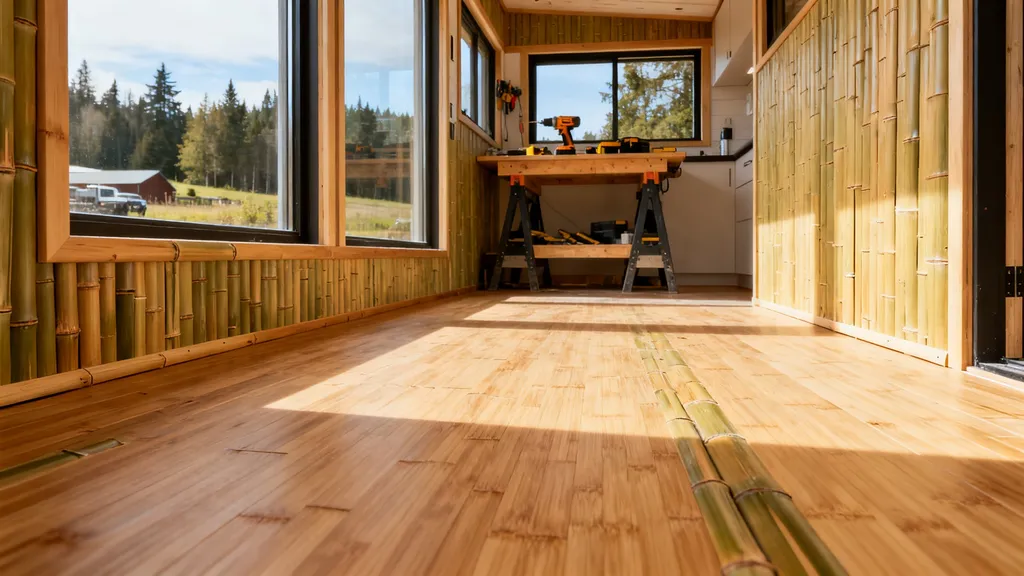
Comprehensive guide to bamboo building: flooring types, panels, structural uses, sourcing, installation tips and sustainability for budget DIY eco-builders.
Bamboo Building Materials: Flooring Panels More
Bamboo building is an umbrella term that covers bamboo flooring, wall panels, engineered products and composite elements used in homes and small structures. For budget-conscious DIY eco-builders, bamboo offers a fast-growing, often lower-carbon alternative to slow-rotation timber, with a range of formats that suit floors, walls and some engineered structural uses. This guide explains product types, installation tips, sourcing and sustainability trade-offs so readers can choose the right bamboo product for a tiny house, cabin, or retrofit project.
TL;DR:
- Choose strand-woven bamboo for high-traffic floors; choose engineered bamboo or bamboo plywood where moisture or dimensional stability matters.
- Verify chain-of-custody (FSC or equivalent), formaldehyde/emissions data and EPDs when assessing sustainability claims.
- Acclimate bamboo materials, pre-drill fasteners for laminated products, and use low-VOC finishes to protect indoor air quality.
Why Bamboo Building Matters for DIY Eco-builders
Bamboo building describes using bamboo-derived materials from solid stalk laminates to engineered panels and strand-woven flooring. Research shows bamboo's mechanical properties can equal or exceed many softwoods, and its 3–5 year regrowth cycle contrasts with multidecade timber rotations, which is why some builders prefer it for sustainable projects (see MIT research on engineered bamboo: Researchers study bamboo for engineered building material 0723).
For DIYers on a budget, bamboo can offer lower material costs per square metre in certain markets, attractive aesthetics, and rapid availability where local supply chains exist. That said, trade-offs matter: processing energy, adhesives, and long-distance shipping reduce some carbon benefits. Authoritative guidance such as regional construction codes and scaffold/manufacture guides remain useful; for example, traditional construction uses and safety details are documented in public guides like the Hong Kong government’s bamboo scaffold manual. Green rating systems such as LEED also recognize fast-renewing materials when chain-of-custody and emissions data are provided.
Practical takeaway: bamboo building is worth considering when you want renewable-sourced materials with good strength-to-weight characteristics and a distinct look. Confirm certifications, check technical data sheets for engineered products, and match product type to the installation conditions before buying.
Bamboo Building Materials at a Glance: Flooring, Panels, Structural, Composites
This quick tour describes the product groups you will see when shopping for bamboo.
Flooring Types (overview)
- Strand-woven bamboo: Manufactured by compressing shredded bamboo with resin under heat and pressure. Very dense and often rated above many hardwoods for hardness.
- Horizontal and vertical bamboo: Solid planks produced by gluing flattened strips in different orientations; these have visible grain patterns.
- Engineered bamboo flooring: A thin bamboo wear layer bonded to a plywood or HDF backing for improved dimensional stability.
Interior Panels and Acoustic Systems
- Bamboo plywood: Thin veneers laminated cross-grain like traditional plywood; used for cabinetry, furniture and non-structural panels.
- Laminated bamboo panels: Thicker sheets used for wall linings and furniture-grade surfaces.
- Acoustic bamboo panels: Perforated or slotted bamboo-faced panels with an acoustic core for sound absorption in living rooms and passive houses. For more on acoustic products, see the deep dive at bamboo acoustic panels.
Engineered and Structural Bamboo Products
- Laminated bamboo (LVL-like): Thick glued laminates used in beams and columns in some markets; often branded as laminated bamboo lumber.
- Bamboo composites: Resins and bamboo fibers form panels or boards that compete with OSB/HDF in specific uses.
Manufacturers apply finishes including UV-cured polyurethane, waterborne lacquers, and penetrating oils. Most bamboo interior products are intended for indoor use; exterior applications require preservative treatment, UV protection and careful detailing.
For broader context among bio-based options, bamboo sits alongside alternatives like mycelium and other emerging materials; see alternative bio-based materials for comparisons.
Bamboo Flooring Deep Dive: Types, Durability, Finishes, and When to Choose Each
This section helps you pick a floor type and understand installation details.
Strand-woven vs Horizontal/vertical Bamboo: Real Differences
Strand-woven bamboo is made by shredding stalks, mixing with adhesive and compressing the mass. This process yields a dense, hard product with excellent scratch and dent resistance—often used where high durability is needed. Horizontal and vertical solid bamboo planks show the bamboo nodes and grain; they are less dense and can be easier to repair but usually less wear-resistant than strand-woven.
Engineered Bamboo and Moisture-prone Areas
Engineered bamboo flooring uses a wear layer bonded to a plywood or HDF core. The core reduces movement when humidity changes, making engineered formats a better choice for kitchens and semi-protected basements. For truly moisture-prone areas like bathrooms, choose tile or waterproof vinyl; engineered bamboo may be acceptable in kitchens if seams are well-sealed and a proper subfloor is used.
Finishes, Maintenance and Lifespan Expectations
Common finishes:
- UV-cured polyurethane: Hard, durable surface that resists wear.
- Waterborne polyurethane: Lower VOC than oil-based alternatives.
- Natural oils/waxes: Easier spot repair, warmer look, but need more upkeep.
To protect indoor air quality, request manufacturers’ emissions data and prefer low-VOC options; see more on low-VOC finishes.
Installation practicalities:
- Acclimation: Allow flooring to acclimate 48–72 hours in the installation space.
- Subfloor prep: Ensure a flat, dry subfloor; use a moisture meter to confirm conditions.
- Methods: Floating (click-lock), glue-down, or nail-down—check manufacturer guidance.
- Gaps: Leave recommended expansion gaps at perimeters; stagger end joints.
What viewers will learn from an installation video: acclimation, subfloor prep, cutting techniques, and joining methods for strand-woven vs standard bamboo.
This video provides a helpful walkthrough of the key concepts:
Comparison/specs table — illustrative guidance for DIY buyers
| Product type | Best uses | Relative hardness | Moisture resistance | DIY-friendliness | Price bracket (example) |
|---|---|---|---|---|---|
| Strand-woven bamboo | High-traffic floors, small homes | High (often higher than many hardwoods) | Moderate (better than solid bamboo) | Medium (heavy, cuts well) | Mid–high |
| Horizontal/vertical solid bamboo | Decorative floors, low-traffic rooms | Medium | Low–moderate | High (traditional workability) | Low–mid |
| Engineered bamboo | Kitchens, basements with care | Medium–high | Improved (stable core) | High (similar to engineered hardwood) | Mid |
| Bamboo plywood | Cabinets, panels | Varies by grade | Low | High (easy to cut/fasten) | Low–mid |
Note: Price bracket entries are illustrative examples; actual prices vary by region and supplier. For finish selection and indoor air quality, refer to the low-VOC finishes guide.
Maintenance tips: sweep or vacuum regularly, use felt pads, clean with manufacturer-recommended products, and refinish or recoat when finish wear becomes visible. Strand-woven floors may last decades with proper care; lifespan depends on finish, traffic and moisture control.
Bamboo Panels and Cladding: Interior Aesthetics and Acoustic Solutions
Bamboo panels provide a warm, consistent finish for walls and ceilings and can improve acoustics when combined with absorbent cores.
Interior Wall Panels, Ceilings and Decorative Cladding
Bamboo wall panels come as tongue-and-groove boards, laminated sheets or decorative veneers. Installation options include adhesive bonding to substrate, screw or pin fixing to battens, or float-and-finish systems. For cabinetry, choose higher-grade, void-free bamboo plywood. When fastening, pre-drill to avoid splitting and use stainless or coated fasteners to avoid staining.
Acoustic Bamboo Panels for Passive Houses and Living Spaces
Perforated bamboo-faced panels with an acoustic core (mineral wool or recycled PET) perform well for mid- and high-frequency absorption. Passive-house and airtight designs value controlled reverberation; bamboo acoustic panels add both sound control and a renewable finish. See further details in the bamboo acoustic panels article for mounting patterns, NRC expectations and cavity requirements.
Exterior Cladding and Weathering Considerations
Exterior use requires pressure treatment or factory-applied preservatives, plus UV-stable finishes. Even treated bamboo will need detailing to shed water and allow ventilation behind cladding. Fastening methods that allow movement and avoid trapped moisture are critical. For outdoor boards, specify manufacturer guidance for recommended service exposures and recoat schedules.
Research on bamboo as a raw material highlights good mechanical properties but warns that natural variability and moisture sensitivity need design responses (see an overview at North Carolina State's BioResources: Bamboo as an emerging source of raw material for household and building products).
Practical installation tips:
- Use adhesive plus mechanical fixings for high-load panels.
- Leave service gaps for humidity-driven movement.
- Finish exposed edges to prevent ingress and delamination.
- Avoid direct soil contact; provide a ventilated rainscreen cavity.
Structural and Engineered Bamboo: Possibilities and Code Considerations
Some manufacturers produce laminated, load-rated bamboo beams and columns, but using bamboo for primary structural elements requires careful verification.
Bamboo Plywood, Laminated Bamboo and Engineered Load-bearing Products
Manufactured structural bamboo (laminated strips or cross-laminated panels) can achieve strengths comparable with common engineered timbers in lab tests. Research communities and universities have published strength data, and commercial products sometimes supply design values similar to glulam or LVL. However, not all bamboo panels are structural; buyer beware—inspect the technical data sheet and product classification.
Fasteners, Joints and Connectors for Bamboo Elements
Practical fastening advice:
- Pre-drill screw holes in bamboo laminates to prevent splitting.
- Use ring-shank nails or structural screws specified for engineered woods.
- Epoxy or structural adhesives can reinforce glued joints in laminated members but follow manufacturer usage and cure times.
- For beam-to-column connections, use metal connectors designed for timber but verify withdrawal and shear capacities with a structural engineer.
Common issues include splitting at fastener locations, variable screw-holding capacity depending on grain orientation, and delamination when water enters adhesive lines.
Building Code, Testing and Certification Basics
Bamboo structural use typically requires:
- Manufacturer technical data sheets with design values.
- Load testing or certification conforming to local standards (ASTM or ISO where available).
- Approval from local building authorities or stamping by a licensed engineer.
For design and safety, consult standards and published resources such as the Bamboo Construction Source Book and verify whether the product has been tested to relevant ASTM or ISO procedures. Because code acceptance varies by jurisdiction, always involve the local building department early in planning for structural bamboo components.
Sourcing, Sustainability and Certifications: Red Flags and Buying Checklist
Sourcing determines whether bamboo is a genuinely lower-impact choice.
Certifications to Look for and What They Mean
- FSC chain-of-custody: Indicates forest-product sourcing and traceability equivalent for bamboo materials where available. Learn more about related certification criteria at FSC-certified lumber.
- Formaldehyde/emissions data: Ask for CARB/TSCA or manufacturer test data for composite products to confirm low-formaldehyde resins.
- Environmental Product Declarations (EPDs): Provide lifecycle carbon and manufacturing impacts for comparison between products.
Lifecycle and Transport Impacts to Consider
Fast regrowth gives bamboo an advantage in biogenic carbon uptake, but manufacturing (resin use, hot pressing) and long shipping distances can offset benefits. Manufacturers with regional production or verified EPDs allow apples-to-apples comparison. For buyers concerned about embodied impacts, request EPDs and compare them to local hardwoods or reclaimed options.
Ethical Sourcing Checklist for Buyers
- Ask about species and country of origin.
- Request chain-of-custody documentation or FSC-equivalent proof.
- Review formaldehyde/emissions testing for composite cores or adhesives.
- Verify surface treatment for exterior-use products.
- Check warranty terms and recommended service exposures.
If sustainability claims are vague or unverifiable, treat them as a red flag. For more background on chain-of-custody and certification choices, the sustainable lumber primer at FSC-certified lumber explains how to interpret labels.
Cost, Procurement and DIY Installation Tips for Budget Builders
This section gives practical money-wise advice and hands-on tips.
How Bamboo Compares on Cost vs Common Alternatives
Bamboo pricing varies by product type and region. Entry-level bamboo planks often compete with mid-range hardwoods, while strand-woven and high-grade engineered bamboo sit nearer the higher end. Compared to cork, bamboo tends to be harder and more durable; compared to recycled plastic decking or flooring, bamboo offers a natural look but may need more maintenance.
Where to Buy and What to Inspect on Delivery
Buy from reputable dealers or direct from manufacturers with clear technical data. On delivery:
- Use a moisture meter to check a representative sample.
- Inspect for consistent color and finish across boxes.
- Confirm batch/lot numbers to avoid mismatch.
- Note damage and file claims promptly.
Hands-on DIY Tips: Tools, Acclimation, and Common Pitfalls
- Tools: Circular saw with carbide blade, jigsaw for cutouts, random-orbit sander for finishing repairs, moisture meter, pneumatic nailer (if nailing), pull bar and spacers for floating installations.
- Acclimation: Store boards flat in the installation room for 48–72 hours; longer in extreme climates.
- Layout: Stagger end joints at least 6–12 inches and arrange boards to balance color variation.
- Fastening: Pre-drill laminated panels and use compatible fasteners; for glue-down installations, use manufacturer-specified adhesives.
- Common pitfalls: Installing over uneven subfloors, failing to leave expansion gaps, mismatching lots, and ignoring manufacturer instructions for finish care.
Link to related installation guidance and cabin projects for layout and subfloor prep techniques when planning a cabin or shed.
Comparisons and Specs Table: Bamboo vs Reclaimed Hardwood, Cork, and Recycled Plastic Flooring
This table helps determine which green material fits a use case.
| Material | Sustainability credentials | Durability | Maintenance | Indoor air quality | DIY-friendliness | Best scenarios |
|---|---|---|---|---|---|---|
| Bamboo (strand-woven) | Fast renewability, look for FSC/EPD | High | Low–moderate | Varies by finish; request emissions data | Moderate (heavy boards) | High-traffic tiny homes, living rooms |
| Reclaimed hardwood | Low harvest impact, reuse benefits (reclaimed wood sourcing) | Medium–high | Medium (may need repair) | Often low VOC if refinished | Moderate (boards may need prepping) | Period-style interiors, vintage look |
| Cork | Renewable bark harvest, biodegradable | Medium | Low (resilient) | Good (low VOC) | High (easy to cut) | Quiet spaces, underfoot comfort |
| Recycled plastic | Uses post-consumer waste (recycled plastic building materials) | High (waterproof) | Very low | Good (inert) | High (lightweight tiles/planks) | Wet areas, exterior decks, low-maintenance needs |
When to choose bamboo:
- Choose strand-woven bamboo if you need a hard-wearing natural floor.
- Choose reclaimed hardwood for unique patina and very low embodied harvest impact if sourcing is local.
- Choose cork for acoustic comfort and resilient feel.
- Choose recycled plastic for waterproof, ultra-low-maintenance installations.
For a deep comparison between bamboo and reclaimed hardwood, consult the article on bamboo flooring vs reclaimed hardwood.
Key Points at a Glance: Choosing Bamboo Materials (quick Decision Guide)
Top 6 Quick Checks Before You Buy
- Certification: Confirm FSC or equivalent chain-of-custody documentation.
- Emissions: Request formaldehyde and VOC test data for composites.
- Species and origin: Note species and manufacturing country.
- Intended use: Match product type to location (strand-woven for traffic, engineered for moist areas).
- Finish type: Choose low-VOC, waterborne or UV-cured finishes where possible.
- Delivery inspection: Check moisture content, batch consistency and visible damage.
Best-use Scenarios (one Line Each)
- Flooring: Choose strand-woven for heavy use; engineered bamboo for kitchens.
- Walls/ceiling: Use bamboo plywood or laminated panels for a uniform finish.
- Acoustic panels: Use perforated bamboo-faced panels with a mineral wool core.
- Exterior cladding: Only use treated bamboo with ventilated rainscreen detailing.
- Structural elements: Use engineered laminated bamboo only with verified structural data and a licensed engineer.
The Bottom Line
Bamboo building materials provide an attractive, renewable option for flooring, wall panels and some engineered structural uses, but benefits depend on product type, manufacturing practices and transport. Next steps for DIYers: pick the product class that fits your climate and use, verify certifications and emissions data, and review manufacturer installation guides before buying and installing.
Frequently Asked Questions
How durable is bamboo compared with hardwood?
Durability depends on the bamboo format. Strand-woven bamboo is highly durable and often rates equal to or above many hardwoods in scratch and dent resistance. Horizontal and vertical solid bamboo are typically less dense and more comparable to softer hardwoods. For reliable comparisons, check Janka or manufacturer hardness ratings and inspect finish types—UV-cured polyurethanes often extend service life.
Is bamboo flooring suitable for bathrooms and basements?
Standard solid bamboo is not ideal for bathrooms or wet basements. Engineered bamboo with a stable core performs better in kitchens and moderately humid basements but still requires careful moisture control and proper sealing. For permanently wet areas, waterproof materials such as tile or waterproof vinyl are safer choices.
How should I maintain bamboo floors to extend their lifespan?
Maintain bamboo floors by sweeping or vacuuming regularly, using manufacturer-recommended cleaners, and protecting high-traffic zones with rugs. Recoat or refinish according to the finish type—oiled floors need more frequent attention than UV-cured polyurethane. Avoid excessive water and promptly clean spills to prevent finish and substrate damage.
Is bamboo truly sustainable compared with timber?
Bamboo’s rapid regrowth is a sustainability advantage, but lifecycle impacts vary. Resin use, hot-press manufacturing and long-distance transport can reduce net benefits. Request EPDs, chain-of-custody documentation, and emissions data to assess a product’s real impact. Locally manufactured bamboo products with verified certifications typically have the strongest sustainability case.
What level of skill is needed to install bamboo flooring?
Skill requirements vary by installation method. Floating click systems and engineered bamboo are accessible for competent DIYers with basic woodworking tools. Glue-down and nail-down installations need more skill and subfloor preparation. For structural or exterior installations, or when working with laminated bamboo for load-bearing use, consult professionals or a structural engineer.