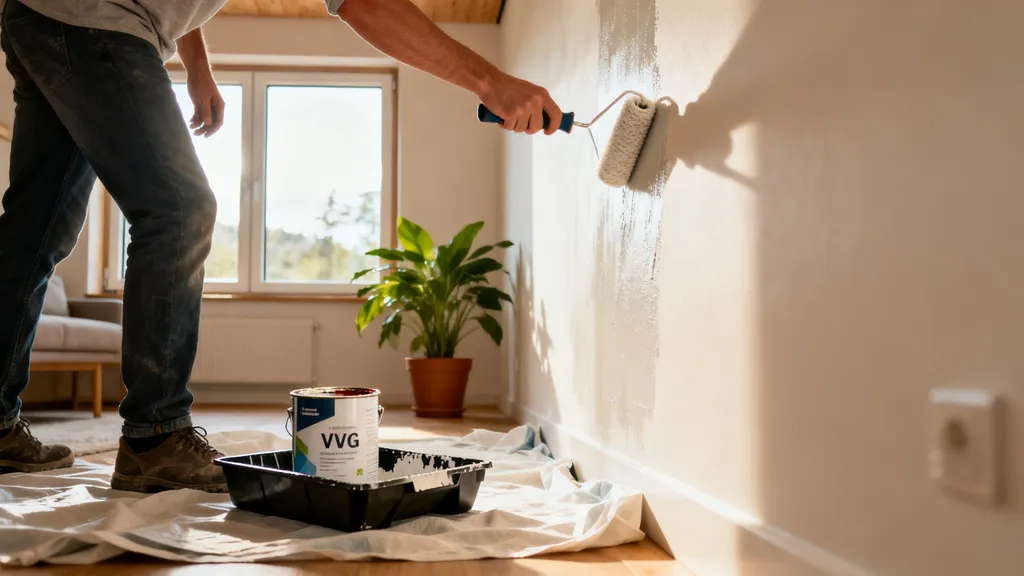
Practical guide to choosing, applying, and maintaining low VOC paints and finishes for healthier, budget-conscious DIY eco homes.
Low VOC Paints and Finishes: Complete Guide
Low VOC paint and finishes reduce indoor air pollution, shorten noticeable odors, and lower long-term off-gassing—benefits that matter for airtight builds, bedrooms, and homes with children or chemical sensitivities. This guide explains what VOCs are, how labels and certifications work, which product types suit each room and substrate, and how to apply, maintain, and dispose of low-emission coatings on a DIY budget. Readers will get practical specs, a compact comparison table, and a printable checklist for on-site decisions.
TL;DR:
- Choose low VOC waterborne paints for most interiors and natural oil or hardwax on exposed timber; check the technical data sheet for exact g/L values before buying.
- Use low-VOC primers, ventilate while painting, and test small sample patches for color and adhesion.
- Keep leftover paint labeled for touch-ups, donate unopened cans, and follow local hazardous waste rules for disposal.
Why Choose Low VOC Paints and Finishes
Health and Indoor Air Quality Benefits
- Many conventional paints release volatile organic compounds (VOCs) for days to weeks after application; some emissions persist longer depending on chemistry and additives.
- VOCs contribute to eye, nose, and throat irritation, headaches, and may aggravate asthma or allergies. In airtight or passive-house builds, reduced air exchange can trap VOCs and raise concentrations over time.
- Prioritize low VOC choices in bedrooms, nurseries, and main living areas where occupants spend long stretches of time.
Environmental and Occupant Comfort Reasons
- Low-emission finishes lower the home's immediate odor load, which can speed re-occupation after painting and reduce the need for mechanical ventilation during drying.
- Research and market analyses show strong growth in demand for low and zero VOC coatings; for example, industry reports project substantial market expansion in low-VOC products as builders and consumers prefer lower-emission options (market research report).
- For airtight builds interested in whole-house indoor air control, consult the site's passive-house airtightness guide to pair low-emission finishes with proper ventilation strategy.
Key points to consider before you buy
- Check the product's g/L VOC rating on the technical data sheet rather than relying solely on marketing terms.
- Remember that tinting can raise VOCs—ask the retailer for post-tint g/L values if you plan custom colors.
- Use certified products where possible to reduce uncertainty about emissions and testing.
Understanding Vocs: What Counts, Thresholds, and Labels
What Volatile Organic Compounds (vocs) Are and Common Examples
- VOCs are organic chemicals that evaporate at room temperature; in paints they commonly include solvents and co-solvents used to control flow and drying.
- Common indoor pollutants related to paints include toluene, xylene, and other hydrocarbons; formaldehyde is a related indoor air pollutant found in some building products, not usually as a primary paint ingredient.
- Greenguard and Green Seal use emissions testing to measure what a product releases into indoor air after installation.
Common Industry Thresholds and Label Terms (zero-voc, Low-voc)
- Label terms are shorthand: zero-VOC paint typically means a product formulated with VOCs in the range of 0–5 g/L before tinting; low-VOC usually refers to paints under roughly 50 g/L for flat finishes, though definitions vary by region and product type.
- Federal architectural coating limits in some jurisdictions have historically been set at higher levels (for example, industry references cite limits like 250 g/L for flat paints and 380 g/L for others), but manufacturers selling low-VOC products aim well below those regulatory maxima (federal guideline discussion).
- Tinting and certain additives can increase VOC content; always check the post-tint g/L value when available.
Certifications and Label Claims to Trust
- Look for independent certifications as filters: GREENGUARD/UL, Green Seal, EU Ecolabel, and LEED low-emitting material credits all reference emissions or content testing in different ways.
- Certifications differ: some measure VOC content (g/L in the can) while others measure VOC emissions from a product installed in a chamber. For building projects where indoor air quality matters, emission-based certifications add confidence.
- When in doubt, request the technical data sheet (TDS) and any third-party test reports before purchasing.
Types of Low VOC Paints and Finishes
Waterborne (acrylic/latex) Paints
- Use case: General interior walls and ceilings. Modern waterborne acrylics offer fast drying, high coverage, and good scrub resistance—suitable for living rooms and hallways.
- Pros: Low odor; quick recoat; wide color range; often available in low-VOC or zero-VOC formulations.
- Cons: Some older waterborne formulations may film-set differently on certain surfaces; a quality low-VOC primer often solves adhesion issues.
Plant-based and Mineral Paints
- Use case: Natural building interiors, breathable walls such as lime or clay plasters, and projects emphasizing low embodied impact.
- Examples: Clay, lime, and silicate mineral paints that rely on mineral binders or plant-based oils.
- Pros: Very low emissions, breathable finishes that suit hygroscopic walls, and authentic natural appearance.
- Cons: May require additional coats for uniform coverage; some formulations perform poorly in high-moisture areas unless specifically treated.
- For background on mineral and clay finishes, see the site's natural building finishes.
Natural Oil Finishes and Hardwax Oils
- Use case: Interior and exterior wood—trim, cabinetry, exposed beams, and reclaimed timber.
- Pros: Penetrating oils and hardwax provide a natural-looking finish, are often repairable by spot re-oiling, and can be low-emission if formulated without solvent carriers.
- Cons: Some oil finishes contain natural or synthetic solvents that add VOCs; choose low-VOC formulations and consult product TDS.
- For step-by-step painting and finishing of wood with oils, see the natural oil finish guide.
Zero-voc Specialty Products
- Use case: Primers, stains, and sealers marketed as zero- or near-zero VOC for sensitive areas or specific substrates.
- Pros: Useful for situations where minimizing emissions is critical—nurseries, medical rooms, or tight passive-house interiors.
- Cons: Availability and color selection may be limited; check compatibility with topcoats and field performance on your substrate.
- Government and industry testing programs have evaluated low-VOC latex performance; consult regulatory technical reports for comparative data (EPA characterization).
Performance and Specs: Coverage, Durability, and a Comparison Table
Key Performance Metrics
- Hiding power (opacity): How well one coat hides the substrate or previous color.
- Coverage: Usually stated as square meters or square feet per liter/gallon—low-VOC formulations can vary but modern products often match conventional paints.
- Durability / scuff resistance: Important in high-traffic areas; check ASTM or manufacturer test claims for scrub cycles.
- Dry time and recoat window: Affects project scheduling—waterborne typically dries faster than solvent-based.
- Odor level: Related to VOCs but not identical—some low-VOC formulas still have noticeable odor from additives.
How Low VOC Products Compare to Conventional Paints
- Modern low-VOC waterborne paints often match older solvent paints for coverage and durability. In many cases, the trade-offs are small and acceptable for interior projects.
- Natural and mineral paints can require more coats or different application techniques but offer breathability and lower embodied emissions.
- When durability is critical (kitchen trim, stair treads), choose a tested semi-gloss or satin low-VOC product designed for high scrub resistance or use a durable topcoat compatible with your chosen system.
Comparison/specs Table
| Finish type | Typical VOC range (g/L) | Best uses | Durability / scuff resistance | Dry time | Typical odor level | Maintenance notes |
|---|---|---|---|---|---|---|
| Conventional solvent-based | higher (varies) | Exterior trim, specialty coatings | High; often very durable | Longer (hours) | Strong | Requires solvent cleanup; disposal more regulated |
| Low-VOC waterborne (acrylic/latex) | often <50 | Interior walls, ceilings, trim | Good to very good | Fast (1–4 hours to touch) | Low to moderate | Water cleanup; many products match traditional performance |
| Natural oil / mineral finishes | 0–50 (product-dependent) | Exposed wood, natural plasters | Moderate; repairable by spot touch | Variable (hours to days) | Low to moderate | Re-oil for maintenance; check compatibility with stains |
Note: These ranges are typical industry examples. Always read the product technical data sheet for exact g/L values and test results.
Real-world performance trade-offs
- For painted floors or high-abrasion trim, look for low-VOC products specifically tested for high scrub cycles or choose a durable waterborne finish designed for floors.
- For breathable natural walls, mineral paints improve moisture buffering, reducing condensation risk in some assemblies—but they may not be ideal for direct contact with shower splash without tile or waterproofing.
- Brand examples to investigate include Benjamin Moore Natura (zero/low-VOC interior line), Sherwin-Williams Harmony (low-odor), and ECOS Paints (zero-VOC options). Compare TDS and warranty claims when making a final selection.
How to Choose the Right Low VOC Paint for Each Room and Substrate
Room-by-room Recommendations (bedrooms, Kitchens, Bathrooms)
- Bedrooms and nurseries: Prioritize low-VOC or zero-VOC interior paint with low odor; flat or eggshell sheens for walls, satin for trim. Allow 24–48 hours of ventilation before prolonged occupancy when possible.
- Living areas and hallways: Low-VOC eggshell or satin balances washability and low sheen. Choose paints with higher scrub resistance for high-traffic zones.
- Kitchens: Choose low-VOC semi-gloss on trim and cabinetry for washability. For walls near cooking surfaces, consider using tile splashbacks or washable finishes to reduce painted surface area; see bathroom finish options for tile guidance that applies to kitchens too.
- Bathrooms and wet areas: Use mildew-resistant low-VOC formulations where specified; for showers and tubs rely on tile and waterproofing rather than paint for wet zones.
Substrate and Primer Compatibility (drywall, Wood, Metal)
- Drywall: Use a low-VOC primer suitable for drywall to improve hide and adhesion—this often reduces the total number of finish coats needed.
- Wood: For clear finishes, choose between waterborne clear coats and natural oils/hardwax depending on the look and repair strategy. For painted wood, a low-VOC bonding primer followed by a durable topcoat gives best long-term results. For reclaimed wood, see sourcing reclaimed wood for finishing tips.
- Metal: Use primers formulated for metal with corrosion protection; some low-VOC primers exist but confirm adhesion testing.
- Exterior considerations: Exterior paints and local regulations vary; some exterior formulations have different VOC rules. Check the product TDS and local building codes before specifying for outside use.
Budget, Finish (sheen), and Aesthetic Considerations
- Sheen affects cleanability and appearance: flatter sheens hide surface imperfections; higher sheens are easier to wipe clean.
- Budget trade-offs: Higher-quality low-VOC products may cost more upfront but often require fewer coats and last longer, reducing lifecycle cost.
- Sample before you buy: Buy sample pots and apply to the actual wall under the intended lighting to confirm color and film appearance.
- When lifecycle impact is a priority, consult product EPDs (environmental product declarations) if available; this helps compare embodied impacts across product types.
Application Tips and Best Practices (youtube Embed Recommended Here)
Surface Prep, Priming, and Sanding Safely
- Clean the surface: Remove dust, grease, and loose material. Use a mild detergent rinse and allow full drying.
- Make repairs: Patch holes and sand smooth. For sanding, wear a dust mask or respirator rated for particulates and use a vacuum with HEPA capture where available.
- Prime when needed: Use a low-VOC primer compatible with your topcoat. Priming improves adhesion, hides stains, and can reduce the number of finish coats.
Tools, Technique, and Achieving Even Coverage
- Tools: Use quality synthetic brushes for waterborne paints and high-quality rollers with correct nap length for the substrate.
- Technique: Work in manageable sections, maintain a wet edge, and back-roll to even out texture. For cutting in, use a quality angled brush and steady strokes.
- Spraying: Airless sprayers provide fast coverage but generate fine aerosols; use full respiratory protection and mask off adjacent areas.
Ventilation, Drying Times, and Occupant Safety
- Ventilate well: Open windows, use fans to exchange indoor air, and keep HVAC balanced to exhaust to the outdoors when possible.
- Drying times: Follow the manufacturer's recoat window; typical low-VOC waterborne paints are touch-dry in 1–4 hours but may need longer to fully cure.
- Occupant safety: Keep children and pets away from freshly painted rooms until odor levels drop and films are dry. For sanding or spraying, use a respirator with organic-vapor cartridges when solvents are present.
Watch this step-by-step guide on using low-voc acrylic enamel paint:
What viewers will learn: how to set up a cut-in and rolling rhythm, arrange ventilation, and avoid lap marks during a single-day room paint.
Troubleshooting Common Problems
- Poor adhesion: Often due to insufficient cleaning or wrong primer; strip or sand and apply a bonding primer.
- Blushing (milky appearance): Caused by moisture trapped in the film—allow longer drying, improve ventilation, and avoid painting in very humid conditions.
- Streaks and roller marks: Use the correct roller nap and back-roll quickly to level the finish; keep a wet edge.
Natural Oil Finishes vs Waterborne Low VOC Paints: Trade-offs and Lifecycle Thinking
Aesthetic, Repairability, and Longevity Comparisons
- Aesthetics: Natural oils enhance wood grain and age gracefully; waterborne paints provide uniform color and a wide palette for walls.
- Repairability: Natural oil finishes are typically easier to repair locally—spot-sanding and re-oiling blends well. Painted surfaces often need feathering and sometimes full recoat to hide touch-ups.
- Longevity: Durable waterborne topcoats can resist scuffing and stains on walls and trim; oil finishes may require periodic maintenance but can outlast frequent repaints when well cared for.
Environmental Trade-offs and Carbon Considerations
- Manufacturing and cradle-to-grave impacts vary by product chemistry; avoid blanket claims. For builders wanting lifecycle clarity, consult product EPDs where available.
- Natural finishes may have lower VOC emissions but can use agricultural oils or natural resins with their own sourcing impacts. Waterborne low-VOC coatings often have lower indoor emissions and may be produced at scale with refined supply chains.
- Practical recommendation: Use natural oils where timber appearance and repairability add real value (exposed beams, reclaimed wood), and choose low-VOC waterborne paints for broad wall coverage where ease of cleaning and color stability matter. For lifecycle context, explore the site's recycled material options to pair low-emission finishes with reclaimed and low-impact substrates.
Maintenance, Disposal, and Quick Reference Checklist
Cleaning and When to Recoat
- Cleaning: Use mild detergents and soft cloths for painted surfaces; avoid abrasive cleaners. For oil-finished wood, follow the manufacturer's maintenance instructions—usually mild soap and re-oiling schedules.
- When to recoat: Look for film failure, chalking, or significant scuffs; a small touch-up can extend the life of a finish. For high-traffic areas, expect more frequent maintenance than low-traffic rooms.
Leftover Paint: Storage, Donation, and Disposal
- Storage: Keep cans sealed, label them with the room and color, and store in a cool, dry place away from freezing temperatures.
- Donation: Unopened or nearly full cans are often accepted by community groups, schools, or nonprofit reuse centers.
- Disposal: Do not pour paint down drains. Follow local hazardous waste guidance for disposal; rules and facilities vary by jurisdiction—contact local waste authorities for instructions.
Quick Decision Checklist for DIY Builders
- Check the product TDS for g/L VOC values and post-tint data.
- Buy a sample pot and apply a test patch to the actual substrate and light.
- Select a compatible low-VOC primer if adhesion or hide is a concern.
- Ventilate the room during and after application; plan occupancy timing.
- Keep leftover paint labeled for touch-ups; donate or dispose per local rules.
The Bottom Line
Choose low VOC paint for most interiors to reduce indoor emissions and odors; reserve natural oils and hardwax for exposed wood where repairability and appearance matter. Always verify the product g/L value on the technical data sheet, test a sample patch, and plan ventilation during application.
Frequently Asked Questions
What exactly does 'low VOC' mean on a paint can?
On a paint can, "low VOC" is a general marketing term that usually means the product's volatile organic compound content is lower than conventional formulas. Typical industry examples place low-VOC flat paints below roughly 50 g/L, but thresholds vary by region and product type. Always check the manufacturer's technical data sheet for the exact g/L number and any post-tint VOC values before purchase.
Is zero-VOC really odorless and totally safe?
"Zero-VOC" generally indicates formulations with VOCs near 0–5 g/L before tinting, and these paints often have much lower odor than solvent-based paints. However, zero-VOC does not guarantee absolutely zero emissions—additives, colorants, or substrates can introduce smells or low-level off-gassing. For high-sensitivity situations, choose products with emission test certifications (like GREENGUARD) and ventilate thoroughly during and after application.
Are low VOC paints more expensive or harder to apply?
Low-VOC paints can cost slightly more upfront than basic budget paints, but many modern low-VOC waterborne products match conventional paints for coverage and durability, reducing total cost through fewer coats and less maintenance. Application technique is similar; use the right primer and tools and follow manufacturer recoat windows. For specialty natural mineral paints, expect different handling and possibly more coats for full coverage.
Can I use low VOC products outdoors or on floors?
Some low-VOC products are formulated for exterior use or floor applications, but exterior paints are subject to different performance and VOC regulations. For floors, choose coatings specifically tested for abrasion and traffic; standard wall paints—even low-VOC—may not withstand foot traffic. Always read the technical data sheet for the intended use and environmental exposure.
How should I dispose of leftover low VOC paint?
Store leftover paint sealed and labeled for future touch-ups. Donate unopened or nearly full cans to reuse centers or community programs when possible. Follow local hazardous waste rules for disposal—do not pour paint down drains or into soil. Contact your municipal waste authority for drop-off locations and accepted procedures.