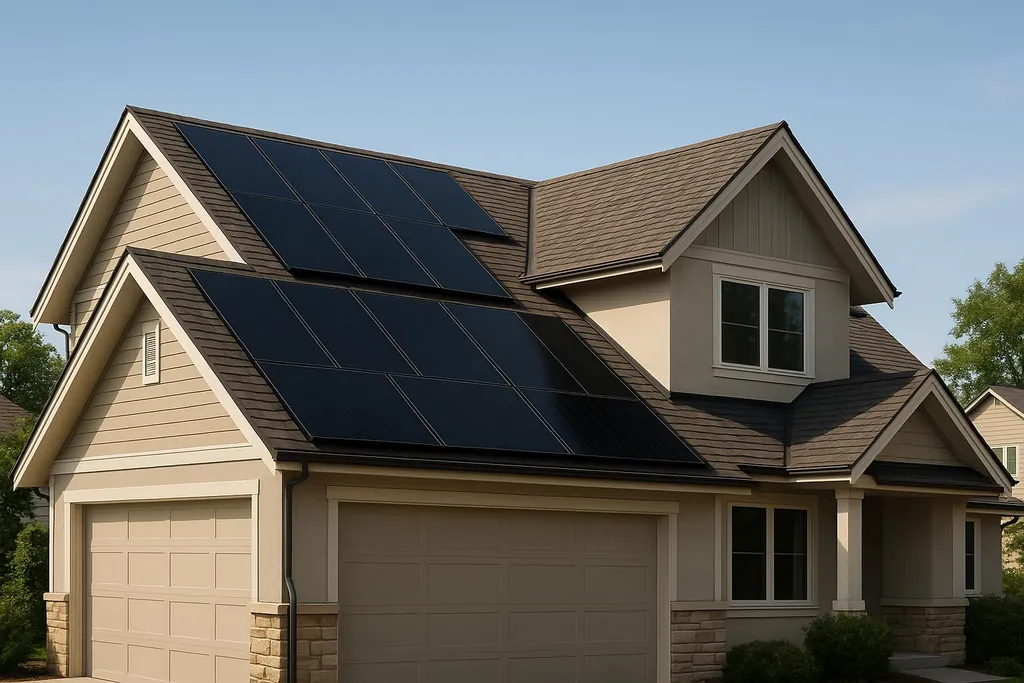
Learn how to select solar panels that fit your roof's structure, style, and energy needs for optimal performance and aesthetics.
How to Choose Solar Panels That Match Your Roof
When choosing solar panels for your roof, focus on three key factors: roof compatibility, panel type, and installation method. Here’s what you need to know:
- Roof Condition: Your roof must be sturdy enough to support the added weight (3–4 lbs per sq. ft.). Address any leaks or structural issues beforehand.
- Roof Material: Asphalt shingles, metal, and tile roofs work well with most panels. However, slate and wood roofs are less suitable due to fragility or fire risks.
- Roof Age: If your roof is nearing the end of its lifespan, replace it before installing solar panels to avoid costly removal and reinstallation later.
- Panel Types:
- Monocrystalline: High efficiency (17–22%), sleek black design, ideal for limited roof space.
- Polycrystalline: More affordable, slightly less efficient (15–17%), works well for larger roofs.
- Thin-Film: Lightweight, flexible, but least efficient (10–13%), suitable for unconventional roof shapes.
- Roof Layout: Measure the roof’s angle, direction, and available space. South-facing roofs with minimal shading are ideal for maximum energy output.
- Aesthetics: Match panel colors and frames to your roof for a polished look. Solar shingles offer a seamless design but at a higher cost.
Quick Comparison
| Factor | Key Points |
|---|---|
| Roof Condition | Fix leaks or damage before installation. |
| Roof Material | Asphalt, metal, tile are compatible; slate and wood are not ideal. |
| Roof Age | Replace roofs nearing the end of their lifespan. |
| Panel Types | Monocrystalline (efficient), Polycrystalline (budget-friendly), Thin-Film (lightweight). |
| Aesthetics | Match panel/frame colors to roof; solar shingles for seamless integration. |
Solar Panel Confusion Solved: Match Technology to YOUR Home
Check Your Roof's Basic Features
Before diving into solar panel installation, take a close look at your roof's material, condition, angle, and structural strength. These factors play a big role in determining the type of panels you need and ensuring the success of the installation. Start by evaluating the roof's material and overall condition to figure out the best installation method.
Check Roof Material, Age, and Condition
The type of material your roof is made of directly affects how solar panels are installed and how long the system will last. For example, asphalt shingles - common across the U.S. - last about 12–30 years, which is often shorter than the 25–30-year lifespan of solar panels. Metal roofs, on the other hand, can last 40–75+ years and cost between $9 and $14 per square foot . They also reflect heat, which can help keep panels cooler. Tile roofs, including clay and concrete varieties, can last over 100 years but require careful installation because of their fragility. However, wood and slate roofs are generally unsuitable for solar panels due to fire risks and their delicate nature .
> "The best roofing material for solar panels ensures a stable foundation for your system." - GreenLancer
Don’t overlook your roof’s age and condition. Damaged shingles, tiles, or membranes could indicate rot or other issues. If you spot leaks, address them right away, as water damage can weaken rafters or trusses, reducing their ability to support weight .
Measure Roof Angle, Direction, and Available Space
Getting accurate measurements of your roof is crucial for determining how many panels can fit and where they should be placed for maximum efficiency. Start by measuring the vertical height from the roof's peak to the gutter line, and then measure the width from eave to eave. Identify any shaded or obstructed areas and mark them on a sketch of your roof . Leave a 3-foot buffer around the solar array for easier installation and to improve wind resistance .
To figure out your roof’s direction, use Google Maps to locate your home . South-facing roofs are ideal because the sun moves through the southern sky . You can measure the roof’s angle using a ladder, level, and tape measure. Roof pitch is often expressed as a ratio, such as 4:12, meaning the roof rises 4 inches for every 12 inches of horizontal distance. Keep in mind that steeper roofs tend to increase labor costs during installation .
Once you’ve got these measurements, confirm that your roof has the load capacity to safely support the solar panels.
Verify Weight Support Capacity
Solar panels typically add 3 to 4 pounds per square foot to your roof’s load . Ensuring that your roof can handle this extra weight is critical. Building codes generally require a minimum live load capacity of 20 pounds per square foot in addition to the weight of the roof and solar panels . The condition of the wooden roof sheets, rafters, or trusses underneath also plays a key role in determining load capacity .
Hire a professional roofing company to assess your roof’s current dead load, the added weight from the solar panels, and the live load capacity . If the additional weight reduces the live load capacity below 20 pounds per square foot, you may need to reinforce the structure .
> "The roof of a modern building is often sufficiently strong to carry the weight of a solar panel installation." - KPost Company
If your roof is approaching the end of its lifespan, replacing it before installing solar panels can save you from the hassle and cost of removing and reinstalling the panels later . For older homes or if there’s any uncertainty about the roof’s structural integrity, consult a structural engineer to evaluate the roof and recommend any necessary reinforcements .
Pick the Best Solar Panel Type for Your Roof
Once you've assessed your roof, it's time to choose the solar panel type that aligns with both your energy goals and your roof's appearance. The right choice depends on your roof's structure, your budget, and how you want the panels to look. The three main types to consider are monocrystalline, polycrystalline, and thin-film panels - each offering distinct benefits based on your needs.
Monocrystalline Panels
Monocrystalline panels are known for being the most efficient option, with efficiency ratings between 17% and 22% . Their sleek, all-black design makes them a favorite for homeowners looking for a polished, uniform look - especially on darker roofs. These panels are ideal if your roof space is limited but you want to maximize energy output.
> "Monocrystalline solar panels are the best solar panels for residential solar installations." - Catherine Lane, Solar Industry Expert
While monocrystalline panels tend to cost about $0.05 more per watt than polycrystalline options , this higher upfront expense often pays off for smaller roofs or those aiming for the highest possible energy generation. They are also known for their durability and long-term reliability.
These panels are compatible with a variety of roof materials, including asphalt shingles, metal, and tile. Their uniform black color blends particularly well with darker shingles or metal roofing, making them a top choice for homeowners prioritizing aesthetics.
If you're looking for a more affordable option and have plenty of roof space, polycrystalline panels might be a better fit.
Polycrystalline Panels
Polycrystalline panels strike a balance between performance and cost. They feature a distinctive blue, marbled appearance that can complement certain roof designs, though their look may not appeal to everyone compared to the sleek black of monocrystalline panels.
These panels are a solid option if you have ample roof space and a tighter budget. While their efficiency - ranging from 15% to 17% - is slightly lower than monocrystalline panels, the difference in output can often be offset by installing a few additional panels if space allows.
Polycrystalline panels are durable and work well with most roof types, including asphalt shingles, metal, and tile. If your roof has specific weight or design considerations, though, thin-film panels might be worth exploring.
Thin-Film Panels and Solar Shingles
Thin-film panels are lightweight and flexible, making them perfect for roofs with weight restrictions or unconventional shapes. However, their efficiency is lower, typically falling between 10% and 13% . This means you'll need more roof space to generate the same amount of energy as other panel types.
> "Out of the three types of solar panels, monocrystalline are the most efficient, polycrystalline are the cheapest, and thin-film panels are the most portable." - Jacob Marsh, EnergySage
Thin-film panels are especially well-suited for metal roofs, particularly standing seam designs. For instance, in 2024, MiaSolé, a California-based thin-film solar panel manufacturer, highlighted their panels as an excellent choice for properties with metal roofs, as the standing seams provide an ideal surface for installation .
For a more integrated look, solar shingles are another option. These shingles combine energy generation with your roof's design, making them a great choice if you're replacing your roof or building a new home. They are especially appealing in areas where local regulations or HOA guidelines favor low-profile installations. However, they come at a higher cost, ranging from $25,000 to $60,000 .
Solar shingles work best on asphalt shingle roofs, offering a seamless appearance without the raised profile of traditional panels. Keep in mind, though, that availability can be limited, and you'll need an installer experienced in this specialized technology.
Here's a quick comparison of the three panel types:
| Feature | Monocrystalline | Polycrystalline | Thin-Film |
|---|---|---|---|
| Efficiency | 17-22% | 15-17% | 10-13% |
| Appearance | Sleek black | Blue, marbled | Clean, all-black |
| Best For | Limited roof space | Budget-conscious | Lightweight installs, unique roofs |
| Cost | Highest | Mid-cost | Lowest |
| Space Needed | Less | More | Most |
Choose Panel Frames and Colors That Match Your Roof
Once you've evaluated your roof and chosen the right type of solar panels, the next step is to make sure the frames and colors align with your roof's style. The overall appearance of your solar installation depends heavily on how well these elements blend with your home's design. By selecting the right combination, you can ensure the panels complement your roof rather than stand out awkwardly.
Pick the Right Frame Color
The color of your panel frames plays a role in both their appearance and performance. Darker frames, like black or dark gray, give a sleek and modern look, especially on asphalt or metal roofs. However, they can absorb more heat, which might slightly lower efficiency. On the other hand, silver or lighter frames reflect heat better and provide a soft contrast on tile or light-colored roofs. If your home has a Mediterranean or rustic style, bronze frames can be an excellent choice to complete the aesthetic. Matching the frame color to your home's exterior palette ensures the solar panels integrate seamlessly into the overall design.
> "Choosing the right color for solar panel frames is more than just a design choice - it's about finding the perfect balance between style and efficiency." - Ryan, GoBeSolar
Match Panel Colors with Your Roof
The color of the solar cells themselves also impacts how well the panels fit with your roof. Dark panels with matching dark frames and back sheets are ideal for modern flat roofs or darker-colored roofs, as they minimize visual contrast. For lighter roofs, panels with silver frames or lighter back sheets can create a more cohesive appearance. Textured or matte finishes are another option, as they reduce glare and blend more naturally with matte roofing materials.
It’s worth noting that while colored panels with dyes or coatings can enhance aesthetics, they may be less efficient - sometimes by as much as 45% compared to standard blue or black panels. However, advancements like soft-print lithography have reduced this efficiency gap to around 10%.
Work with Textured and Specialty Roofs
If your roof has a unique texture or material, such as slate or clay tiles, you'll need to consider how the panels will integrate with these surfaces. For slate roofs, PV slates are a great option. They blend seamlessly with natural blue-gray slates, offering a traditional look while generating energy. In addition, these PV slates are lighter and stronger than conventional slates. To ensure a cohesive appearance, a border of natural or infill slates - about 1.6 feet wide - should be installed around edges, roof windows, and other penetrations.
For clay tile roofs, building-integrated photovoltaics (BIPV) can be custom-colored to mimic traditional materials, creating a uniform look. Using mounting systems that match the roof's edges and colors, along with low-profile mounts that keep the panels close to the roofline, helps maintain a clean and professional finish. Aligning the panels in a grid that matches the roof's angles further enhances the overall aesthetic.
Architectural projects like Atelier Kaiser Shen's Haus Hoinka and Nathan Good Architects' Hazelnut Orchard Farmhouse showcase how thoughtful design can make solar panels nearly invisible from the street. While specialty options like PV slates can cost significantly more - typically 200–400% higher than standard panels - they provide unmatched aesthetic benefits. For instance, a 4kW PV slate system, including a SolarEdge inverter and optimizers, starts at around $14,000.
Learn Installation Methods for Different Roof Types
Once you've assessed your roof's structure and load capacity, the next step is selecting an installation method that suits its material. Each roof type requires specific techniques to ensure panels are securely mounted while maintaining the roof's integrity. Let’s dive into the methods for some of the most common roof types.
Asphalt Shingle Roofs
Asphalt shingle roofs are the most commonly used in the United States. Installing solar panels on this type of roof involves using a mounting system with flashing to prevent water leaks. The process typically requires drilling through the shingles to secure mounting rails with lag bolts, but proper flashing installation is the key to protecting the roof.
Dan Felix, Training Manager at IronRidge, highlights the importance of adhering to manufacturer guidelines:
> "From that note, it's clear that an installing contractor should identify the exact manufacturer of the roofing material on a customer's home and double-check the manufacturer's website for instructions on properly installing a flashing, both for maintaining the warranty and ensuring a waterproof roofing system."
The flashing should feature an elevated platform to redirect water away from the penetration point. Felix further explains:
> "You don't want to send water to the top of the platform. That platform is designed into the product to divert water away from your penetration location."
When working with flashing, avoid removing existing nails. Instead, cut a V-notch in the flashing to fit around them. Felix advises:
> "You'll find that there are some flashing manufacturers that recommend removing nails or fasteners in the way of your installation. As an installer, I don't recommend that."
To protect your warranty, always use the sealant specified by the manufacturer when sealing pilot holes. Ensure the flashing aligns with the drip edge of the shingle course to prevent debris buildup. Additionally, trim any shingles around elevated platforms so they sit flush with the flashing base for a clean and secure fit.
Metal Roofs
Metal roofs often provide the advantage of clamp-on mounting systems, which eliminate the need for drilling. The installation technique depends on the type of metal roof.
- Standing Seam Metal Roofs: Manufacturers like Quick Mount PV and Ecofasten offer clamp-on systems that attach directly to the raised seams. This method avoids roof penetration, preserving the waterproof barrier.
- Corrugated Metal Roofs: A different approach is needed here. Systems like SnapNrack’s Straddle Blocks are mounted on the ridges, with screws driven into the roof's center where water flow is less likely. While this method requires waterproof sealant around each penetration, it’s relatively straightforward.
Thin-film solar panels, such as those from MiaSolé, are another option for metal roofs. These panels are lightweight and easy to install, making them a popular choice for this roof type.
Tile and Flat Roofs
Tile and flat roofs come with their own set of challenges, requiring specialized mounting techniques.
- Tile Roofs: Installation usually involves removing tiles to attach racking feet to the deck. Metal hooks with sealed flashing are then installed. In some cases, installers replace tiles with specialized metal versions that integrate mounting feet and flashing, creating a streamlined look.
- Flat Roofs: These roofs typically require tilted racking systems. Ballasted mounts are a common choice, as they secure panels without penetrating the roof. If penetration is unavoidable, every hole must be carefully sealed to prevent leaks, as flat roofs are prone to water pooling. It’s also essential to confirm that the roof can handle the added weight, especially in areas with heavy snow during winter.
For older or more fragile roofs, a professional assessment is crucial. Roofs over 20 years old may need repairs or replacement before installation, and asphalt shingle roofs should ideally be no more than 10 years old for the best results. Certified installers can ensure panels are strategically placed and securely mounted while minimizing stress on the roof structure.
Compare Solar Panel and Roof Material Options
Choosing the right combination of solar panels and roof materials is essential for balancing performance and aesthetics. Each pairing comes with its own set of benefits and challenges, influencing both how well the system works and how it looks. Below, we break down the key factors to help you make an informed decision.
Solar Panel Type Comparison Table
Solar panels come in various types, each suited for different roof characteristics and priorities. Here’s a quick comparison of the main options:
| Panel Type | Efficiency | Cost | Weight | Appearance | Best For |
|---|---|---|---|---|---|
| Monocrystalline | 18–22% | High | 40–50 lbs per panel | Sleek black | Small roof spaces, modern designs |
| Polycrystalline | 15–18% | Mid | 40–50 lbs per panel | Blue with visible crystals | Budget-friendly, traditional homes |
| Thin-Film | 10–12% | Low | 20–30 lbs per panel | Uniform dark surface | Complex roof layouts, weight-sensitive roofs |
| Solar Shingles | 14–18% | Highest | Varies | Integrated roof look | New builds, premium aesthetics |
_Note: The weight of solar shingles depends on the integrated roofing material rather than individual panels._
Weight matters when it comes to your roof’s structural integrity. For context, a standard 60-cell panel weighs between 40–50 lbs. A full solar array can easily add over 1,000 lbs to your roof .
Mounting systems also differ by panel type. Monocrystalline and polycrystalline panels require rigid racking systems for installation . Thin-film panels, on the other hand, are more versatile - they can be mounted with rails or even adhered directly to the roof, making them ideal for roofs with complex shapes or obstructions like chimneys .
Next, let’s look at how roof materials influence installation and long-term performance.
Roof Material and Panel Compatibility Table
Your roof material plays a big role in determining the best solar panel type and installation method. It also affects how well the system performs over time. Here’s a breakdown of common roof materials and their compatibility with solar panels:
| Roof Material | Lifespan | Panel Weight Capacity | Best Panel Types | Installation Method | Considerations |
|---|---|---|---|---|---|
| Asphalt Shingles | 12–30 years | Good | All types | Penetrating mounts with flashing | Most common, affordable option |
| Metal (Standing Seam) | 40–75+ years | Excellent | All types | Clamp-on systems | No drilling required, very durable |
| Metal (Corrugated) | 40–75+ years | Excellent | All types; thin-film ideal | Ridge mounting with sealant | Lightweight panels preferred |
| Clay/Concrete Tile | 50–100+ years | Adequate with reinforcement | Monocrystalline, thin-film | Tile removal and replacement | Requires careful handling |
| Flat Roof | 20–30 years | Good | All types | Ballasted or penetrating mounts | Allows optimal panel angles |
Roof structure is critical for solar panel compatibility. Metal roofs, for instance, are sturdy enough to handle solar installations without major modifications . However, heavier materials like clay or concrete tiles require additional reinforcement to support both the tiles and the solar panels .
Climate also plays a role. Metal roofs can lower cooling costs by up to 25%, but solar panel efficiency tends to drop when temperatures exceed 77°F . In snowy regions, metal roofs are ideal because they shed snow effectively, while asphalt shingles may buckle under the added weight. For roofs with delicate materials like wood shakes or slate tiles, extra care is needed. Wood shakes might not be durable enough to support solar panels and can rot under their weight, while slate tiles can crack during the mounting process .
If your roof is nearing the end of its lifespan (20+ years old), it’s smart to replace it before installing solar panels. Solar systems typically last 25–30 years, so a newer roof ensures you won’t face structural issues or leaks down the line .
For roofs with unique shapes or excessive shading, solar shingles can be a game-changer. Acting as both roofing material and solar panels, they’re a great option when traditional mounting methods aren’t practical .
Final Tips for Choosing Solar Panels That Work with Your Roof
When choosing solar panels for your roof, it's important to weigh structural fit, appearance, and long-term performance. Here's what to keep in mind before making your final decision.
Start by having a professional evaluate your roof's condition. If your roof is older or shows signs of damage, you might need to repair or replace it before installing solar panels, which typically last 25–30 years. A sturdy foundation ensures your investment is protected.
Make sure to review local building codes and permits. For example, fire safety regulations often require setbacks from roof edges and designated access routes for emergency responders . These rules can affect how and where panels are installed, as well as the type of mounting system you’ll need.
Think about long-term maintenance. Metal roofs, which can last 40–70 years, are a great match for solar panels. They also offer an added bonus: their reflective surface can cut cooling costs by up to 25% . Keep in mind, though, that solar panel efficiency decreases by about 0.45% for every degree above 77°F . This makes ventilation between the panels and the roof especially important in warmer areas.
Choosing aesthetically pleasing systems can also pay off. Homes with solar panels that blend well with the architecture tend to see an increase in value - around 6.8% on average . Selecting panels and mounts that complement your home’s style can make a big difference.
Work with professionals who have experience with your specific roofing material. The National Roofing Contractors Association (NRCA) highlights the importance of proper installation techniques, stating:
> "NRCA is of the opinion ballasted rack systems do not satisfy the equivalent service life criteria necessary for successful roof system performance throughout the useful life of rooftop-mounted PV systems."
For in-depth guidance, check out [DIY Eco Homes](/). They provide detailed resources on everything from solar panel selection to installation methods and energy-efficient upgrades, complete with cost breakdowns to simplify the process.
Finally, conduct a seasonal shading analysis. Even partial shading can significantly reduce your system's output. This step can help you identify the best panel types and placement strategies for your roof, ensuring optimal performance while aligning with earlier assessments and recommendations.
FAQs
How can I tell if my roof is strong enough for solar panels, and what should I do if it’s not?
Before installing solar panels, it's important to confirm your roof can support them. Start by having a structural engineer or roofing expert evaluate its condition, material, and age. Solar panels typically add around 2 to 4 pounds per square foot, which most modern roofs can handle. However, older or damaged roofs might require repairs or reinforcements first.
If your roof doesn’t meet the requirements, you still have options. You could look into reinforcing the roof’s structure or opt for ground-mounted solar panels instead. Tackling these concerns early ensures your solar panel system is installed safely and performs as expected.
What’s the difference between monocrystalline, polycrystalline, and thin-film solar panels, and how do I pick the right one for my roof?
Monocrystalline solar panels stand out for their high efficiency, ranging between 15% and 20%, and their durability. Made from a single silicon crystal, they’re perfect for those who want top-tier performance and have limited roof space to work with.
Polycrystalline panels, on the other hand, are crafted from multiple silicon crystals. While their efficiency is slightly lower, at 13% to 16%, they come at a more affordable price. These are a solid choice if you’re looking to save on costs and have enough roof space to accommodate them.
Thin-film panels offer the lowest efficiency, around 10% to 12%, and are less durable compared to the other options. However, they’re lightweight, flexible, and budget-friendly, making them ideal for roofs with unconventional shapes or weight restrictions where traditional panels might not be practical.
When deciding which type to go for, take into account your roof’s size, material, and structure, as well as your budget and energy requirements. This will help you identify the option that best matches your needs.
How can I choose solar panels that complement my roof's style and design?
When installing solar panels, you can make sure they add to your roof’s visual appeal by paying attention to color, frame, and design options. Panels with black frames or an all-black finish often blend well with a variety of roof styles. If your roof has a distinct color or material, consider panels that can be customized to either match or complement it. For a clean and unified appearance, opt for sleek, low-profile mounting systems that help the panels integrate smoothly with your roof’s overall design.