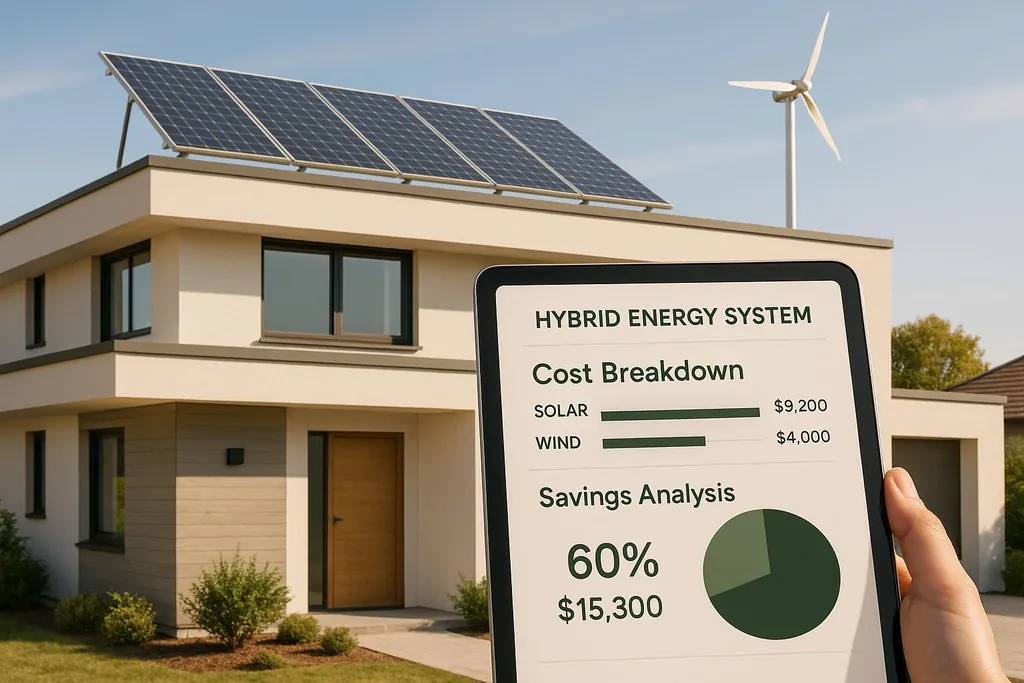
Explore the cost breakdown and installation options for hybrid energy systems, comparing DIY and professional approaches for optimal energy savings.
Hybrid Energy Systems: Cost Breakdown
Hybrid energy systems combine solar panels, wind turbines, batteries, and inverters to provide reliable power while reducing utility bills. They can be installed as DIY projects or by professionals, each with different costs, benefits, and challenges.
Key Takeaways:
- DIY Installation: Lower upfront costs but requires significant time and technical expertise. A 3kW system with 10kWh lithium storage costs $12,000–$18,000 DIY vs. $25,000–$35,000 professionally installed.
- Professional Installation: Higher initial investment but includes warranties, compliance with safety codes, and expert design. Larger systems (e.g., 8kW with 20kWh storage) cost $45,000–$65,000 professionally installed.
- Components: Solar panels ($0.70–$1.50/watt), wind turbines ($3,000–$8,000), batteries ($100–$500/kWh), and inverters ($500–$2,000) all contribute to the total cost.
- Maintenance: DIY systems require $200–$400 annually for upkeep, while professional installations often include service plans.
Quick Comparison:
| Factor | DIY Installation | Professional Installation |
|---|---|---|
| Upfront Costs | Lower | Higher |
| Expertise Needed | High | None |
| Time Investment | Significant | Minimal |
| Warranties | Limited | Included |
| Safety Compliance | Homeowner's responsibility | Guaranteed |
DIY is ideal for smaller systems and hands-on individuals, while professional installation suits larger systems or those seeking a streamlined process.
Full Complete DIY Solar System Costs! EVERY Part And Piece Explained! MIN And MAX $ For 2025
1\. DIY Hybrid Energy Systems
Building your own hybrid energy system can save you a significant chunk of change, primarily by cutting labor costs by 30–50%. But before diving in, it’s essential to understand the costs of components and what’s involved in the installation.
Solar panels are the backbone of any DIY hybrid system. These typically cost between $0.70 and $1.50 per watt, so a 5kW solar array will set you back $3,500 to $7,500 for the equipment alone. If efficiency is your priority, monocrystalline panels are the way to go, though they’re pricier. On the other hand, polycrystalline panels are a solid option for larger setups where space isn’t a constraint.
Wind turbines can be an excellent addition, especially if you live in an area with steady wind speeds above 10 mph. Smaller residential turbines, which are DIY-friendly, usually cost $3,000 to $8,000 for a 1–3kW unit. However, you’ll need to plan carefully for wind assessments, tower installations, and any local permits that might be required.
The battery bank is often the most expensive part of the system. If you opt for lithium iron phosphate (LiFePO4) batteries, expect to pay $300–500 per kWh of storage capacity, while lead-acid batteries are cheaper at $100–200 per kWh but need replacing every 3–5 years. For a typical home requiring 10–20kWh of storage, this translates to $3,000–10,000 for lithium batteries or $1,000–4,000 for lead-acid options.
Inverters and charge controllers are critical components that shouldn’t be overlooked. MPPT charge controllers range from $200 to $800, and pure sine wave inverters will cost between $500 and $2,000. These components are essential for ensuring your system runs efficiently and lasts over time.
The overall cost of your system depends on its size. For example, a basic 3kW hybrid system with 10kWh of lithium storage will cost $12,000–18,000 if you go the DIY route, compared to $25,000–35,000 for professional installation. Larger setups, like an 8kW system with 20kWh of storage, can range from $25,000–35,000 DIY to $45,000–65,000 for a professionally installed system. These differences also affect installation requirements and long-term maintenance.
When it comes to installation, you’ll need to factor in costs for electrical permits ($100–500), inspections ($150–300), and specialized tools ($200–500). Most areas require your electrical work to comply with NEC codes, and some jurisdictions even insist on professional inspections, even for DIY setups.
Be prepared to invest 40–80 hours in research, planning, and the actual installation. Resources like [DIY Eco Homes](/) guides can provide step-by-step instructions to help you through the process.
With electricity rates ranging from $0.12 to $0.25 per kWh, a well-designed hybrid system can pay for itself in 6–12 years, thanks to reduced utility bills. DIY systems typically recoup costs 3–5 years faster than professionally installed ones because of the lower upfront investment.
Ongoing maintenance costs are relatively low - around $200–400 annually for tasks like battery monitoring, inverter servicing, and cleaning the panels. Plus, the modular design of hybrid systems allows you to start small and expand as your budget permits, making them a flexible option for phased installations.
2\. Professional Hybrid Energy System Installation
Choosing a professional for your hybrid energy system installation brings a level of expertise and precision that’s hard to match. From designing the system to securing permits and ensuring compliance with local codes, professionals handle every detail to set your system up for optimal performance.
They rely on commercial-grade components and carefully calibrated configurations to prioritize safety and long-term efficiency. Many installers also stand behind their work with extended warranties, giving you added reassurance.
Professional installation packages often go beyond the basics. They may include system monitoring, routine maintenance services, and flexible financing options like solar loans or power purchase agreements, making it easier to manage the higher initial costs.
While the upfront expense of professional installation is higher than a DIY approach, the benefits - expert design, reliable support, and a hassle-free experience - often outweigh the cost. It’s an investment in quality and peace of mind, offering a streamlined, turnkey solution that’s built to last.
Pros and Cons
When choosing between DIY and professional installation for a hybrid energy system, it's crucial to consider both the advantages and potential drawbacks of each option.
DIY installation can save you money upfront by cutting out labor costs and giving you complete control over selecting components and scheduling the project. However, hybrid systems are intricate, and working with advanced electrical setups comes with significant risks. Without proper training, you might void manufacturer warranties, encounter safety hazards, or fail to meet local code requirements.
On the other hand, professional installation eliminates many of these challenges. Experts handle the system's design, permitting, and compliance with safety standards, ensuring a smoother and safer process. Professionals also typically offer warranties on labor and system performance. The downside? You’ll face higher upfront costs and have less control over the choice of components and project timeline.
Here's a side-by-side comparison to help clarify the differences:
| Factor | DIY Installation | Professional Installation |
|---|---|---|
| Upfront Costs | Lower, as labor fees are avoided | Higher, due to labor and additional service costs |
| Installation Complexity | Requires significant expertise and time; involves safety and regulatory challenges | Managed by experts who oversee design, permitting, and safety compliance |
| Time Investment | Longer process involving research, planning, and hands-on work | Faster, as professionals streamline project management |
| Maintenance | Homeowner is responsible for routine tasks like battery checks and panel cleaning | Often includes maintenance packages or service plans |
| Warranties | DIY work may void manufacturer warranties | Comes with extended warranties on labor and system performance |
| Safety Compliance | Homeowner must ensure adherence to all electrical and safety codes | Professionals guarantee compliance with industry standards and local regulations |
This table highlights the trade-offs between the two approaches. While DIY installation can cut costs, it demands time, expertise, and a commitment to ongoing maintenance. Professional installation, though more expensive, offers reliability and peace of mind, with experts handling the technical and regulatory aspects.
For those opting for DIY, staying on top of maintenance tasks like cleaning panels and inspecting batteries is critical to ensure the system's longevity. Professional services often include maintenance plans that can simplify these responsibilities and help preserve your system's performance over time.
In most cases, professional installation strikes the right balance between safety, efficiency, and long-term reliability. DIY might be a practical choice only if you have formal electrical training or are working with low-voltage kits specifically designed for safer, user-friendly setups.
Conclusion
When it comes to choosing a hybrid energy system, the right decision hinges on factors like system size, installation method, and a clear understanding of your budget. Costs can vary widely depending on these elements, as well as hidden expenses like permitting and maintenance. Professional installations tend to come with higher upfront costs but include perks like warranties, code compliance, and ongoing support. On the other hand, DIY installations can save you money but may require technical expertise and careful planning.
Smaller systems are often ideal for DIY enthusiasts, especially when paired with pre-engineered kits designed for easier and safer installation. However, larger systems typically demand professional expertise to ensure safety, reliability, and compliance with local codes. While professional installation offers peace of mind and long-term reliability, a DIY approach can be a cost-effective option if you have electrical training or access to user-friendly kits.
Resources like DIY Eco Homes provide detailed cost breakdowns and step-by-step guides to help you make informed decisions. Whether you're planning to take on a DIY project or considering professional quotes, these tools can help you create an energy solution that’s both budget-friendly and tailored to your specific needs.
FAQs
What are the financial advantages of a hybrid energy system, and how do costs differ between DIY and professional installations?
[Hybrid energy systems](/blog/ultimate-guide-to-wind-solar-hybrid-systems) come with strong financial perks over the long haul. They can lead to lower energy bills, less dependence on fossil fuels, and operational savings thanks to better efficiency. In fact, these systems can reduce fuel consumption by an impressive 30% to 50%, making them a smart choice for anyone looking to invest in sustainable living.
If you're considering installation, DIY options are generally more budget-friendly at first, costing about $2 to $3.50 per watt. On the other hand, professional installations run higher, typically between $7 to $9 per watt. While DIY setups can save you money upfront, professional installations often include benefits like warranties, optimized performance, and greater reliability. These extras can help you save more in the long run, even with the higher initial expense.
How can I choose the right size and components for a hybrid energy system to meet my home's energy needs?
To figure out the right size and components for a hybrid energy system, start by calculating your home's daily energy usage in kilowatt-hours (kWh). Then, divide that number by the average peak sun hours in your area. This will give you an estimate of the solar system size you'll need. For instance, if your household uses 30 kWh daily and your location averages 5 peak sun hours, you'd need a 6 kW solar system.
Next, choose an inverter that can handle slightly more than your peak power load. Residential inverters typically range between 3 and 15 kW. When it comes to batteries, their capacity should align with your energy use and the amount of backup power you want. This ensures you have enough stored energy for times when sunlight or wind is limited. Properly sizing these components is key to creating a system that's efficient, reliable, and cost-conscious.
What safety precautions should I take when installing a DIY hybrid energy system?
Installing a DIY hybrid energy system can be risky if safety precautions aren't followed. Common hazards include electric shock, fire risks, and falls from heights, especially when dealing with live electrical components, intricate wiring, or elevated work areas. Without proper care, these dangers could lead to serious injuries.
To reduce these risks, make sure to wear the right protective gear, like insulated gloves and safety harnesses. Always adhere to local electrical codes and carefully inspect all connections to prevent wiring mistakes. If you're working at heights, secure your workspace with stable ladders or scaffolding. And most importantly, turn off all power sources before handling any electrical components. By taking these steps, you can create a safer environment and set yourself up for a successful installation.