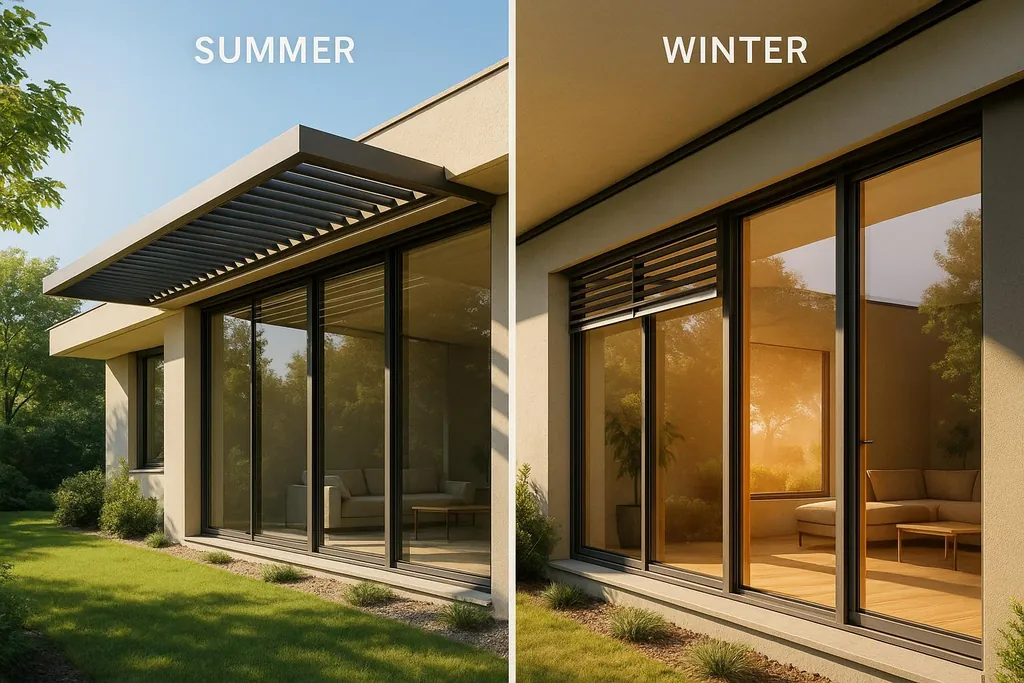
Explore how passive solar shading can enhance comfort and reduce energy costs year-round through smart design strategies.
Passive Solar Shading: Winter vs. Summer
Want to save on energy bills and stay comfortable year-round? Passive solar shading is the key. It uses smart design to manage sunlight, keeping your home cool in summer and warm in winter - without relying on mechanical systems.
- Summer Shading: Blocks up to 90% of solar heat, reducing cooling costs by 5–25%.
- Winter Shading: Maximizes sunlight to cut heating costs by 10–40%.
- Key Tools: Fixed overhangs, adjustable awnings, landscaping (like deciduous trees), and external blinds.
- Window Orientation: South-facing windows are ideal for both seasons, while east/west windows need extra shading.
Quick Comparison
| Aspect | Summer Shading | Winter Shading |
|---|---|---|
| Goal | Reduce heat gain | Increase solar heat gain |
| Methods | Overhangs, awnings, trees, external blinds | South-facing windows, thermal mass, trees |
| Energy Savings | Cuts cooling loads by 5–25% | Saves 10–40% on heating costs |
| Window Focus | East/west windows absorb most sun | South-facing windows provide net energy gain |
Whether you're building new or retrofitting, passive shading is a simple, cost-effective way to reduce energy use. Start with south-facing windows and add shading to east/west sides for the best results.
How to design a solar shading overhang for a window.
How Passive Solar Shading Works
Passive solar shading operates by managing sunlight based on predictable seasonal patterns. The main goal is to block excess heat during the summer while allowing warmth to enter during the winter. This method hinges on understanding how the sun moves throughout the year and tailoring your home's design to take full advantage of it.
Key elements like roof overhangs, awnings, and landscaping are strategically positioned to align with the sun's seasonal path. In the summer, these features cast shadows that help keep your home cool. In the winter, when the sun is lower in the sky, they allow sunlight to flood through your windows, naturally warming your living spaces.
External shading is particularly effective because it stops heat before it even enters your home. Compared to internal solutions like blinds or curtains, external shading can block up to 90% of direct solar heat.
What makes passive solar shading so appealing is its simplicity and efficiency. It doesn’t rely on mechanical systems or add to your energy bills. By designing shading solutions that match the sun’s natural path and incorporating ventilation, you can create a system that works year-round. Let’s dive deeper into how sun angles and window orientation affect shading performance.
Sun Angles Change with Seasons
The sun’s position in the sky shifts dramatically over the course of a year, and this variation is critical to effective shading. During the summer, the sun is at its highest point around June 21, the summer solstice. This creates steep angles, making it easier to shade south-facing windows. However, since the hottest temperatures often hit in August, fixed overhangs must be carefully sized to block summer heat without blocking desirable sunlight during spring.
In the winter, the sun sits much lower in the sky, allowing its rays to reach deeper into your home through the same south-facing windows. This seasonal shift means a fixed overhang can shade your windows in July while still letting sunlight warm your home in December. The performance of passive shading depends on these altitude and azimuth angles, which vary by season and location. For example, a shading strategy that works well in Florida may not be as effective in Minnesota.
Spring and autumn bring transitional sun angles, making adjustable shading solutions particularly useful during these seasons. Understanding how the sun’s angles change naturally leads to considering how window orientation impacts heat gain.
Window Direction and Solar Heat
The orientation of your windows plays a crucial role in determining how much heat enters your home and when. South-facing windows are the easiest to manage and the most advantageous for passive solar design. In winter, they receive direct sunlight, providing much-needed warmth. In summer, fixed overhangs effectively block the high-angle sun. Proper south-facing window orientation can reduce heating costs by 10–20%, with some homes even achieving savings of up to 40%.
North-facing windows, on the other hand, receive indirect sunlight throughout the year. They offer consistent natural light without introducing significant heat, making them ideal for spaces where steady illumination is preferred without temperature fluctuations.
East and west-facing windows are the most challenging when it comes to passive solar shading. Morning sunlight floods east-facing windows, while west-facing windows bear the brunt of intense afternoon heat - often causing overheating during summer evenings. To mitigate this, minimizing the amount of east and west-facing glass in your home design can make a big difference.
For homes already built with problematic window orientations, adjustable shading devices are a flexible solution, particularly for east and west-facing windows. Unlike fixed overhangs, these devices can adapt to the changing angles of the sun throughout the day.
The orientation of each window not only affects how much heat enters but also determines the timing of that heat gain, which can significantly influence your home's comfort and energy efficiency.
Summer Shading Methods
Keeping your home cool during the summer doesn’t have to mean sacrificing light or ventilation. The trick lies in preventing solar heat from entering in the first place. Here’s a closer look at some effective shading solutions to help you stay comfortable during those scorching months.
Fixed and Movable Shade Devices
Fixed shading systems like overhangs, pergolas, or louvers work well for south-facing windows, blocking the high-angle summer sun. However, they’re less effective for east and west-facing windows, where the sun’s lower angles can be challenging. For these orientations, vertical shading or movable systems often perform better.
Movable devices such as awnings, external blinds, and adjustable louvers offer flexibility, allowing you to control heat levels more precisely than fixed systems. These options align with energy-saving designs by reducing cooling demands and adapting to changing conditions.
> "Shading devices prevent the penetration of solar radiation into the building in summer, while allowing the needed solar gains in winter, which leads to a better thermal comfort with significant energy savings." - Comprehensive Energy Systems
Adjustable shading is particularly useful during transitional seasons, letting you fine-tune coverage as needed. Retrofitting your home with these solutions can cut cooling loads by up to 30% and reduce annual energy use by 5–30% . The savings on energy bills and improved indoor comfort make them a worthwhile investment.
| Shading Device Type | Heat Gain Reduction | Best Window Orientation | Flexibility |
|---|---|---|---|
| Fixed Overhangs | 60–70% | South-facing | Low |
| Retractable Awnings | 65–77% | South, West | High |
| External Blinds | 60–85% | All orientations | High |
| Adjustable Louvers | 50–75% | East, West | Medium |
Trees and Plants for Shade
Nature provides an effective and visually appealing way to combat summer heat. Landscaping with trees and plants can cool the surrounding air through evapotranspiration, lowering air temperatures by up to 9°F and reducing the heat directly under trees by as much as 25°F .
Deciduous trees are particularly useful, offering dense shade in summer while shedding their leaves in winter to let sunlight in. Planting large deciduous trees on the east, west, and northwest sides of your home can shield against intense morning and afternoon sun.
> "Large deciduous trees planted on the east, west, and northwest sides of your home create soothing shade from the hot summer sun and reduce summer air conditioning costs by up to 35%." - Arbor Day Foundation
Strategically placed trees can lower summer cooling expenses by up to 35% , while a well-thought-out landscape design can cut cooling costs by 15–50% . Just three properly positioned trees could save an average household $100–$250 annually in energy costs .
For best results, plant trees at least 20 feet from your home’s foundation to avoid root-related structural issues . To improve air conditioning efficiency, place trees or shrubs on the south or west side of the unit, ensuring at least 10 feet of clearance .
Opt for trees with high, spreading crowns for maximum shade coverage, and consider lower-crowned trees on the west side to block intense afternoon sun . Shading paved areas like driveways and walkways also reduces heat radiation, keeping your home cooler.
Vines and climbing plants offer a quicker solution, providing shade for walls, fences, and pergolas. Leave at least a foot of space between mature plants and your home’s exterior to prevent moisture problems .
Outside vs. Inside Shading
The placement of shading elements - whether external or internal - plays a big role in how well they reduce heat. External shading systems, like awnings, shutters, and shade screens, block up to 85% of solar heat by stopping it before it reaches your windows. This can cut cooling loads by 40–70% .
Internal shading options, including blinds, curtains, and window films, are more affordable and easier to install but less effective. They reduce heat gain by 14–37%, as heat still enters through the glass, which can leave rooms feeling warmer .
| Shading Location | Heat Gain Reduction | Cooling Load Reduction | Installation Cost | Maintenance |
|---|---|---|---|---|
| External Systems | 60–85% | 40–70% | Higher | Annual inspections |
| Internal Systems | 14–37% | 15–30% | Lower | Every 2–3 years |
External systems often require a larger upfront investment and more maintenance due to weather exposure but deliver much better performance. Internal solutions, while budget-friendly and low-maintenance, work best when paired with external shading to provide added privacy, glare control, and light adjustment.
Combining both external and internal shading creates a layered approach that maximizes cooling efficiency while adapting to seasonal and daily changes. The right choice depends on your home’s design, budget, and local climate, but in areas with intense heat, external shading is often a must to keep cool without overloading your air conditioning system.
Winter Shading Methods
Winter shading is all about using the sun’s natural heat to warm your home while keeping that warmth from escaping. By understanding the sun's lower angle and shorter days during winter, you can make smart choices about windows, landscaping, and coverings to keep your home cozy and energy-efficient.
> "Passive solar heating relies on the sun's energy to naturally warm your home." - Earthwise Windows
A well-thought-out passive solar system can significantly reduce heating bills. In fact, homes designed with passive solar principles can cut heating and cooling costs by as much as 85% . Whether you're building a new home or upgrading an existing one, these strategies can make a big difference.
Making the Most of South-Facing Windows
South-facing windows are a powerhouse for winter heating. They receive the most sunlight when the sun is at its lowest angle, making them essential for capturing free solar energy. Ideally, these windows should face within 30 degrees of true south to maximize their efficiency .
The size of your south-facing windows matters. They should generally cover 7%–15% of your home’s floor area, depending on your local climate . Bigger isn’t always better - you need just the right amount to gather heat even on cloudy days, without causing overheating when the sun is out.
To get the best results, use windows with high solar heat gain coefficient (SHGC) and low-emissivity (low-E) glass. These features allow sunlight in while reducing heat loss . Traditional windows often fall short in insulation, leading to drafts and wasted energy.
Don’t forget to keep these windows clean! Dust and grime can block sunlight, cutting down on the heat your home absorbs . You can also enhance their effectiveness by incorporating thermal mass materials - like brick, stone, or concrete - that store heat during the day and release it gradually as temperatures drop .
Deciduous Trees: Nature’s Seasonal Solution
Deciduous trees are a natural fit for passive solar design. In the winter, their bare branches let sunlight stream into your home. In the summer, their leafy canopies can block 70% to 90% of solar radiation, keeping your home cooler .
Choosing the right tree species is key. "Solar-friendly" varieties like redbud, green ash, and honey locust are great options. These trees have open crowns during winter, drop their leaves early in the fall, and take their time leafing out in the spring . Planting trees with high, wide crowns can also provide excellent roof shading during the hotter months .
Keeping the Heat Inside
Capturing the sun’s warmth is only half the battle - you also need to keep it from escaping. Windows are a major culprit, accounting for up to 30% of heat loss in many homes . That’s why heat retention strategies are so important for staying comfortable and saving energy.
One of the easiest ways to retain heat is by managing your window coverings. Open them during sunny winter days to let sunlight in, and close them at sunset to trap the warmth .
Insulated cellular shades are particularly effective, cutting heat loss through windows by over 40% and reducing heating energy use by about 10% . Window quilts offer similar benefits and can be a more affordable option . Even basic draperies help - closing them can reduce heat loss by up to 10% . For the best results, hang draperies close to the window and seal the edges to minimize drafts.
Low-E window films are another option, reducing heat loss by 15%–25% while improving overall thermal comfort .
| Heat Retention Method | Heat Loss Reduction | Energy Savings | Installation Difficulty |
|---|---|---|---|
| Insulated Cellular Shades | 40%+ | 10% heating costs | Easy |
| Window Quilts | 35–40% | 8–10% heating costs | Moderate |
| Conventional Draperies | 10% | 2–3% heating costs | Easy |
| Low-E Window Films | 15–25% | 4–6% heating costs | Moderate |
Consistency is key when it comes to heat retention. By making it a habit to manage your window coverings daily, you can immediately improve your home’s comfort and cut your heating bills. Combining smart window design, thoughtful landscaping, and effective coverings can lead to year-round energy savings.
Summer vs Winter: Energy and Comfort Comparison
Understanding the energy and comfort dynamics of summer and winter highlights the unique strategies each season requires. In summer, the goal is to block excess heat, while in winter, it’s about capturing and utilizing sunlight. Both approaches can significantly improve energy efficiency and indoor comfort.
Side-by-Side Strategy Comparison
Here’s a closer look at how shading techniques differ between summer and winter:
| Aspect | Summer Shading | Winter Shading |
|---|---|---|
| Primary Goal | Reduce heat gain | Increase solar heat gain |
| Shading Methods | Use of overhangs, awnings, and reflective materials | South-facing windows, thermal mass, and insulation |
| Energy Impact | Cuts cooling loads by 5–15% | Saves 10–40% on heating costs |
| Comfort Benefits | Blocks up to 90% of solar heat | Enhances indoor warmth on sunny days |
| Window Performance | East/west windows absorb most sun | South-facing windows provide a net energy gain |
Shading can reduce air conditioning costs by as much as 25% and lower heating energy use by 10% . However, these savings depend on factors like your home’s orientation and local climate.
East- and west-facing windows tend to collect the most sunlight during summer - when it’s least needed - and offer little benefit in winter . For these windows, permanent shading solutions like trees or fixed overhangs are ideal.
South-facing windows, on the other hand, are a different story. They’re incredibly efficient for passive solar heating. As Professor Norbert M. Lechner from Auburn University explains:
> "Every south-facing window is a net gainer of energy in the winter because it collects more energy during the day than it loses over a 24-hour period. Thus, every south-facing window is a basic passive solar heating system."
Thermal mass materials, such as concrete, brick, and tile, stabilize indoor temperatures by absorbing heat during the day and releasing it at night. This feature benefits both summer and winter conditions . Movable awnings also allow for seasonal adjustments to optimize solar gain .
Different Climate Zones Need Different Approaches
While some shading strategies work universally, your local climate plays a big role in determining the best approach. The U.S. Department of Energy identifies four main climate zones - temperate, hot-arid, hot-humid, and cool - each requiring tailored solutions .
In cooler regions, maximizing winter sunlight is key. South-facing windows and deciduous trees, which allow sunlight through in winter while providing shade in summer, are especially effective. Since heating and cooling account for nearly half of household energy use, these strategies can make a noticeable difference .
In hotter climates, the focus shifts to keeping homes cool. Shading roofs, walls, and windows while using vegetation as windbreaks can help lower indoor temperatures . As Sarah Lozanova points out:
> "Strategically placed vines, trees, and bushes can serve as a windbreak in cold weather or provide shade during the cooling season. Landscaping for energy efficiency is a great long-term investment that also beautifies your property."
Properly placed trees can cut a household’s energy use by up to 25% . In cool climates, deciduous trees on the south side are ideal for blocking summer heat while letting in winter sun. In hotter areas, comprehensive shading is essential for comfort and savings.
Roof shading is especially critical in warm regions. During midsummer, a square foot of roof can receive three to four times more solar radiation than the same area on north- or south-facing walls . High-canopy trees are particularly effective for blocking this intense heat.
When planning shading upgrades, focus on skylights first, followed by east- and west-facing windows, then south-facing windows, and finally north-facing windows . This priority list ensures you get the best energy and comfort benefits, no matter your climate zone.
DIY Tips for Home Shading Projects
Now that we've covered seasonal strategies, let's dive into some hands-on DIY methods for shading your windows. With just a few basic tools, you can create shading solutions that improve comfort and energy efficiency year-round.
How to Size and Place Shading Elements
Getting the size and placement of your shading elements right is crucial for their effectiveness. The National Renewable Energy Laboratory offers detailed guidance in its _Solar Radiation Data Manual for Buildings_, which provides overhang sizing recommendations tailored to different U.S. locations. These guidelines help ensure south-facing windows are fully shaded during the cooling season while allowing sunlight to warm your home during the heating season .
Start with a sun path analysis. Use sun charts or smartphone apps to figure out the best dimensions for overhangs that block summer sun but let in winter light . To calculate the depth of the overhang, factor in the sun's angle at midday during both the summer and winter solstices .
For windows that face within 30° of true south, properly sized overhangs work well . East- and west-facing windows, however, present a bigger challenge because of the low sun angles in the morning and evening, which can lead to excessive heat and glare year-round . To address this, consider reducing the amount of east- and west-facing glass and use landscaping, like trees or shrubs, to add shade .
For north-facing windows, horizontal shading - either fixed or adjustable - can be effective if it extends beyond the window on both sides . On east- and west-facing walls, vertical louvers or blades work well, as do pergolas or verandas with deciduous vines for natural shading .
With these sizing and placement tips in mind, you can easily transition into retrofitting your existing home for better shading.
Adding Shading to Existing Homes
If you're looking to retrofit your home, shading can complement passive solar designs and help you make the most of seasonal changes. According to the Department of Energy, about 76% of sunlight hitting standard double-pane windows turns into heat during cooling seasons .
Awnings are a great retrofit option, cutting solar heat gain by up to 65% on south-facing windows and up to 77% on west-facing ones . Opt for retractable, opaque awnings that reflect sunlight in summer but can be retracted during winter to let light in .
Exterior solar screens are another effective option. These screens reduce heat gain, minimize glare, and block UV rays - all while preserving your view . Exterior shading devices generally outperform interior ones when it comes to reducing cooling loads .
Window films provide a quick and easy solution. These films block solar heat gain, glare, and UV exposure. To ensure quality, look for products rated by the National Fenestration Rating Council (NFRC) .
Landscaping can also make a big difference. Plant deciduous trees or vines on the north side of your home, and use a mix of deciduous and evergreen trees for east and west exposures . When planting, think about solar access and wind patterns to create natural shading that adjusts with the seasons .
For detailed instructions, [DIY Eco Homes](/) offers step-by-step guides on retrofitting projects, including material recommendations and installation techniques to help you get the most out of your shading solutions.
Budget-Friendly Shading Options
Shading your home doesn’t have to break the bank. Plenty of affordable options can boost energy performance without a hefty price tag. In fact, many solutions cost under $200 and can be installed in a single weekend with basic tools.
Interior cellular shades are a great example, with prices ranging from $75 to $200. These shades can reduce heat loss through windows by 40% or more during the heating season, saving about 10% on heating energy. In the summer, they can cut unwanted solar heat gain by up to 60% when installed snugly . Cellular shades are known for their insulating properties (high R-values), and window quilts offer similar benefits at a lower cost . Other budget-friendly interior options include roller shades, Roman shades, and louvered blinds.
If you’re handy, consider building your own overhangs using basic lumber and roofing materials. Properly sized overhangs not only provide excellent summer shading and allow winter sunlight in, but they also protect your windows and siding from rain . For east- and west-facing windows, deeper overhangs paired with additional shading - like roller shades - can be especially effective.
Adjustable shading solutions offer even more flexibility. Retractable awnings, movable screens, and seasonal vegetation let you adapt to changing weather conditions without making permanent changes to your home . These solutions give you the control to fine-tune your shading throughout the year, ensuring comfort and efficiency no matter the season.
Conclusion
Striking the right balance between summer and winter shading is essential for maintaining energy efficiency and comfort throughout the year. The secret lies in blocking the intense summer sun while allowing the lower winter sun to brighten and warm your space.
In summer, shading systems are all about keeping excessive heat at bay. Winter, on the other hand, is the time to welcome sunlight to reduce heating demands. Fixed features like overhangs are excellent for shielding against the high summer sun while still letting in the lower winter rays. Pair these with adjustable options, such as retractable awnings or cellular shades, for added seasonal versatility.
Your choice of shading strategy should align with your local climate. For hot areas, continuous shading is a smart choice to combat relentless heat. In colder climates, designs that maximize winter sunlight are more effective. If you live in a region with mixed weather patterns, combining various shading methods can provide the best results. This tailored approach not only boosts comfort but can also lead to noticeable energy savings.
The financial benefits are clear - effective summer shading can cut cooling costs, while winter sunlight strategies reduce heating expenses. Whether you're building a new home or retrofitting an existing one, designing with the sun's natural patterns in mind can make a big difference.
FAQs
What’s the best way to size and position shading elements for energy efficiency throughout the year?
To make your home more energy-efficient, consider incorporating shading elements like overhangs or louvers. These features are designed to block the intense summer sun while still allowing the lower winter sun to shine through. For most homes, overhangs that extend roughly 2 feet usually work well, but their size and angle should be tailored to your specific location and the seasonal movement of the sun.
Another great option is using natural shading with deciduous trees. These trees provide cooling shade during summer and, when they shed their leaves in winter, allow sunlight to pass through. For the best results, plant them about 6 to 8 feet from your home. To get the most out of these strategies, tools like solar calculators can help you determine the ideal placement and sizing of shading elements based on your home’s orientation and local climate.
How do shading strategies differ for homes in colder versus hotter climates?
Shading strategies for homes are tailored to the local climate, aiming to balance energy efficiency with year-round comfort. In colder regions, the goal is to capture solar heat during winter. This is often achieved by allowing low-angle sunlight to stream through windows, using features like overhangs or fixed shading devices. These same elements are designed to block high-angle sunlight in the summer, helping to keep interiors cooler.
In warmer climates, the focus shifts to reducing solar heat gain throughout the year. Techniques include using deep overhangs, planting shade-providing trees, or incorporating adjustable shading devices to shield windows - especially those facing south - from direct sunlight. Complementary approaches, like optimizing cross-ventilation and leveraging thermal mass, can further improve cooling and indoor comfort. By customizing shading designs to match seasonal sun angles and climate specifics, homes can stay energy-efficient while maintaining a pleasant indoor atmosphere.
How can deciduous trees improve energy efficiency through seasonal shading, and which types are best for this purpose?
Deciduous trees are a smart choice for passive solar shading because they naturally adjust to the changing seasons. During summer, their thick canopy provides much-needed shade, helping to cool your home and cut down on air conditioning use. When winter rolls around, they lose their leaves, allowing sunlight to stream through and contribute to natural heating. This seasonal cycle makes them an energy-conscious option for landscaping around your home.
Popular choices like oak, maple, and sycamore are particularly well-suited for this purpose and thrive in many regions across the United States. These trees grow large enough to cast substantial shade in the summer while letting in plenty of sunlight during the winter months. To get the most out of their benefits, plant them on the south or west sides of your home. This strategic placement maximizes shade during hot months and ensures your home gets ample sunlight when temperatures drop.