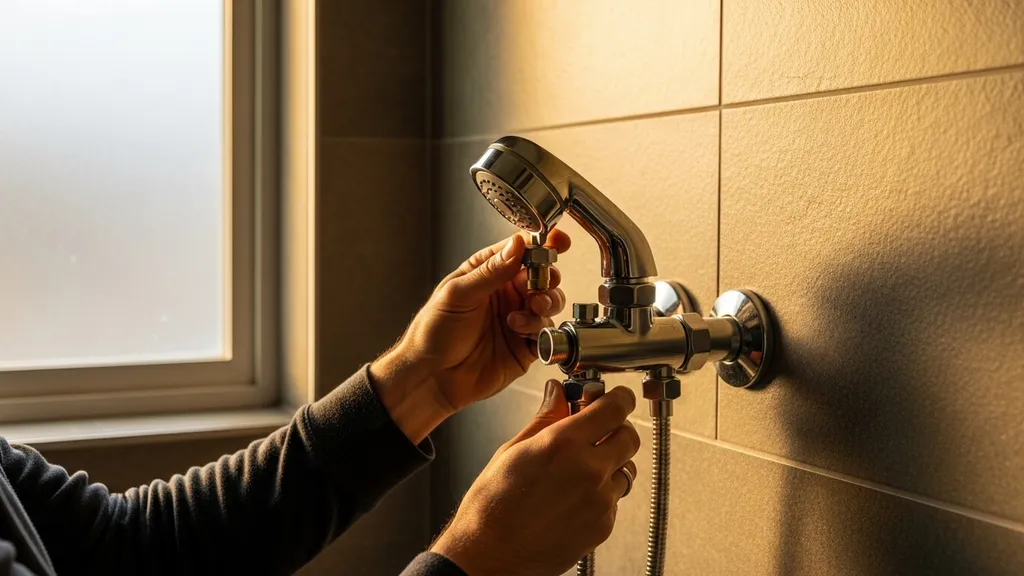
Practical guide to choosing, installing, and integrating low flow fixtures to cut water use and save money in DIY and off-grid homes.
Low Flow Fixtures: Water Conservation Guide
Low flow fixtures are a simple retrofit and new-build choice that cuts indoor water use without sacrificing everyday comfort. Research from the USGS shows average U.S. indoor residential water use sits around 80–90 gallons per person per day, and the EPA reports that showers, toilets, and faucets make up the majority of that total. This guide on low flow fixtures explains what flow rates mean, how to choose and test fixtures, hands-on DIY installation steps, and how to pair low-demand plumbing with rainwater and greywater systems so you actually save water and money.
TL;DR:
- Switching a household from 2.5 GPM to 1.8 GPM showerheads can save roughly 10,000 gallons per year for a family of four.
- Choose WaterSense-certified fixtures, check pressure ratings, and prefer pressure-compensating showerheads for low-pressure or off-grid systems.
- Start by fixing leaks and replacing high-use fixtures; integrate low flow fixtures with rainwater/greywater to cut storage and filtration needs.
How Low Flow Fixtures Save Water (and Money)
What "low Flow" Means: Flow Rates and Units (GPM/LPM)
Flow rate is the core metric: gallons per minute (GPM) in the U.S. or liters per minute (LPM) elsewhere. A standard older showerhead often flows at 2.5 GPM or more. Low flow showerheads commonly target 1.5–2.0 GPM; faucets with aerators range from 0.35–1.5 GPM; efficient toilets use 1.28 gallons per flush (GPF) or offer dual-flush options (e.g., 0.8–1.6 GPF). Flow rate on spec sheets is usually the maximum allowed at a specified pressure (often 80 psi). That number tells you how fast water will move through a fixture when supply conditions are ideal.
Typical Household Water Savings by Fixture
Small reductions add up fast. Example math: swapping four 2.5 GPM showerheads to 1.8 GPM, with each shower averaging 8 minutes daily, saves:
- Per shower: (2.5 − 1.8) × 8 min = 5.6 gallons/day
- Four people: 5.6 × 4 = 22.4 gallons/day → ~8,176 gallons/year
At a municipal water rate of $0.01–$0.02 per gallon, that’s $80–$160 saved annually—and it's amplified by lower hot-water heating use. Toilets and faucets contribute similar savings; replacing a 3.5 GPF toilet with a 1.28 GPF model can cut flush water per use by ~60%.
Why Savings Matter for Off-grid and Budget Builds
Lower demand reduces tank and cistern sizing, downsizes filtration and pump capacity, and can stretch a solar array’s range when hot-water load falls. For budget-conscious DIY builders, the reduced infrastructure (smaller tanks, smaller pumps) often pays back in material savings. For renters or retrofits, quick swaps of aerators and showerheads deliver the fastest ROI.
For broader system planning and moisture-control context, see the site’s water-efficient plumbing guide. For crawl-space moisture related to plumbing inefficiency, see crawl space moisture fixes. Local municipal pages also summarize fixture design and expectations; for an official municipal overview, see this municipal overview of low flow fixtures.
Key Takeaways: Quick Guide to Choosing Low Flow Fixtures
Checklist for Buyers
- Check the flow rate and pressure rating on the spec sheet.
- Look for WaterSense certification or equivalent performance labeling.
- Confirm compatibility with your supply pressure or pump.
- Prefer pressure-compensating or laminar-flow options for low-pressure systems.
- Verify easy serviceability and accessible aerators for cleaning.
- Check warranty and parts availability.
- Search for local rebates before purchase.
When Low Flow is Most Effective
- Replace the highest-use fixtures first: showerheads, primary bathroom faucets, and toilets.
- Fix leaks and running toilets before swapping fixtures—leaks erase savings.
- Consider fixture swaps if your water heater is oversized; lower demand reduces hot-water energy use. For deeper system decisions, see the Department of Energy guidance on faucets and showerheads and the Top performing water fixtures fact sheet for performance benchmarks. For outdoor water savings, pair indoor work with smart scheduling from the smart irrigation guide.
Types of Low Flow Fixtures: Faucets, Showerheads, and Toilets
Low-flow Faucets and Aerators
Faucets usually get their flow control from aerators—small screw-in discs that mix air with water to preserve perceived pressure while lowering actual flow. Typical ranges:
- Kitchen pre-rinse spray valves: can be 0.5–1.5 GPM for low-flow options.
- Bathroom sinks: 0.35–1.5 GPM with 0.5–1.0 GPM common for efficient taps.
Aerator types: standard aerators, laminar-flow (stream) inserts (good where aeration is undesirable), and pressure-compensating aerators that maintain flow across pressure swings.
Low-flow and High-efficiency Showerheads
Showerheads vary by spray pattern and technology:
- Aerated spray: mixes air and water for a full-feel spray; beware if using rainwater with particulates.
- Pressure-compensating nozzles: hold flow steady at low supply pressure—ideal for off-grid pumps or gravity-fed systems.
- Laminar-flow nozzles: stream-like, less splash.
Typical low-flow shower options: 1.5–2.0 GPM. For low pressure, choose pressure-compensating designs.
Low-flush Toilets, Dual-flush, and Composting Alternatives
WaterSense toilets commonly use 1.28 GPF; dual-flush toilets let you pick 0.8–1.6 GPF depending on need. Composting toilets are an alternative where waterless sanitation is acceptable—good for remote or off-grid sites but require behavioral and maintenance shifts.
Comparison/specs Table
| Fixture type | Typical flow / use | Pressure range | Pros | Best use |
|---|---|---|---|---|
| Faucet aerator (bathroom) | 0.35–1.0 GPM | 20–80 psi | Low cost, easy retrofit | Retrofit sinks |
| Kitchen spray valve (low-flow) | 0.5–1.5 GPM | 30–80 psi | Saves hot water during prep | Kitchens on demand |
| Showerhead (pressure-compensating) | 1.5–1.8 GPM | 10–80 psi | Stable feel at low pressure | Off-grid/gravity feed |
| Single-flush high-efficiency toilet | 1.28 GPF | N/A | Consistent savings | Most households |
| Dual-flush toilet | 0.8/1.6 GPF | N/A | User-selectable water use | Mixed-use bathrooms |
| Composting toilet | 0 GPF | N/A | Waterless, off-grid | Remote cabins, tiny homes |
For retrofit comfort, compare spray patterns and rated pressure during store tests or by reading in-home reviews. Roto-Rooter’s practical tips on installation and fixture selection are useful for understanding types and install needs; see Roto-Rooter's installation tips for low-flow fixtures.
Choosing Certified Low Flow Fixtures: What to Look For
Certifications and Labels (watersense, NSF, Local Codes)
The EPA’s WaterSense label indicates a fixture meets both flow and performance standards for efficiency. WaterSense-certified fixtures are tested to provide comparable or better performance than standard models at lower flow rates. Also check NSF ratings for health-related plumbing products and your local plumbing code—which may set minimum flush rates or specify acceptable backflow prevention. The Department of Energy has a clear summary on how flow ratings are expressed and what they mean; read the Department of Energy's guidance on faucets and showerheads.
Reading Specifications: Flow Rate, Pressure Rating, and Warranty
Spec sheet checklist:
- Flow rate at stated pressure (e.g., 1.8 GPM @ 60 psi).
- Rated pressure range—does it include your home's measured supply pressure or pump output?
- Aerator size and serviceability—can you remove the insert easily to clean or replace?
- Warranty and replaceable parts—cartridges and nozzles should be available.
Measure your supply pressure (buy a $20 gauge or ask a plumber) and compare to the fixture’s rating. If your house pressure is below the fixture’s minimum rating, look for pressure-compensating or low-pressure rated options.
Comfort and Performance Tests to Try Before You Buy
In-store or demo checklist:
- Feel the spray at eye level—does it break into a fine mist or maintain a full stream?
- Try a 1–2 minute hand wash at the faucet to gauge splash and soap rinsing.
- Ask for a test of the showerhead at lower pressure if the retailer offers it.
- Check how easily the aerator unscrews; mineral-prone areas benefit from easy-clean designs.
For help aligning fixture choices with whole-system layout and compliance, see the site's page on how to design a water-efficient system. For moisture concerns affected by reduced flow, consult moisture control options.
Installing Low Flow Fixtures: DIY Tips and Common Pitfalls
Tools, Materials, and Prep
Common tools: adjustable wrench, plumber's tape (PTFE), channel-lock pliers, screwdriver, bucket and stopwatch for flow testing, thread adapters if swapping different standards. Materials: replacement showerheads, faucet aerators, new flapper or fill-valve kit for toilets, new toilet wax ring if replacing the bowl. Prep: shut off local supply valves or main water, cover drains, and lay down towels.
Step-by-step: Replacing a Showerhead and Faucet Aerator
- Turn off shower/bath valve or ensure no heavy water use in house.
- Use a wrench with a rag to loosen the old showerhead—turn counterclockwise.
- Clean threads and remove old plumber's tape or debris.
- Wrap 2–3 turns of plumber’s tape clockwise on male threads.
- Hand-thread the new showerhead, then snug with wrench—don’t overtighten.
- Run shower, check for leaks, and test flow with a bucket and stopwatch (measure seconds to fill one gallon).
For faucet aerators: unscrew the old aerator (often by hand), clean the spout, insert the new aerator, and hand-tighten. If threads differ, use a small rubber adapter or a universal aerator kit.
Before and after replacement, test flow with a bucket and stopwatch to measure real-world change. If you want to monitor changes and detect leaks over time, see how to connect smart water systems.
Simple Toilet Upgrades and When to Replace the Whole Bowl
Often a leaking flapper or an inefficient fill valve wastes more than the bowl design. Replace the flapper or install a dual-flush conversion kit first. Replace the entire toilet if:
- The bowl or trapway is damaged;
- Old design consistently requires double-flushing;
- The unit leaks at the base or connections.
If replacing the bowl, account for wax ring, flange condition, and floor sealing. For definitions and recommended toilet specs, consult local code and WaterSense guidance.
When to Call a Plumber
Call a pro for:
- Low or fluctuating supply pressure needing pump adjustments;
- Repeated leaks after fixture swaps or structural water damage;
- Complex toilet flange repairs or sewer-line issues.
Budget DIYers can safely replace aerators and showerheads in under an hour. For step-by-step visuals, watch a short installation demo showing the common steps and troubleshooting: .
The Connecticut Green Bank summarizes common fixture definitions and thresholds helpful for installers; see this low flow fixture details and definitions. Also, the guide at Roto-Rooter includes practical installation tips for low-flow fixtures if you want another professional viewpoint.
Integrating Low Flow Fixtures with Off-grid, Rainwater, and Greywater Systems
Compatibility with Rainwater Harvesting
Low flow fixtures reduce demand and therefore the size of cisterns and the throughput required from filters. However, smaller fixture orifices are more susceptible to clogging from particulates common in harvested rainwater. That means you may need finer pre-filtration or larger mesh screens. For step-by-step rainwater system build guidance, review the rainwater collection guide and the rainwater filtration checklist.
Using Low Flow Fixtures with Greywater Reuse
Low flow fixtures reduce the volume of greywater you’ll handle, which lowers storage and treatment needs. But greywater systems require predictable flows for gravity-fed or pump-driven designs—sharp, intermittent flows can complicate reuse. Check the greywater systems guide to match fixture choice to reuse design and local regulations. For toilet greywater reuse, remember toilets are typically excluded from simple greywater loops.
Pressure and Filtration Considerations for Alternative Water Sources
Gravity-fed tanks and small solar pumps may not reach the pressure needed for some low-flow devices. Use pressure-compensating showerheads or size a small booster pump; see options to automate water pumps. Filtration must remove particulates larger than your fixture's smallest orifices; a recommended practice is 100–200 micron pre-filtering ahead of final cartridge filters for faucets and showers. For high-sediment sources, use sediment traps and easy-access strainers to prevent fouling.
Practical tip: reduce demand first with low-flow fixtures, then downsize storage and filtration to match—you’ll often save more on infrastructure than you spend on premium fixtures. For a high-level resource on storage and collection before sizing fixtures, consult the water collection overview. For perspectives on how low-flow fixtures improve overall water system economics, see the benefits summarized by a local plumbing firm in this article on benefits of low flow fixtures.
Cost, Payback, and Real-world ROI for Low Flow Fixtures
Upfront Costs vs Long-term Savings: Sample Calculations
Fixture cost bands:
- Budget aerator/showerhead: $5–$25
- Mid-range WaterSense showerhead: $25–$75
- High-efficiency toilet: $200–$500
Sample ROI: Replace four 2.5 GPM showerheads with 1.8 GPM mid-range models costing $50 each ($200 total). Saved water (from earlier example) ~8,176 gallons/year. At $0.015/gal, annual water savings ≈ $122. Hot-water savings amplify this: if half of shower water is heated, and energy cost for heating water is $0.02/gal equivalent, you might save an additional ~$80/year. Combined, payback can be 1–3 years for showerhead swaps.
Rebates, Incentives, and Where to Look
Many utilities and municipalities offer rebates or coupon programs for WaterSense fixtures. The EPA WaterSense rebate finder and local utility pages list incentives; check city or county programs before purchasing. Some rebate programs require purchase of specific models or prior registration.
Energy Interactions: Hot Water Savings and Water Heater Impacts
Lower flow reduces hot water volume and can allow down-sizing of water heater capacity or reduce cycling losses for tank systems. For details on how fixture choices change heater selection, see the site's water heater efficiency. On-demand (tankless) systems respond differently to low-flow events; ensure your unit’s minimum flow rate matches typical fixture flows so you don’t trigger cold-water events.
Product Recommendations and Comparison Specs
Best Budget Picks for DIY Retrofits
- Faucet aerator kits (0.5–1.0 GPM) with removable inserts—cheap, effective, and easy to service.
- Basic low-flow showerheads (1.8 GPM) with anti-clog nozzles—good for starter retrofits.
- Dual-flush toilet conversion kits—lower cost than full replacement if the bowl is in good condition.
Best Options for Low-pressure or Off-grid Homes
- Pressure-compensating showerheads rated for 10–20 psi minimum.
- Large-diameter aerators or laminar-flow faucets that reduce clogging from alternative sources.
- Pump-friendly fixtures if you plan to boost pressure with a small pump; see pump automation tips at automate water pumps.
Specs Comparison Table (flow Rates, Pressure Rating, Certification)
| Category | Flow / flush | Pressure rating | Certification | Price band | Ideal use |
|---|---|---|---|---|---|
| Bathroom faucet aerator | 0.5 GPM | 15–80 psi | Some NSF/ANSI | $5–$15 | Retrofit sinks |
| Kitchen low-flow spray | 1.2 GPM | 30–80 psi | Varies | $20–$75 | Kitchens with filtration |
| Pressure-compensating showerhead | 1.5–1.8 GPM | 10–80 psi | WaterSense (some) | $25–$100 | Off-grid/low pressure |
| Dual-flush toilet | 0.8 / 1.6 GPF | N/A | WaterSense | $200–$600 | Full replacements |
| Composting toilet (container) | 0 | N/A | Depends on model | $400–$2,000 | Remote cabins |
| High-efficiency tankless shower valve | 1.8 GPM limiter | Matches valve | Varies | $100–$300 | System-level retrofit |
For lifecycle and sustainability choices when buying fixtures, see the sustainable materials guide. When choosing brands, mainstream manufacturers such as Moen, Delta, and Kohler offer WaterSense models; compare warranty and spare-part availability rather than marketing claims.
The Bottom Line
Low flow fixtures deliver immediate water and energy savings with low upfront cost—start by fixing leaks and replacing showerheads, faucets, and inefficient toilets. Prefer WaterSense-certified or pressure-compensating fixtures for off-grid or low-pressure systems, test flow before and after installation, and pair reduced demand with rainwater or greywater systems to shrink storage and filtration requirements.
Video: 1st Place Winners (water Conservation) - Slow the Flow Video
For a visual walkthrough of these concepts, check out this helpful video:
Frequently Asked Questions
Do low flow fixtures feel weaker?
Short answer: often not. Pressure-compensating and aerated designs are engineered to preserve the perceived stream while reducing actual gallons. Test a model in-store or review real-world user videos to check spray pattern and rinsing performance before buying.
If supply pressure is very low, choose a pressure-compensating showerhead—these maintain a steady spray even when pump output or gravity feed is modest.
Will low-flow toilets work with my septic system?
Yes, most modern low-flow toilets are compatible with septic systems, but older septic setups that rely on higher flush volume for solids transport might need occasional adjustment. Check local code and consult a septic professional if you have a history of slow drains or solids build-up.
Dual-flush models can reduce volume while still providing a full flush when needed, which helps septic function in many cases.
Can I use low flow fixtures with rainwater?
Yes, but take precautions: smaller orifices clog more easily from particulates in harvested rainwater. Install adequate pre-filtration, first-flush diverters, and accessible strainers. For system planning, consult the rainwater filtration checklist and the step-by-step rainwater collection guide.
How do I measure flow rate at home?
Use a one-gallon bucket and a stopwatch. Turn the fixture on full to its normal setting, time how many seconds it takes to fill the bucket, then calculate GPM = 60 ÷ seconds-per-gallon. Repeat the test at different fixtures and compare to manufacturer specs.
For accuracy, test at typical supply conditions (e.g., when other appliances are off) and record temperature if checking hot-water energy savings.
Are there rebates or incentives for low flow fixtures?
Yes. Many utilities, municipalities, and state programs offer rebates or vouchers for WaterSense fixtures and high-efficiency toilets. Check EPA WaterSense resources and your local utility site for current offers before purchasing, since some rebates require pre-approval or specific models.