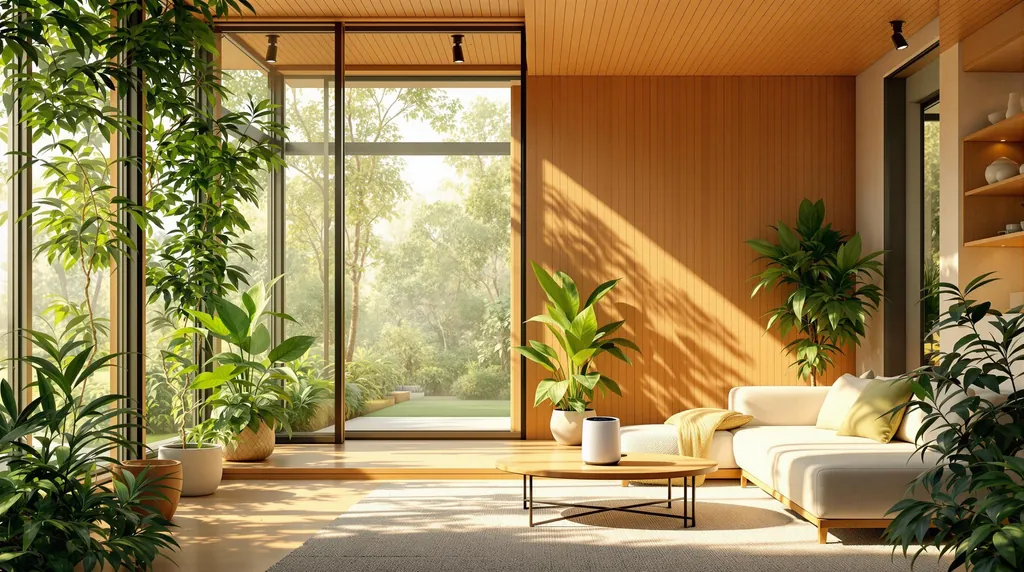
Explore essential ventilation strategies for small eco homes to improve air quality, manage humidity, and enhance energy efficiency.
Good ventilation in small eco homes ensures clean air, controls moisture, and saves energy. Here's what you need to know:
- Why It's Important:
- Removes pollutants and improves air quality.
- Prevents mold by managing humidity.
- Balances indoor temperature without wasting energy.
- Challenges:
- Limited space for systems.
- Uneven airflow between rooms or floors.
- Moisture buildup in small areas like kitchens and bathrooms.
- Ventilation Goals:
- Maintain 0.35 air changes per hour (ACH) for fresh air.
- Keep indoor humidity between 30%-50% to avoid mold.
- System Options:
- Natural Ventilation: Uses windows and airflow, costs $200-$500, but depends on weather.
- Mechanical Ventilation: Reliable in all climates, costs $1,000-$3,500, with higher efficiency (80%-95%).
- Planning Tips:
- Follow ASHRAE 62.2 standards for airflow.
- Place systems in attics or closets to save space.
- Use insulated ducts to prevent energy loss.
- Costs:
- Budget $200-$3,500 depending on the system.
- Add energy-saving features like timers, sensors, or solar vents to lower ongoing costs.
- Maintenance:
- Monthly: Clean filters and check vents.
- Quarterly: Vacuum ducts and test airflow.
- Annually: Professional inspection and system rebalancing.
Quick Comparison:
| Feature | Natural Ventilation | Mechanical Ventilation |
|---|---|---|
| Efficiency | 40%-60% | 80%-95% |
| Cost | $200-$500 | $1,000-$3,500 |
| Weather Dependency | High | None |
| Space Requirements | Minimal | 2-4 sq ft + ductwork |
Start by identifying your home's needs and climate, then choose the right system to ensure fresh, clean air year-round.
How to Maximize Natural Ventilation for an Eco Friendly Home
Basic Ventilation Requirements
To ensure clean air and proper moisture control, your ventilation system needs to meet two main goals. These focus on maintaining air quality and managing indoor humidity effectively.
Air Exchange Basics
Air changes per hour (ACH) refers to how often the air inside is replaced. For smaller eco-friendly homes, a target of 0.35 ACH is recommended. This rate helps remove pollutants while minimizing heat loss, striking a good balance between air quality and energy efficiency.
Managing Indoor Humidity
Keeping indoor humidity between 30% and 50% helps prevent mold growth and minimizes respiratory problems. You can manage this with passive strategies like placing windows thoughtfully or active measures like using exhaust fans. With these basics covered, we'll explore system options in the next section.
Ventilation Systems and Methods
Once you've identified your airflow and humidity goals, the next step is choosing a ventilation system that fits your home's size and local climate. To maintain the target of 0.35 ACH and 30-50% humidity, you can opt for natural, mechanical, or hybrid ventilation systems.
Natural Ventilation Methods
Natural ventilation relies on wind and temperature differences to circulate air throughout your home - no mechanical equipment needed.
Here's what to know:
- No energy costs, but performance depends heavily on weather conditions.
- Relies on well-placed windows and cross-ventilation paths for effectiveness.
- Works best in mild climates with low humidity levels.
Mechanical Systems Overview
Mechanical ventilation systems actively manage airflow and filtration using powered equipment.
Key details include:
- Reliable performance regardless of weather conditions.
- Higher upfront costs, ranging from $1,000 to $3,500, but offers precise control over air quality.
- Requires ongoing maintenance, including regular filter replacements.
Natural vs. Mechanical: System Comparison
Here's a side-by-side look at the two options:
- Efficiency
- Natural: Weather-dependent, typically 40-60% effective.
- Mechanical: Consistently delivers 80-95% efficiency.
- Installation Costs
- Natural: Around $200-$500, mainly for window modifications.
- Mechanical: Between $1,000 and $3,500, covering full system installation.
- Space Requirements
- Natural: Minimal - uses existing windows and openings.
- Mechanical: Requires 2-4 sq ft for equipment, plus space for ductwork.
When deciding, think about your climate, budget, and available space, along with your home's specific ventilation requirements.
Planning Your Ventilation System
ASHRAE Guidelines for Small Homes

Refer to ASHRAE 62.2 standards to determine the required continuous and intermittent airflow rates for each room type, including living areas, bedrooms, kitchens, and bathrooms.
Once you've established the airflow rates, focus on positioning ventilation components to suit your floor plan while maintaining their efficiency.
Efficient Equipment Placement
Placing ventilation components thoughtfully can help you save space while maintaining proper airflow:
- Install main ventilation units in attics or closets to free up living areas.
- Opt for slim wall- or ceiling-mounted models for homes with limited space.
- Route ductwork along ceiling edges or hide it within built-in cabinetry to reduce visual clutter.
- Position intakes near areas with high moisture levels, like kitchens and bathrooms, for better exhaust targeting.
After setting up the layout, ensure insulation and airflow work together to prevent energy loss and condensation.
Balancing Insulation and Airflow
Properly coordinating insulation and ventilation helps avoid wasted energy and moisture problems:
- Install continuous air barriers behind walls and ceilings, leaving clear channels for ventilation.
- Keep insulation from compressing ducts or vents by maintaining adequate clearance.
- Use insulated ductwork in unconditioned spaces like attics or crawlspaces to minimize condensation.
- Ensure rooms maintain balanced air pressure with return-air pathways, such as door undercuts or transfer grilles.
For detailed planning templates, cost breakdowns, and step-by-step guides, check out [DIY Eco Homes](/).
Cost and Efficiency Guide
Before wrapping up your design, take a close look at system costs and performance.
System Costs and Installation
Natural ventilation setups typically cost between $200 and $500 for materials, while HRVs (Heat Recovery Ventilators) or ERVs (Energy Recovery Ventilators) range from $1,000 to $3,500, excluding installation. Installation fees vary based on factors like duct length, the number of vents, and the complexity of controls. Opting for DIY installation can help reduce labor expenses. For detailed budgeting templates, check out DIY Eco Homes.
Energy-Saving Features
Consider adding energy-efficient components to your system, such as:
- Programmable timers
- Humidity and temperature sensors
- Permanent-magnet DC motors
- Variable-speed fans
- Sealed ductwork
- Solar chimneys
- Wind-driven vents
- Smart window placement for better airflow
These features can help optimize system performance while reducing energy use.
Cost-Cutting and Efficiency Tips
Save money and improve efficiency with these strategies:
- Use shaded intake areas, high exhaust points, and stairwell airflow pathways for better circulation.
- Clean or replace filters every three months.
- Schedule annual inspections for ducts and fans.
- Operate mechanical systems during off-peak hours.
- Rely on natural ventilation whenever possible.
- Switch between passive and active ventilation methods based on the season.
Next, explore our step-by-step installation and maintenance guide to keep your system running smoothly.
Installation and Upkeep
Once your system design is ready, follow these steps to install the components:
- Plan the layout: Gather the necessary tools: a drill with hole saw attachments, HVAC-grade mastic or foil-backed tape, a level, a tape measure, a utility knife, safety goggles, gloves, a dust mask, and a caulking gun with weatherproof sealant. Sketch the system layout, decide on intake and exhaust locations based on wind direction and airflow, and ensure compliance with local codes and ASHRAE standards.
- Install components: Start with the exterior vents and work inward. Use vibration isolators to mount fans and ducts, and seal all joints with mastic or UL-rated tape.
- Connect interior fixtures: Secure all connections to ensure a tight, efficient system.
System Testing
After installation, test the system to ensure everything is functioning as it should:
- Check the intake and exhaust balance, ensuring a 0.35 ACH airflow. Use tools like a smoke pencil or anemometer for accuracy.
- Verify that fans run smoothly and that dampers open and close without any resistance.
Regular Maintenance Guide
To keep your system running efficiently, follow this maintenance schedule:
- Monthly: Clean or replace filters, clear vents of debris, run the fans, and listen for unusual noises.
- Quarterly: Vacuum accessible ductwork, cycle dampers, check belt tension, and record airflow measurements.
- Annually: Schedule a professional inspection, deep-clean the ducts, lubricate moving parts, tighten all connections, and rebalance the system.
Maintain a log with dates, photos, and labels for reference. Keep extra filters, belts, and seals on hand, and plan maintenance during mild weather for convenience.
Conclusion
Once your ventilation system is installed and maintained, focus on three key points to complete your plan: match the system type to your climate, budget, and layout; select HRV or ERV units to help lower energy costs; and use compact ducts with smart placement to conserve space.
Stick to the steps in the _Regular Maintenance Guide_, like checking filters monthly and scheduling yearly inspections, to keep your system running efficiently.