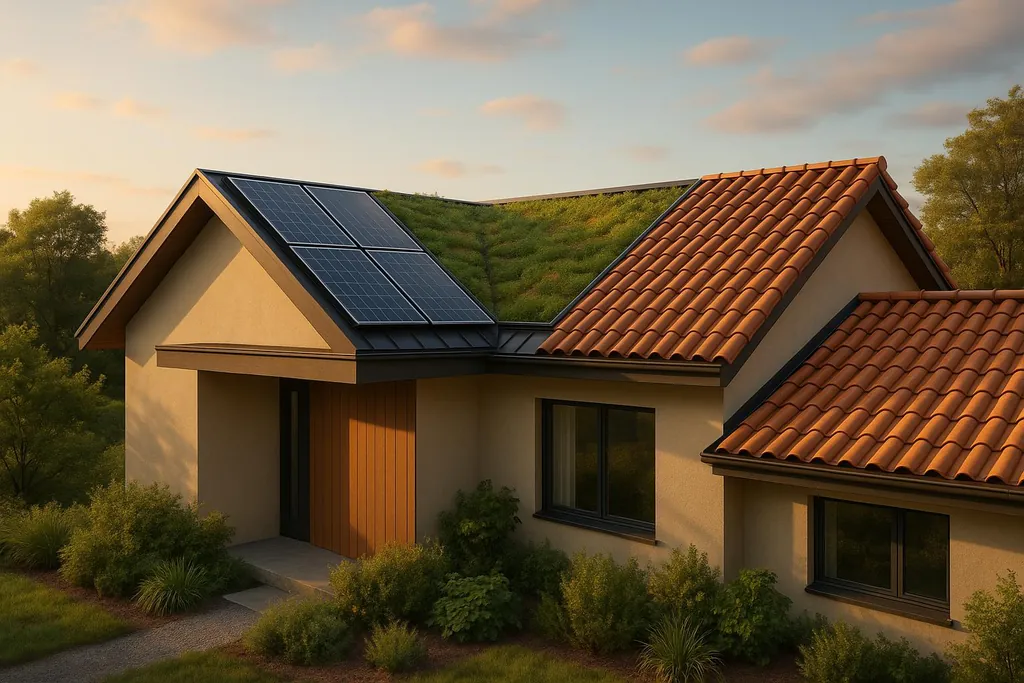
Explore the top eco-friendly roofing materials that combine durability, energy efficiency, and sustainability for your home.
Top 10 Eco-Friendly Roofing Materials
Looking for sustainable roofing options? Here's a quick guide to the 10 best eco-friendly roofing materials that balance durability, energy savings, and environmental benefits:
- Metal Roofing: Long-lasting (40–70 years), recyclable, reflects heat, and saves on cooling costs.
- Solar Tiles: Generate electricity, blend seamlessly into roofs, and last 25–30 years.
- Green Roofs: Transform roofs into gardens, reduce cooling loads by up to 70%, and manage stormwater.
- Recycled Rubber Roofing: Made from old tires, durable, flexible, and reduces landfill waste.
- Cool/White Roofs: Reflect sunlight, lower indoor temperatures, and combat urban heat.
- Clay Tiles: Naturally insulating, recyclable, and can last over 100 years.
- Concrete Shingles: Affordable, durable (50–75 years), and great thermal performance.
- Slate Roofing: Premium option, lasts 75–150 years, and has a low carbon footprint.
- Wood Shingles: Biodegradable, renewable, and naturally insulating.
- Recycled Shingle Composites: Blend recycled plastics and rubber, lasting 40–50 years.
Quick Comparison
| Material | Lifespan | Cost per sq ft | Energy Efficiency | Recyclability | DIY Difficulty |
|---|---|---|---|---|---|
| Metal Roofing | 40–70 years | $6–$16 | High | Fully recyclable | Moderate |
| Solar Tiles | 25–30 years | $15–$35 | Generates electricity | Limited | Hard |
| Green Roofs | 30+ years | $13–$45 | Excellent insulation | Sustainable | Very Hard |
| Recycled Rubber | 30–50 years | $4.25–$14 | Flexible, durable | 95% recyclable | Moderate |
| Cool/White Roofs | Varies | $0.50–$4.50 | Reflects sunlight | Varies by material | Easy |
| Clay Tiles | 50–100+ years | $14–$25 | Natural insulation | Fully recyclable | Hard |
| Concrete Shingles | 50–75 years | $3.80–$7.50 | Good thermal mass | Partially recyclable | Hard |
| Slate Roofing | 75–150 years | $14–$30 | Excellent insulation | Natural, reusable | Very Hard |
| Wood Shingles | 20–40 years | $10–$15 | Natural insulation | Biodegradable | Moderate |
| Recycled Composites | 40–50 years | $7–$14 | Varies by type | Fully recyclable | Moderate |
Key Takeaway: Choose based on your climate, budget, and sustainability goals. Metal roofs are durable and versatile, solar tiles generate energy, and green roofs enhance urban spaces. For budget-friendly options, consider recycled rubber or cool roofs. For premium, long-lasting choices, slate or clay tiles are ideal.
5 ECO FRIENDLY ROOF IDEAS || Sustainable housing ideas
1. Metal Roofing
Metal roofing stands out for its durability, eco-friendliness, and long-term value, making it a top choice for modern construction.
Recyclability and Environmental Impact
One of the biggest advantages of metal roofing is its recyclability. Steel, for example, boasts the highest recycling rate of any construction material, with nearly 70 million tons of domestic steel scrap reused annually in new steel production. When a metal roof reaches the end of its lifespan, up to 95% of it can be recycled.
Recycling steel instead of using virgin ore cuts water usage by 40% and reduces mining waste by 97%. The benefits extend to aluminum roofing as well, where recycling uses 95% less energy compared to producing aluminum from raw materials.
> "Metal roof recycling exemplifies the circular economy in action. It significantly reduces the need for mining raw materials and lowers manufacturing energy consumption and pollution. This sustainable building solution also diverts waste from landfills and incineration." > – Doug Sluga, Author / Roofing Pro
Research conducted by McElroy Metal in April 2025 using buildLCA analysis revealed the Monterrey steel roof reduces Global Warming Potential by nearly 60% compared to bitumen roofing, all while achieving recycling rates of up to 95%. Meanwhile, the Environmental Protection Agency reports that 11 million tons of asphalt shingles are discarded in landfills annually, where they contribute to urban air pollution by releasing volatile organic compounds during hot weather.
Beyond its eco-friendly disposal, metal roofing offers impressive durability.
Durability and Lifespan
Metal roofs are built to last, often far outliving traditional roofing materials. While asphalt shingles typically need replacement every 20–25 years, metal roofs can endure for 40–80 years, making them a long-term investment.
This longevity comes from metal's natural resistance to common roofing issues. Unlike other materials, metal doesn't rot, crack, or warp and stands up well to extreme weather. Additionally, steel roofing requires 85% less maintenance than bitumen. It's also much lighter - 50% lighter than bitumen and 75% lighter than concrete - reducing structural stress without compromising performance.
Energy Efficiency
Metal roofs are known for their energy-saving capabilities. They reflect up to 70% of solar energy back into the atmosphere, which helps lower cooling costs and indoor temperatures. Homeowners can save up to 40% on energy bills, with annual savings ranging from 10–25% depending on the quality of the installation. For example, DECRA metal roofing products installed directly on decking improved energy efficiency by 30.3%, while installations on battens increased efficiency by as much as 48.7%.
> "Metal roofs are one of the most energy-efficient roofing materials on the market because they reflect heat up and away from buildings." > – Trevor Underwood, Author
Metal roofs can reduce surface temperatures by 60 to 100°F compared to asphalt roofs. This cooling effect not only reduces air conditioning demand but also helps mitigate the urban heat island effect.
Cost and Suitability for DIY
While metal roofing typically involves a higher upfront cost, its long lifespan, minimal maintenance, and energy savings make it a cost-effective choice over time. For DIY enthusiasts, metal roofs offer another perk: their lightweight design simplifies installation. In March 2025, McElroy Metal client Leonard Hoffer selected a standing seam metal roof for solar panel installation. The clamps attached directly to the seams without drilling holes, cutting labor costs and preserving the roof's integrity.
If you're replacing an old roof, reach out to local metal recycling companies or your contractor to explore recycling options. To maximize environmental benefits, consider choosing metal roofing products with a high percentage of recycled content.
2. Solar Tiles
Building on the eco-friendly reputation of metal roofing, solar tiles take sustainability a step further by combining energy production with modern roof design.
Solar tiles, also called solar shingles, integrate solar energy collection directly into a home's roofing system. Unlike traditional solar panels, which are mounted separately, these tiles double as both roofing material and energy generators, blending seamlessly into the roof's design.
Energy Efficiency
Solar tiles use photovoltaic (PV) cells to convert sunlight into electricity. The electricity generated is direct current (DC), which is then transformed into alternating current (AC) by an inverter for household use. Any surplus energy can be stored in a battery system for later use. High-quality solar tiles achieve efficiency rates of 18–22%, with monocrystalline versions offering the best performance compared to polycrystalline and thin-film options.
> "Solar roof tiles offer a stylish and innovative way to generate renewable energy while maintaining your home's aesthetic appeal." – ECOFLOW
These tiles not only generate clean energy but can also significantly reduce or even eliminate dependence on grid electricity, leading to lower utility bills. While their energy output rivals that of traditional solar panels, solar tiles stand out by seamlessly integrating into the roof's architecture, combining functionality with design.
Durability and Lifespan
Built to endure extreme weather conditions, solar tiles are designed for reliable energy production over decades. They typically last 25–30 years and are rigorously tested to resist fire, wind, rain, and hail. This durability can even result in lower homeowner insurance premiums. For example, Luma Solar shingles are engineered to withstand Category 5 hurricanes and are three times stronger than standard roofing tiles.
> "Photovoltaic shingles are designed for an average lifespan of 25–30 years, making them a better choice than traditional asphalt for roof longevity." – Genest Concrete
Most manufacturers offer warranties ranging from 10 to 25 years, with some extending coverage to underlying components. Unlike traditional solar panels, solar tiles are screwed directly into roof battens, eliminating the need for drilled mounting brackets and providing extra protection for the roof structure beneath.
Cost and Installation Considerations
Solar tiles are a premium option compared to conventional solar panels. Pricing typically falls between $15 and $35 per square foot, or $3.50–$8.00 per watt, with full roof installations costing $35,000 to $75,000. For example, Tesla Solar Roof installations often exceed $70,000, with an average cost of $16 per watt. For a standard 2,000-square-foot roof, homeowners can expect to pay between $42,000 and $50,000, with labor making up about 60% of the total cost.
Due to the complexity of integrating solar tiles with both electrical and roofing systems, professional installation is essential. Homeowners are encouraged to gather multiple quotes and detailed estimates to understand the specific costs for their roof type.
For more tips on sustainable roofing and energy-efficient renovations, check out DIY Eco Homes.
3. Green Roofs (Living Roofs)
Green roofs, also known as living roofs, bring nature to your rooftop, combining aesthetics with functional benefits that enhance building performance. Essentially, they transform your roof into a vibrant ecosystem, featuring vegetation layered over a waterproof membrane.
There are two primary types of green roofs. Extensive green roofs use shallow soil layers (6 inches or less) and support hardy, low-maintenance plants like sedums and grasses, making them perfect for DIY enthusiasts. On the other hand, intensive green roofs include deeper soil, allowing for larger plants, shrubs, and even small trees. However, these require more structural support and ongoing upkeep.
Environmental Impact
Green roofs can be up to 60°F cooler than traditional black roofs, helping to combat the urban heat island effect by providing natural shade and promoting evapotranspiration. They also dramatically reduce stormwater runoff - by 60–100% - easing pressure on city drainage systems. In summer, green roofs retain 70–90% of precipitation, while in winter, they hold 25–40%.
In addition to managing heat and water, green roofs improve air quality by filtering out particulate matter and airborne chemicals. A study in Kansas City, Missouri, revealed that green roofs installed between 1999 and 2020 helped prevent emissions of 384 pounds of nitrogen oxide, 734 pounds of sulfur dioxide, and 269 tons of carbon dioxide in 2020 alone. These roofs are also increasingly planted with native, pollinator-friendly species to support biodiversity and are often paired with renewable energy systems like solar panels.
Energy Efficiency
Green roofs excel at reducing energy consumption. They can cut cooling loads by as much as 70%, thanks to their natural cooling properties. The layers of soil and vegetation act as an insulating barrier, regulating indoor temperatures throughout the year and decreasing the need for both heating and cooling.
Durability and Lifespan
Another standout feature of green roofs is their durability. The vegetation and soil layers shield the roof membrane from harsh weather, UV rays, and temperature swings. While conventional roofs typically last 15–20 years, green roofs can last over 60 years, significantly extending the lifespan of your roof.
Cost and DIY Suitability
Green roof installation costs range from $13 to $45 per square foot. Extensive green roofs are especially DIY-friendly due to their lightweight and low-maintenance design, making them a great choice for flat roofs.
Before starting, consult a structural engineer to ensure your roof can handle an extra 30 pounds per square foot. The best times for installation are early spring or early fall, when weather conditions are mild. For a DIY project, you can create a lightweight growing medium by mixing aggregate (like expanded shale, slate, or volcanic rock) with organic potting soil in an 85% to 15% ratio. Opt for shallow-rooted, drought-resistant plants to keep maintenance simple.
Ongoing upkeep for extensive green roofs is affordable. In Minnesota, for example, annual maintenance costs typically range from $0.10 to $1.00 per square foot after the first five years. Maintenance tasks include clearing drains of vegetation and weeding two to three times a year to prevent blockages.
For more detailed guidance on green roofs and other eco-friendly building options, check out DIY Eco Homes.
4. Recycled Rubber Roofing
Recycled rubber roofing transforms old tire rubber into durable, eco-friendly roofing materials that resemble traditional options like shingles or tiles. Made from a mix of recycled tire rubber and synthetic compounds, this roofing solution provides a practical way to reduce landfill waste while offering a long-lasting roof.
The manufacturing process involves cleaning used tires, grinding them into crumb rubber, adding binders and other materials, and then shaping the shingles through injection molding. The outcome is a roofing product that's both environmentally conscious and visually appealing.
Recyclability and Environmental Impact
Recycled rubber roofing stands out for its sustainability. By repurposing materials destined for landfills, it significantly reduces waste. For instance, Euroshield, a prominent manufacturer, uses about 300 tires per roof and has successfully diverted 3.5 million tires from landfills.
> "Going green isn't just a catchphrase for us. All Euroshield® rubber roofs are manufactured from 95% recycled materials, with the highest quality virgin crumb rubber derived from recycled tires. Our shingles help reduce landfill waste." > > - Euroshield Roofing
Typically, these shingles consist of 75% recycled tire rubber, combined with 25% recycled plastics and binding agents. Some manufacturers go a step further by recycling their own production waste, creating a closed-loop system that minimizes environmental impact even more.
Durability and Lifespan
Beyond its environmental benefits, recycled rubber roofing is built to last. It withstands hail, high winds, and extreme temperature changes. Thanks to its flexibility, it can expand and contract without cracking, making it a great choice for areas with variable climates. Unlike some traditional materials that may become brittle over time, rubber retains its elasticity, reducing the need for frequent repairs or replacements.
Cost and Suitability for DIY
Recycled rubber roofing strikes a balance between performance and cost. Prices range from $4.25 to $14 per square foot, making it two to three times more expensive than asphalt shingles. Professional installation typically adds $1.50 to $3.50 per square foot in labor costs.
For DIY enthusiasts, rubber roofing offers a mix of opportunities and challenges. DIY EPDM roofing kits start at around $150 and often include 20-year warranties. However, installation requires precision, as mistakes could void the warranty. While rubber roofing is generally easier to install on flat or low-slope roofs, it's not recommended for beginners to tackle on their own.
To save on costs, consider scheduling installation during the off-season, like late fall or early winter, when contractors might offer discounts. Routine maintenance, such as using DIY patch kits (priced between $50 and $150), can also help extend the roof's lifespan and reduce long-term expenses.
Recycled rubber roofing not only helps tackle waste but also offers a durable and sustainable roofing solution. For more information on eco-friendly building techniques and sustainable roofing options, check out resources from DIY Eco Homes to guide your green building journey.
5. Cool/White Roofs
Cool roofs are a practical and efficient option for those seeking eco-friendly roofing solutions. By reflecting more sunlight and absorbing less heat compared to traditional dark roofs, they help regulate building temperatures and reduce energy use. This capability stems from their high "thermal emittance", which allows them to release heat rather than hold onto it.
The concept is straightforward but highly effective. While a typical roof can heat up to 150°F or more on a sunny summer day, a reflective roof can stay over 50°F cooler. For example, a clean white roof reflecting 80% of sunlight will remain about 54°F cooler than a gray roof reflecting just 20%.
Energy Efficiency
Cool roofs can reflect 60–90% of sunlight, which translates to a reduction in peak cooling demand by 11–27% and lowers indoor temperatures by 2.2 to 5.9°F. A white roof coating can cut energy expenses by up to 20% and cooling costs by as much as 50%.
A compelling real-world example comes from the Nationwide Scottsdale Insurance Company headquarters in Arizona. After installing a PolyKool roof system, the building consumed 663,000 kilowatts of electricity in August 2009 - a 7.79% decrease (saving $5,450) compared to 719,000 kilowatts in August 2008. The roof upgrade was the only major change during that period.
Beyond energy savings, cool roofs also contribute to broader environmental benefits.
Recyclability and Environmental Impact
The advantages of cool roofs extend well beyond individual energy savings. By lowering local air temperatures, they help mitigate the urban heat island effect, which makes cities warmer than surrounding rural areas. This cooling effect can also reduce smog formation and ease strain on power grids, helping to prevent blackouts.
On a global scale, the potential impact is striking. Widespread adoption of reflective roofs could create a cooling effect equivalent to taking 300 million cars off the road for 20 years. By reducing energy demand for cooling, these roofs also cut emissions from power plants, contributing to efforts to combat climate change.
> "Local radiative management differs from global geoengineering in that it does not aim at effecting global temperatures [and] global effects would be negligible... It is a measure of adaptation." – Sonia Seneviratne, Land-Climate Dynamics Researcher, Swiss Federal Institute of Technology (ETH)
These environmental benefits come alongside the affordability of cool roof coatings, making them an accessible option for many homeowners.
Cost and Suitability for DIY
Cool roofs are an economical choice for eco-conscious homeowners. Roof coatings typically range from $500 to $2,400, with an average cost of around $1,400. Reflective coatings, in particular, cost between $0.50 and $4.50 per square foot, and the premium for cool roof materials is usually minimal - around zero to 10 cents per square foot.
For those who enjoy tackling home improvement projects, applying a cool roof coating can be a manageable DIY task. Acrylic coatings, which are water-based and UV-resistant, are especially popular for this purpose. However, for more complex jobs or coatings like silicone, hiring a professional is recommended.
Converting an existing roof with a cool coating can cost between $400 and $700 per square foot, while a full roof replacement generally starts at $1,000 per square foot. Labor costs typically range from $0.50 to $3 per square foot, or hourly rates of $50 to $80. Before applying any coating, it's crucial to address roof damage - repairs for minor leaks can cost anywhere from $150 to $1,000.
Concerns about increased heating costs in winter, often referred to as the "winter penalty", have been largely debunked. Research from Princeton University concluded that "the wintertime penalty of white roofs is also shown to be insignificant compared to their summertime benefits". This makes cool roofs a smart investment, even in colder climates.
Cool roofs align well with other eco-friendly materials, offering a holistic approach to energy savings and environmental benefits. For homeowners looking to embrace sustainable living, DIY Eco Homes provides detailed guides on incorporating cool roof technologies into broader green home improvement projects.
6. Clay Tiles
Clay tiles have been a trusted roofing material for centuries, offering a blend of natural beauty and practicality. Made from a simple mix of clay, sand, and water, they stand out as an environmentally friendly choice that combines durability with timeless appeal.
> "When it comes to sustainable roofing materials, the traditional choice still remains one of the best. Clay roofing tiles are known for their timeless charm and natural beauty – but they're also one of the most environmentally friendly roof coverings available." – Marley Website
Recyclability and Environmental Benefits
One of the biggest advantages of clay tiles is their high recyclability. Over 90% of these tiles are recovered and reused during non-hazardous construction and demolition projects. The production process itself is eco-conscious, recycling water and generating minimal waste, all while avoiding harmful gas emissions. Clay tiles don't require chemical preservatives and make use of abundant natural resources without depleting them. At the end of their lifespan, they can be recycled into new tiles or even bricks, significantly cutting down on landfill waste.
Built to Last
Clay tiles are incredibly durable, with high-quality options lasting more than 100 years. They resist rot, decay, mold, water damage, and even insect infestations. They can also withstand extreme weather, including winds up to 200 mph and impacts from hailstones as thick as 2 inches. While most clay tile roofs last 50–60 years, some installations have been known to endure for a century.
Energy Efficiency at Its Best
Clay tiles naturally insulate homes, reducing heat transfer through the roof deck by up to 70% compared to asphalt shingles. Their thermal mass helps regulate temperature - absorbing heat during the day and releasing it at night - leading to noticeable energy savings. In fact, homeowners can see annual energy cost reductions of 10–20%. For instance, in Phoenix, a light-colored clay tile roof cut summer energy bills by nearly 20%.
The color of the tiles also plays a role. Light-colored tiles reflect up to 80% of the sun's rays, while darker ones reflect only 10–20%. Additionally, the curved design of S-shaped or other contoured tiles promotes natural ventilation by allowing air to flow between the tiles and the roof deck, further boosting energy efficiency.
Cost and Installation Considerations
While clay tiles require a higher upfront investment compared to other roofing materials, their durability and energy efficiency often make them a cost-effective choice over time. Professional installation is usually recommended since their weight requires a structural assessment to ensure the roof can support them. Proper installation also ensures effective waterproofing and ventilation. However, for those with experience, maintenance tasks like replacing individual damaged tiles can be handled as DIY projects.
Clay tiles offer a long lifespan, energy savings, and a strong return on investment. If you're looking to incorporate them into an energy-efficient home design, resources like DIY Eco Homes provide step-by-step guides to help you make the most of this sustainable roofing option.
7. Concrete Shingles
Concrete shingles strike a great balance for homeowners looking for a durable and eco-friendly roofing option. They combine longevity and energy efficiency, making them a solid choice for sustainable home construction. Made from natural materials like sand, cement, water, and iron oxide pigments, they offer a sturdy, petroleum-free roofing solution.
> "Concrete roof tiles are a popular choice, as they provide excellent aesthetics, performance and durability. They are also a sustainable choice, thanks to their environmentally friendly manufacturing process, thermal efficiency, long lifespan and ease of maintenance." – Kevin Taylor, Training and Technical Support Manager, Marley
Now let's break down how concrete shingles perform in terms of recyclability, durability, energy efficiency, and cost.
Recyclability and Environmental Impact
Concrete shingles shine when it comes to recyclability and their low environmental footprint. Once they've reached the end of their long lifespan, these tiles can be crushed and reused as aggregate in new tiles or other building materials, keeping them out of landfills. For instance, Marley incorporates at least 16% recycled concrete into its tiles and recycles all of its production waste. Even rejected tiles find a second life as road fill, further cutting down on waste.
Durability and Lifespan
When it comes to durability, concrete roof tiles are built to last. They typically have a lifespan of 50 to 75 years, far outpacing asphalt shingles, which usually last only 20 to 30 years. What's more, concrete tiles actually get stronger over time. Their weight also gives them excellent wind resistance, with some tiles holding up against winds as high as 180 mph. While they may not match the century-long lifespan of clay or slate tiles, concrete shingles deliver impressive durability at a more affordable price point.
Energy Efficiency
Concrete shingles don't just last - they also help save energy. Thanks to their high thermal mass, these tiles can absorb heat during the day and release it slowly, reducing heat transfer into the attic and helping to regulate indoor temperatures year-round. Tests show that the airflow created by the individual installation of concrete tiles can cut heat transfer by up to 70% compared to traditional asphalt shingles. This natural ventilation helps keep homes cooler in summer and warmer in winter, translating to annual energy savings of around 10–30%.
Cost and Suitability for DIY
While concrete shingles come with a higher upfront cost, their long lifespan makes them a cost-effective choice in the long run. Over their lifetime, they can cost only about a third as much as asphalt shingles due to their durability. Prices range from $3.80 to $7.50 per square foot, meaning a typical 1,700-sq-ft home could cost between $20,400 and $31,450 for replacement. However, their weight makes installation a job for professionals, not a DIY project. Additional structural reinforcement may be needed, which could cost anywhere from $15,000 to $30,000. If you're considering concrete shingles, consulting with structural engineers and licensed contractors is crucial to ensure your home can support the tiles and that installation is done correctly for optimal performance and longevity.
8. Slate Roofing
Slate roofing stands out as a high-end, environmentally conscious option, prized for its natural elegance and impressive longevity. Its minimal processing and natural composition make it an excellent fit for homes with sustainability in mind.
> "Natural slate is the roofing material with the lowest carbon footprint throughout its entire life cycle." – Control Union
Let's break down how slate measures up in key areas for sustainable building.
Recyclability and Environmental Impact
Slate's eco-friendly advantages are evident from the quarry to its eventual disposal. Its carbon footprint is remarkably low, with natural slate producing just 0.005 to 0.054 kg of CO₂ per kilogram. In contrast, concrete tiles emit 0.19 kg, and clay tiles generate 0.43 kg. At its highest, slate's embodied carbon is only 16% of what other roofing materials typically produce.
When a slate roof reaches the end of its lifespan, the tiles can often be reclaimed and repurposed for new projects, reducing landfill contributions. The average yearly CO₂ emissions for slate are just 0.12 kg, compared to 0.21 kg for terracotta, 0.26 kg for concrete, and 0.45 kg for bituminous roof tiles. This combination of low embodied carbon and recyclability underscores slate's sustainable appeal.
Durability and Lifespan
One of the most celebrated features of slate roofing is its incredible durability. High-quality natural slate often lasts over 100 years, with some varieties enduring as long as 200 years.
> "Slate roofs can last over 100 years if properly installed. This is the longest lifespan of any roofing material, making slate a valuable investment." – Brian Spicer, Spicer Bros. Construction, Inc.
This longevity is largely due to slate's natural resistance to fire, hail, acid rain, and even hurricane-strength winds. It's also impervious to water, mold, and pests. Compared to asphalt shingles, which typically need replacement every 20 to 30 years, slate reduces waste and minimizes the need for frequent, resource-intensive renovations.
Energy Efficiency
Slate adds to its eco-friendly profile with excellent thermal properties. Thanks to its density, it acts as an effective thermal barrier, helping to regulate indoor temperatures throughout the year.
> "With its natural insulating properties, slate helps regulate indoor temperatures, keeping your home comfortable year-round. During the summer, it prevents excessive heat absorption while in the winter, it retains warmth. This reduces strain on heating and cooling systems, lowering energy costs over time." – Elizabeth Cady
The National Slate Association also highlights slate's density as a key factor in maintaining temperature stability. Its thermal mass effect can cut cooling costs by up to 20%, making it not just an environmentally thoughtful choice but also a financially smart one in the long run.
Cost and Professional Installation
Slate roofing is undeniably a premium investment. Its weight and the specialized skills required for proper installation mean professional expertise is a must. While the upfront cost is higher compared to other materials, slate's longevity more than makes up for it. With fewer replacements needed over time, it becomes a cost-effective choice for homeowners focused on sustainability and long-term savings.
9. Wood Shingles (Cedar/Redwood)
Wood shingles, crafted from cedar or redwood, bring a rustic charm while offering eco-conscious benefits. These materials are prized for their renewable nature and ability to decompose naturally, making them a smart choice for those looking to build sustainably.
Recyclability and Environmental Impact
Cedar and redwood shingles stand out for their eco-friendly life cycle. Unlike the staggering 11 million tons of asphalt shingles that fill U.S. landfills annually, wood shingles can be repurposed. Once they're no longer suitable for roofing, they can be chipped into mulch or turned into wood-based products like particleboard. Even if they end up in a landfill, they break down quickly due to their biodegradable properties, unlike asphalt, which can take centuries to decompose.
Beyond their recyclability, these shingles contribute to a smaller carbon footprint. Trees absorb carbon while growing, and using their wood for shingles locks in that carbon. Additionally, their production process is energy-efficient, relying on sustainably harvested wood and minimal fossil fuels.
Durability and Lifespan
Cedar and redwood are naturally resistant to insects and rot, which makes them durable roofing materials. On average, wood shingle roofs last 20–30 years, but hand-split shakes can endure for 30–40 years with proper upkeep. However, environmental factors like moisture, UV exposure, and temperature changes can affect their longevity. Cedar, for instance, expands and contracts with moisture, which can gradually impact waterproofing.
To extend their lifespan, regular maintenance is key. In wet climates, it's important to keep gutters clear and apply water-resistant coatings. In drier regions, UV-resistant coatings are more effective. Routine cleaning to remove debris and mold, along with periodic applications of a wood stain or sealer, can provide extra protection against weathering.
Energy Efficiency
Wood shingles offer natural insulation benefits. Cedar, for example, helps reduce heating demands in winter and keeps interiors cooler during summer, absorbing less heat compared to darker asphalt shingles. This thermal efficiency not only lowers heating and cooling costs but also enhances indoor comfort, making wood shingles a practical and energy-conscious roofing choice.
Cost and Suitability for DIY
While wood shingles fall in the mid-to-high price range, they deliver excellent long-term value, often lasting up to three times longer than asphalt roofs. For DIY enthusiasts, these shingles provide both an opportunity and a challenge. Installation demands careful attention to detail, particularly in ensuring proper ventilation to prevent moisture buildup and rot. In fire-prone areas, applying fire-retardant treatments is also a critical step.
For those interested in tackling the project themselves, platforms like DIY Eco Homes offer step-by-step guides and cost breakdowns, making sustainable roofing projects more approachable and manageable.
10. Recycled Shingle Composites
Recycled shingle composites are taking roofing innovation to the next level, blending performance with eco-conscious design. These shingles repurpose waste materials into durable, efficient roofing solutions that address both environmental concerns and homeowner demands.
Recyclability and Environmental Impact
Recycled shingle composites directly address one of construction's major waste issues. Asphalt shingles are a significant contributor to landfill waste in the U.S., making up nearly 8% of the total building-related waste stream. According to the EPA, construction and demolition activities generate 600 million tons of waste annually, with asphalt shingles accounting for 15.1 million tons.
These composites are made using recycled plastics and rubber from items like tires and milk bottles. By using materials that would otherwise take centuries to decompose, they help divert waste from landfills.
In a notable example, GAF installed its first roof in Florida in March 2022 with shingles partially made from recycled asphalt. During their pilot program, GAF managed to reuse about 90% of the shingle waste they collected, creating new shingles with approximately 7% recycled content. Their goal? To keep one million tons of shingle waste out of landfills annually by 2030.
> "Roofing shingles made from recycled plastic and rubber appear to be an environmentally friendly alternative to traditional shingles that shows promise and is welcome in the sustainable building marketplace." – National Park Service
What's more, these shingles are fully recyclable at the end of their lifespan, creating a closed-loop system that reduces waste and minimizes the need for raw material extraction. This approach not only helps the environment but also results in more durable roofs.
Durability and Lifespan
When it comes to longevity, recycled composite shingles outperform traditional options. While standard asphalt shingles last about 15 to 30 years, composite shingles can endure for 30 to 50 years. Fewer replacements mean less waste and lower long-term costs.
Built to handle harsh conditions, composite shingles resist wind speeds of 110–190 mph, compared to the 90 mph threshold for asphalt shingles. They're also UV-resistant, which helps maintain their color over time.
> "Composite shingles, made with durable synthetic polymers, offer a long-lasting solution capable of withstanding harsh weather conditions." – Georgia Home Roofing
Despite being made from recycled materials, these shingles are lightweight yet strong, making them suitable for a variety of structural needs and climates.
Energy Efficiency
Recycled composite shingles can also enhance a home's energy efficiency. Their thermal performance depends on factors like color and composition. For instance, lighter-colored shingles reflect more heat, which can reduce cooling costs during summer. Additionally, some composites may offer better insulation compared to traditional asphalt shingles.
Cost and Suitability for DIY
Recycled composite shingles are considered a premium roofing choice, with installation costs ranging from $7 to $14 per square foot. In comparison, asphalt shingles typically cost $3 to $5 per square foot. The total cost to install a composite roof generally falls between $15,000 and $26,500, with labor making up about half of the expense. However, their extended lifespan - 40 to 50 years versus 15 to 30 years for asphalt - makes their cost per year of service more competitive.
Their lightweight nature can make them appealing for DIY enthusiasts, but roofing is a complex and physically demanding task. Improper installation can lead to issues like leaks, missing shingles, poor ventilation, or structural problems that might void warranties.
For those committed to tackling the project themselves, resources like DIY Eco Homes offer detailed guides and cost breakdowns. Still, for most homeowners, hiring a professional remains the safer and more reliable choice in terms of quality and long-term savings.
Material Comparison Chart
After examining the unique features of various eco-friendly roofing materials, the chart below provides a side-by-side comparison of their key attributes. It outlines each option's lifespan, cost, energy efficiency, climate suitability, ease of installation, and recyclability, helping you identify the best match for your home.
| Material | Lifespan | Cost per sq ft | Energy Efficiency | Climate Suitability | DIY Difficulty | Recyclability |
|---|---|---|---|---|---|---|
| Metal Roofing | 40–70 years | $6–$16 | High reflectivity; reduces peak cooling demand by 11–27% | Performs well in diverse climates; ideal for coastal/windy areas | Easy | Fully recyclable |
| Green Roofs (Living Roofs) | 30+ years | N/A | Excellent insulation | Best for urban, temperate environments | Very Hard (professional installation recommended) | Sustainable |
| Cool/White Roofs | N/A | N/A | Reduces peak cooling demand by 11–27% | Best suited for hot, dry climates | Easy to Moderate | Varies by material |
| Clay Tiles | 50–100+ years | $14.71 | Reflects heat effectively | Ideal for hot, dry climates | Hard | Fully recyclable |
| Concrete Shingles | 30–50 years | N/A | Good thermal mass | Suitable for storm-prone areas | Hard | Partially recyclable |
| Slate Roofing | 75–150 years | $14.78 | Natural insulation properties | Perfect for cold, snowy regions | Very Hard | Natural, reusable |
| Wood Shingles (Cedar/Redwood) | 20–40 years | $10.88 | Good insulation if properly treated | Best for moderate climates; can be treated for coastal conditions | Easy | Biodegradable |
| Recycled Shingle Composites | 40–50 years | $4–$6 | Varies with composition | Performs well in various climates; offers high wind resistance | Moderate | Varies |
Understanding the Trade-offs
The chart highlights that while slate and clay tiles have the longest lifespans, they come with higher costs and require professional installation. Metal roofing offers a solid middle ground, combining durability, energy efficiency, and ease of installation for DIY enthusiasts.
Cool/white roofs are excellent for reducing indoor temperatures by 2.2–5.9°F, though data on their lifespan and cost remains limited.
Climate is a critical factor in choosing a roofing material. In hot, dry areas, clay tiles and cool roofs excel at reflecting heat. For cold, snowy climates, slate is a top choice due to its ability to handle snow loads and freeze-thaw cycles. Meanwhile, coastal regions benefit from the corrosion resistance of metal roofing.
Installation difficulty varies widely. Metal roofing and wood shingles are manageable for experienced DIYers, while slate requires specialized skills due to its weight and fragility.
For those prioritizing sustainability, green roofs stand out with their eco-friendly benefits, though they require significant upfront investment and professional expertise. Recycled composites and metal roofing also balance longevity, energy efficiency, and ease of installation.
Ultimately, your choice should reflect what matters most to you - whether it's affordability, durability, energy savings, or environmental impact. For step-by-step installation guides, check out DIY Eco Homes. Use this chart to guide your decision toward a sustainable roofing solution.
Conclusion
Choosing the right eco-friendly roofing material boils down to factors like your local climate, budget, and how hands-on you want to be with the project.
For those living in hot climates, metal roofing, clay tiles, and cool roofs stand out as excellent options. Metal roofs are highly reflective and built to last, while clay tiles not only reflect heat but can also endure for up to 100 years. As RoofCrafters puts it, "Investing in durable, high-quality materials tailored to your local climate and budget can prevent headaches down the line".
If you're working with a tighter budget, recycled-content shingles and cool roofs offer cost-effective solutions. White asphalt shingles, for instance, are priced similarly to standard dark shingles, and cool roofs can cut energy use by as much as 15%. Recycled-content shingles provide an affordable alternative to premium materials like slate, all while delivering real environmental benefits.
For DIY enthusiasts, materials that balance performance with ease of installation are key. Metal roofing and wood shingles are often preferred by hands-on homeowners for their manageable installation process and reliable performance.
Different materials also excel in specific climates. For example, green roofs are ideal for urban areas, offering excellent insulation, though they usually require professional installation. Meanwhile, metal roofing can last up to 50 years without rust or corrosion, and slate roofing can surpass 100 years with minimal maintenance.
For more detailed guides, including step-by-step instructions and cost comparisons, check out DIY Eco Homes.
FAQs
What should I consider when selecting an eco-friendly roofing material for my home?
When picking a roofing material that's kind to the planet, it's important to weigh a few critical factors to make sure it aligns with both your home's needs and environmental goals.
First up, sustainability. Opt for materials that are recyclable, have minimal impact during production, or are crafted from recycled materials. Choices like [metal roofing](/blog/how-to-install-recycled-metal-roofing) or recycled shingles check these boxes - they're long-lasting and eco-conscious.
Next, look at energy efficiency. Roofing that reflects sunlight can cut down on cooling costs, keeping your home more energy-efficient. This is especially valuable if you live in a warmer climate where air conditioning use is high.
Finally, take your local climate into account. The weather in your area plays a big role in how well certain materials perform. For example, slate or clay tiles are a great fit for hot, dry regions, while metal roofs are built to handle heavy snow and cold winters effectively.
Are eco-friendly roofing materials worth the upfront cost compared to their long-term savings and environmental impact?
Eco-friendly roofing materials often come with a higher upfront price tag compared to more traditional options like asphalt shingles. For instance, installing a green roof can range from $10 to $25 per square foot, and solar panels require a considerable initial investment. But here's the upside: over time, these choices can result in notable savings by cutting down energy costs and reducing the need for frequent maintenance.
What's more, many of these sustainable materials are built to outlast conventional ones, which means fewer replacements and lower long-term expenses. Beyond just saving money, they also play a role in creating a healthier planet by boosting energy efficiency and shrinking carbon footprints. While the initial investment might seem steep, the combination of financial savings and environmental impact makes these materials a smart pick for anyone aiming to build a more sustainable home.
Can I install eco-friendly roofing materials myself, or should I hire a professional?
Some environmentally friendly roofing materials can be installed by DIY enthusiasts, but others demand professional expertise to ensure the best outcomes. Take green roofs, for instance - they require intricate drainage systems and careful structural planning, which are tasks best left to seasoned contractors. On the other hand, metal roofing might be manageable for skilled DIYers, but hiring a professional can help ensure the material is handled correctly and achieves its full lifespan.
If you're confident in your abilities and the roofing material doesn't require specialized techniques, tackling the project yourself could help cut labor expenses. That said, for more challenging or heavy-duty installations, working with a professional ensures safety, proper installation, and long-lasting results.