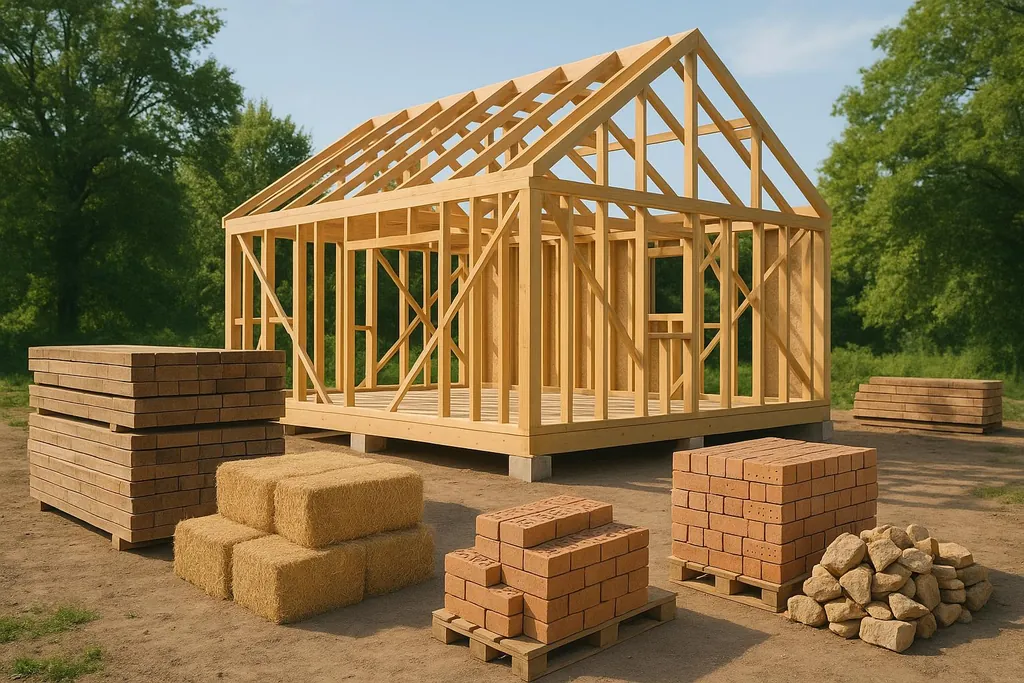
Discover a complete guide to sustainable building materials, covering energy impacts, recycling, and carbon emissions for eco-friendly construction.
Complete Guide to Sustainable Building Materials
Use the Embodied Carbon Calculator to translate wall, roof, and foundation choices into kg CO2e and see which assemblies move the needle most before committing to a material list.
A Comprehensive Guide to Sustainable Building Materials: Making Eco-Conscious Choices for a Greener Future
In today’s world, where environmental concerns are at the forefront of societal challenges, the materials we choose for constructing or upgrading our homes carry profound implications. As individuals and families in North America work toward greener, more affordable lifestyles, understanding the impact of building materials on the environment is critical. This article delves into the intricate world of sustainable building materials, breaking down their environmental footprints, costs, and potential for reuse. Whether you’re constructing a new home or retrofitting an existing one, this guide will provide clarity on how to make informed, eco-friendly choices.
Why Material Selection Matters in Building Sustainability
The materials used in a building influence its environmental footprint across its entire lifecycle - from extraction and production to disposal or reuse. Professor Kyong Hi Kim, an expert in architecture, highlights that a building’s systems can be categorized into five major components: the site, structure, enclosure, services, and interior systems. Each category represents interconnected parts of a building that determine its performance, visual appeal, and sustainability.
These systems are not just about functionality. They dictate the energy, water, and raw materials required to create and maintain a building, as well as the amount of waste and pollution generated throughout its lifecycle. By understanding the energy intensity, carbon footprint, and recyclability of various materials, you can significantly reduce your home’s environmental impact while staying on budget.
Understanding the Environmental Impact of Common Building Materials
1\. Embodied Energy: How Much Energy Is Hidden in Your Materials?
Embodied energy refers to the total energy required to produce a material, from raw resource extraction to finished product. The energy demand varies significantly across material families:
- Metals (e.g., steel, aluminum): High embodied energy due to intensive mining and refining processes. For instance, aluminum production consumes hundreds of megajoules (MJ) per kilogram.
- Polymers (e.g., plastics): Require substantial energy, often around 100 MJ per kilogram, due to chemical manufacturing processes.
- Ceramics and Glasses (e.g., concrete, brick): Lower embodied energy per kilogram (a few MJ), but large-scale usage in construction can lead to significant cumulative impacts.
- Hybrid Composites: Energy intensity varies; synthetic composites like carbon fiber are energy-heavy, while wood-based composites are far less taxing.
Takeaway: Prioritize materials with low embodied energy, such as wood and brick, over energy-intensive alternatives whenever feasible.
2\. Carbon Footprint: Measuring Emissions per Kilogram
Building materials also vary widely in the amount of CO2 emitted during production:
- Metals: Producing steel emits 1.5–2 kg of CO2 per kilogram, while aluminum emits several times more due to high electricity usage.
- Polymers: Emit around 5 kg of CO2 per kilogram (e.g., polycarbonate).
- Ceramics (e.g., concrete): Emit less than 1 kg of CO2 per kilogram, but their extensive use makes cement production a top global contributor to carbon emissions.
- Hybrids: Composite materials combine the carbon costs of their ingredients, often leading to higher emissions.
Actionable Insight: Minimize reliance on carbon-intensive materials like aluminum and prioritize alternatives like recycled steel, sustainably sourced wood, or innovative low-carbon concrete.
3\. Water Usage in Material Production
Water is another critical resource used during material production. Metals, polymers, and ceramics all require significant water inputs, though these processes often recycle water on-site. However, in water-scarce regions, this usage can exacerbate environmental stress.
Sustainable Tip: Favor materials like brick or concrete with lower water footprints if you’re building in water-stressed areas.
4\. Recycling Performance: Closing the Loop on Material Life Cycles
Recycling is a vital strategy to reduce raw material extraction and associated impacts. Current recycling rates vary by material:
- Metals: Lead the way, with well-established recycling systems for steel, aluminum, and copper ensuring significant recycled content.
- Ceramics (e.g., concrete, brick): Moderate recycling performance but room for improvement.
- Polymers and Hybrid Composites: Lag significantly behind, with challenges in recycling due to technical and economic barriers.
Takeaway: When possible, choose materials with higher recycled content, like steel or reclaimed wood, and collaborate with local recycling programs to responsibly dispose of construction waste.
The Economic Role of Carbon Taxes on Building Materials
Introducing a carbon tax on building materials could reshape the economics of construction. For example:
- Steel and Concrete: These carbon-heavy but lower-cost materials would face a 7–10% price increase under a $20/ton CO2 tax.
- Polymers: Due to their already high cost, the impact of a carbon tax would be less pronounced (only 2–3% increases).
- Hybrid Composites: Would see minimal cost changes, given their high base price and lower production volumes.
Such measures incentivize the use of lower-carbon alternatives, pushing industries and individuals toward greener practices.
Key Takeaways for Eco-Conscious Builders
- Understand Material Lifecycles: Consider embodied energy, carbon emissions, and water usage across a material’s full lifecycle - not just during its production.
- Prioritize Low-Energy Materials: Wood, recycled steel, and brick are excellent choices for reducing embodied energy.
- Focus on Recycled Content: Opt for materials with higher recycled fractions, such as metals, and advocate for better recycling systems for polymers and concrete.
- Think Beyond the Kilogram: Large-scale materials like concrete may have a low impact per kilogram but contribute significantly to global emissions due to sheer volume.
- Prepare for Carbon Taxes: A potential carbon tax could increase the cost of high-emission materials, making sustainable options more economically viable.
- Be Water-Wise: Choose materials with lower water footprints if building in drought-prone regions.
- Scale Matters: Reducing global emissions requires systemic improvements in high-usage industries like concrete and steel.
Building a Sustainable Future, One Material at a Time
By carefully selecting materials with eco-friendly properties, you can create a home that’s not only affordable but also contributes to a healthier planet. Whether it’s choosing recycled steel, experimenting with innovative composites, or simply reducing material waste, every decision counts. Remember, sustainable construction isn’t just about saving money - it’s about building a legacy of environmental stewardship for future generations.
Source: "Sustainable Building Materials | Eco Properties Explained" - Kyoung-Hee Kim, YouTube, Aug 21, 2025 - https://www.youtube.com/watch?v=7ZP48bGytHY