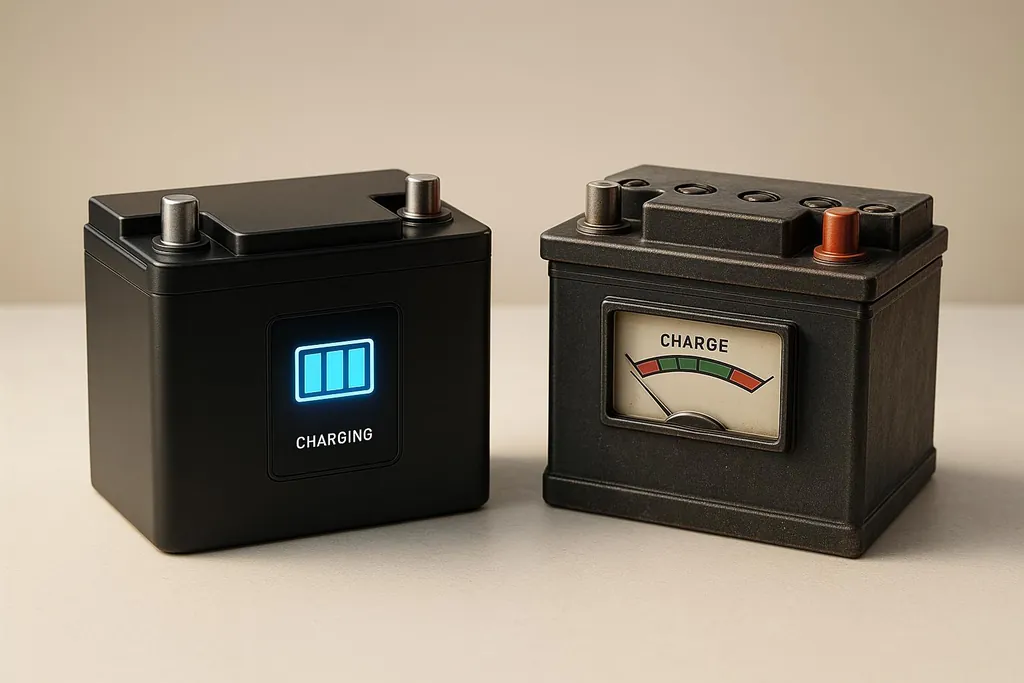
Learn the essential differences in charging practices between lithium and lead-acid batteries for optimal performance and longevity.
Lithium vs. Lead-Acid: Charging Best Practices
Charging lithium and lead-acid batteries requires different approaches to ensure safety, efficiency, and longevity. Using the wrong method can damage your system or create safety hazards. Here’s what you need to know:
- Lithium Batteries: Charge faster (1–3 hours), have higher efficiency (95%+), and require no float charging. Use chargers with built-in protections like overcharge and temperature safeguards. Avoid charging below 32°F and follow the "20–80 rule" to extend lifespan.
- Lead-Acid Batteries: Charge slower (6–10+ hours) in three stages (Bulk, Absorption, Float). They tolerate low temperatures better but need regular maintenance like checking water levels. Overcharging or undercharging can reduce their lifespan.
- Key Differences: Lithium batteries are more efficient, require less maintenance, and are better for high-demand systems but cost more upfront. Lead-acid batteries are cheaper initially but need more care and replacements over time.
Quick Comparison
| Attribute | Lithium Batteries | Lead-Acid Batteries |
|---|---|---|
| Charge Time | 1–3 hours | 6–10+ hours |
| Efficiency | 95%+ | 70–85% |
| Float Charging | Not required | Required |
| Temperature Sensitivity | No charging below 32°F | Can charge at low temps |
| Maintenance | Minimal | Regular checks needed |
| Lifespan | 2,000–6,000+ cycles | 500–1,500 cycles |
For DIY or off-grid systems, choose lithium for speed and efficiency, or lead-acid for cost-sensitive setups. Always match your charger to your battery type to avoid damage.
How to Charge a Battery--lead acid and lithium-ion batteries (2021)
How Lithium and Lead-Acid Batteries Differ
The main distinction between lithium and lead-acid batteries lies in their internal chemistry, which directly impacts how they charge and store energy. Lithium batteries rely on the movement of lithium ions, while lead-acid batteries use a chemical reaction involving lead and sulfuric acid. Recognizing these differences is essential when selecting the right charger for your system. Let’s break down the characteristics that make each battery type suitable for specific off-grid applications.
Lithium Battery Features
Lithium batteries are known for their ability to store energy efficiently in a compact form. They pack more power into a smaller space, making them ideal for off-grid setups where storage capacity is limited. Another standout feature is their impressive round-trip efficiency of 90–95% . This means nearly all the energy you put into a lithium battery can be retrieved, ensuring minimal energy loss and reliable performance.
Lead-Acid Battery Features
Lead-acid batteries store energy through a chemical reaction between lead and sulfuric acid. To maintain their performance, the charging process must reverse this reaction. Although they’ve been a dependable and budget-friendly choice for off-grid systems for years, lead-acid batteries typically have lower energy density and efficiency compared to their lithium counterparts. This makes them a less space-efficient option but still viable for certain cost-sensitive applications.
Charging Methods for Each Battery Type
To get the most out of your batteries and ensure they last, it's essential to follow the correct charging methods for each type. Lead-acid and lithium batteries require distinct protocols, and using the wrong one can lead to damage or even safety risks in off-grid systems.
Lead-Acid Battery Charging Stages
Charging lead-acid batteries involves a three-stage process called Constant Current Constant Voltage (CCCV). This approach reverses the chemical reaction between lead and sulfuric acid without harming the battery plates.
- Bulk Stage: During this phase, the charger provides a constant current, restoring about 80% of the battery's capacity while the voltage gradually increases.
- Absorption Stage: As the battery nears full charge, the charger switches to constant voltage, allowing the current to taper off naturally.
- Float Stage: At this point, a lower voltage maintains the battery's full charge and offsets self-discharge.
Temperature plays a big role in charging lead-acid batteries. Adjust the voltage by about \-3mV per °C per cell to prevent overcharging in warmer conditions . For example, if your battery bank is in a hot garage during summer, the charger should automatically reduce the voltage.
Safety Tips:
- Never charge lead-acid batteries above 120°F (49°C) or when they're frozen .
- For flooded batteries, always add distilled water _after_ charging to avoid acid overflow .
Lithium Battery Charging Stages
Lithium batteries follow a simpler Constant Current/Constant Voltage (CC/CV) protocol, which is quicker than the process for lead-acid batteries. Here's how it works:
- Constant Current Phase: The charger delivers a steady current until the battery reaches its target voltage.
- Constant Voltage Phase: Once the target voltage is hit, the charger holds that voltage while the current gradually decreases.
One of the key benefits of lithium batteries is their speed. They can handle charge rates up to 1C, meaning they can theoretically charge to full capacity in about an hour . This is a significant advantage over lead-acid batteries, which are slower and can't handle rapid charging .
Important Note: Lithium batteries don't require float charging. Once the CC/CV cycle is complete, charging must stop. Continuous float charging can harm the cells and shorten their lifespan. Make sure to use a charger designed specifically for lithium batteries.
Selecting Compatible Chargers
Choosing the right charger is critical for both safety and optimal performance in off-grid setups.
- For Lead-Acid Batteries: Use chargers programmed for your specific battery type - flooded, gel, or AGM. Look for features like precise voltage regulation within ±0.5%, current limiting, and low ripple voltage (less than 5% of the charge voltage) to protect the battery from overheating and plate damage .
- For Lithium Batteries: Select chargers equipped with safeguards like overcharge, temperature, short circuit, and reverse polarity protection. They should also support cell balancing for multi-cell packs and be compatible with your battery's specific chemistry (e.g., LiFePO4, NMC) .
The demand for lithium battery chargers is growing rapidly. In 2024, the market was valued at $4.76 billion, with projections estimating it will reach $12.58 billion by 2033, expanding at an annual rate of 11.67% . This surge is fueling advancements in smart charging technology, which dynamically adjusts settings for better performance.
Always ensure your charger matches your battery's chemistry and voltage. Using the wrong type of charger - like a sealed lead-acid charger for flooded batteries or a lead-acid charger for lithium cells - can cause irreversible damage. Investing in high-quality charging equipment is a small price to pay compared to the cost of replacing damaged batteries. With the right charger and proper practices, you can optimize your off-grid charging system effectively.
Side-by-Side Charging Comparison
Understanding the differences between charging lithium and lead-acid batteries can save you time, money, and a whole lot of headaches. If you're building an off-grid system, these distinctions are especially important. At [DIY Eco Homes](/), we aim to equip DIY builders with the insights they need to design energy systems that work efficiently and reliably.
The standout difference? Charging speed. As Power-Sonic puts it, "Charging SLA batteries is notoriously slow" . In contrast, lithium batteries charge much faster, cutting downtime and improving overall system dependability.
Efficiency is another big factor. Lithium batteries operate at over 95% efficiency, while lead-acid batteries fall between 70–85%. That means lithium batteries waste significantly less energy - about 30% less electricity usage overall .
Comparison Table
| Charging Attribute | Lead-Acid Batteries | Lithium Batteries |
|---|---|---|
| Full Charge Time | 6–10+ hours | 1–3 hours |
| Charging Efficiency | 70–85% | 95%+ |
| Temperature Sensitivity | Can charge at low temperatures with low current | Do not accept charge below 32°F (0°C) |
| Opportunity Charging | Frequent top-offs can reduce battery life | Supports opportunity charging without penalties |
| Float Charging | Required for storage | Not needed and may cause damage |
| Maintenance Needs | Regular checks (e.g., water levels, terminal cleaning) | Minimal maintenance once properly installed |
Beyond the numbers in the table, temperature and maintenance are two areas where these battery types differ significantly. For those in colder climates, lead-acid batteries have an edge - they can accept low-current charges even in freezing temperatures. On the other hand, lithium batteries typically won’t charge if the temperature drops below 32°F (0°C), unless they’ve recently discharged and generated internal heat . This makes lead-acid batteries a better choice for unheated storage areas in cold weather.
Maintenance is another key consideration. Lead-acid batteries demand regular attention, like checking water levels and cleaning terminals, to keep them running smoothly. Lithium batteries, however, are almost maintenance-free once installed, though they do require more advanced charging equipment with built-in safety features.
Charging behavior also sets these batteries apart. Lead-acid batteries degrade faster when frequently topped off, while lithium batteries handle frequent charging with no issues . This makes lithium batteries ideal for solar setups, where capturing and storing every bit of sunlight is essential.
Ultimately, these comparisons give DIY enthusiasts the knowledge to choose the right charging method for their energy system. While lithium batteries come with a higher upfront cost, their faster charging times, higher efficiency, and minimal maintenance needs can lead to significant savings over the long haul.
Charging Best Practices for DIY and Off-Grid Systems
When it comes to DIY off-grid systems, taking proper care of your batteries isn't just a suggestion - it's essential. By following the charging methods outlined earlier and adopting these best practices, you can sidestep common mistakes and significantly extend your battery's lifespan. At DIY Eco Homes, we stress that understanding your battery's specific charging needs is critical to avoiding expensive errors.
Lead-Acid Battery Best Practices
Lead-acid batteries require careful handling, particularly when it comes to discharging. One of the golden rules is to avoid deep discharges. For instance, repeatedly draining a 12V battery below its recommended voltage - usually around 10.5V - can lead to irreversible damage like sulfation and plate shedding, which shortens the battery's life span . Starter batteries are especially prone to damage from deep cycling .
Another important tip: never leave lead-acid batteries in a partially charged state for extended periods. Undercharging can result in sulfation, reducing the battery's capacity and overall performance. Keeping them fully charged when possible is key to maintaining their health.
Lithium Battery Best Practices
Lithium batteries operate differently from lead-acid ones and come with their own set of charging requirements. The most important thing to remember? Always follow the manufacturer's guidelines for charging. These instructions are designed to ensure both the safety and efficiency of your battery. Ignoring them can lead to damage and reduced performance.
Each lithium battery model may have unique specifications, so sticking to the provided recommendations is crucial for proper care.
Common Charging Mistakes to Avoid
One of the most damaging errors is operating your battery outside its optimal voltage range. This can cause permanent damage and drastically shorten its life span . Skipping essential steps in the charging process can also lead to performance issues and even safety hazards. By adhering to proper charging protocols, you not only protect your system's longevity but also ensure its safe operation.
Choosing the Right Charging Method for Your System
Selecting between lithium and lead-acid batteries depends on your specific energy requirements, budget, and long-term objectives. Each type of battery has unique characteristics and charging methods that make it suitable for different applications.
Lithium batteries are known for their impressive charging efficiency - ranging from 95–98% - and their long lifespan of 2,000–6,000+ cycles, which can extend beyond 10 years . These batteries support faster charging times, typically between 1–3 hours, thanks to their closed-loop charging capability. They also allow for "opportunity charging", meaning you can charge them in short bursts without causing damage. This feature is particularly useful for DIY systems with high energy demands or limited charging opportunities.
To maximize the lifespan of lithium batteries, smart charging practices are essential. Following the "20–80 rule", where charge levels are kept between 20% and 80%, can significantly extend battery life . Additionally, charging to 3.92V per cell instead of the maximum 4.20V can double the cycle life. In fact, reducing the charging voltage by just 0.10V below the maximum can have a dramatic impact on longevity, though it may slightly reduce immediate capacity .
Lead-acid batteries, on the other hand, are more affordable upfront, offering efficiencies of 65–80% and lifespans of 500–1,500 cycles, typically lasting 2–5 years . However, their charging process is more time-consuming, involving three stages: bulk, absorption, and float. This process usually requires an 8-hour charging period followed by an 8-hour cool-down, making them less practical for systems that need continuous operation . Lead-acid batteries are best suited for systems with lighter and more predictable energy demands.
When choosing the right battery, it’s important to align your decision with your system's energy needs. For high-demand, frequently used systems, lithium batteries are worth the higher initial investment. For systems with lighter, predictable loads, lead-acid batteries may offer a more cost-effective solution.
Lastly, factor in long-term costs. While lithium batteries require a higher upfront investment, their longer lifespan, higher efficiency, and reduced maintenance can lead to lower overall expenses over time. In contrast, lead-acid batteries may end up costing more in the long run due to frequent replacements and higher operating costs .
FAQs
What risks are associated with using the wrong charger for lithium or lead-acid batteries?
Using the wrong charger for lithium or lead-acid batteries can cause serious problems like overheating, irreversible battery damage, or even fires and explosions. Chargers that deliver the wrong voltage or current can push the battery into a dangerous state called thermal runaway, where it overheats uncontrollably.
On top of that, an incompatible charger can shorten your battery’s lifespan, forcing you to replace it more often and driving up costs. To avoid these risks, always follow the manufacturer’s guidelines and use the charger specifically designed for your battery type.
How does temperature impact charging lithium and lead-acid batteries, and what steps can you take to protect them?
Temperature has a big impact on how lithium and lead-acid batteries charge and perform. Let’s break it down:
Lithium batteries work best when charged in temperatures between 41°F and 113°F. Charging them in freezing conditions (below 32°F) can cause permanent damage and shorten their lifespan. On the flip side, charging in very high temperatures can accelerate wear and tear. To keep your lithium batteries in good shape, avoid charging them in freezing weather. Using a charger with built-in temperature sensors can help regulate charging and prevent damage.
Lead-acid batteries are also sensitive to temperature extremes. Charging them in heat above 104°F can cause excessive gassing and potentially harm the battery. In colder temperatures, their efficiency drops noticeably. To protect lead-acid batteries, opt for chargers with temperature compensation features. These adjust the charging process based on the surrounding temperature, helping to extend the battery’s life.
Paying attention to the charging environment can go a long way in getting the most out of both lithium and lead-acid batteries.
What are the long-term cost benefits of using lithium batteries instead of lead-acid batteries for off-grid systems?
Lithium batteries come with a higher upfront price tag - usually ranging from $300 to $500 per kWh, compared to the $100 per kWh cost of lead-acid batteries. However, their benefits over time can far outweigh the initial expense. These batteries often last more than a decade, require virtually no maintenance, and deliver higher efficiency, meaning you get more usable energy from every charge.
In the long run, these advantages translate to lower replacement and operating costs, making lithium batteries a smarter financial choice for off-grid systems. Their long lifespan and [energy efficiency](/blog/ultimate-guide-to-smart-lighting-energy-efficiency) also make them a dependable solution for those aiming to live in a more energy-conscious and sustainable way.