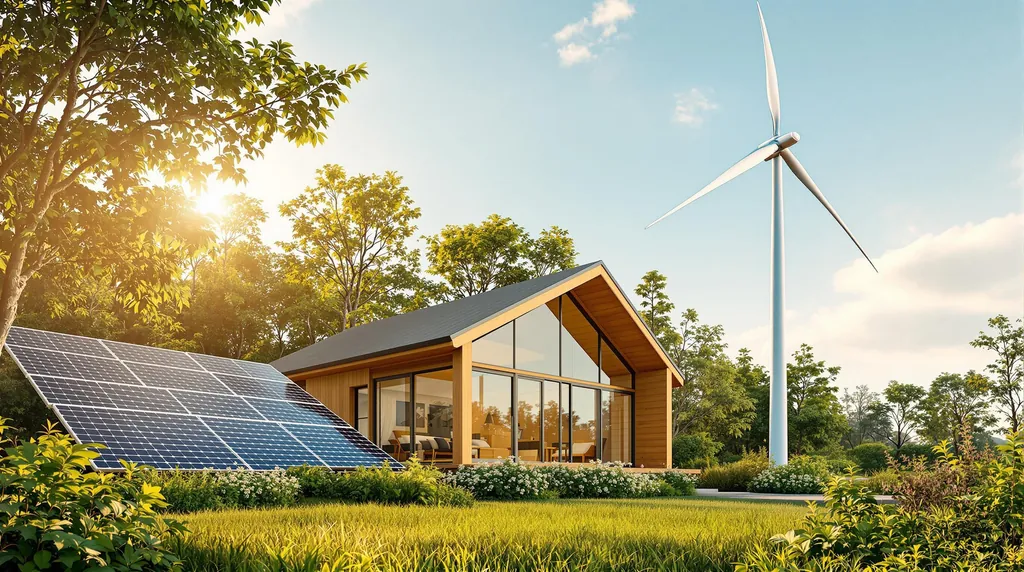
Explore the pros and cons of solar and wind power for off-grid living, and find out which system suits your energy needs best.
Looking to power your off-grid home? Here's the bottom line: Solar power is often the best choice for most locations due to lower costs, easier installation, and fewer maintenance needs. However, wind power can be better in rural areas with consistent wind speeds above 12 mph.
Key Takeaways:
- Solar Power: Works best in sunny areas, costs $10,000–$15,000 for most systems, and requires minimal upkeep.
- Wind Power: Ideal for open, windy locations, costs $3,000–$5,000 per kW, but needs more maintenance and space.
Quick Comparison:
| Feature | Solar Power | Wind Power |
|---|---|---|
| Efficiency | 15–22% | 35–45% |
| Operating Hours | Daylight only | 24/7 with sufficient wind |
| Upfront Cost | $800–$1,800 per kW | $3,000–$5,000 per kW |
| Maintenance | Minimal | Regular upkeep needed |
| Best Location | Sunny areas, urban or rural | Open, rural areas with ≥12 mph wind |
Choosing the right option depends on your location, budget, and energy needs. Read on to learn more about installation, costs, and how to decide which system is right for you.
What to Consider When Choosing Off-Grid Power
Power Supply Consistency
Solar panels generate electricity during the day, but their efficiency drops significantly on cloudy days. Wind turbines, on the other hand, can operate around the clock, though their output depends on fluctuating wind speeds.
Weather and Land Features
Choose a system that aligns with your location's sun exposure, available space, and wind conditions:
| Feature | Solar | Wind |
|---|---|---|
| Space Needed | Roof or ground space with direct sunlight | Open area with few obstacles |
| Height Requirements | Standard roof structures | Turbines typically need to be about 80 ft tall |
| Minimum Conditions | Adequate sun exposure | Average wind speeds of 12 mph or higher |
| Location Type | Suitable for urban or rural areas | Best suited for rural, open locations |
Required Support Equipment
In areas with frequent cloud cover, larger battery banks are essential to store energy for later use. If you're considering a wind turbine, check local regulations regarding tower height before installation.
Next, we'll take a closer look at off-grid solar power systems.
Summary of our Off-Grid: Solar, Wind & Generator
Off-Grid Solar Power Systems
Let's break down the essentials of off-grid solar power, including its components, costs, and the best conditions for installation.
Solar Panel Basics
Off-grid solar systems rely on several key components, starting with the solar panels. These come in two main types: monocrystalline and polycrystalline. Monocrystalline panels are more efficient and take up less space, while polycrystalline panels are a more affordable option if you have extra room to install them.
A complete off-grid system includes the following:
- Solar panels
- MPPT charge controller
- Battery bank
- Off-grid inverter (120/240 V AC)
- Power center (inverter, controllers, monitoring, surge protection)
- Backup generator
Solar System Pricing and Setup
The cost of an installed system can vary based on size and components. Here's an estimate of total costs:
- 3 kW system: $30,000–$35,000
- 5 kW system: $40,000–$45,000
- 10 kW system: $70,000–$80,000
- 15 kW system: $85,000–$100,000
Breaking it down further, here's what you might pay for individual components:
- Solar panels: $0.80–$1.80 per watt
- Inverter: $1,500–$3,000+
- Battery storage: $17,500–$40,000+
- Charge controllers: $100–$1,000
- Labor: $3,000–$8,000 for a 5–10 kW system
When to Choose Solar Power
Solar power works best in areas with 4–5 hours of direct sunlight daily and minimal shading. In the U.S., panels should ideally face due South to maximize energy production. Avoid placing panels near trees, chimneys, or other structures that could block sunlight.
Here are some key factors to consider:
| Factor | Requirement |
|---|---|
| Minimum Sun Hours | 4–5 hours daily |
| Panel Orientation | South-facing (Northern Hemisphere) |
| Site Requirements | Unobstructed sunlight |
| Performance Warranty | 80% output after 25 years (0.8% annual degradation) |
Additionally, the federal Residential Clean Energy Credit can help offset up to 30% of the system's cost through tax incentives, making solar power a more affordable option.
Off-Grid Wind Power Systems
Off-grid wind power systems use components like blades, rotors, towers, generators, and storage units to transform wind energy into electricity. Similar to solar systems, they rely on battery banks and inverters to deliver consistent AC power.
Wind Turbine Basics
Key parts of a wind turbine include the blades, rotor, nacelle (housing the generator and gears), tower, battery bank, charge controller, and inverter. Most residential turbines are horizontal-axis models designed to align with prevailing winds. For context, a 5–15 kW turbine typically covers the average U.S. household's energy use of 877 kWh per month.
Wind System Setup and Requirements
Wind turbines begin producing electricity at wind speeds of about 6.7 mph, with maximum output often achieved around 35 mph.
- Placement: Rotor blades should be at least 30 feet above any obstacles within a 300-foot radius.
- Site conditions: Open areas free from trees and buildings are ideal.
- Regulations: Ensure compliance with local zoning laws and secure necessary permits.
When to Choose Wind Power
Wind power is a good option under specific conditions:
- A confirmed, reliable wind resource (via site measurements or wind maps).
- Adequate open space for proper tower installation.
- Aiming for long-term energy independence, often paired with solar to ensure steady power supply.
For example, a 5 kW turbine with a 14-foot rotor and a swept area of approximately 50 square feet could be a practical choice.
Next, we'll compare solar and wind systems by features, locations, and costs.
Solar vs Wind: Direct Comparison
Let's break down the key differences in performance, costs, and installation between solar and wind power systems.
Feature Comparison Chart
| Feature | Solar Power | Wind Power |
|---|---|---|
| Conversion Efficiency (%) | 15–22% | 35–45% |
| Operating Hours | Daylight hours only | Operates 24/7 if wind is sufficient |
| Initial Cost | $800–$1,800 per kW (panels only) | $3,000–$5,000 per kW of capacity |
| Installation Requirements | Roof or ground-mounted, needs minimal space | Requires open areas, above obstacles |
| Maintenance | Minimal upkeep needed | Regular maintenance due to moving parts |
| Weather Dependency | Output drops with cloudy weather | Requires average wind speeds of ≥12 mph |
| Space Requirements | Flexible placement options | Needs large, open spaces |
Each system has unique strengths, making them suitable for different environments.
Best Locations for Each System
Solar power works best in:
- Areas with abundant sunshine
- Residential neighborhoods where roof or ground installation is feasible
Wind power is ideal for:
- Open, rural landscapes
- Locations with consistent wind speeds of at least 12 mph
- Sites free from tall obstacles that block airflow
Cost Analysis Over Time
Assessing long-term costs and upkeep is crucial when choosing between solar and wind systems.
- Wind systems: Installation costs range from $3,000–$5,000 per kW. For example:
- 4 kW system: $12,000–$20,000
- 6 kW system: $18,000–$30,000
- 8 kW system: $24,000–$45,000
- 10 kW system: $30,000–$50,000
- These systems are cost-effective only in high-wind areas due to higher maintenance needs.
- Solar systems: They have a lower upfront cost per kW and require less maintenance, making them a more accessible option for many households.
In 2019, wind energy contributed 24% of the U.S. renewable energy generation, highlighting its importance in the energy mix.
Making Your Final Choice
When deciding on the best off-grid power system, consider factors like reliability, site conditions, and your budget. Use the feature comparison and cost analysis to pick a solution that matches your energy needs and goals.
For most homes, solar power is often the go-to option. It's easier to install, costs between $10,000 and $15,000, and requires little upkeep. On the other hand, wind power works better for rural areas with steady winds of at least 12 mph, though it comes with higher costs of $3,000–$5,000 per kW and more maintenance.
To make the right choice, assess your property's sun exposure or wind conditions and check local regulations. Be sure to calculate your household's energy needs to find the right system size. For more guidance and quotes from installers, check out [DIY Eco Homes](/).
FAQs
When should I combine off grid solar and wind systems instead of choosing just one?
Combining off grid solar and wind systems makes the most sense when (1) your site has both a usable solar resource (≥4 peak sun hours on average) AND consistent average wind speeds of at least 10-12 mph at the proposed turbine hub height, (2) your loads include heating or other winter-heavy usage that solar alone can't carry through short days, and (3) you have the budget for both an inverter that supports dual DC inputs and a battery bank sized for sustained low-generation periods. The U.S. Wind Exchange and NREL NSRDB are the authoritative sources for site-specific resource data — pull at least 12 months of hourly averages before committing. A hybrid off grid solar and wind systems setup typically delivers 20-40% smaller batteries than either source alone because wind and solar production tend to be diurnally and seasonally complementary (windier nights and winters; sunnier days and summers in most temperate climates).
What does a complete off grid solar and wind systems setup cost for a small home?
A complete off grid solar and wind systems setup for a 1,500-2,000 sq ft home with typical loads (heating not included) runs roughly $25,000 to $55,000 installed: $10,000-$18,000 for a 6-8 kW solar array; $7,000-$15,000 for a 2-5 kW residential wind turbine on an appropriately tall tower (50-80 ft); $5,000-$12,000 for a hybrid inverter and 10-20 kWh lithium-iron-phosphate battery bank; plus $3,000-$10,000 for tower foundation, wiring, charge controllers, fuses, monitoring, and code-compliant disconnects. DIY-friendly components like battery enclosures and rack mounts can shave 15-25% off the total — see our DIY battery enclosure guide. For the smaller end of off grid solar and wind systems (cabins, tiny houses), $8,000-$15,000 covers a 2-3 kW solar array plus a 1 kW wind turbine and a 4-8 kWh battery bank.