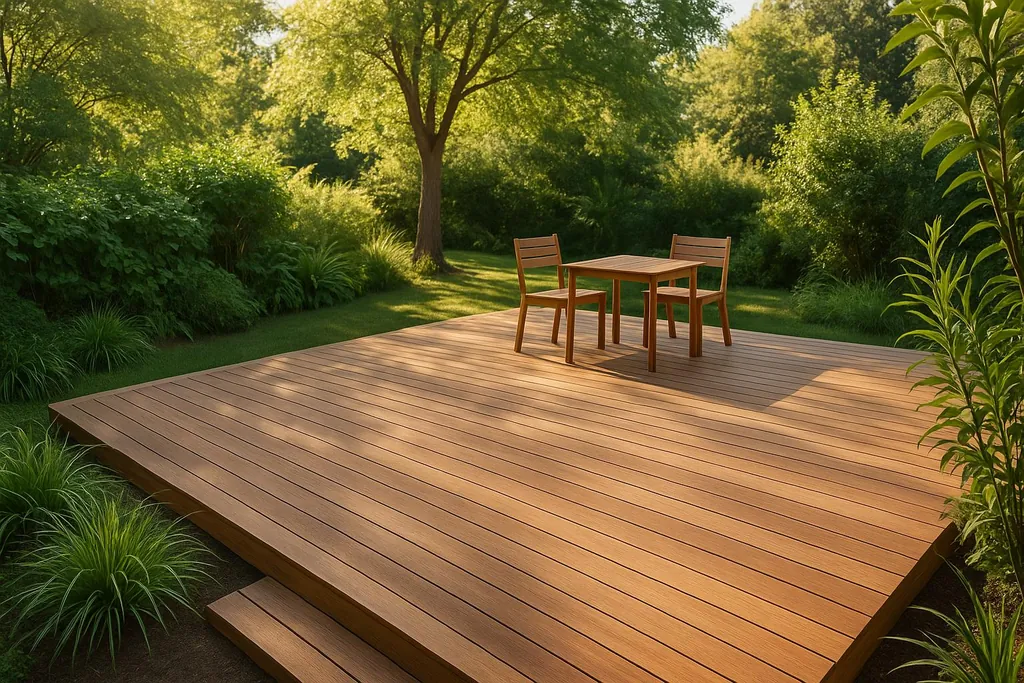
Learn how to build an eco-friendly deck with sustainable materials, proper planning, and maintenance tips to enhance your outdoor space responsibly.
How to Build a Deck
Building a deck can transform your outdoor space, but choosing eco-friendly materials and methods ensures it's safe, cost-effective, and environmentally responsible. This guide covers everything you need to know to build a deck, from planning and permits to material selection, construction, and maintenance. Here’s a quick overview:
- Start with permits: Check local building codes and secure permits to avoid fines or issues.
- Choose sustainable materials: Opt for reclaimed wood, recycled composites, or FSC\-certified lumber.
- Use durable hardware: Stainless steel screws and low-VOC sealers improve longevity and reduce environmental impact.
- Prepare your site: Ensure proper drainage, avoid disrupting vegetation, and test soil stability.
- Build step by step: Focus on a sturdy foundation, accurate framing, and proper installation of decking boards.
- Add green features: Solar lighting, rainwater collection, or planter boxes can enhance functionality.
- Maintain regularly: Clean twice a year, reseal wood every 2-3 years, and inspect for damage.
BUILDING A SUSTAINABLE FARM in Costa Rica. Our Teak Deck Build - DIY Adventure Continues!
Planning and Permits
Planning carefully and securing the proper permits before starting your deck project can save you from fines and the frustration of having to redo work.
Understanding Local Building Codes
Local building codes dictate when a permit is required for deck construction, and these rules vary depending on your location. In some areas, any attached deck requires a permit, while others base the requirement on factors like size, height, or placement. To avoid surprises, contact your local building department or visit their website to find the necessary permit applications. Many municipalities now provide online submission options, making the process more convenient. Keep in mind that permit fees will depend on the scale of your project.
Building codes also cover essential safety elements like railing heights, baluster spacing, and footing depths. Additionally, you’ll need to check setback requirements to ensure your deck is appropriately distanced from property lines and streets. Following these regulations is crucial for creating a deck that is both safe and compliant.
Once you’re familiar with the code requirements, focus on selecting a site that combines functionality with environmental considerations.
Choosing and Preparing Your Site
Picking the right spot for your deck involves weighing factors like convenience, drainage, and how it impacts the environment. Evaluate the area for proper water drainage and sun exposure - steer clear of low spots where water tends to pool and consider planning for shade if the location gets a lot of direct sunlight.
If your site includes mature trees or existing vegetation, think about incorporating them into your design rather than removing them. For instance, you could build around a tree using a tree well, allowing the deck and the tree to coexist beautifully.
Before you start digging, call 811 to have underground utilities marked for free. This service will help you locate gas lines, water pipes, electrical cables, and telecommunications lines, preventing costly and potentially dangerous accidents.
Soil conditions are another critical factor. The type of soil on your property affects both drainage and stability, which can influence the foundation you’ll need for the deck. A soil test, available through your local extension office, can provide helpful details about the soil’s composition and pH levels. Knowing this information will guide you in choosing the most secure foundation for your project.
Creating a Budget for Green Materials
Eco-friendly materials often come with a higher upfront price tag, but they tend to last longer and require less maintenance over time. For example, reclaimed hardwood may cost more than pressure-treated lumber, but with proper care, it can outlast traditional options. Similarly, composite decking made from recycled materials typically involves higher installation costs but offers extended warranties and reduced upkeep compared to regular wood.
When budgeting, keep in mind that material prices vary widely. Beyond the decking itself, you’ll also need to allocate funds for structural components like galvanized steel brackets, FSC-certified framing lumber, and low-VOC sealers or stains. These environmentally conscious products may cost more than standard alternatives but contribute to a greener project.
Labor costs will depend on your location, with professional rates often higher in urban areas. Additionally, working with sustainable or reclaimed materials may require extra preparation, which can increase labor expenses.
Don’t forget to set aside a contingency fund for unexpected issues like soil complications, permit adjustments, or material defects. Timing can also impact your budget - seasonal price fluctuations might present opportunities to save on materials or labor. Careful planning ensures your deck project stays on track financially while aligning with your eco-friendly goals.
Choosing Eco-Friendly Materials
Hardware and Sealers for Long-Term Use
When building an eco-conscious deck, the type of fasteners and finishes you use plays a big role. Stainless steel screws, for instance, are a smart choice. They contain at least 10.5% chromium, which forms an oxide layer that helps prevent rust. For areas near the coast or with high moisture, 316-grade stainless steel is the best option due to its superior resistance to corrosion. While these fasteners might cost more upfront, their durability means fewer replacements, which translates to less waste over time.
For sealers, opt for low-VOC or plant-based options. A great example is _Seal It Green Xtreme Marine-Plant Based Wood Sealant_, which covers about 400 square feet per gallon and requires two coats for full protection. When shopping for sealers, look for labels like "non-toxic", "zero VOC", or "plant-based" to ensure you're making an environmentally responsible choice. Keep in mind, though, that there might be a trade-off between eco-friendliness and the level of protection offered.
It's important to think about the total lifecycle cost of these materials. High-quality fasteners and sealers that last longer reduce the need for frequent replacements, making them better for the environment in the long run. With the right hardware and sealers, you're setting the stage for a durable, sustainable deck that will stand the test of time.
Building Your Deck Step by Step
Getting Your Site Ready
Start by outlining your deck's perimeter with stakes to define the area clearly. Clear the space of any plants, loose rocks, or debris to create a clean, workable environment and ensure proper drainage. Use a level and a straight board to check if the ground naturally slopes away from your house. If it doesn’t, you may need to lightly grade the area or install a drainage system like a French drain or gravel bed to prevent water from pooling.
When marking footing locations, use a geometric method to ensure the corners are perfectly square. This careful planning lays the groundwork for a sturdy and long-lasting foundation.
Creating the Foundation and Frame
For the footings, dig holes deep enough to go below your local frost line - your building department can provide guidance on this. Pour concrete footings that rise slightly above ground level and include galvanized post anchors for secure post placement. Be sure to space the footings according to your local building codes and your deck’s design.
Once the concrete cures (usually after 24 hours), attach the posts to the anchors. Cut the posts a bit longer than needed so you can trim them to the exact height later. When attaching the ledger board to your house, use lag bolts at regular intervals and install flashing behind it to prevent water damage.
Construct the frame using pressure-treated lumber, ensuring joist spacing matches the requirements of your chosen decking material. Proper spacing minimizes material waste and ensures a solid structure.
Putting Down the Decking Boards
Begin installing the decking boards at the house, working outward. Use your straightest board as a guide for a clean, even starting point, and leave a small gap between the first board and the house siding for expansion and drainage.
Maintain consistent spacing between all boards, securing each one with at least two fasteners at every joist intersection. Stagger the board joints to improve the deck's stability and overall look. For wood decking, seal any cut ends promptly with a low-VOC sealer to protect against moisture. If using composite decking, follow the manufacturer’s guidelines for fasteners to ensure proper installation.
After all the boards are securely in place, you can explore ways to make your deck more eco-friendly.
Adding Green Features
Take your deck to the next level with environmentally friendly additions. Consider built-in planter boxes with drainage for added greenery, energy-efficient LED lighting powered by a solar panel, or a rainwater collection system with gutters directing water into a rain barrel. Place the solar panel in a sunny location and hide the wiring for a polished look.
For a unique touch, you could add a living roof section featuring drought-resistant plants and lightweight soil. This not only provides natural insulation but also helps manage stormwater runoff. Keep in mind that this feature may require extra structural support.
If you’re using reclaimed wood for accents or other features, make sure it’s thoroughly cleaned and sealed to avoid pest problems or damage over time.
Maintenance and Care Tips
Taking care of your deck using eco-conscious methods not only helps the environment but also saves you money over time. Routine maintenance is key to keeping your deck durable and functional for years to come.
Regular Cleaning and Inspections
Keeping your deck clean and well-maintained is essential to protect your investment. Plan to clean your deck twice a year. For wood, use a pressure washer set to 1,500 PSI or lower to prevent surface damage. If you have composite decking, skip the pressure washer - opt for a garden hose, a scrub brush, and mild soap instead.
Inspect your deck regularly. Tighten any loose fasteners and look for signs of rot, insect damage, or warping, particularly in areas exposed to moisture, like near planters or where the deck connects to your house. Check the flashing behind the ledger board to ensure it's still effectively directing water away from your home's structure.
Clear debris between deck boards using a putty knife to prevent moisture buildup, which can lead to mold or mildew. During the fall, clean gutters and drainage systems monthly to ensure water flows properly and doesn’t pool around your deck’s foundation.
These simple habits help you catch small issues before they turn into expensive repairs.
Resealing and Repairs
If you have a wood deck, resealing it every 2-3 years is crucial, depending on your climate and the type of finish you use. Not sure if it’s time to reseal? Sprinkle water on the surface. If it beads, your seal is still intact; if it doesn’t, it’s time to reseal.
Stick to low-VOC or zero-VOC sealers to keep your deck eco-friendly while protecting it from the elements. Before applying the sealer, make sure the deck is thoroughly cleaned and dry. Work in small sections and aim to do this during cooler weather for the best results.
For damaged boards, consider using reclaimed wood that matches your existing deck. This keeps the look consistent while staying environmentally conscious. Smooth out the ends of the new boards with sandpaper and seal them immediately to block moisture. For composite decks, contact the manufacturer for replacement boards that match the original color and texture.
Replace rusted fasteners with stainless steel or galvanized ones. These materials are more resistant to corrosion and will help extend the life of your deck.
Recycling and Reusing Old Materials
When parts of your deck are no longer usable, disposing of them responsibly ensures your project stays green.
Instead of tossing old deck boards into the landfill, consider repurposing pressure-treated lumber for non-structural projects like garden borders, compost bins, or shelving in your workshop. Just remember to remove any fasteners and sand down rough edges before reusing the wood.
Some composite decking manufacturers offer recycling programs. Trex, for example, accepts old composite decking at select locations and recycles it into new products. Check with your decking manufacturer to see if they have similar programs in your area.
For old hardware, sort and recycle metals like steel, aluminum, and stainless steel through local recycling centers. Make sure to clean the fasteners and separate them by type for easier processing.
If you have usable materials, consider donating them to organizations like Habitat for Humanity ReStores or local building material reuse centers. These groups can repurpose your old materials for new construction projects, keeping them out of landfills. Take clear photos and measurements of the materials to make it easier for potential users to determine if they’ll work for their needs.
Lastly, untreated wood scraps can be chipped and used as mulch in your garden, completing the sustainability loop. Just avoid using pressure-treated wood as mulch near edible plants due to the chemicals it contains.
Final Thoughts and Key Points
Creating an eco-friendly deck is more than just a home improvement project - it’s a way to enhance your outdoor space, save money in the long run, and make a positive impact on the environment.
Review of the Building Process
Building sustainably starts with thoughtful planning and ends with a durable, environmentally conscious deck. Begin by securing the necessary permits and ensuring your plans meet local building codes. From the outset, prioritize eco-friendly practices by choosing materials like reclaimed wood, responsibly sourced lumber, or recycled composite decking. While these options may cost more initially, their durability and reduced environmental impact make them worthwhile investments.
Use high-quality hardware, such as stainless steel fasteners, to prevent rust and corrosion, and opt for low-VOC sealers to minimize harmful chemical emissions. Preparing the site properly, including adequate drainage and strong footings, ensures your deck remains sturdy over time. Finally, commit to regular maintenance using products that are safe for the environment to protect both your deck and its surroundings.
With these steps, you’re equipped to build a deck that’s both functional and eco-conscious.
Ready to Start Your Deck Project
Now that you’ve reviewed the process, it’s time to turn these sustainable principles into action. Building an eco-friendly deck is a step toward greener living, offering long-term benefits for both your home and the planet.
Start by reaching out to your local building department to understand permit requirements. Research suppliers for sustainable materials and place your orders early to compare options and lock in the best prices. Plan your timeline carefully, factoring in delivery schedules and potential weather delays. Most DIY deck projects can be completed over a few weekends, giving you the time to focus on quality and avoid cutting corners.
Every decision you make - from choosing reclaimed wood to ensuring proper drainage - reduces future maintenance needs and protects your investment. Keep this guide close as you work through your project. Your finished deck will stand as a testament to the harmony between environmental care and practical home improvement. Why wait? Start planning today and enjoy the rewards of a sustainable outdoor space for years to come.
FAQs
What are the advantages of using eco-friendly materials for building a deck, and how do they compare to traditional options in cost and durability?
Using eco-friendly materials for your deck comes with plenty of perks. Options like composite decking - crafted from recycled plastics and wood fibers - or reclaimed wood help cut down on deforestation and reduce waste. These materials let you create a sustainable outdoor space that doesn’t sacrifice style or usability.
Although eco-friendly materials might cost more upfront, they’re built to last - often 25 to 30 years - and require far less maintenance than traditional wood. While traditional wood may seem cheaper initially, it often demands regular repairs, staining, or chemical treatments, which can add up over time. Choosing sustainable materials not only saves you money and effort in the long run but also provides durability and supports a greener planet.
How can I design a deck around existing trees without harming the environment?
To build a deck around existing trees while respecting the environment, careful planning is essential. Start by designing the structure to work with the tree's natural growth and root system. Opt for sustainable materials like reclaimed wood or composite decking to reduce your environmental footprint. Make sure to leave enough space around the tree trunk for future growth, and avoid placing heavy footings where they could harm the roots.
You can take it a step further by incorporating the tree into the deck’s design. Think about adding built-in seating or planters that showcase the tree’s natural charm. Before construction begins, consult with a professional arborist. They can evaluate the tree’s health and ensure your plans won’t compromise its roots or stability. With the right approach, you can create a beautiful, functional deck that feels like part of the landscape.
What do I need to do to make sure my deck meets local building codes, and how can I find out which permits are required?
To make sure your deck meets local building codes, your first step should be reaching out to your city or county's building department. The rules can differ depending on your location, but in many cases, you'll need a permit - especially for decks that are over 30 inches above ground or attached to your home.
Check your local building department's website or give them a call to get the details on permit requirements, application steps, and associated fees. You'll likely need to provide specific information, such as the deck's dimensions, height, and the materials you'll use. Following these guidelines not only helps you steer clear of fines but also ensures your deck is safe and compliant with regulations.