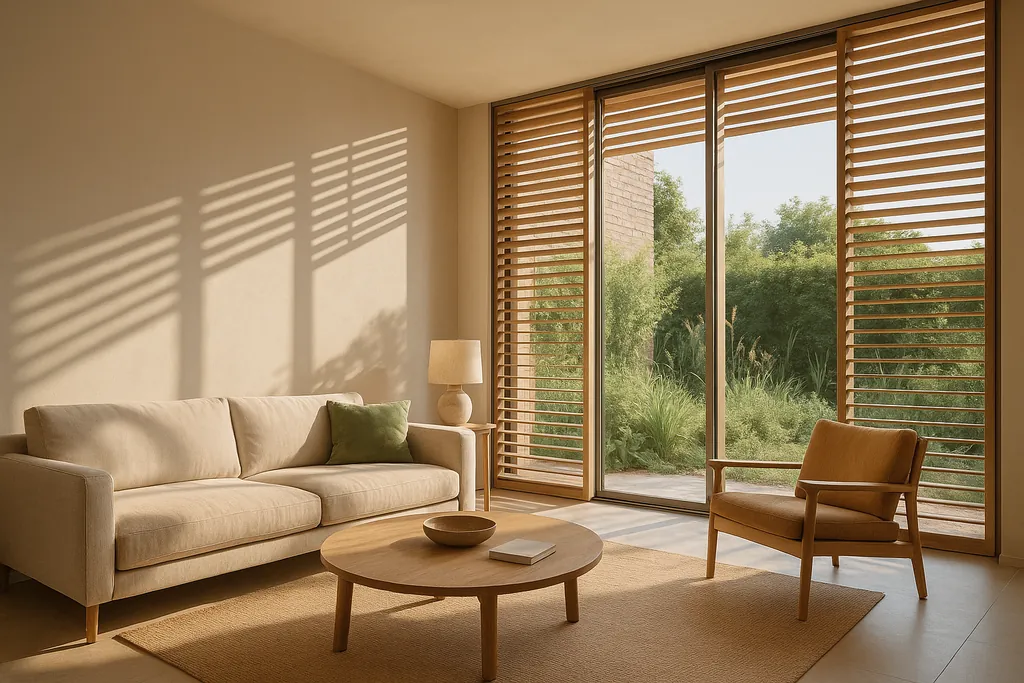
Learn how effective glare control in passive design enhances comfort, reduces energy costs, and improves natural light management in your space.
Ultimate Guide to Glare-Free Passive Design
Glare control in passive design improves comfort and reduces energy costs by up to 30%. It leverages building orientation, strategic window placement, shading, and specialized materials to manage natural light effectively. Here's why it matters and how to implement it:
- Why It's Important:
- Reduces eye strain, headaches, and UV damage to furniture.
- Cuts cooling costs by limiting heat gain (up to 87% through glazing).
- Enhances daily functionality with better light distribution.
- Key Strategies:
- Window Placement: South-facing windows with overhangs, fewer east/west windows, and high north-facing windows for soft light.
- Shading Solutions: Use external devices like awnings, motorized shades, or landscaping for optimal glare control.
- Advanced Glazing: Low-E glass and tinted options balance light and heat.
- Quick Fixes:
- Add reflective films or light-diffusing curtains.
- Use adjustable blinds or plants to filter sunlight.
Balancing light and heat is the core of passive design. With the right mix of strategies, you can create a more comfortable, energy-efficient space. Keep reading for detailed steps and examples!
Basic Principles of Glare Control
3 Main Types of Glare
To design spaces that are both functional and comfortable, it's important to understand the three main types of glare. Each type presents unique challenges and calls for tailored solutions:
| Glare Type | Description | Common Causes | Primary Solutions |
|---|---|---|---|
| Discomfort | Annoying but doesn't impair vision | Direct sunlight entering through windows | Exterior shading, window tinting |
| Disability | Makes it hard to see clearly | Strong reflections from shiny surfaces | Anti-reflective coatings, light diffusers |
| Uniformity | Uneven light distribution in a space | Poorly placed windows | Strategic window placement, light shelves |
Studies highlight that addressing these glare issues can boost productivity and reduce issues like headaches and eyestrain. Moreover, managing glare isn't just about comfort - it ties directly into energy efficiency. For instance, exterior shading systems are often more effective at cutting cooling costs than interior solutions. But glare control is only part of the equation. The next step is to balance natural light with heat management for optimal performance.
Light vs Heat Management
Balancing natural light and heat is a cornerstone of passive design. While maximizing natural light can lower energy usage by as much as 40%, it's essential to pair this with strategies that limit heat gain.
Here's how to strike the right balance:
Window Orientation and Sizing
- South-facing windows benefit from overhangs that block high summer sun while letting in lower winter sunlight.
- Reduce east and west-facing windows to limit heat gain during mornings and afternoons.
- North-facing windows provide consistent, glare-free lighting throughout the day.
Advanced Glazing Solutions Modern high-performance windows with low-E coatings are a game-changer. They minimize heat transfer while maintaining ample natural light. Passive houses, known for their energy efficiency, often rely on these windows to cut heating and cooling energy use by up to 90% compared to traditional buildings.
Seasonal Considerations It's also vital to tailor strategies for year-round performance. Options include:
- Fixed overhangs designed to block high-angle summer sunlight but allow winter light.
- Deciduous trees that provide shade in summer yet shed leaves to welcome sunlight in winter.
- Automated shading systems that adapt to the sun's position and intensity throughout the day.
Another effective approach is using tinted glass with low-solar-gain low-E coatings. This type of glass reduces solar heat while still allowing plenty of visible light to pass through. When combined with exterior shading devices, you could see cooling costs drop by up to 20%.
Glare Control Design Methods
Window Position and Direction
Where and how windows are placed can make a big difference in controlling glare while still letting in plenty of natural light. The direction they face influences both the quality of light and energy efficiency.
- North-facing windows: Install them high (around 7'6" above the finished floor) to allow soft, diffused daylight - perfect for work environments.
- South-facing windows: Divide into two parts - a top section for daylight (50–75% visible light transmittance) and a bottom section for views (under 40% transmittance).
- East- and west-facing windows: Use shading to reduce glare and limit heat gain.
Once window placement is optimized, shading systems can further refine glare control.
Shade Systems and Options
After deciding on window placement, choosing the right shading system is critical. Exterior shading not only reduces glare but also keeps cooling costs down. Automated systems take it a step further by adjusting throughout the day using sensors, ensuring ideal light levels while minimizing glare.
| Shading Type | Best Location | Primary Benefit | Climate Consideration |
|---|---|---|---|
| Venetian Blinds | Exterior | Blocks sunlight before it heats | Hot climates |
| Overhangs | South facade | Seasonal sun control | All climates |
| Motorized Shades | Any exposure | Automated adjustments | High sun exposure |
| Natural Landscaping | East/West sides | Adaptive, living shading | Temperate zones |
Light-Diffusing Materials
In addition to window placement and shading, modern glazing materials can further soften light, making spaces more comfortable.
> "It's not the brightness that tires our eyes, per se. It's the contrast."
Here are some advanced glazing options to consider:
- Double-Pane Glass: Cuts heat loss by about 50% compared to single-pane glass and still provides excellent light transmission.
- Low-E Glass Options:
- _LoĒ³-366_: Blocks 95% of UV rays while maintaining clear visibility.
- _LoĒ-180_: Optimizes solar heat gain in colder regions.
- _LoE²-272_: Balances interior temperatures for year-round comfort.
- Polycarbonate Glazing: Ideal for reducing screen glare in workspaces. For instance, Fivewall 16mm polycarbonate offers an R-value of 3.0 and transmits about 62% of light.
How Light Distribution and Glare Work In Spaces? - Sustainable Architecture Animated Glossary #23
Home Glare Control Projects
Here are some practical ways to tackle glare issues at home, building on the design strategies we've already discussed.
Measuring Glare Levels
To get started, homeowners can measure glare using a reliable lux meter. For a more detailed assessment, try combining HDR photography with a luminance meter to evaluate the intensity of incoming light. Once you've identified the glare hotspots, you can take immediate steps to reduce the excess light.
Quick Glare Fixes
After pinpointing the problem areas, there are several quick fixes you can use to reduce glare without diving into major renovations:
- Apply reflective window films: Silver or mirror-like films can significantly cut down glare and sunlight.
- Layer your light management:
- Install adjustable blinds for more flexible control.
- Use light-diffusing curtains or shades to soften incoming light.
- Opt for matte finishes on walls and furniture to minimize harsh reflections.
- Strategically place plants near windows to gently filter natural light.
> "Window attachments are products that can be attached to a window either internally or externally to improve energy performance, create a more comfortable environment, reduce glare, provide privacy and enhance the appearance and value of your home."
Testing and Adjusting Results
Once you've implemented your glare control solutions, it's important to monitor and fine-tune them. For example, in a project based in Chicago, a combination of dark-tinted low-E glass, patterned frits, and motorized perforated roller shades successfully balanced the light levels.
To ensure you're getting the best results:
- Use a luminance meter to record light levels at different times of the day.
- For automated systems, consider adding dimmers and opt for warmer color temperatures in artificial lighting, as they tend to produce less glare.
Summary
Examining our strategies, it's clear how thoughtful glare control can improve both comfort and energy use. The right mix of techniques and practical solutions creates a balance between reducing glare and enhancing efficiency.
Key Approaches:
Window Management and Placement
- South-facing windows with high-performance glass make the most of natural light while keeping glare in check.
- Cellular shades can cut window heat loss by 40% during winter, leading to about 10% savings on heating costs.
- Medium-colored draperies and window awnings are effective at significantly reducing heat gains.
Exterior Solutions Window awnings are a game-changer, capable of lowering indoor temperatures by 35°F to 50°F. Their effectiveness lies in blocking sunlight before it enters, which is crucial since 76% of sunlight that passes through standard double-pane windows turns into heat during cooling seasons.
> "Passive design is design that works with the local climate to maintain a comfortable temperature in the home." - YourHome
Smart Integration The secret to effective glare control is striking the right balance between:
- Maximizing natural light
- Managing heat
- Boosting energy efficiency
- Ensuring visual comfort
For the best results, combine permanent architectural features with adaptable solutions like blinds or shades. This approach provides flexibility and ensures steady performance throughout the year. Together, these strategies deliver balanced natural light, reduced heat gain, and consistent visual comfort regardless of the season.
FAQs
What's the best way to position windows to reduce glare in my home?
To cut down on glare in your home, think about the sun's path and how your local climate affects light. Generally, north-facing windows are a great choice for reducing glare because they let in soft, indirect light throughout the day. South-facing windows, while brighter, can be managed with features like overhangs or shades to keep glare under control. On the other hand, west-facing windows get hit with the strongest glare from the afternoon sun, so they're better avoided or paired with good shading options.
Using adjustable blinds, curtains, or window films can also give you more control over how much light enters your space. By planning your window placement and shading carefully, you can enjoy a comfortable home filled with natural light without the annoyance of glare.
What does it cost to use Low-E glass in a home, and is it worth the investment?
The installation of Low-E glass in a home usually costs between $300 and $850 per window, depending on factors like size, style, and added features. While the upfront cost is higher than standard glass, the energy savings it provides can be substantial - often cutting heating and cooling expenses by 25% to 50%. Many homeowners recoup this investment within 2 to 5 years, making it a practical choice for the long haul.
In addition to saving on energy bills, Low-E glass enhances indoor comfort by helping retain heat during winter and blocking excess heat in summer. It also shields your interiors from harmful UV rays, protecting furniture and flooring from fading. Over time, these advantages not only cover the initial cost but can also increase your home's overall value.
How do seasonal changes impact glare control in passive home design, and what adjustments can improve performance year-round?
Seasonal shifts significantly impact the success of glare control strategies in passive home design. In the summer, when the sun is higher and its rays are more intense, external shading options like awnings, overhangs, or strategically placed trees can help cut down on glare and manage heat gain. Conversely, in winter, the sun's lower position allows more direct sunlight to stream in, aiding in passive heating. Features like retractable shades or movable overhangs offer flexibility, making it easier to adapt to these seasonal variations.
For consistent comfort throughout the year, automated shading systems equipped with sensors are worth considering. These systems adjust shading levels based on the intensity of sunlight, ensuring effective glare control while keeping indoor spaces comfortable no matter the season.