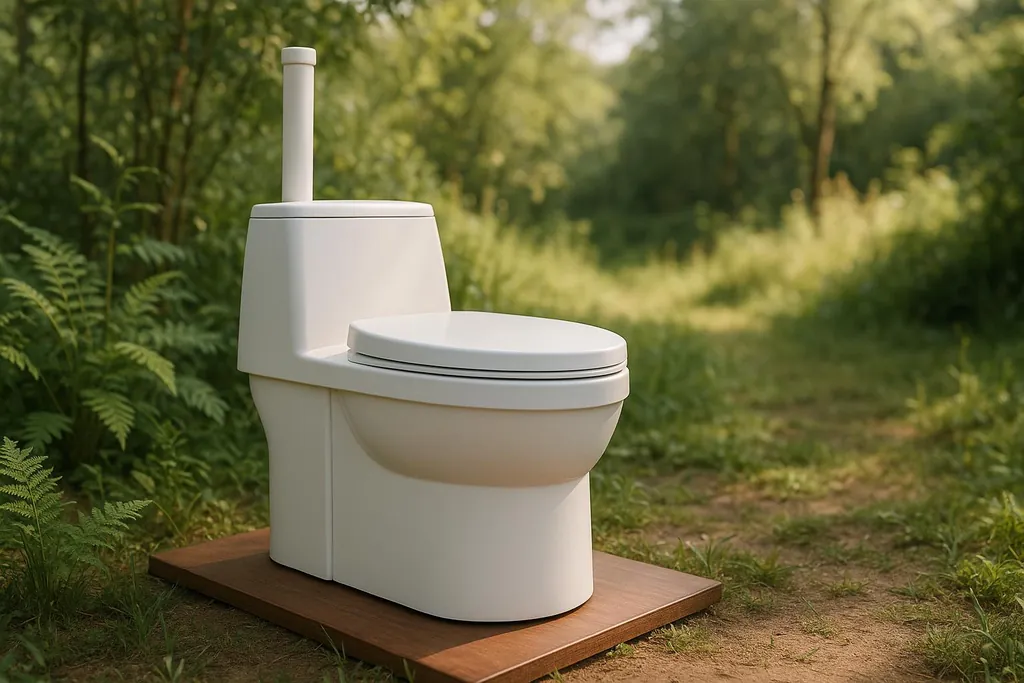
Explore top off-grid toilet options, their costs, compliance requirements, and maintenance tips for sustainable living in remote areas.
Top Off-Grid Toilet Options and Code Compliance
Off-grid toilets are a practical solution for those living in remote areas, tiny homes, or RVs. This guide covers the best options, costs, and legal considerations to help you choose the right system. Here's what you need to know:
- Types of Off-Grid Toilets:
- Composting Toilets: Break down waste into compost using natural processes.
- Incinerating Toilets: Burn waste into ash using electricity or gas.
- Waterless Flush Systems: Manage waste without water or external power.
- Key Features:
- Prices range from $200 for basic models to over $2,000 for advanced systems.
- Some require electricity or ventilation; others are manual and portable.
- Maintenance varies by type, from ash disposal to compost removal.
- Compliance:
- Regulations differ by location; some areas require NSF/ANSI Standard 41 certification.
- Local building codes may mandate professional installation or septic backups.
- Check with your local building department to avoid costly mistakes.
- Popular Models:
- Sun-Mar Excel: Electric composting toilet with NSF certification.
- Nature's Head: Compact, portable, but lacks NSF approval.
- Separett Villa 9215: Urine-diverting system with AC/DC power options.
- Incinolet: Incinerates waste but requires significant power.
- C-Head: Manual operation, no electricity needed.
- Laveo Dry-Flush: Cartridge-based, waterless, and portable.
- DIY Option:
- Build your own composting toilet for $50–$200. Follow local regulations and use materials like sawdust for composting.
Quick Tip: Always confirm local codes before purchasing or installing an off-grid toilet. Proper planning ensures compliance and avoids future issues.
Code Compliant - Water Flushing - Composting Toilet That Uses Worms!
National Building Code Requirements for Composting Toilets
National standards set the foundation for how composting toilets should perform and ensure their safety, offering guidance for manufacturers and installers, especially in off-grid setups. In the U.S., these standards are further shaped by local regulations, which can vary widely. Together, they ensure composting toilets operate effectively while meeting both national and local health requirements.
The NSF/ANSI Standard 41 plays a central role in certifying composting toilets in the U.S. This certification evaluates critical factors like load capacity, odor control, and the safe breakdown of waste. To earn this certification, units undergo rigorous testing in both labs and real-world settings. If you're considering a manufactured composting toilet, look for the NSF mark - it confirms the unit meets established public health standards.
The IAPMO/ANSI WE-Stand Green Code (updated in 2017) outlines detailed water efficiency and composting requirements. However, its adoption depends on local jurisdictions, so its applicability may vary.
For accessibility, ADA compliance is essential. Composting toilets must align with ICC/ANSI Standard A117.1 and ADA guidelines to ensure they are accessible for all users.
Ventilation is another key factor. Each composting toilet should include a vent pipe that extends to the roof, which helps maintain proper airflow and minimizes odors.
The EPA also weighs in, setting performance expectations to ensure composting toilets support aerobic decomposition in sanitary, controlled conditions. When it comes to waste disposal, the humus produced is generally classified as domestic septage. This requires disposal at approved landfills or wastewater treatment facilities, unless it meets the 40 CFR 503 criteria for Class A or Class B sludge.
Manufacturers' instructions should be followed closely. Electric composting toilets, for instance, often need a 120-volt AC connection and may require permits and inspections during installation.
One of the biggest hurdles comes from local jurisdiction variations. Many states lack specific codes for composting toilets, and some municipalities still require a backup septic or sewer connection, even if a composting toilet is installed. For new builds, most areas require land to pass percolation tests for septic systems, even if a composting toilet is planned.
Some states are beginning to adapt their regulations. For example, Oregon now permits site-built composting toilets, while most other states only allow NSF-certified manufactured units. Manufactured composting toilets typically cost between $1,500 and $8,000. These evolving codes highlight the importance of ensuring installations meet both national and local requirements, particularly for those pursuing off-grid living.
In many areas, composting toilets are considered supplementary systems. Always check local regulations before starting an installation to avoid complications.
1\. Sun-Mar Excel Composting Toilet
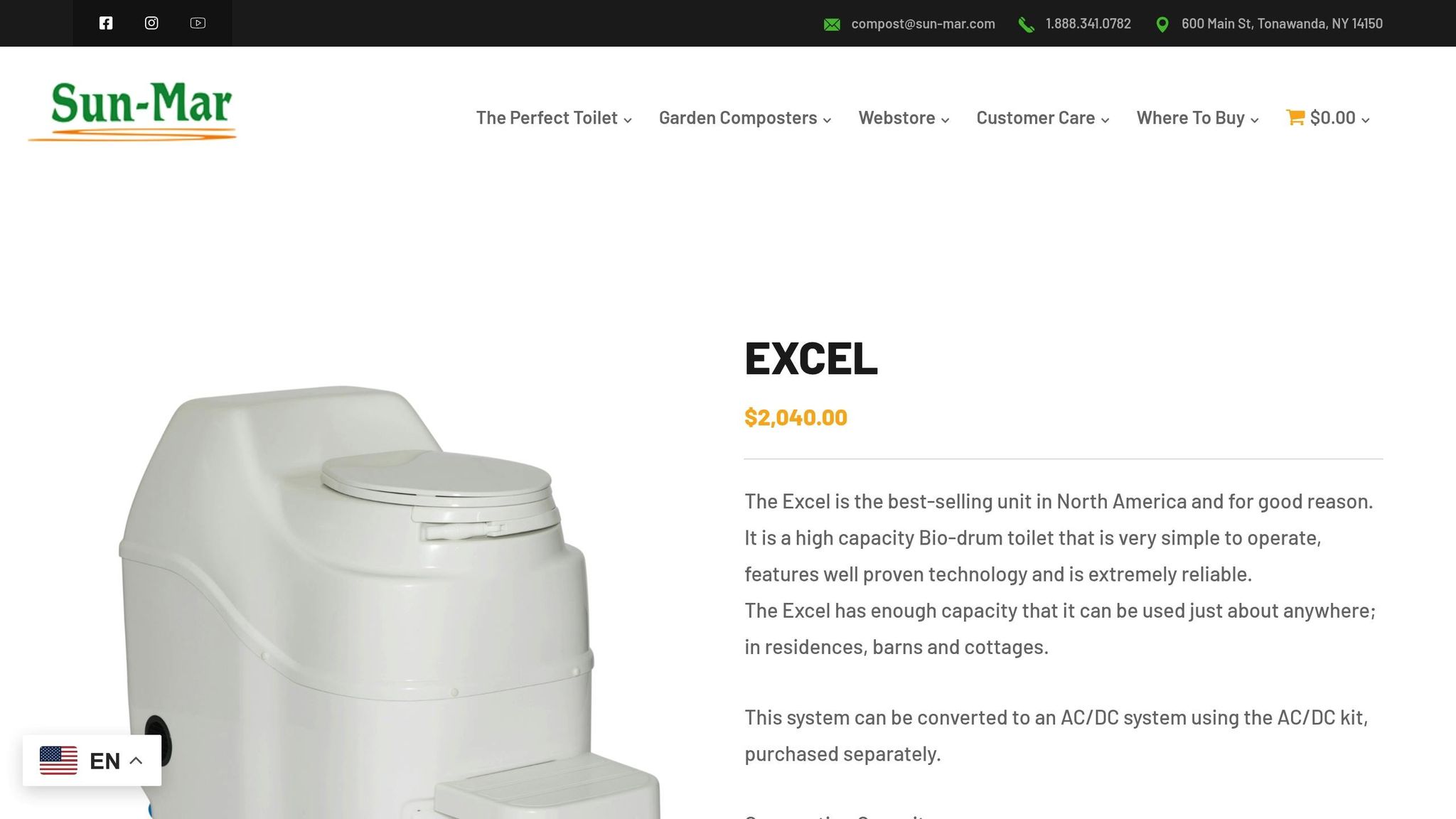
The Sun-Mar Excel is a well-regarded composting toilet system, designed for both residential and off-grid living. It handles both liquid and solid waste through a rotating drum that encourages aerobic decomposition, ensuring it meets sanitation and building code requirements.
Certification and Accessibility
When installed correctly, this system complies with performance and accessibility standards. Its design streamlines the process of meeting local building codes, making it a practical choice for various applications.
Power and Operation
The Sun-Mar Excel runs on standard household electricity and features a built-in heating element with an automatic thermostat to maintain ideal composting conditions. For those living off the grid, the system can be modified to work with renewable power sources, provided they meet its energy requirements.
Maintenance and Installation
To keep the system functioning properly, rotate the drum regularly to aerate the compost and minimize odors. Waste disposal should follow local regulations. Its compact design and user-friendly setup make it a suitable option for DIY installations, as long as proper ventilation and code compliance are ensured.
Up next, we’ll take a closer look at the Nature's Head Self-Contained Composting Toilet, another dependable choice for off-grid living.
2\. Nature's Head Self-Contained Composting Toilet

The Nature's Head Self-Contained Composting Toilet offers a compact, waterless solution. Its urine-diverting design separates liquids from solids, making it easier to naturally compost waste. While it's a favorite among RV users and off-grid living enthusiasts, it’s important to check if it meets local regulations for permanent installations.
NSF/ADA Compliance
The Nature's Head is not NSF certified, which may pose problems in areas requiring composting toilets to comply with NSF/ANSI 41 standards. Some sellers classify it under portable toilet guidelines, but the lack of NSF certification remains a concern. Users have reported that the unit doesn't fully meet composting standards. On the other hand, it does have US Coast Guard approval, making it suitable for marine use. However, this approval doesn’t replace residential building code requirements. As for ADA compliance, there’s no verified information available.
Best for Off-Grid or DIY Setups
This portable toilet works well for temporary or mobile setups, such as cabins, tiny homes, or RVs. If you’re considering it for long-term use, make sure to check your local building codes to avoid any compliance issues.
Up next: take a look at the Separett Villa 9215 AC/DC for more options that may meet broader compliance requirements.
3\. Separett Villa 9215 AC/DC
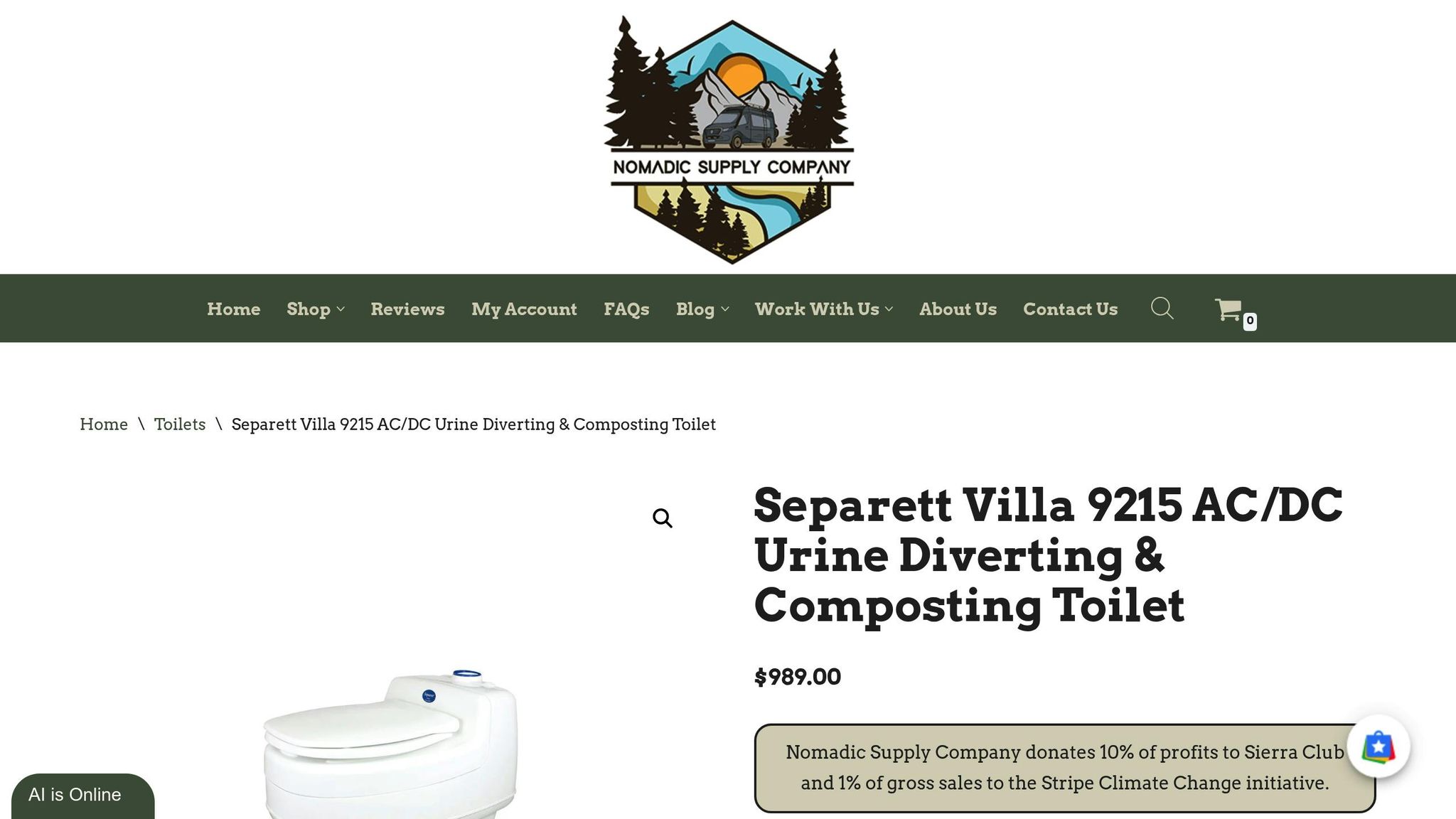
The Separett Villa 9215 AC/DC is a composting toilet designed with a urine-diverting system that separates liquids from solids. Made in Sweden, it connects to a separate composting chamber, making it a practical option for long-term off-grid setups. Its power flexibility and efficient operation further enhance its usefulness in such environments.
Power and Operation
This model runs on both AC and DC power, making it versatile for various energy setups. It features an integrated fan system that helps with ventilation and odor control while using minimal energy. This low power consumption makes it a great match for systems relying on solar panels or battery storage.
Maintenance and Waste Management
The separate composting chamber simplifies maintenance compared to self-contained units. The urine collection compartment and composting chamber need occasional attention. Liquid waste can be diluted and used as fertilizer, while solid waste breaks down into a soil-like material, reducing cleaning efforts.
Ideal for Off-Grid Living
With straightforward plumbing and simple electrical requirements, this toilet is well-suited for off-grid living. Its design prioritizes functionality and ease of maintenance, making it a reliable choice for those seeking a permanent composting toilet solution in remote locations.
4\. Incinolet Electric Incinerating Toilet

The Incinolet Electric Incinerating Toilet turns waste into sterile ash through incineration, eliminating the need for waste storage and frequent removal.
Power Requirements
This toilet requires a dedicated circuit and consumes a significant amount of power during operation. For those living off the grid, it’s essential to ensure your power setup - whether solar panels, wind turbines, or a backup generator - can handle its energy needs without strain.
Maintenance and Waste Disposal
Each incineration cycle leaves behind a small amount of sterile ash, making disposal quick and easy. To keep the system running smoothly, clean the bowl regularly and check the combustion chamber for any issues. Compared to the upkeep of some composting toilets, this process is relatively hassle-free.
Suitability for Off-Grid Installations
While the Incinolet can be a practical solution, its high power requirements mean it’s best suited for locations with a reliable electricity source. Proper installation is key: ensure good ventilation, use non-combustible mounting materials, and maintain sufficient clearance to manage heat safely. Though it involves a higher upfront cost, the system’s ability to eliminate traditional waste storage and reduce long-term maintenance could make it a worthwhile investment for those with dependable power infrastructure.
5\. C-Head Portable Composting Toilet
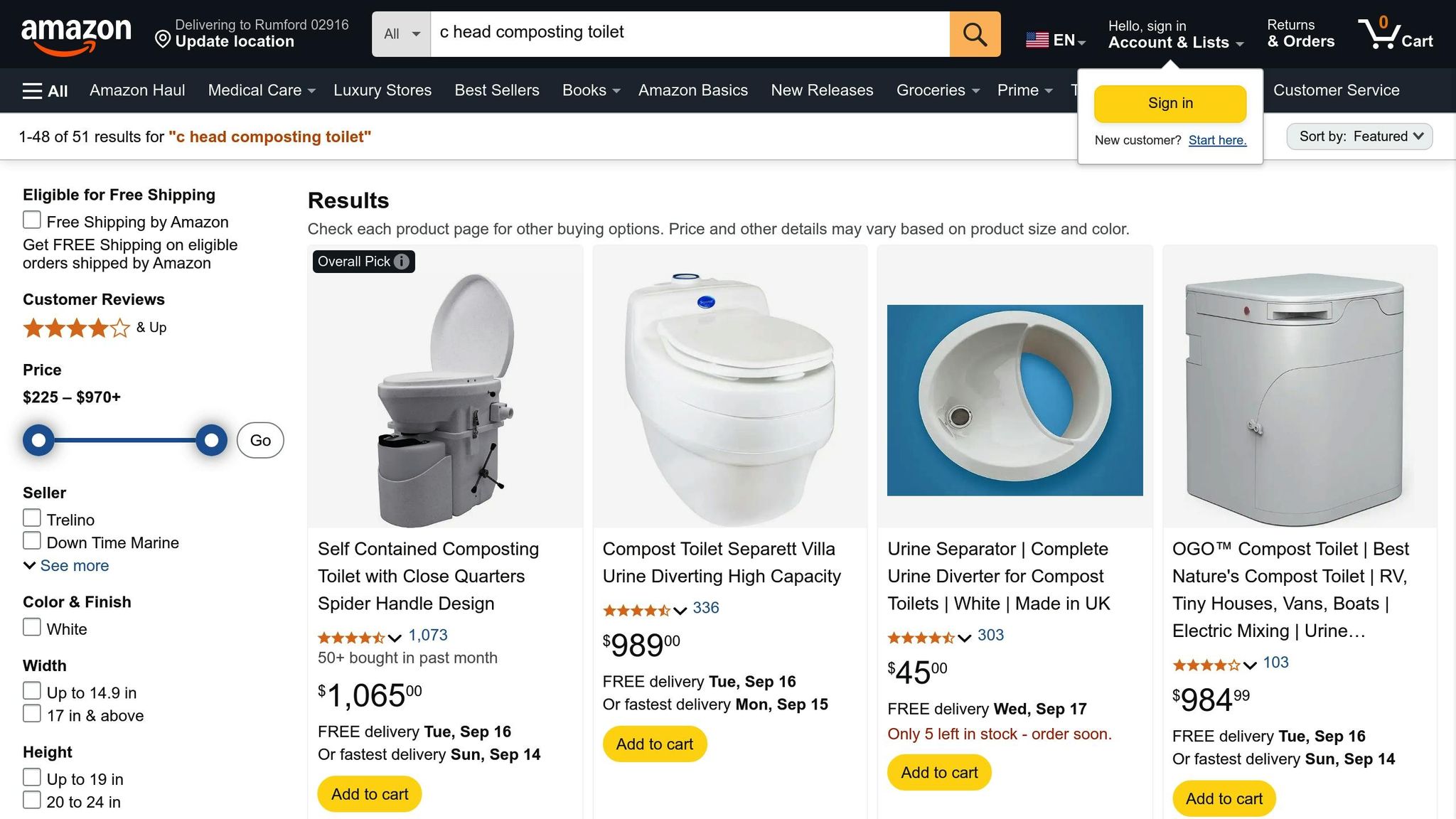
The C-Head Portable Composting Toilet is a practical solution for off-grid living and DIY setups. It’s designed to work without electricity, separating liquid and solid waste while using a dry medium to manage the solids.
Power-Free Operation
One of the standout features of the C-Head is its electricity-free design. Instead of relying on electric agitators, it uses a simple manual crank to stir the solid waste compartment. This makes it an excellent choice for areas where electricity is limited or entirely unavailable.
Ventilation is optional and depends on how often the toilet is used. For occasional use, like weekend trips, active ventilation isn’t usually necessary. If ventilation is preferred, you can choose low-energy options like a 12-volt computer fan, a solar vent, or a small 110-volt fan. Alternatively, passive methods, such as a gravity vent or simply opening a window, can suffice. This flexibility adds to its ease of use.
Simple Maintenance and Waste Disposal
The toilet’s design makes maintenance straightforward. Liquids are collected in a separate container for easy emptying, while solids mix with the dry medium in the main compartment. The manual crank helps stir the contents, speeding up decomposition and reducing odors.
When the solid waste container is full - usually every few weeks - it can be removed and emptied. Liquids should be diluted before disposal, and composted solids can be buried or added to a non-food compost pile. These features make it a practical choice for those living off the grid or managing DIY installations.
Perfect for Off-Grid and DIY Needs
This toilet is particularly well-suited for off-grid living because it doesn’t require permanent plumbing, electrical hookups, or complicated installation. Its portable design means it can be easily moved between tiny homes, cabins, RVs, or even temporary structures.
To set it up, place the unit on a stable surface and connect the liquid drain tube to your chosen collection system. Its manual operation ensures that no professional help is needed, making it a user-friendly option for a variety of settings.
6\. Laveo Dry-Flush Waterless Toilet

The Laveo Dry-Flush Waterless Toilet offers a modern approach to waste disposal, using sealed cartridge technology instead of composting. It's a great choice for those who want a setup that feels closer to a traditional toilet but without the hassle of managing a composting system.
Power Requirements
This toilet relies on electricity to power its unique flush mechanism. It includes a rechargeable 12V battery and charger, with a single one-hour charge lasting for up to 300 flushes. For added convenience, it can also be powered through a wall outlet or a car adapter, making it adaptable to various off-grid setups. This thoughtful design ensures smooth operation without frequent recharging.
Easy Maintenance and Waste Disposal
The Laveo Dry-Flush simplifies waste management with its waterless, chemical-free system. Each flush securely seals waste in an odor-proof cartridge, eliminating the need for manual mixing or handling. Once the cartridge is full, it can be removed and disposed of as a sealed, air-tight bag. Typically, a single cartridge handles about 15 flushes for solid waste or up to 28 flushes when liquids are separated. This straightforward process reduces the complexity of maintenance - no need for carbon additives or moisture adjustments.
Ideal for Off-Grid and DIY Setups
This toilet is designed for spaces without traditional plumbing, making it an excellent fit for off-grid cabins, RVs, tiny homes, boats, or DIY projects. Its full-size design and standard seat height ensure comfort, while its Wet Bath IPX-4 Certification guarantees it can withstand damp environments. Installation is simple, requiring only a 12V power source, with no plumbing or permanent wiring needed. However, for those living full-time off-grid, it's important to factor in the ongoing costs and logistics of replacing the cartridges.
7\. [DIY Eco Homes](/) Guide to Building a Composting Toilet

Creating your own composting toilet is a practical and budget-friendly solution for off-grid living. It gives you the freedom to design a system that perfectly suits your space and needs, without the hefty price tag of commercial models. DIY Eco Homes offers detailed, step-by-step instructions and clear cost breakdowns to help you build a reliable and compliant composting toilet system. This guide takes the guesswork out of the process, making it easier for anyone ready to take on this project.
Power Requirements
Unlike many commercial composting toilets, DIY versions rely on simple, low-tech systems. They work off-grid by using natural ventilation and gravity, eliminating the need for complex electrical setups. If you'd like to improve airflow and minimize odors - especially in humid climates or small, enclosed areas - you can add an optional 12V fan. This fan uses less than 5 watts of power and can easily run on a small solar panel, offering an energy-efficient upgrade.
Maintenance and Waste Management
Maintaining a DIY composting toilet is straightforward. The key is balancing the carbon-to-nitrogen ratio by adding materials like sawdust, peat moss, or coconut coir after each use. To keep the composting process on track, you'll need to monitor moisture levels and occasionally mix the contents. Most DIY systems use a bucket or container setup, which typically needs emptying every 4-6 weeks, depending on usage. Once emptied, the compost should cure in a separate area for 6-12 months before being used as a soil amendment for non-edible plants.
Perfect for Off-Grid Living and Custom Spaces
DIY composting toilets are ideal for off-grid setups because they are entirely customizable. You can design one to fit unique spaces, adapt it to your climate, and source materials locally. The cost of materials usually falls between $50 and $200, depending on your design and where you source your supplies. DIY Eco Homes provides detailed plans for a range of options, from basic bucket systems to more advanced units with built-in ventilation. Their guides also include material lists and cost breakdowns, helping you plan your project while ensuring compliance with local building codes. This makes DIY composting toilets a practical choice for tiny homes, cabins, and remote properties where commercial solutions might be too expensive or hard to install.
Feature Comparison Table
Here’s a simplified breakdown of the key features for each off-grid toilet option. Use this table to weigh your choices based on cost, ease of installation, and maintenance requirements.
| Toilet System | Cost | Certifications | Power Requirements | Maintenance | Waste Disposal Method | DIY Installation |
|---|---|---|---|---|---|---|
| Sun-Mar Excel | Moderate to high | Generally meets standard certifications | Requires standard AC or low-voltage options | Periodic cleaning required | Processed compost removal | Moderate difficulty |
| Nature's Head | Moderate | Accepted locally | Operates on low-voltage power | Requires more frequent upkeep | Separates liquid and solid waste | Easy installation |
| Separett Villa 9215 AC/DC | Moderate to high | Compliant with key international standards | Offers both standard AC and low-voltage options | Regular maintenance needed | Uses a urine-diversion design | Moderate difficulty |
| Incinolet Electric | High | Should be evaluated for local code compliance | Uses standard household AC power | Minimal upkeep with periodic ash removal | Incinerates waste completely | Professional installation required |
| C-Head Portable | Budget-friendly | Varies by local jurisdiction | No electrical power required | Regular manual maintenance | Employs a manual compost system | Very easy installation |
| Laveo Dry-Flush Waterless | Moderate to high | Meets industry standards in portable applications | Runs on low-voltage power for dry flushing | Requires periodic replacement of waste cartridges | Uses sealed waste cartridges | Simple setup |
| DIY Composting Toilet | Cost-effective | Subject to local approval | Optional low-power for ventilation if needed | Maintenance depends on design choices | Typically uses a bucket system with a curing process | Complete DIY project |
This table provides a quick glance at the essential details. When choosing, think about your power availability, local building codes, and how much time you’re willing to spend on maintenance. Some systems are perfect for DIY enthusiasts, while others may require professional installation. Consider long-term costs and decide whether composting, incineration, or liquid-solid separation aligns better with your needs and budget.
Legal and Regulatory Compliance Requirements
Making sure your off-grid toilet complies with legal standards is just as important as the installation itself. The tricky part? Regulations for off-grid toilets differ significantly from state to state. Some areas have clear guidelines for alternative waste management systems, while others enforce stricter rules that can make installation more challenging - and more expensive.
Typically, getting a permit means submitting detailed plans that cover everything from ventilation to electrical connections and waste management. In some places, you’ll also need to keep official records of these systems, which can affect future property sales. This adds another layer of complexity, especially when local waste management systems are part of the equation.
Building codes often view composting toilets and graywater systems as interconnected, meaning you’ll likely need coordinated permits and inspections for both.
Inspection requirements also vary. Some areas require regular professional inspections, while others allow homeowners to self-report periodically. If your property is near environmentally sensitive areas, it’s especially important to confirm the monitoring requirements in your jurisdiction.
For more advanced systems, you might need certified technicians to handle the work, as well as permits for plumbing or electrical components. Additionally, many regions have strict rules about how far off-grid toilets must be placed from water sources or neighboring properties to protect the environment.
Permit approval timelines can differ widely. Some local authorities offer expedited processing for an extra fee, but it’s always a good idea to check early. In certain cases, older systems may be "grandfathered in", but significant upgrades might trigger a full compliance review.
To avoid headaches, start working with your local building department early in the planning process. Pre-application consultations can help you spot potential issues, clarify specific requirements, and speed up the approval process. Tackling these legal details upfront can save you time and money down the line.
Maintenance and Safety Tips
Taking care of your off-grid toilet regularly is key to keeping it running smoothly and safely for years to come. Proper maintenance not only ensures functionality but also helps you stay in line with any regulatory requirements.
Start by performing daily and weekly checks. For urine-diverting systems, monitor liquid levels to avoid overflows, which can lead to unpleasant odors and hygiene issues. Empty liquid containers as recommended and inspect ventilation fans and vent pipes to ensure they’re free of blockages caused by debris, insects, or even ice during colder months. Adjust these practices as needed based on seasonal changes or specific conditions.
Temperature plays a big role, especially for composting toilets. They work best in moderate temperatures, so during cold weather, consider insulating the toilet housing or using a gentle heating method to maintain the right conditions for composting.
Keep up with routine cleaning and maintenance tasks like clearing fan housings and replacing filters as outlined in your system’s manual. Vent pipes should also be checked regularly to prevent blockages that could lead to odors being pushed back into your living space.
Different systems have different needs. For self-contained units, stir the contents as directed and add materials like sawdust or peat moss to maintain the proper carbon-to-nitrogen ratio. If you’re planning to use liquid waste as fertilizer, dilute it properly and store it safely. Never apply fresh urine directly to edible plants. Use sealed containers for storage, keep them away from living areas, and clean them often to prevent bacterial growth.
When handling finished compost, always wear gloves, eye protection, and a dust mask. Properly matured compost should be dark, crumbly, and smell earthy. If it still has strong odors or an odd texture, it likely needs more time or additional materials to finish the composting process.
Don’t forget to check electrical connections for wear or corrosion, especially if your setup includes powered components. Keeping spare parts on hand can save you from extended downtime, particularly in remote locations. During cold weather, insulate water lines and, if advised by the manufacturer, use a safe antifreeze solution to protect parts that are prone to freezing.
Keeping detailed records of your maintenance activities can be incredibly helpful. Note down when you empty containers, add carbon materials, or perform major upkeep. These logs can help you identify recurring issues and are also a handy reference during inspections.
Lastly, always be prepared for surprises. Stock up on extra carbon materials and spare parts so you can tackle minor problems quickly. Pay attention to warning signs like strange odors, unexpected noises, or changes in performance, and address them immediately. Staying proactive ensures your system remains efficient and compliant with any necessary codes.
Conclusion
When choosing an off-grid toilet, it's essential to balance _functionality_ with _regulatory compliance_. The right system will depend on your specific needs and local building codes, which can vary widely from one region to another.
For reliable options that meet code requirements, Sun-Mar Excel and Nature's Head are solid picks. If ventilation is a concern, the Separett Villa 9215 stands out for its performance in challenging setups. Meanwhile, the Incinolet offers a unique, approved solution, though it comes with higher energy demands.
If you're working with a tighter budget, portable systems like the C-Head or even DIY builds can be viable options. However, permanent installations often require systems that meet stricter compliance standards. While the initial cost of a high-quality system may seem steep, it often pays off in the long run with smoother inspections and dependable performance. Before making your final decision, check with your local building department to ensure your chosen system aligns with regional requirements. Some areas may even mandate professional installation or specific ventilation setups, which could influence your choice.
For a quick comparison, refer to the feature table provided earlier in this guide - it highlights the key attributes of each system to help streamline your decision-making process.
To make planning even easier, DIY Eco Homes offers step-by-step guides and detailed cost analyses. Their resources are designed to help you navigate both the technical and regulatory aspects of off-grid living, ensuring you're well-prepared to make choices that suit your budget and meet local guidelines.
Choosing and maintaining the right off-grid toilet system is a crucial step toward a sustainable lifestyle. A well-thought-out setup not only ensures reliable performance but also reflects your commitment to environmentally responsible living.
FAQs
What should I consider when selecting an off-grid toilet for my home or RV?
When selecting an off-grid toilet, there are a few important factors to keep in mind. Prioritize water and energy independence, as well as how simple the system is to maintain. Consider both the upfront investment and long-term expenses, and make sure the toilet is suitable for the climate in your area. [Composting toilets](/blog/composting-toilet-inspection-rules-by-state) are a popular option since they usually don't require water or electricity and are environmentally friendly.
Another critical point is ensuring the toilet meets U.S. regulations for waste management and sanitation. This ensures proper waste disposal and confirms the system is legally approved for use in your location.
What steps should I take to ensure my off-grid toilet meets local building codes?
To make sure your off-grid toilet aligns with local building codes, begin by reviewing the regulations in your area, as these can differ significantly depending on your municipality. Some places might require you to obtain permits, pass inspections, or follow specific design and ventilation rules - particularly for composting or waterless toilet systems.
Reaching out to your local building authority or consulting a licensed inspector before you start the installation is a smart move. This ensures your chosen system meets all required standards, helping you avoid fines or legal complications. Addressing these steps upfront guarantees your off-grid toilet is both practical and compliant.
What regular maintenance is needed to keep an off-grid toilet working safely and efficiently?
To ensure your off-grid toilet stays in good working order, regular upkeep is a must. Start by cleaning the toilet seat, pedestal, and ventilation parts every week. Use non-toxic cleaners like vinegar to keep odors at bay and prevent buildup.
If you’re using a [composting toilet](/blog/composting-toilet-inspection-rules-by-state), make sure to aerate or rake the compost chamber from time to time. This helps the decomposition process run smoothly. Depending on how often the toilet is used and the type of system you have, you’ll need to empty the composted waste roughly every 6 to 12 months. Always stick to the manufacturer’s instructions for safe handling and disposal to keep things hygienic and running efficiently.