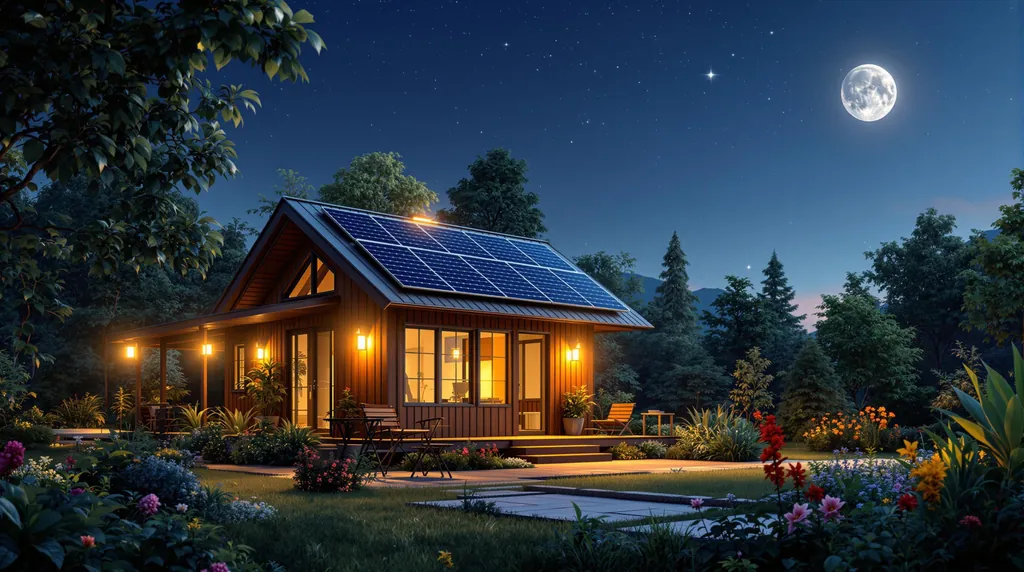
Learn how to effectively set up and maintain solar lighting systems for off-grid homes, ensuring reliable and eco-friendly illumination.
Ultimate Guide to Solar Lighting for Off-Grid Homes
Solar lighting is a smart choice for off-grid homes, offering reliable, cost-effective, and eco-friendly illumination. Here's what you need to know to get started:
- Key Components: Solar panels, battery bank, charge controller, and LED fixtures work together to provide energy-efficient lighting.
- System Types:
- _All-in-One Units_: Compact and ideal for small spaces.
- _Modular Systems_: Scalable for entire homes.
- _Hybrid Systems_: Combine solar with backup generators for extra reliability.
- Choosing a System:
- Calculate lighting needs in lumens and hours of use.
- Check your location's sunlight levels (peak sun hours).
- Balance cost, battery type, panel efficiency, and expandability.
Quick Tip: Proper panel placement (facing south, tilt angle = latitude ±15°) and regular maintenance (cleaning panels, checking batteries) ensure optimal performance.
This guide covers everything from setup to maintenance, so you can create a dependable solar lighting system for your off-grid home.
Solar Lighting Basics
Key Components of a Solar Lighting System
A solar lighting system includes four essential parts:
- Solar panels: These collect sunlight and convert it into electricity.
- Battery bank: Stores the energy for use during nighttime or cloudy periods.
- Charge controller: Manages power flow to prevent overcharging or draining the battery.
- LED fixtures: Provide efficient and long-lasting illumination.
Types of Solar Lighting Systems
- All-in-One Units: These combine the panel, battery, and light into a single unit. They're perfect for smaller areas like pathways or entryways.
- Modular Systems: With separate components (panels, batteries, controllers, and fixtures), these systems can be scaled to cover an entire home.
- Hybrid Systems: Pair solar power with a backup generator to ensure extended runtime, making them ideal for larger properties or workshops.
Why Solar Lighting Works Well Off-Grid
Solar lighting offers several benefits, especially for off-grid setups:
- No need for fuel, which eliminates ongoing costs.
- Quiet operation without the noise of traditional generators.
- No harmful emissions, making it environmentally friendly.
- Minimal upkeep and easy expansion as your needs grow.
Once you understand these basics, you can determine the system size that fits your home's requirements. The next step? Assess your location's sunlight levels and calculate your lighting needs to choose the best system.
Installing an Off Grid Solar LED Lighting System in a Barn
How to Pick the Right System
Now that you understand the basics, it's time to figure out your lighting needs and choose the right system.
Calculate Light Requirements
Start by measuring the square footage of each area you want to light. Multiply the area by the recommended lumens per square foot: 20 lm/ft² for general lighting and 50 lm/ft² for task lighting.
Add up the lumen totals for all areas. Next, estimate how many hours per day the lights will be in use. Don't forget to include a 10–20% buffer to account for shorter days in winter or cloudy weather.
Once you've calculated your lighting demand, check if your solar panels can handle it.
Check Solar Resources
Determine how much sunlight your location gets by estimating peak sun hours:
- Use a solar calculator or local weather data to find your site's peak sun hours.
- Position the panels to face south and set the tilt angle to your latitude, plus or minus 15°.
- Identify and address any shading from trees or nearby structures that could block sunlight, especially between mid-morning and early afternoon.
Cost vs. Performance
Solar lighting systems come in a range of prices and capabilities. Here's what to consider when comparing options:
- Initial cost: Basic kits are affordable for small areas, mid-range systems strike a balance between price and capacity, and higher-end setups can handle larger properties.
- Battery type: Lithium iron phosphate (LiFePO₄) batteries last longer and require less maintenance than lead-acid ones, though they are more expensive upfront.
- Panel efficiency and warranty: More efficient panels generate more power in less space and often come with longer warranties.
- Expandability and durability: Choose a charge controller rated at least 20% above your current load to accommodate future upgrades. For outdoor components, opt for enclosures rated IP65 or higher to protect against rain, dust, and extreme temperatures.
Setup and Installation Steps
Follow these clear steps to set up, install, and safely commission your solar lighting system.
System Layout Guide
- Position solar panels facing south with a tilt angle of latitude ±15°, avoiding shade between 10 AM and 2 PM.
- Plan for the shortest wire runs using UV-rated conduit, and place the battery bank near living spaces for convenience.
- Group the charge controller and breakers in an accessible, weatherproof enclosure.
- Double-check that the wiring and controller ratings align with your lumen and amp-hour calculations.
- Clearly label all components and connection points to simplify future maintenance.
Installation Instructions
- Mount the solar panels on a roof or ground frame.
- Secure the battery enclosure in a cool, ventilated area close to living spaces.
- Connect the components in this order:
- Solar panel → charge controller
- Charge controller → battery bank
- Battery bank → LED fixtures
- Test the open-circuit voltage at each connection point to ensure proper functionality.
- Gradually commission the system by adding loads one circuit at a time.
If you run into power issues, check out the common problems section below for troubleshooting tips.
Safety Guidelines
- Wear insulated gloves and ANSI-rated eye protection while working.
- Disconnect existing circuits before starting any wiring tasks.
- Install lockable breakers to safely disconnect the battery bank when needed.
- Ensure proper grounding and use surge protection devices to safeguard the system.
- Keep a fire extinguisher rated for electrical fires within reach.
Next, we'll cover simple maintenance tips to keep your system running efficiently.
Maintenance and Updates
Keeping your solar system in good shape ensures it runs smoothly. Here's a guide to routine tasks, solving common issues, and scaling up your setup.
Regular Maintenance Tasks
- Clean solar panels: Use water and a soft brush once a month to remove dirt and grime.
- Check battery terminals: Look for corrosion weekly and clean as needed.
- Test system voltage: Use a multimeter every three months to ensure everything is operating correctly.
- Inspect connections: Check wire connections and conduit seals twice a year.
- Clear debris: Remove any leaves or debris from panels after storms to maintain efficiency.
Troubleshooting Common Issues
- Low battery voltage: Clean your panels and confirm the charge controller settings are correct.
- Dim or flickering LEDs: Replace faulty fixtures or inspect wire connections for any issues.
- Swollen batteries: Replace them immediately and check the charge controller's temperature settings to prevent future problems.
Tips for Expanding Your System
- Add more solar panels: Install panels in parallel to increase current output without changing voltage.
- Upgrade the battery bank: Choose batteries that match your current setup and aim to boost amp-hours by about 25%.
- Increase controller capacity: Pick a charge controller rated at least 20% higher than the total load of your expanded system.
Wrapping It Up
You're now equipped with the knowledge to set up and maintain off-grid solar lighting. From understanding the basics to selecting the right components, installing them correctly, and keeping everything running smoothly, you're ready to create a reliable system.
Key Takeaways
- Combining solar panels, batteries, controllers, and LEDs provides dependable off-grid lighting.
- Proper load calculations, positioning panels to face south, and adjusting tilt angles to match your latitude help maximize energy collection.
- Routine cleaning and checking batteries are essential for keeping the system efficient.
- While setup costs depend on the system's size, ongoing expenses are minimal.
Quick Tips to Get Started
- Evaluate your energy needs and focus on essential areas like the kitchen, bathroom, or main living space.
- Select high-quality components, such as UL-listed equipment and durable deep-cycle batteries.
- Design with growth in mind by using conduit and junction boxes that can handle future upgrades.