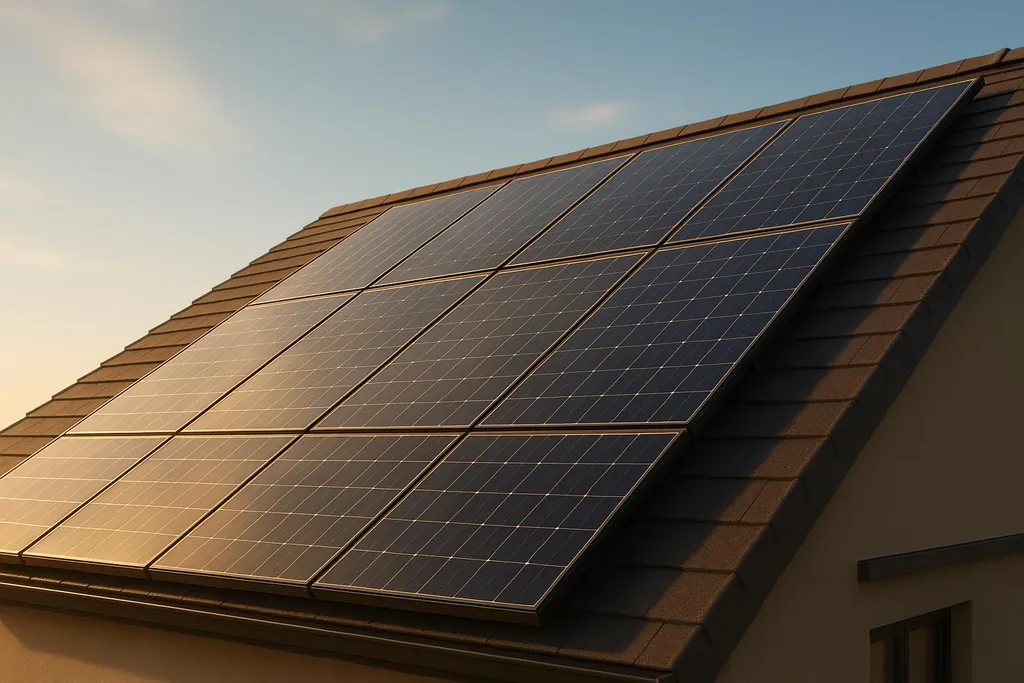
Understanding solar panel certifications is crucial for ensuring safety, durability, and quality in your eco-friendly energy solutions.
Solar Panel Certifications Explained
Solar panel certifications help ensure safety, performance, and durability. They prove that panels meet strict standards, making them reliable for long-term use. Here's why they matter:
- Safety & Compliance: Certifications like UL 61730 and IEC 61730 ensure panels are safe and meet electrical and fire protection standards.
- Durability: IEC 61215 tests panels for harsh conditions like hail, wind, and temperature changes, ensuring they last 25+ years.
- Quality Assurance: ISO 9001 guarantees consistent manufacturing quality, reducing defects.
- Market-Specific Standards: Certifications like CE Marking are essential for European markets but require additional U.S. certifications for compliance.
Key Certifications and Their Focus
| Certification | Purpose | Key Focus Areas | Region |
|---|---|---|---|
| UL 61730 | Safety and performance | Electrical, fire, mechanical safety | North America |
| IEC 61215 | Durability testing | Long-term environmental stress | Global |
| ISO 9001 | Manufacturing quality | Process consistency | Global |
| CE Marking | EU compliance | Safety and environmental standards | Europe |
Why It Matters for DIY Builders
- Certified panels ensure safety, efficiency, and durability.
- They reduce risks like electrical shocks and maintain warranty protection.
- Certified systems increase home resale value and lower insurance costs.
Tip: Always verify certifications on the panel or through manufacturer websites. Certified panels may cost slightly more but prevent early failures and reduce long-term maintenance.
Main Solar Panel Certifications and What They Do
When choosing solar panels for your eco-friendly home, certifications play a crucial role in ensuring safety, durability, and quality. Each certification addresses specific aspects, from basic safety measures to verifying how well panels perform under tough conditions.
UL 61730: U.S. Safety Certification
UL 61730 sets the safety standard for solar panels in North America, replacing the older UL 1703 standard in December 2017. This certification ensures that panels meet stringent requirements for electrical, fire, mechanical, and environmental performance. The testing process examines electrical insulation, grounding systems, and fire protection measures. Panels that pass these tests are considered low-risk for electrical shock, fire hazards, or mechanical failures caused by environmental stressors .
For DIY enthusiasts, UL 61730 is especially valuable because it supports system voltages up to 1,500 VDC . It also includes specific requirements to align with the National Electric Code (NEC) , ensuring your installation complies with local electrical standards.
For example, Trinasolar's Vertex N 2,000-V panel successfully passed UL 61730 testing. This included checks for electrical insulation, fire safety, grounding, and resistance to environmental stress, showcasing a design that minimizes electrical and fire risks.
IEC 61215: Performance and Durability Testing
IEC 61215 focuses on crystalline silicon solar panels, testing their ability to endure long-term outdoor exposure. This certification involves 19 tests designed to simulate real-world environmental conditions . These include temperature cycling, humidity exposure, mechanical load testing, and hail impact simulation. Panels that meet IEC 61215 standards are expected to maintain performance over 25+ years with minimal degradation .
For homeowners investing in solar energy, this certification provides peace of mind, ensuring your panels can handle extreme weather conditions. By requiring manufacturers to prove resilience to thermal stress, moisture, and mechanical forces, IEC 61215 raises the bar for photovoltaic quality. It complements safety-focused certifications like UL 61730 by guaranteeing durability in various climates.
ISO 9001: Quality Management Certification
ISO 9001 takes a different angle by focusing on the manufacturing process rather than the finished product. This certification confirms that a manufacturer maintains consistent quality control across all production stages, from design to after-sales service . While IEC 61215 evaluates the panel itself, ISO 9001 ensures the reliability of the production process .
For DIY solar projects, ISO 9001 certification reduces the risk of manufacturing defects and ensures consistent quality across all panels in your system . This means you can trust that each panel in your array will perform as expected, thanks to the manufacturer’s commitment to quality management.
CE Marking: European Market Compliance
CE Marking signifies that solar panels meet the European Union's safety, health, and environmental requirements . While mandatory for panels sold in Europe, its relevance for U.S. builders is limited. The CE mark covers standards for electromagnetic compatibility, electrical safety, and environmental impact. However, it does not replace U.S.-specific certifications like UL 61730.
If you're considering imported panels with CE marking, ensure they also have appropriate U.S. certifications. The CE mark alone won’t guarantee compliance with American electrical codes or installation standards. For U.S.-based projects, prioritize panels with UL or similar domestic certifications over those with only CE marking. This ensures compatibility with local requirements and a smoother installation process.
How to Find and Check Solar Panel Certifications
Knowing how to identify and verify solar panel certifications is essential for ensuring your panels meet safety and performance standards. This step protects your investment and guarantees the quality of your solar setup. Here's how to locate and confirm these certifications.
Finding Certification Marks on Panels
Start by physically inspecting your solar panels. Certification marks are usually printed on labels located on either side of the panel . These labels typically include key details like the brand name, model number, serial number, and specific certification symbols.
Common certification marks to look for include TUV, IEC, and CE symbols . These marks are often paired with technical details such as power output and voltage, confirming the panel's compliance with industry standards. Additionally, the ICC-SRCC mark helps differentiate products with performance ratings from those that meet only basic codes and standards .
While inspecting, make sure the junction box is securely attached and the connectors are functioning properly . Use the printed serial numbers to verify the panel’s authenticity directly with the manufacturer .
Checking Certifications Online
Once you've inspected the panel, take the next step by verifying its certifications online. Visit the manufacturer’s official website, where most reputable companies provide detailed specification sheets and certification documents for their panels. Cross-check the certification marks from your panel with the information provided on the website.
For panels sold in the United States, the UL Product iQ database is a reliable resource for verifying UL certifications . You can search this database by entering the manufacturer’s name, model number, or UL file number to confirm the certification's validity and current status.
If your panel claims IEC compliance, you can verify it through testing bodies listed on the manufacturer’s website . For example, manufacturers like Maysun Solar undergo routine inspections by external agencies like TUV and SGS. Their panels meet various testing standards, including crystalline silicon terrestrial PV module testing, safety testing, salt mist corrosion testing, and ammonia corrosion testing .
Specialized databases also offer valuable resources. The VeraSol product database lists solar kits certified under Lighting Global Quality Standards or IEC TS 62257-9-8 . Similarly, the Interstate Renewable Energy Council (IREC) National Solar Licensing Database provides information on licensing, certifications, and state-specific requirements that may affect your panel choice and installation process .
If you need further confirmation, contact the manufacturer directly. Reputable manufacturers are usually transparent and willing to provide additional documentation to back up their certifications. Be cautious, however, of suppliers who cannot or will not supply clear certification details. This could be a red flag regarding the legitimacy of their products.
Solar Panel Certification Comparison
Understanding solar panel certifications is key to choosing the right panels for your eco-home. Each certification serves a unique role and offers specific advantages for DIY builders.
Certification Comparison Table
Here’s a breakdown of the four main certifications, focusing on their purpose, testing areas, and benefits for eco-home projects in the U.S.:
| Certification | Primary Purpose | Applicable Region | Key Benefits for DIY Builders | Testing Focus |
|---|---|---|---|---|
| UL 61730 | Safety qualification and performance | North America, International | Ensures safety against mechanical loads, fire, and electrical hazards | Electrical, mechanical, thermal, and fire safety |
| IEC 61215 | Performance and durability testing | International | Verifies panels can endure varying environmental conditions while maintaining performance | Long-term environmental stress testing |
| ISO 9001 | Quality Management System | Global | Promotes consistent quality in design, manufacturing, and after-sales service | Manufacturing and quality control processes |
| CE Marking | EU compliance standards | European Economic Area | Confirms adherence to EU health, safety, and environmental protection guidelines | Basic safety and environmental standards |
This table highlights the key aspects of each certification, but let’s dive deeper into some additional insights and the cost-benefit of certified solar panels.
The UL 61730 certification combines elements of UL 1703 and IEC 61730, ensuring panels meet both North American and international safety standards. This dual compliance simplifies global approvals while addressing domestic requirements .
IEC 61215 focuses on testing a panel's ability to endure long-term environmental stress, while IEC 61730 evaluates safety aspects. Unlike CE marking, which manufacturers often self-declare, IEC and UL certifications require rigorous testing in accredited laboratories .
From a cost perspective, certified panels are slightly more expensive upfront - about 3–5% more - but they offer significant benefits. They prevent up to 90% of early failures and require 60% fewer repairs over a decade. Additionally, certified panels maintain steady performance, losing only 0.5–0.8% efficiency annually .
> "Certified solar panels cost only 3–5% more upfront but prevent up to 90% of early failures seen in cheaper products." - Solar Industry Market Analysis, 2024
ISO 9001 doesn’t test the panels directly but ensures manufacturers adhere to strict quality management systems. This translates to more reliable products, which is particularly reassuring for DIY builders aiming for a dependable and sustainable energy setup.
When choosing panels for your eco-home, look for manufacturers with multiple certifications. This approach increases quality assurance and ensures your panels meet a variety of international standards, making it easier to find compatible parts or expand your system later.
Next, we’ll explore how to apply these insights when selecting panels for your DIY eco-home.
Choosing Certified Solar Panels for DIY Eco Homes
When designing your eco-friendly home, picking certified solar panels isn’t just about ticking off regulatory boxes - it’s a smart move that aligns with [DIY Eco Homes](/)' goal of creating affordable, energy-efficient spaces. Building on the certification standards discussed earlier, here’s how to put them into practice when selecting solar panels for your sustainable home.
Look for panels with well-recognized certifications like UL 61730, IEC 61215, and ISO 9001. For U.S. installations, UL 61730 certification is essential to secure solar permits . IEC 61215 ensures the panels have been rigorously tested for performance and safety, making them ideal for residential setups . Additionally, choosing ISO 9001-certified manufacturers guarantees consistent quality in production .
Key Points for DIY Builders
- Durability and Longevity: Certified panels typically last 25–30 years, with annual degradation rates of just 0.5–1% . This makes them a reliable choice for DIY builders seeking low-maintenance systems.
- Verification Matters: Always verify certifications before buying. Look for marks from trusted organizations like UL, IEC, or TUV, and cross-check these with the certification bodies’ websites to confirm authenticity.
- Cost Accessibility: Between 2003 and 2017, solar panel prices dropped by an impressive 90% , making certified panels more affordable for DIY enthusiasts.
- Financial Protection: Pair certified panels with warranties and insurance to minimize financial risks during severe weather conditions.
While you might handle the mechanical installation yourself, it’s wise to hire NABCEP\-certified professionals for the more complex electrical work. This ensures safety without blowing your budget . By doing so, you stay true to DIY Eco Homes' emphasis on practical skills while maintaining top-notch safety standards for your solar energy system.
FAQs
How do I check if solar panels are certified before buying them for my DIY eco-home project?
To ensure a solar panel meets recognized standards, check for certification marks like IEC, UL, TÜV, or CE on the product label. These marks indicate the panel has been tested for safety, performance, and quality. For added peace of mind, you can verify these certifications directly with official organizations such as [UL Solutions](https://www.ul.com/) or NABCEP to confirm their authenticity.
It's also wise to cross-check the panel's model number and manufacturer details. This extra step helps you avoid counterfeit products and ensures you're choosing dependable [solar panels](/blog/how-to-choose-solar-panels-that-match-your-roof) for your energy-efficient home.
What’s the difference between UL 61730 and IEC 61215 certifications, and why do they matter when choosing solar panels?
## UL 61730 and IEC 61215: Why They Matter for Solar Panels
When it comes to solar panels, UL 61730 and IEC 61215 are two certifications you’ll frequently encounter. These certifications play a critical role in ensuring that solar panels are both dependable and safe.
IEC 61215 is all about performance and durability. It tests how well solar panels handle real-world challenges, like harsh weather conditions and years of use. With this certification, you can be confident that the panels will maintain their efficiency over time.
Meanwhile, UL 61730 focuses on safety. This certification, widely recognized in the United States, sets strict standards for electrical safety and construction. Whether for residential or commercial use, it ensures that the panels meet high safety benchmarks.
In short, these certifications work hand in hand: IEC 61215 confirms a panel’s long-term performance, while UL 61730 guarantees it’s safe to install and use. Together, they provide peace of mind when choosing solar panels for your home or project.
Why are certified solar panels more expensive upfront, and what long-term benefits make them worth the investment?
Certified solar panels tend to cost more initially because they are made with top-tier materials, utilize advanced technology, and go through extensive testing to meet strict industry standards. While these factors drive up manufacturing costs, they also ensure the panels deliver consistent performance and reliability over time.
In the long run, certified solar panels offer several advantages, including higher energy efficiency, better durability, and increased safety. These benefits can translate into noticeable energy savings and lower maintenance expenses. Plus, they might boost your property’s value, making them a smart choice for both your finances and the planet.