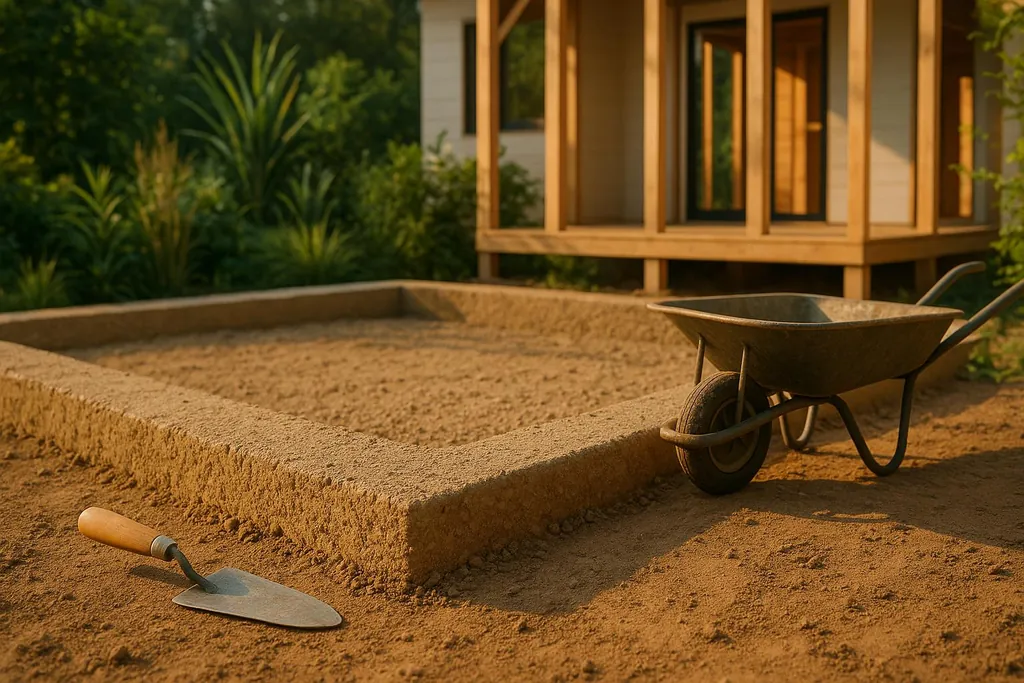
Explore the benefits and challenges of limecrete foundations, an eco-friendly alternative to traditional concrete for sustainable construction.
Limecrete Foundation Guide: Pros, Cons, and Uses
Limecrete is a lime-based alternative to traditional concrete, offering benefits like better moisture control, natural insulation, and a reduced carbon footprint. It’s ideal for eco-conscious builders, passive homes, and historic restorations. However, it’s more expensive, takes longer to cure, and is less suitable for heavy structures. Here’s a quick look at its pros and cons:
- Pros:
- Allows moisture to escape, reducing dampness and mold.
- Provides thermal mass for improved energy efficiency.
- Absorbs CO₂ during curing, cutting overall emissions.
- Works well with underfloor heating and natural building materials.
- Cons:
- Higher material and labor costs.
- Lower strength compared to concrete.
- Sensitive to weather during curing.
- Requires regular maintenance to prevent damage.
Limecrete is best suited for lightweight structures, DIY projects, and repairs to older buildings. While it requires careful planning and upkeep, it can deliver long-term benefits for those focused on eco-friendly construction.
WHY LIME? Laying a Limecrete Foundation for Historic Timber Frames (Replacing Concrete)
Benefits of Limecrete Foundations
Limecrete foundations offer a range of advantages for sustainable construction, addressing common foundation issues while promoting eco-friendly building practices. Let's break down the key benefits.
Moisture Control and Air Flow
One of the standout features of limecrete is its breathable nature, which helps manage moisture far better than traditional concrete. Unlike concrete, which traps moisture, limecrete allows vapor to escape naturally. This reduces the risk of dampness and mold, creating a healthier indoor environment .
This quality is particularly useful in wet climates and for older buildings that are prone to damp issues. As The Mud Home points out:
> "It's cheap, uses a quarter of the fossil fuels to manufacture, and it will pull damp out of buildings like nothing else. If you're in a wet climate, lime is the way."
Will, a Tile and Installation Expert at StoneSuperstore, also highlights its suitability for restoration projects:
> "Limecrete enables vapour to escape, reducing damp and mould issues. It is often prescribed for listed buildings for restoration authenticity."
Insulation and Energy Performance
Limecrete isn’t just about moisture control - it also provides excellent natural insulation that meets modern energy standards. Its thermal mass plays a significant role in improving energy efficiency, especially when paired with underfloor heating systems .
The material’s ability to store and slowly release heat helps maintain consistent indoor temperatures, reducing the need for excessive heating or cooling. A great example of this is the Glasscrete® limecrete floor system developed by Mike Wye. This system incorporates foam glass aggregate, which insulates while managing moisture, ensuring optimal performance of underfloor heating systems and meeting modern insulation requirements .
Additionally, limecrete simplifies installation by addressing both insulation and moisture challenges. By preventing moisture from being pushed into ground-level walls, it helps avoid issues like damp floors and structural damage .
Lower Carbon Footprint
When it comes to environmental impact, limecrete stands out. It uses about 75% fewer fossil fuels during production compared to traditional concrete . Plus, limecrete has the unique ability to absorb CO₂ as it cures, further improving its carbon profile over time .
The use of recycled aggregates and natural lime in its composition also cuts down on energy consumption, making limecrete a more sustainable choice for eco-conscious builders. Unlike concrete, which retains its initial carbon debt, limecrete actively contributes to long-term environmental sustainability.
For builders focused on green construction, limecrete foundations align perfectly with the goals of reducing carbon emissions while delivering high-performance results.
Drawbacks and Challenges of Limecrete Foundations
While limecrete offers environmental advantages, it does come with its own set of challenges, especially for DIY builders. Below, we’ll explore its cost implications, mechanical limitations, and sensitivity to weather.
Higher Costs and Limited Availability
Cost is a significant hurdle when it comes to limecrete. The materials themselves are pricier than traditional concrete, with hydraulic lime being considerably more expensive than Portland cement. On top of that, finding skilled installers can be a challenge. The scarcity of experienced professionals often drives labor costs higher. Sourcing hydraulic lime can also be tricky; it may involve special orders and longer lead times compared to the widely available Portland cement. These factors can complicate budgeting for eco-conscious projects.
Lower Strength and Structural Limitations
Limecrete doesn’t pack the same punch as traditional concrete when it comes to strength. Its lower compressive strength makes it suitable for lighter structures like timber frames or light steel buildings. However, for projects involving heavier loads - such as multi-story buildings, heavy masonry, or concrete block walls - limecrete may not be the best choice. To compensate for its reduced strength, thicker foundation walls are often required, which can increase both material costs and excavation work. Additionally, limecrete takes much longer to cure compared to modern concrete, as it gains strength gradually through carbonation. This slower curing process can extend construction timelines, requiring careful planning for DIY builders.
Weather Sensitivity and Maintenance Demands
Limecrete is particularly sensitive to weather conditions during the curing process. Extreme temperatures or sudden rain right after pouring can disrupt its ability to set properly, making protective measures essential.
Once the foundation is in place, it also requires more upkeep than conventional concrete. Regular maintenance, such as repointing and renewing surface treatments, is necessary to preserve its integrity - especially in areas prone to freeze-thaw cycles or ground movement. While these tasks are relatively simple, they do require time and financial investment. For DIY builders, this means factoring in both weather management during installation and ongoing maintenance over the life of the foundation.
Best Uses for Limecrete Foundations
Limecrete stands out in specific scenarios thanks to its unique properties. Knowing where limecrete shines can help you decide if it’s the right fit for your project.
Eco Homes and Passive House Projects
Limecrete is a great match for sustainable building projects that focus on energy efficiency and minimizing environmental impact. One of its standout features is its ability to naturally regulate humidity, which helps prevent condensation in tightly sealed, energy-efficient homes. This makes it especially useful in passive house construction, where managing moisture and maintaining consistent indoor air quality are top priorities. By reducing mold risks and improving air quality, limecrete supports healthier living environments.
Another eco-friendly advantage? Limecrete has a lower carbon footprint compared to traditional concrete. Plus, it pairs seamlessly with natural building materials like timber framing, straw bale walls, and rammed earth. Since it expands and contracts at similar rates to these materials, limecrete avoids the cracking and separation issues that often occur when modern concrete is used with traditional construction techniques.
These qualities make limecrete not only a smart choice for new eco-friendly builds but also a versatile option for many other applications.
Historic Building Repairs
When it comes to restoring historic structures, limecrete is often the most compatible choice for foundations. Many older buildings were constructed with lime-based mortars and breathable materials, which require foundations that work in harmony with these original characteristics.
Limecrete helps preserve the natural moisture dynamics of historic buildings, allowing them to "breathe" as they were originally designed. This balance is crucial for maintaining the health and longevity of these structures. Its flexibility also accommodates the natural settling and movement of older buildings, reducing the likelihood of stress cracks.
For restoration projects, limecrete provides an authentic repair solution that aligns with traditional construction methods while meeting modern building standards. This is especially important for historically significant buildings, where maintaining original techniques isn’t just preferred - it’s often essential.
DIY Project Integration
Limecrete can also be a practical choice for smaller, DIY projects, though it requires careful planning. One of its advantages is its extended workability compared to concrete. Limecrete remains workable for longer periods, allowing for adjustments during the curing process. This makes it a bit more forgiving for less experienced builders.
DIY projects like tiny homes, workshops, or single-story additions are well-suited for limecrete foundations, as they typically have lower structural demands. Simpler designs - such as straight stem walls, grade beams, or slab-on-grade foundations - are ideal for DIY builders, as limecrete is less suited for complex or heavily reinforced structures.
However, timing and preparation are critical. Limecrete requires protection from rain and extreme temperatures during its longer curing process. Make sure you have weather protection measures in place before starting your project.
For those passionate about sustainable building, limecrete offers a chance to explore traditional building techniques while creating environmentally conscious foundations. It’s a way to blend modern eco-friendly practices with age-old methods that emphasize durability and harmony with nature.
How to Install Limecrete Foundations
Limecrete foundations are an eco-friendly alternative to traditional concrete, and with the right approach, they can be installed successfully by DIY builders. The key is thorough preparation, precise mixing, and proper curing conditions throughout the process.
Site Prep and Material Sourcing
Start by assessing your site’s drainage and frost line requirements. Limecrete is more sensitive to water than conventional concrete, so good drainage is essential. To test soil drainage, dig a hole, fill it with water, and monitor how quickly it drains over 24 hours. If water remains, consider adding gravel beds or installing a French drain to improve drainage.
Excavation depth depends on your local frost line. In northern regions of the U.S., foundations often need to extend 42–48 inches below grade, while southern areas may only require 12–18 inches. Always confirm specific requirements with your local building department.
Sourcing materials for limecrete can be a bit tricky since it’s less common than standard concrete. You’ll need hydraulic lime (available in grades like NHL 2, NHL 3.5, or NHL 5 based on strength needs), clean sharp sand, and aggregate such as pea gravel or crushed stone. Keep in mind, hydraulic lime is more expensive than Portland cement. If insulation is part of your design, limecrete pairs well with rigid foam boards, cork panels, or sheep’s wool insulation. Its breathable nature makes it versatile and reduces moisture issues.
Once your site is ready and materials are gathered, you’re set to begin mixing and laying the limecrete.
Mixing and Laying Limecrete
Getting the mix ratio right is critical. A standard mix for limecrete includes 1 part hydraulic lime, 2.5 parts sand, and 1 part aggregate. This blend provides the necessary strength for residential projects while remaining workable.
Mix small batches of limecrete to ensure consistency and usability. Use a mechanical mixer, adding water gradually until the mix holds together without becoming too wet or soupy. Limecrete can stay workable for several hours, giving you time to work carefully.
Temperature plays a big role in successful installation. Aim to pour limecrete when the weather is moderate - ideally between 40°F and 85°F. In hot conditions, frequent misting helps prevent rapid drying, while insulated curing blankets can aid curing during cooler weather.
Unlike concrete, limecrete doesn’t self-level easily. Make sure the mix fills the forms completely, working it around any reinforcement. Use a tamping rod or vibrating tool to eliminate air pockets, then level the surface and smooth it with a float. Avoid over-troweling, as this can bring too much lime to the surface, weakening the final product.
Safety and Best Practices
Handling lime requires extra safety precautions due to its caustic nature. Always wear protective gear, including safety glasses, rubber gloves, long sleeves, and a dust mask when working with dry lime or mixing limecrete. Lime can cause chemical burns, so if it contacts your skin, rinse immediately and neutralize as needed. If it gets in your eyes, flush with water for 15 minutes and seek medical attention.
Protect the site during curing. Cover the work area with tarps, plastic sheeting, or temporary shelters to shield it from rain, which can wash away key components, or from direct sun and wind, which can cause rapid moisture loss and cracking.
Curing limecrete requires patience and attention. Mist the surface regularly during the first week to keep it damp but not overly wet. After the initial set - usually within 24 to 48 hours - you can remove the forms, but remember that limecrete remains softer than concrete in its early stages. Full strength typically develops over 28 days, so plan accordingly before applying significant loads.
If you’re new to limecrete, consider starting with a smaller project, like a garden wall, to gain confidence. By following these steps, you’ll ensure a durable, sustainable foundation that stands the test of time.
For more tips on sustainable building, visit [DIY Eco Homes](/).
Cost Breakdown and Budgeting
Planning your budget is a key step in building an eco-home foundation. While detailed U.S. pricing for limecrete foundations is limited, the following estimates can give you a starting point.
Material and Labor Costs
The cost of a limecrete foundation varies based on factors like location, project size, and the availability of skilled workers familiar with lime-based materials. Key material expenses include hydraulic lime, sand, and aggregate. Labor costs may also be higher compared to traditional concrete installations because limecrete requires more precision and care during mixing and setting.
For comparison, standard concrete slab foundations typically cost between $6 and $14 per square foot. In the UK, limecrete floors (including materials and labor) are estimated at approximately £130 per square meter. However, these UK figures may not directly align with U.S. costs due to differences in material access, labor rates, and regional pricing.
Having a general idea of these costs can help you plan and identify ways to manage expenses effectively.
Money-Saving Tips
- Source materials locally: This can cut down on shipping costs and may unlock bulk discounts.
- DIY or hybrid approach: Handle tasks like site prep and finishing work yourself, while hiring professionals for the more technical parts of the installation.
- Time your project strategically: Take advantage of seasonal discounts or times when suppliers have better availability.
- Start small: Gain experience by working on smaller limecrete projects, such as garden walls or paths, before committing to a full foundation.
- Collaborate with local groups: Join eco-building communities or cooperatives to pool resources and potentially lower material costs.
Although limecrete foundations may require a larger upfront investment, they provide long-term advantages like improved indoor air quality, effective moisture control, and a reduced environmental footprint. For more detailed budgeting advice and step-by-step guides, check out DIY Eco Homes for helpful resources on limecrete foundation projects.
Maintenance and Long-Term Performance
After installation, keeping limecrete foundations in good condition is key to preserving their eco-friendly advantages. Limecrete’s unique aging process means it requires specific care to maintain its durability over time.
Regular Maintenance
Routine checks are essential for spotting issues like cracks, surface imperfections, or moisture buildup. Pay close attention to areas where water collects or where the foundation meets other materials, as these spots are more prone to wear.
Drainage systems are equally important. If your foundation includes gravel-filled land drains, ensure these remain clear of debris and sediment. Effective drainage prevents water from pooling, which can weaken the foundation.
Temperature extremes can also take a toll on limecrete. Freeze-thaw cycles during cold weather and rapid temperature changes in hot climates can lead to damage. Maintaining proper insulation and drainage helps mitigate these risks. For example, when temperatures fall below 59°F (15°C), the chemical reactions in lime slow significantly, reducing its strength by up to 50% and making it more vulnerable to damage .
Hot, dry weather poses different challenges. Soil shrinking and pulling away from the foundation can cause settling issues, while rapid temperature swings can lead to mass loss and structural weakening in hydraulic lime materials . Additionally, alternating periods of heavy rain and dry weather can stress limecrete, causing micro-cracking. However, limecrete has a natural advantage - its self-healing properties. Over time, minerals can fill these small cracks, strengthening the material .
By staying proactive with these maintenance steps, you can extend the life and durability of your limecrete foundation.
Lifespan and Performance
With consistent care, limecrete foundations can last for decades. Their natural breathability helps minimize moisture-related problems, making them a reliable choice for long-term use.
Real-world examples highlight their performance. In a _Grand Designs_ project involving an eco-friendly farmhouse in Wales, limecrete foundations proved effective despite early challenges with slow curing during winter. While the delays caused some cost overruns, the material eventually performed well and maintained its appearance . The takeaway? Patience is critical - limecrete needs time to reach its full strength.
> Louisa, a member of the Green Building Forum, shared her positive experience with limecrete: “One new build with a basement had gravel-filled land drains installed around and under it, and ‘all is well’ after two winters” .
Allowing several months for proper curing before building on the foundation is also important, especially for lightweight structures like wood-framed homes . This curing period not only enhances durability but also reduces the likelihood of future maintenance issues.
Another benefit of limecrete is its self-healing nature. Small cracks can seal themselves through natural carbonation, cutting down on repair needs. However, if your foundation is in an area with extreme temperature fluctuations or frequent wet-dry cycles, you’ll need to monitor it more closely. With thoughtful drainage design and regular inspections, limecrete foundations can perform reliably even in challenging conditions.
Conclusion
Limecrete foundations present an eco-friendly option without compromising on performance. Thanks to its natural breathability and moisture management properties, limecrete stands out as an excellent choice for sustainable construction. Its low carbon footprint aligns perfectly with green building practices, making it an appealing option for environmentally conscious builders. However, like any material, it comes with its own set of challenges.
Some of the standout benefits include exceptional insulation, effective moisture control, and long-lasting durability. Limecrete’s ability to manage moisture and encourage natural air circulation contributes to healthier indoor environments, which is a big plus for homeowners.
On the flip side, there are hurdles to consider. Limecrete tends to have a higher upfront cost, and sourcing the material can sometimes be tricky due to limited availability. The installation process is also weather-sensitive, requiring careful planning to avoid delays. Additionally, limecrete’s lower load-bearing capacity compared to traditional concrete makes it less suitable for heavy-duty construction projects.
This material shines in lightweight construction applications, such as timber-framed homes, passive houses, and historic renovation projects. For DIY enthusiasts, limecrete can be a rewarding option, provided that timing and weather conditions are managed effectively.
To make the most out of limecrete, it’s crucial to account for the higher material costs, allow extra time for curing, and establish reliable supply chains. With these considerations in place, limecrete foundations can deliver excellent long-term performance while supporting sustainable building goals.
Ultimately, whether limecrete is the right choice for your project will depend on your priorities. For those ready to balance environmental benefits with thoughtful planning and budgeting, limecrete offers a promising step toward greener construction practices.
FAQs
What challenges can arise when using limecrete foundations in extreme weather conditions?
Limecrete foundations can encounter some hurdles when exposed to extreme weather, largely because they are sensitive to shifts in moisture and temperature. For instance, in cold or damp climates, the curing process might slow down, which can increase the chances of cracking or moisture-related problems like capillary action that could compromise the foundation's strength. Conversely, in hot and arid conditions, limecrete might cure too quickly, which can impact its durability and lead to structural issues.
To address these challenges, managing the curing environment is crucial. Protective measures such as moisture barriers or weather covers can help ensure the limecrete sets correctly, regardless of the surrounding climate.
How does limecrete compare to traditional concrete for durability and maintenance?
Limecrete is known for its breathability and its ability to manage moisture effectively. This makes it a great choice for reducing dampness and enhancing durability, especially in older buildings or areas with high moisture levels. Unlike traditional concrete, limecrete is more flexible, which helps it resist cracking in challenging conditions.
That said, working with limecrete requires extra care during installation. It sets more slowly and demands proper curing to ensure it holds up over time. While it performs well in eco-conscious or historic building projects, it does tend to need more regular upkeep compared to standard concrete. Still, for many, its sustainable qualities and moisture-regulating benefits make it a worthwhile option.
How can I lower the costs of building a limecrete foundation?
To keep the costs of a limecrete foundation in check, start by opting for locally sourced or recycled materials like recycled aggregates. These can help trim material expenses without sacrificing quality. Careful project planning is another key factor - optimizing curing times and organizing labor efficiently can make a big difference, especially since limecrete tends to set more quickly than traditional concrete.
Another cost-saving approach is to design the foundation to require less limecrete. This might mean reducing its depth or pairing it with other breathable, budget-friendly materials. Not only do these methods save money, but they also support environmentally conscious building practices.