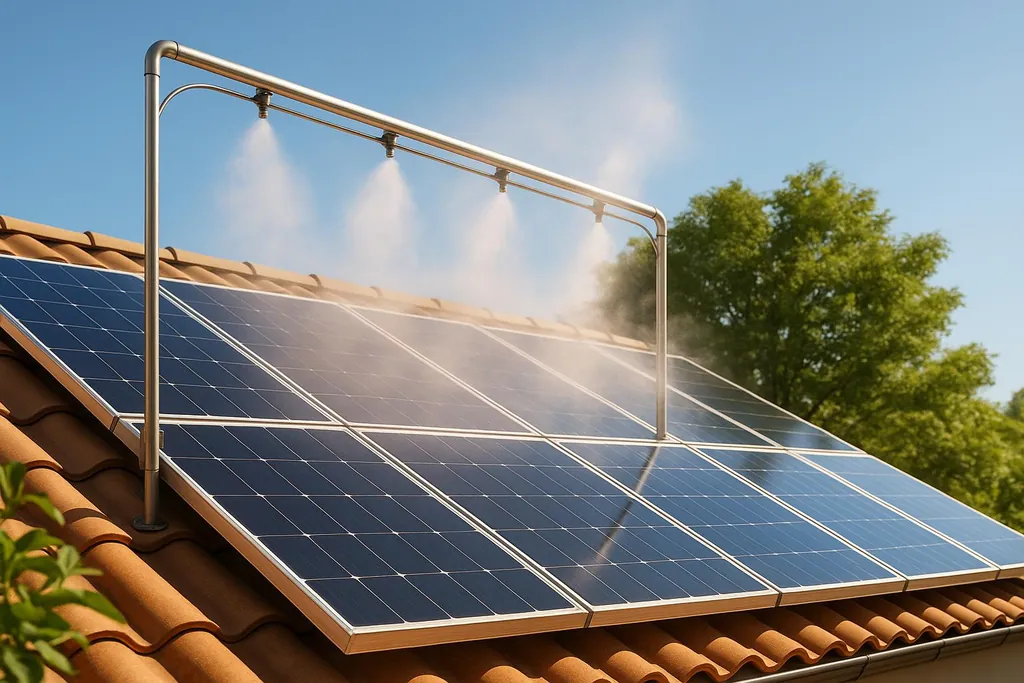
Explore cost-effective cooling solutions for solar panels that enhance efficiency and longevity, tailored to different climates and budgets.
Cost-Effective Cooling Solutions for Solar Panels
Solar panels lose efficiency when they get too hot. High temperatures lower power output and shorten the lifespan of the cells. To address this, cooling solutions help maintain optimal performance, especially in hot climates. Here are three main methods to keep your panels cooler:
- Passive Cooling Gel: Thermal gels or gel pads absorb heat, offering a low-cost, low-maintenance option for mild temperature control.
- Airflow Techniques: Proper installation with air gaps or elevated mounts improves natural cooling through ventilation. This is an affordable and easy solution.
- Hybrid & Active Systems: These use fans or water cooling for stronger temperature control, ideal for extreme heat but with higher costs and maintenance.
Key takeaway: Choose passive or airflow cooling for simplicity and low costs. Opt for hybrid or active systems in extreme heat to maximize efficiency despite higher expenses. Tailoring the solution to your climate and budget ensures better solar performance and longevity.
This $37 Cooling Gel Makes Solar Panels 12% More Efficient
1\. Passive Cooling Gel Technology
Passive cooling gel technology works by reducing the heat on solar panels. This is achieved by applying a thermal gel or using gel-filled pads in the panel's mounting structure. These gels absorb and release excess heat, helping to keep the panels cooler.
Cost Considerations
This method is budget-friendly, with options ranging from DIY kits to ready-made cooling pads. The cost depends on the size of the system and the materials used, offering flexibility for different budgets.
Temperature Impact
By using passive cooling gels, solar panels stay cooler during peak sunlight hours. This helps maintain their temperature within the ideal range for operation.
Efficiency Impact
Cooler panels are better at converting sunlight into energy. However, the efficiency boost will vary depending on the local climate and the system's design.
Maintenance Requirements
Passive cooling gel systems require little upkeep. You’ll only need to do occasional visual checks and fix minor issues, like weather-related wear and tear, when necessary. This low-maintenance approach also serves as a stepping stone to more advanced cooling technologies, which are covered in the following sections.
2\. Airflow and Installation Methods
Good airflow is key to keeping solar panels cool. By allowing air to circulate freely around and beneath the panels, convection helps release hot air and draw in cooler air, naturally regulating temperatures.
Ground-mounted systems tend to have better airflow compared to rooftop setups. Panels installed with enough elevation - whether on tracking systems or fixed mounts - allow air to move freely underneath, which helps dissipate heat more efficiently than panels mounted flush against a roof.
For rooftop installations, raised mounting rails are a simple yet effective way to create air gaps. Some setups even include specialized hardware to improve ventilation channels. Adjusting the tilt of the panels can also enhance airflow by creating a chimney effect, where hot air rises and escapes while cooler air flows in from below.
Adding these airflow features doesn’t add much to the cost but makes a noticeable difference in managing heat. Maintenance is straightforward too - just occasional inspections and cleaning to ensure ventilation gaps stay clear of debris.
This setup also serves as a solid foundation for incorporating more advanced cooling technologies in the future.
3\. Hybrid and Active Cooling Systems
While improving airflow is a great way to keep temperatures in check, some situations call for stronger cooling methods. That’s where hybrid and active cooling systems come into play, blending passive and active techniques to better manage solar panel temperatures.
Hybrid systems combine passive cooling elements like heat sinks with low-energy active components, such as fans or coolant loops. For instance, some setups use fans that kick in only when temperatures hit a certain threshold, while others integrate water cooling loops alongside natural airflow channels. These systems strike a balance between performance and energy efficiency but bring added considerations like cost and maintenance.
Active cooling systems, on the other hand, rely entirely on powered components - like pumps, fans, or compressors - to regulate panel temperatures. Water-based active systems circulate a coolant through dedicated channels or spray mechanisms, while air-based systems use blowers or fans to force airflow. These systems excel at maintaining steady temperatures even during extreme heat, though their energy use can offset some of the performance gains.
Initial Cost
Hybrid cooling systems typically have a lower upfront cost compared to fully active systems. However, the total expense can vary depending on the complexity of the system and any additional installation requirements.
Temperature Reduction
Both hybrid and active systems outperform passive-only setups when it comes to lowering solar panel temperatures. Hybrid systems deliver moderate cooling, while active systems are designed to handle significant temperature drops during peak heat. The extent of cooling depends on factors like the local climate, the type of solar panel, and the system design.
Efficiency Gain
Hybrid systems provide a noticeable boost in efficiency, but active systems deliver even greater improvements, especially under extreme conditions. However, it’s worth noting that active systems consume more energy to achieve these results.
Maintenance Requirements
Ongoing maintenance is a key factor in keeping these systems running smoothly. Hybrid systems generally need moderate upkeep, such as occasional inspections and cleaning to ensure everything works as it should. Active systems, with their more complex components and moving parts, often require more frequent maintenance and servicing. These added upkeep demands are something to weigh when considering the overall cost and practicality of a cooling solution.
Pros and Cons
Every cooling method comes with its own set of trade-offs, impacting factors like cost, performance, and maintenance. The right choice depends on your budget, system setup, and local climate conditions.
Here’s a breakdown of how different cooling methods stack up in terms of cost, temperature reduction, efficiency, and upkeep:
| Cooling Method | Initial Cost | Temperature Reduction | Efficiency Gain | Maintenance Requirements | Key Benefits | Main Drawbacks |
|---|---|---|---|---|---|---|
| Passive Cooling Gel | Low | Moderate | Modest improvement | Minimal (occasional check) | Long lifespan, no moving parts, silent operation | Limited cooling capacity; performance varies with weather |
| Airflow/Installation | Very Low | Low to Moderate | Slight improvement | Low (periodic cleaning) | Affordable, easy to set up, no extra power needed | Effectiveness depends on airflow and proper placement |
| Hybrid Systems | Moderate | Noticeable | Improved efficiency | Moderate | Balanced performance, automated operation saves energy | Higher initial cost, more complex installation |
| Active Systems | High | High | Significant increase | High | Maximum cooling, consistent performance | High energy use, more intricate maintenance |
Key Insights into Cooling Methods
Passive solutions, like cooling gels or enhanced airflow, shine for their simplicity. They don’t need extra power or frequent maintenance, making them ideal for remote areas or for those looking to minimize upkeep. These systems are cost-effective and reliable but may struggle in extreme heat or under harsh weather conditions.
Hybrid systems strike a middle ground, offering better temperature regulation without the energy demands of fully active setups. Their automated features adjust cooling based on demand, which can help keep energy costs manageable.
Active cooling systems are the go-to choice for extreme climates where maximum cooling is critical. While they deliver outstanding performance, their higher energy consumption and more complex maintenance requirements make them a bigger investment.
Factors to Consider
- Cost and Payback: Passive systems are generally more affordable upfront and recover their costs faster. Active systems, on the other hand, come with higher initial and ongoing expenses.
- Maintenance Needs: Passive options typically require less frequent maintenance, while active systems involve more upkeep due to their additional components, like pumps and sensors.
- Climate Suitability: Passive cooling works well in mild or moderate climates. However, in high-temperature regions, the added efficiency of active or hybrid systems can justify the increased costs and complexity.
- Reliability: With fewer components, passive systems are less prone to failure, making them a reliable choice in areas where technical service is hard to access. Active systems, while powerful, introduce more potential points of failure if not properly maintained.
Ultimately, the choice of cooling method has a direct impact on solar panel performance and long-term value. Tailoring the solution to your specific climate and budget will ensure you get the most out of your investment.
Conclusion
For homeowners in the U.S. looking to maintain solar panel efficiency over the long term, passive cooling solutions stand out as a practical and budget-friendly option. With low upfront costs, minimal maintenance, and dependable performance, these methods are well-suited for most residential setups.
Each cooling method brings its own advantages, depending on your local climate and budget. Passive cooling gels, for instance, offer an affordable and low-maintenance way to regulate panel temperatures. Enhanced airflow, achieved through proper installation, provides another cost-effective option for keeping panels cool. For areas with extreme heat - like Arizona, Nevada, or southern Texas - hybrid systems can deliver superior performance. While they come with higher costs, their automated features can make them worth the investment. On the other hand, active cooling systems are better suited for commercial applications, where maximizing performance outweighs concerns about energy use and maintenance complexity.
In regions with intense heat, hybrid systems may strike the right balance between cost and performance. Meanwhile, active cooling methods should generally be reserved for commercial setups or cases where achieving peak efficiency is a top priority.
The key to maximizing the value of any cooling solution lies in selecting the right approach for your specific climate and financial situation. Starting with passive cooling methods and upgrading only when necessary can ensure that even modest temperature reductions help extend panel lifespan and boost energy output over time.
FAQs
What are the cost and effectiveness differences between passive cooling gels and airflow techniques for residential solar panels?
Passive cooling gels and airflow techniques both work to lower solar panel temperatures, but they come with different costs and maintenance needs.
Airflow techniques, like natural ventilation or systems with fans and ducts, are effective at managing heat. However, active systems can come with higher upfront expenses and require regular maintenance to keep everything running smoothly.
In contrast, passive cooling gels provide a straightforward, low-maintenance alternative. These gels are made with advanced materials designed to absorb and release heat, keeping panels cool without relying on mechanical parts. While the initial cost might be slightly higher than basic airflow methods, the long-term advantages - such as improved [energy efficiency](/blog/ultimate-guide-to-smart-lighting-energy-efficiency) and minimal upkeep - make them an appealing option for many homeowners.
What should I consider when choosing between hybrid and active cooling systems for solar panels in extreme climates?
When choosing a cooling system for [solar panels](/blog/how-to-connect-solar-panels-to-a-hybrid-inverter) in harsh climates, it's important to weigh factors like local weather conditions, cooling performance, and long-term expenses. Hybrid systems, which blend passive and active cooling methods, tend to strike a balance between efficiency and energy use, making them a practical option for many.
Active cooling solutions, such as fan-based systems or water circulation, deliver higher cooling efficiency but often come with increased energy consumption and maintenance needs. To find the right system, consider your budget, the energy requirements of the cooling setup, and the unique environmental challenges of your location.
Do the efficiency benefits of hybrid or active cooling systems outweigh their energy use and maintenance costs?
When it comes to boosting solar panel efficiency, hybrid and active cooling systems can make a noticeable difference. However, their effectiveness often hinges on finding the right balance between energy savings and the costs tied to operation and maintenance. Active cooling methods, like water or air circulation systems, can lower panel temperatures quite effectively. But here's the trade-off: they tend to consume more energy and demand regular upkeep, which can drive up long-term costs.
In contrast, passive cooling options rely on natural heat dissipation and offer a simpler, more budget-friendly alternative. While they might not cool panels as effectively as active systems, their straightforward design and lower costs make them an appealing option for many homeowners looking for an efficient yet low-maintenance solution.