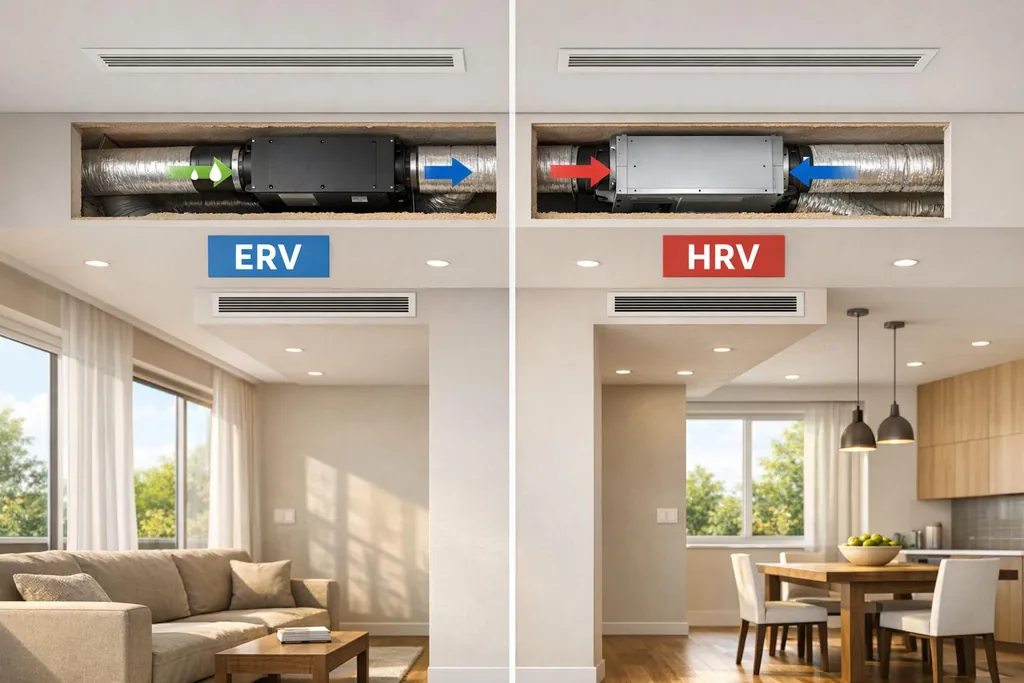
HRV vs ERV compared: how each system handles heat, humidity, and fresh air. Climate-based recommendations plus cost and installation differences.
ERV vs HRV: Which Ventilation System Is Better for Your Home?
If you're deciding between an ERV (Energy Recovery Ventilator) and an HRV (Heat Recovery Ventilator), here's the quick breakdown:
- HRVs: Best for cold, dry climates. They exchange heat but remove excess indoor moisture, helping prevent window condensation in winter.
- ERVs: Ideal for hot, humid regions or very dry winters. They transfer both heat and moisture, balancing humidity levels inside your home.
Both systems improve indoor air quality by replacing stale air with filtered outdoor air while conserving energy. Your choice depends on your climate, home construction, and indoor moisture needs.
Quick Comparison
| Feature | HRV (Heat Recovery Ventilator) | ERV (Energy Recovery Ventilator) |
|---|---|---|
| Heat Transfer | Yes | Yes |
| Moisture Transfer | No | Yes |
| Best Climate | Cold, dry winters | Hot, humid summers; dry winters |
| Winter Performance | Removes indoor humidity | Retains indoor humidity |
| Summer Performance | Pre-cools air only | Pre-cools and reduces humidity |
| Condensate Drain | Required | Usually not required |
| Cost Range | $600–$1,800 | $800–$2,000+ |
For airtight homes, these systems are essential to maintain fresh air and energy efficiency. If unsure, consult an HVAC expert to determine the best fit based on your home's needs.
::: @figure 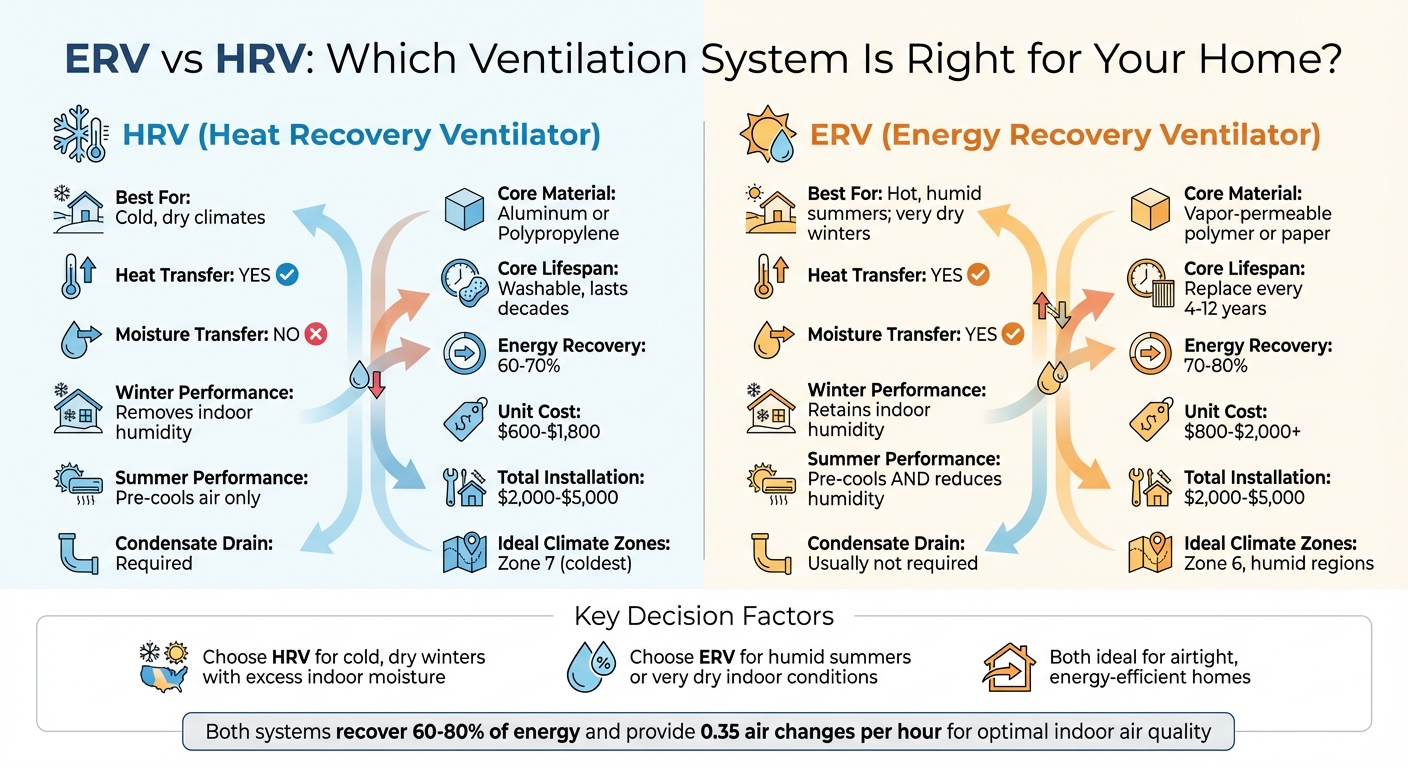 :::
:::
ERV vs. HRV - What's the Difference?
Why Modern Homes Need Mechanical Ventilation
Energy-efficient homes are built to be airtight and highly insulated, which is excellent for minimizing heat loss but not so great for air quality. This airtight construction - using advanced insulation, continuous vapor and air barriers, and triple-pane windows - essentially seals your home like a thermos. While it keeps the heat in, it also traps moisture, carbon dioxide, and other pollutants indoors. Over time, this can lead to condensation, mold, and even dust mite problems. Considering that people spend about 90% of their time indoors, indoor air quality is a major factor in overall health.
Without proper ventilation, these contaminants build up, creating an unhealthy indoor environment. In colder climates, opening a window for fresh air while running your heater can waste up to 50% of your heating energy. An HRV or ERV solves this problem by continuously bringing in fresh air while recovering 70% to 90% of the heat that would otherwise escape. As technology author Chris Woodford explains:
> "HRVs are essentially noses on houses: they consist of two ventilation ducts running next to one another passing between the inside and the outside of a house" .
HRV and ERV vs. Other Ventilation Systems
Not all ventilation systems are created equal. Here's a quick breakdown of how HRVs and ERVs compare with other options:
| System Type | How It Works | Heat Recovery | Pressure Impact | Energy Performance |
|---|---|---|---|---|
| HRV | Exchanges stale air for fresh air while recovering heat | 60–95% efficiency | Neutral | High – significantly reduces HVAC load |
| ERV | Exchanges air and transfers both heat and moisture | 60–95% efficiency | Neutral | High – ideal for humid climates |
| Exhaust-Only | Removes air (e.g., bathroom fans) | None | Negative (can cause backdrafting) | Low – wastes conditioned air |
| Supply-Only | Pushes outdoor air inside | None | Positive (often drafty) | Low – introduces unconditioned air |
Exhaust-only systems, like basic bathroom fans, expel warm indoor air directly outside, wasting heating energy and creating negative pressure that can draw harmful combustion gases back into your home. Supply-only systems push outdoor air inside without recovering heat, which can lead to uncomfortable drafts in winter or sticky, humid air in summer. HRVs and ERVs, by contrast, maintain balanced pressure while recovering most of the heat and (in the case of ERVs) moisture from outgoing air.
How HRV Systems Work
An HRV (Heat Recovery Ventilation) system, also known as mechanical ventilation heat recovery (MVHR), works by continuously swapping stale indoor air with fresh outdoor air while reclaiming heat energy. At the core of the system lies a heat recovery core made up of thin, durable plates that create separate channels for two airstreams to flow through independently .
Here's how it operates: warm, stale air from inside your home moves through one set of channels, while cold, fresh outdoor air flows in the opposite direction through adjacent channels. The channels are designed to prevent the two airstreams from mixing. As these streams pass close to each other, heat transfers through the thin walls that separate them. In winter, this process pre-heats the cold incoming air using the warmth from the outgoing indoor air. During summer, the reverse happens - cool indoor air absorbs heat from the warmer outdoor air, reducing the burden on your HVAC system . Many systems use a counterflow design, where the air streams move in opposite directions, maximizing the temperature difference along the exchanger.
> "By pre-warming the incoming air, an HRV reduces the burden on your heating system, helps maintain consistent indoor temperatures, and prevents drafts from cold outside air." – Kevin Dickson, President of Energy Services Air Conditioning, Heating and Electrical .
Two fans work simultaneously to ensure balanced airflow - one fan expels stale indoor air while the other pulls in fresh outdoor air. This balance helps maintain neutral air pressure in your home. Depending on the model, HRV systems can recover 60% to 95% of the heat from outgoing air, with most standard units achieving recovery rates of 70% to 80% . Studies show that HRV systems can reduce energy lost through ventilation by around 65%. For example, the Fanco Habitat Central HRV system achieves up to 92% heat recovery efficiency. Many systems also feature a summer bypass mode, which allows cool outdoor air to flow directly into your home without being warmed by the outgoing air - perfect for natural ventilation on mild evenings. Additionally, during extremely cold weather, a defrost cycle kicks in to prevent ice buildup inside the core by temporarily recirculating warm indoor air.
Key Components of HRV Systems
HRV systems are designed for efficient ventilation while minimizing energy loss. Each component plays a critical role:
| Component | Primary Function | Maintenance Schedule |
|---|---|---|
| Heat Exchanger Core | Transfers heat between air streams | Clean every 6–12 months |
| Fans/Blowers | Moves air through the system (50–100W typical; some high-efficiency models as low as 9W) | Check annually for proper operation |
| Filters | Removes airborne pollutants | Clean every 1–3 months; replace every 6–12 months |
| Ductwork | Distributes and collects air | Inspect during installation; seal leaks |
| Controls | Manages system settings (wall switches, humidity sensors, CO2/VOC detectors) | Program based on occupancy and humidity |
| Condensate Drain | Collects moisture from heat exchange | Inspect annually |
The heat exchange core is the centerpiece, transferring thermal energy between the incoming and outgoing airstreams without allowing them to mix. Dual fans ensure equal airflow in both directions, preventing pressure imbalances that could draw contaminants from areas like garages or crawlspaces into your living space .
Filters at both the intake and exhaust points trap dust, pollen, and debris from the incoming air, protecting the core from dirt accumulation and improving indoor air quality . For homes with tight building envelopes, MERV 13 filtration is recommended - these filters effectively trap particulates, allergens, and pollutants, though they may slightly reduce airflow compared to standard MERV 8 filters. Modern HRV systems often include advanced controls, ranging from simple wall switches to sophisticated CO2 or VOC sensors that adjust ventilation rates based on air quality, improving energy efficiency through demand-controlled ventilation.
To ensure proper performance, HRV systems are usually designed to provide about 0.35 air changes per hour for the entire home . You can calculate the required airflow in cubic feet per minute (CFM) using this formula: _(Square Footage × Ceiling Height × 0.35) / 60_. For example, an 1,100 sq. ft. home with 8-foot ceilings would need approximately 51 CFM . For a 2,000-square-foot home with 8-foot ceilings (16,000 cubic feet of air), achieving 0.35 air changes per hour requires about 93 CFM.
Next, let's explore the specific conditions where HRVs perform at their best.
Best Conditions for Using HRVs
HRV systems shine in cold, dry northern climates where heat retention and indoor moisture control are crucial. During winter, everyday activities like cooking and showering can create excess humidity. An HRV addresses this by removing moist indoor air and replacing it with drier outdoor air, reducing the chances of window condensation and mold growth - all while maintaining energy efficiency.
> "Since the HRV removes moisture from the air, there's less potential for mold and mildew to build up in your home." – Paige Bennett
> "An HRV will be most effective at removing excess indoor humidity efficiently in cold winter climates, because as an HRV pulls stale air out of the home, humidity within that air is removed too." – Scott Gibson, Contributing Writer, _Fine Homebuilding_
Homes in tightly sealed, cold climates benefit greatly from HRVs, as they provide fresh air without sacrificing warmth or driving up energy bills. For regions with extreme cold, where temperatures regularly fall below freezing, it's wise to opt for units with built-in defrost modes or pre-heaters to prevent ice buildup on the heat exchange core . Advanced double-core HRV systems can function even at temperatures as low as -40F without requiring a defrost cycle. HRVs are also well-suited for hot-dry climates (such as parts of the Southwest), since the lack of moisture control is not an issue when outdoor air is already dry. Installation costs for HRVs typically range from $2,000 to $5,000, with unit prices starting at around $600 and going up to $1,800 .
How ERV Systems Work
An Energy Recovery Ventilator (ERV) works much like a Heat Recovery Ventilator (HRV) but with one key distinction - it transfers both heat and moisture between two separate airstreams. It uses two fans: one pulls fresh air in, while the other expels stale air. These airstreams move through a specialized energy transfer core, flowing in opposite directions without mixing .
The core of an ERV is a porous heat exchanger. Unlike HRVs, which use non-permeable materials, ERV cores are made from membranes - often treated paper or synthetic materials - that allow water vapor to pass through while keeping the airstreams separate . Some advanced units even feature rotating desiccant wheels that absorb moisture from humid air and release it into drier air .
> "The heat exchanger core is the heart of the ERV system. It allows for the transfer of heat and moisture between the incoming and outgoing air streams without the air actually mixing." – Richard Trethewey, Plumbing and Heating Expert
In winter, ERVs transfer warmth and moisture from outgoing indoor air to the cold, dry air coming in, helping to humidify your home and reduce heating demands. This process, called latent heat recovery, helps regulate humidity levels - no separate humidifier required. During summer, the system works in reverse, removing heat and excess humidity from the incoming air, which lightens the load on your air conditioner .
Modern ERVs are highly efficient, recovering about 70–80% of the heat energy from indoor air and capturing 60–70% of the energy that would otherwise be lost through regular ventilation . Latent heat recovery rates typically range between 40% and 60%, with high-efficiency models reaching around 70%. ERVs operate quietly, typically below 1.0 sone, and last around 10–15 years . Costs for a unit range from $1,000 to $3,000, with installation adding $500 to $1,500, bringing the total investment to $2,000 or more .
Next, let's look at the features that make ERVs so effective.
Key Features of ERV Systems
ERVs go beyond simple heat and moisture exchange, offering additional benefits like advanced filtration and smart controls. They use a concentration gradient to transfer both heat and moisture - water vapor naturally moves from the more humid airstream to the drier one . The permeable membrane ensures this exchange happens without allowing pollutants, odors, or VOCs to enter your home. There is a small degree of cross-leakage - about 5% to 10% of air may transfer between streams - which remains within acceptable limits according to ASHRAE standards.
Because moisture is transferred in vapor form rather than condensing into liquid, ERVs do not require a condensate drain, allowing for flexible installation in any orientation. This is a key advantage over HRVs, which must be installed with proper orientation for drainage.
Many ERVs come equipped with high-performance filters and sensors to maintain balanced airflow. This prevents negative pressure, which could otherwise draw contaminants from spaces like garages or crawlspaces into your home. Modern units often integrate with smart thermostats or sensors that automatically adjust airflow based on indoor CO2 levels or outdoor humidity forecasts .
> "Energy recovery ventilation removes water vapor from the more humid airstream and transfers it to the less humid airstream." – Lawrence Berkeley National Laboratory
> "An HRV is used to save energy. But an ERV is also used to downsize the capital costs of [air conditioning or dehumidification] equipment." – Nick Agopian, Vice President of Sales and Marketing, RenewAire
Maintenance is straightforward: vacuum or replace filters every three to six months, and inspect the core annually. If dust builds up, rinsing the core with water helps keep the system running efficiently . However, it is important to note that ERVs are not a substitute for a dehumidifier. While they reduce the amount of outdoor humidity entering your home during summer, in very humid regions you may still need dedicated dehumidification equipment to maintain comfortable indoor conditions.
Best Conditions for Using ERVs
ERVs perform exceptionally well in climates where managing indoor moisture is a priority. In hot, humid regions, they act as partial dehumidifiers, removing excess moisture from incoming air and reducing the strain on your air conditioner .
> "ERVs are the best choice for indoor moisture control. During heating season, ERVs can transfer moisture and heat from exhaust air into the dry outdoor winter air entering the home." – Energy Trust of Oregon
In cold or dry climates, ERVs help retain indoor moisture generated by daily activities like cooking and showering. This reduces issues like dry skin, static electricity, cracked lips, respiratory discomfort, and damage to wood furniture or flooring . These benefits are particularly noticeable in homes with fewer occupants, where less moisture is naturally produced .
ERVs are ideal for tightly sealed, energy-efficient homes. Modern construction minimizes natural air leakage, making mechanical ventilation essential to supply fresh air while conserving the energy used to heat or cool your home . They're also great for households with allergy or asthma sufferers, as they filter incoming air while maintaining steady humidity levels .
> "In a warm humid climate, an ERV brings in less outdoor humidity than an HRV." – Allison A. Bailes III, PhD, Founder, Energy Vanguard
One caveat: in tightly sealed homes with high moisture loads (many occupants, frequent cooking), ERVs can retain too much moisture, pushing humidity levels above 60% and creating conditions that may encourage mold growth. In these situations, an HRV's drying effect may be the better choice.
For homes in extremely cold regions, ERVs with defrost modes or pre-heaters are recommended to prevent moisture in the core from freezing and blocking airflow. ERVs are generally less susceptible to freezing than HRVs due to their moisture transfer capabilities. Installation costs typically range from $2,000 to $5,000, depending on your home's size and ductwork complexity .
ERV vs HRV: Main Differences
Both ERVs (Energy Recovery Ventilators) and HRVs (Heat Recovery Ventilators) are designed to exchange air and recover energy, but the key difference lies in how they handle moisture. HRVs only transfer sensible heat - essentially the temperature - between air streams, using vapor-impermeable cores made of materials like aluminum or polypropylene. ERVs, on the other hand, transfer both sensible and latent heat, meaning they also handle moisture. They achieve this through vapor-permeable membranes, often made from specialized paper or synthetic polymers .
This difference impacts both maintenance and overall performance. HRV cores are durable and washable, lasting for decades (often 20+ years with routine cleaning). ERV cores, particularly those made from paper, need to be replaced more frequently - typically every 4 to 12 years due to clogging from dust, oils, and skin cells . Another distinction is how they manage moisture. HRVs require a condensate drain because moisture condenses as air cools in the core, and must be installed in the correct orientation for proper drainage. ERVs transfer moisture as vapor, eliminating the need for a drain in most cases and allowing flexible installation in any orientation .
> "Deciding between an ERV and an HRV should land on ERV most of the time." – Allison Bailes III, Energy Consultant
When it comes to heat recovery, HRVs typically reclaim about 70% of sensible heat, with premium models reaching up to 95%. ERVs, however, recover 70–80% of sensible heat and an additional 40–60% of latent heat. This makes ERVs especially effective in hot, humid climates like Miami, Houston, and Atlanta, where they can reduce HVAC energy use by approximately 10% to 17% compared to HRVs .
Feature Comparison Table
| Feature | HRV (Heat Recovery Ventilator) | ERV (Energy Recovery Ventilator) |
|---|---|---|
| Primary Transfer | Heat only (Sensible) | Heat + Moisture (Sensible + Latent) |
| Core Material | Aluminum or Polypropylene | Vapor-permeable polymer or paper |
| Winter Performance | Removes excess indoor humidity | Retains indoor humidity |
| Summer Performance | Pre-cools air; no dehumidification | Pre-cools and pre-dehumidifies air |
| Condensate Drain | Required | Usually not required |
| Installation Orientation | Must be oriented for drainage | Flexible, any orientation |
| Core Maintenance | Washable; lasts 20+ years | Replacement every 4–12 years |
| Unit Cost | $600 – $1,800 | $800 – $2,000+ |
| Best Climate | Cold, dry winters; mild summers; hot-dry | Hot, humid summers; very cold, dry winters |
| Freezing Risk | Higher; needs defrost cycle | Lower; moisture transfer reduces risk |
These distinctions are especially important when evaluating seasonal performance.
Performance in Different Seasons
Winter Performance: HRVs excel in winter by removing excess indoor moisture caused by daily activities, which helps prevent window condensation and moisture damage . ERVs, however, retain indoor humidity, which can help combat the dryness that often accompanies cold weather. This feature is particularly beneficial for protecting wood furniture and maintaining a comfortable indoor environment . If you're using a humidifier alongside an HRV, you're essentially adding moisture that the HRV is removing - an energy drain. ERVs sidestep this issue by naturally retaining indoor humidity.
> "In a warm, humid climate, an ERV brings in less outdoor humidity than an HRV... In a cold climate, bringing in outdoor air without moisture exchange can result in extremely low humidity in winter." – Allison Bailes III, Energy Consultant
Summer Performance: During the summer, HRVs pre-cool incoming air by using the cooler exhaust air from inside your home. However, they do not remove humidity, which can leave your indoor environment feeling uncomfortably sticky . ERVs, on the other hand, transfer moisture from the incoming hot, humid air to the cooler, drier exhaust air. This reduces the latent load on your air conditioning system, improving comfort and energy efficiency .
In extremely cold climates (below 32F), freezing can become an issue. HRVs typically include defrost systems to prevent the core from icing. ERVs are generally less prone to freezing due to their moisture transfer capabilities, though both systems benefit from frost control strategies such as preheating incoming air or temporarily bypassing the heat exchanger to allow the core to thaw. Concerns about ERV frost issues are largely outdated, as newer models include effective frost protection mechanisms .
What to Consider When Choosing Between ERV and HRV
Selecting the right ventilation system means finding a solution that fits your home's unique characteristics. Factors like your local climate, how airtight your home is, and the number of people living there all play a role in determining which system will work best.
Climate and Location
Your location's climate is a major factor in deciding between an ERV (Energy Recovery Ventilator) and an HRV (Heat Recovery Ventilator). Here's a breakdown by climate type:
- Cold, dry climates (e.g., Minnesota, Wisconsin, Maine, Canada, high-altitude regions): ERVs are often preferred to prevent overly dry indoor conditions. However, in smaller Passive Houses with high occupancy and significant moisture production, an HRV may be necessary to prevent window condensation.
- Hot, humid climates (e.g., Southeast, Gulf Coast, Florida): ERVs are the clear winner, limiting outdoor humidity from entering your home and reducing the strain on your air conditioning system.
- Hot, dry climates (e.g., parts of the Southwest): HRVs are well-suited since the lack of moisture control is not an issue when outdoor air is already dry.
- Mild, damp climates (e.g., Pacific Northwest): HRVs are often preferred because outdoor humidity remains relatively high even during colder months, and the HRV helps remove excess indoor moisture.
- Mixed climates (e.g., Mid-Atlantic, Midwest): ERVs provide year-round comfort by moderating humid summers and dry winters. For homes in Climate Zone 6, an ERV is typically the better choice, whereas colder Climate Zone 7 often calls for an HRV.
- Arid climates (e.g., Southern California): ERVs help maintain comfortable indoor humidity levels by preventing the air from becoming too dry during both heating and cooling seasons.
> "In a cold climate, bringing in outdoor air without moisture exchange can result in extremely low humidity in winter because cold air is dry air." – Allison Bailes III, Energy Consultant
These climate considerations are closely tied to your home's construction and how well it's sealed.
Home Construction and Air Sealing
The way your home is built and how airtight it is significantly influence your ventilation needs. According to the International Residential Code, whole-house mechanical ventilation is required for homes with air-leakage rates below 5 ACH50 (air changes per hour at 50 Pascals) . Without proper ventilation in airtight homes, indoor pollutants like volatile organic compounds (VOCs), dust, and moisture can accumulate rapidly, compromising indoor air quality and even reducing oxygen levels. In newer, tightly sealed homes, indoor air pollutants and moisture can accumulate, making humidity control more critical than heat loss . For instance, small, airtight condos with 2–3 occupants may benefit more from an HRV to prevent excessive humidity .
In contrast, older homes (built before 1970) with more natural air leakage can become overly dry in winter, making an ERV a better choice to retain indoor moisture . Interestingly, some manufacturers, like Zehnder, Venmar, and Broan, offer systems with swappable cores. These allow you to use an HRV core in winter to reduce moisture and an ERV core in summer to manage humidity. This flexibility can be particularly useful if your home experiences significant seasonal humidity changes .
Household Size and Indoor Moisture
The number of people living in your home also affects moisture levels. Everyday activities like breathing, cooking, and showering generate moisture, and the more people in your household, the more moisture is produced. A household with four people and pets produces significantly more moisture compared to a two-person home - this difference is a key factor in determining whether you need an HRV (for moisture removal) or an ERV (for moisture retention).
> "The higher the density of people in a space, the more you might need to lower indoor humidity and dry out the air with an HRV." – Allison A. Bailes III, PhD, Founder, Energy Vanguard
For larger families in airtight homes, an HRV can be especially helpful during the colder months, as it removes excess humidity and prevents problems like window condensation and mold . On the other hand, smaller households - such as empty nesters in a larger home - may not produce as much moisture. In these cases, an ERV is often the better choice, as it helps retain humidity and avoids overly dry conditions .
If you notice frequent window fogging during winter, it could signal that your home has too much moisture, indicating an HRV might be a better fit. If indoor humidity often exceeds 45% in winter, an HRV's drying effect could be beneficial. Conversely, if dry air is a constant struggle and you're relying on humidifiers, an ERV can improve comfort while cutting down on energy use. Installing "boost" switches with 20-, 40-, or 60-minute timers in moisture-heavy areas like bathrooms and kitchens can also help. These switches allow you to temporarily increase ventilation during activities like showering or cooking, which can manage short-term spikes in humidity . For a healthy indoor environment, aim to keep relative humidity between 35–50% . By balancing moisture control and heat recovery, you can achieve a comfortable and efficient home environment.
> "An HRV may be better in a cold climate with a tight house. There aren't good alternatives for reducing winter indoor humidity below ~45%." – Jon_R, Contributor, GreenBuildingAdvisor
Cold Climate Considerations
Cold climates present unique challenges for ventilation systems. Understanding how HRVs and ERVs perform when temperatures plummet is essential for making the right choice.
Frost Protection and Defrost Strategies
In extremely cold climates, moisture in the exhaust air can freeze on the heat exchange core, blocking airflow. Both HRVs and ERVs use frost control strategies, such as preheating incoming air or temporarily bypassing the heat exchanger to allow the core to thaw. HRVs are more prone to freezing because they condense moisture rather than transferring it as vapor. ERVs are generally less susceptible to freezing due to their moisture transfer capabilities. Advanced double-core HRV systems can function even at -40F without requiring a defrost cycle, making them suitable for the most extreme cold climates.
Indoor Humidity Effects in Cold Climates
The drying effect of HRVs can be both a benefit and a drawback in cold climates. On the positive side, HRVs help prevent window condensation and mold by removing excess moisture from high-occupancy or moisture-heavy homes. However, HRVs can cause indoor relative humidity to drop below 20-30%, leading to respiratory irritation, dry skin, static electricity, and cracked lips. ERVs counter this by recovering 40% to 60% of the moisture from exhaust air, keeping indoor humidity in the comfortable 30% to 50% range without requiring a separate humidifier.
Installation Tips for Cold Climates
When installing in cold regions, always place the unit in a conditioned space to prevent freezing, and ensure it has a condensate drain and a defrost cycle to handle frost buildup. Route intake and exhaust terminations away from areas prone to ice or snow accumulation. Place supply registers thoughtfully to avoid blasting cold air directly onto beds or seating areas during winter. Kitchen range hoods should never be routed through the heat exchanger core, as grease buildup can damage the system - use a separate exhaust system for the range.
ERV and HRV for Passive House Projects
Passive House Certification Requirements
If you're working on a Passive House certified by PHI or PHIUS, you'll need a ventilation system with verified performance data. The Home Ventilating Institute (HVI) directory is a helpful resource for finding certified ratings based on your airflow needs. For HRVs, pay attention to the Adjusted Sensible Recovery Efficiency (ASRE), and for ERVs, focus on the Adjusted Total Recovery Efficiency (ATRE). These metrics exclude fan energy, offering a more accurate performance comparison.
High-efficiency systems designed for Passive Houses often achieve sensible heat recovery rates of 93% or higher, far surpassing the average rate of around 70%. Using a certified unit ensures precise energy modeling and helps your home meet the airtightness and efficiency standards required for certification — a Passive House costs roughly 5-15% more upfront to build, and the HRV or ERV is one of the line items that scales with that premium.
Case Study: Cornell Tech Passive House
In a notable Passive House project at Cornell Tech in New York City, a centralized ERV system was chosen over individual units. This decision reduced the number of air barrier penetrations from 698 (two per apartment for 352 units) to just six, helping the building achieve an exceptionally low air leakage rate of 0.14 ACH50 - well below the Passive House standard of 0.6 ACH50. This case demonstrates how system selection and design can dramatically impact building performance.
Why Passive Houses Need Balanced Ventilation
For Passive House applications, fully ducted multi-point systems are the gold standard. These systems deliver fresh air directly to bedrooms and living spaces while removing stale air from areas like bathrooms, kitchens, and laundry rooms. Unlike integrated systems, fully ducted setups don't rely on high-power furnace fans, making them more efficient. Balanced ventilation systems are especially favored for Passive House designs because of their low energy consumption - high-efficiency models can use as little as 13.5 watts while delivering 40 to 80 cfm of fresh air.
Energy Efficiency and Indoor Air Quality Benefits
When it comes to ERV (Energy Recovery Ventilator) and HRV (Heat Recovery Ventilator) systems, their benefits go beyond basic functionality. These systems not only help regulate temperature but also deliver noticeable energy savings and improved indoor air quality. By reclaiming energy from outgoing air to precondition incoming air, they reduce the workload on your HVAC system. During winter, they warm incoming air with heat from the outgoing air, while in summer, they cool the incoming air - making it easier for your furnace or air conditioner to maintain comfortable indoor temperatures.
Energy Savings with Ventilation Systems
ERV and HRV systems are champions of energy efficiency, recovering between 60% and 80% of the energy that would otherwise be lost through traditional ventilation methods. HRVs typically recover about 60–70% of energy, while ERVs can recover slightly more, around 70–80%, based on U.S. Department of Energy data. High-efficiency models, like the Venmar EKO 1.5, demonstrate this efficiency by using just 13.5 watts at low speeds while delivering 40–80 cubic feet per minute (cfm) of fresh air. Most residential HRV systems consume about the same energy as a 60-watt light bulb, costing approximately $75 per year in electricity.
> "Because ERVs and HRVs are mostly passive devices that only use energy to circulate air, they are very efficient and often generate far more in energy savings than what is needed to operate them." – Ken D., Product Expert, eComfort
ERVs take efficiency a step further by managing moisture transfer along with heat. In the summer, they reduce incoming air humidity, lightening the load on your air conditioner. In the winter, they help retain indoor moisture, reducing the need for additional humidification. By minimizing the constant cycling of your HVAC system, these devices also contribute to extending the lifespan of your heating and cooling equipment. The result? A home that's not only more energy-efficient but also easier on your wallet.
Upfront Costs and Long-Term Value
Understanding the full cost picture is essential for making a smart investment. Here's a breakdown:
| System Component | Cost Range |
|---|---|
| HRV Unit Only | $600–$1,800 |
| ERV Unit Only | $800–$2,000+ |
| Basic Installation (Shared Ducts) | $2,000–$5,000 |
| Full Dedicated Ducting (2,000 sq ft home) | Up to $10,000 |
| Ductless/Through-Wall Units | Starting at $449 |
| Replacement Filters | $30–$50+ |
In humid climates, an ERV's ability to reduce air conditioning and dehumidification demands can help offset its higher upfront cost relatively quickly. Conversely, in colder, drier climates, an HRV's efficient heat recovery and lower maintenance requirements often make it a more cost-effective long-term choice. Both systems last 10 to 15 years with proper maintenance.
Better Indoor Air Quality
Where these systems truly shine is in improving indoor air quality. Both ERVs and HRVs ensure a continuous exchange of stale indoor air with filtered outdoor air. This process helps reduce harmful substances like VOCs (volatile organic compounds), carbon dioxide, radon, formaldehyde, and unpleasant odors. Their built-in filters capture allergens such as pollen, dust, and pet dander before they enter your home, making them a great choice for individuals with allergies or respiratory concerns.
> "Though this type of ventilation has all these benefits for the home, heat-recovery ventilators and energy-recovery ventilators (ERVs) are installed more for the occupants than for the home itself. We should be calling them 'fresh air machines.'" – Randy Williams, Editor of GreenBuildingAdvisor.com
Unlike basic exhaust fans, these systems maintain balanced airflow, which prevents pressure imbalances that could draw pollutants from areas like garages or crawlspaces. For airtight, modern homes, maintaining at least 0.35 air changes per hour is often recommended to sustain healthy indoor air quality. With regular maintenance - such as cleaning or replacing filters every one to three months - ERVs and HRVs can last 10 to 15 years, keeping your home's air fresh while helping you save on energy costs.
Sizing and Selecting Your System
Calculating Required Airflow
Proper sizing is critical for system performance. There are two common approaches:
Volume-based formula: _(Square Footage x Ceiling Height x 0.35) / 60 = Required CFM_
ASHRAE 62.2 standard formula: _(7.5 CFM x Number of People) + (3 CFM per 100 sq ft of living space) = Required CFM_ For example, a three-bedroom home (4 people assumed) with 1,500 square feet: (7.5 x 4) + (1,500 / 100 x 3) = 75 CFM.
An alternative ASHRAE calculation uses: (Number of Occupants x 7.5) + (Conditioned Floor Area x 0.01) = Ventilation Rate in CFM. For a 2,000-square-foot home with four occupants: (4 x 7.5) + (2,000 x 0.01) = 50 CFM.
Don't just rely on square footage - the number of people in the home matters just as much. A household with four people and pets produces far more moisture than a two-person home, affecting whether you need an HRV or ERV.
Key Performance Specs to Look For
When comparing models, focus on these performance metrics:
- Sensible Recovery Efficiency (SRE): At least 80% for optimal heat transfer. Check the Home Ventilating Institute (HVI) Certified Products Directory for verified ratings.
- For HRVs: Look at Adjusted Sensible Recovery Efficiency (ASRE) - higher ratings (70–95%) indicate better heat retention.
- For ERVs: Look at Adjusted Total Recovery Efficiency (ATRE) to gauge total energy recovery including moisture.
- Fan efficacy: At least 1.25 CFM per watt - this reflects how efficiently the unit moves air relative to its energy use.
- Motor type: Systems with PMSM ECM (Electronically Commutated Motor) fan motors can cut energy consumption by up to 60% compared to standard motors.
- Noise level: Less than 1.5 sones for continuous use, especially important in bedrooms.
- Automatic defrost: Essential for cold climates to prevent core freezing.
- Energy Star certification: Maximizes efficiency and minimizes energy use.
Smart Sizing Strategy
When sizing your unit, consider going for a slightly larger capacity than your calculations suggest and running it at a lower speed. For instance, if your home requires 100 CFM, select a 150 CFM unit and operate it at 60–70% capacity. This approach improves efficiency, enhances heat and moisture transfer, and keeps operational noise down. Variable-speed fans are a great option - they let the system run at low speeds most of the time but ramp up airflow when needed. If your home uses central air handlers, consider adding a motorized damper to prevent over-ventilation and a fan cycling controller to ensure proper air circulation - typically 10 minutes every hour.
DIY Installation Guide
Installing an HRV or ERV system yourself is a practical way to save on labor costs while still achieving reliable results. Basic HRV units are available for under $1,000, making this a budget-friendly home upgrade. You'll need a few essential tools, including a tubing cutter, deburring tool, torque wrench, and a flow hood for final testing.
Step 1: Preparing the Installation Site
Pick a location that's easy to access for maintenance but doesn't take up valuable living space. Basements, utility rooms, or conditioned attics are popular choices. Ideally, the spot should be close to existing ductwork if you're integrating with your HVAC system, and near exterior walls for the intake and exhaust vents. Use wall or ceiling brackets (typically $25 to $100) to mount the unit securely, and make sure there's enough room around it for filter changes and routine cleaning. Place the HRV/ERV so it pulls stale air from moisture-heavy areas like kitchens or bathrooms and supplies fresh air to main living spaces. Keep duct routes short and straight to reduce airflow resistance.
You'll also need to decide between a centralized system (a single unit with ducting throughout the house) or a de-centralized system (ductless units placed in pairs). Centralized systems are best for whole-house ventilation in new builds with space for ductwork. De-centralized units are great for retrofits or single-room solutions since they don't require ducting.
Step 2: Installing Outdoor Vents and Weather Hoods
Positioning your outdoor vents correctly is key. According to the U.S. Department of Energy, the air intake vent must be at least 10 feet from any exhaust vent and at least 1 foot above the ground or the expected snow line. This prevents debris, snow, or contaminated air from entering the system. Use a 1/4-inch to 1/2-inch mesh screen on intake hoods to block insects and rodents, while exhaust hoods should include dampers that close when the system is off. Drill holes in your exterior wall with a hole saw, then seal the openings with weatherproof caulk or expanding foam to prevent water leaks. Attach the weather hoods securely using stainless steel screws for durability. To simplify exterior wall penetrations, you can use a tandem transition hood kit - this allows both intake and exhaust to pass through a single 6-inch opening, reducing the number of holes in the building envelope.
Step 3: Mounting the Unit and Connecting Ductwork
Secure the HRV/ERV unit using the provided mounting hardware, and connect 4-inch ducts to the intake and exhaust ports. Seal all joints with mastic or UL 181 tape - avoid using standard duct tape, as it won't hold up over time. Insulate any ducts located outside your home's insulated areas with R-8 insulation. Most setups require dedicated ductwork to connect the unit to the intake and exhaust vents, along with distribution ducts for different rooms. Cut the ducting to the appropriate lengths, smooth out rough edges with a deburring tool, and attach each section to the HRV/ERV ports. HRVs should be installed according to the manufacturer's recommended orientation to ensure proper condensate drainage. ERVs, on the other hand, offer more flexibility in mounting options.
Step 4: Setting Up Electrical and Drainage Connections
HRV and ERV systems typically run on standard 120-volt household power, but you'll need a dedicated circuit. For safety, hire a licensed electrician to handle the wiring. For HRVs, install a condensate drain line to manage moisture that collects during heat exchange - use 3/4-inch PVC or flexible tubing, and ensure it slopes continuously downward to a floor drain, sump pump, or outdoor discharge point. Adding a trap to the drain line will prevent odors from traveling back into the unit. ERVs typically do not require condensate drains.
Step 5: Balancing Airflow and Testing the System
Once everything is installed, it's time to balance the airflow. Power on the system and adjust the dampers to ensure the intake and exhaust airflows are even.
> "The IRC also requires the equipment to be balanced during installation... Usually the intake and exhaust rates should be within 10% of each other." – Randy Williams, Editor at GreenBuildingAdvisor.com
Use a flow hood or manometer to measure airflow at each vent. The goal is to match the system's airflow to the CFM you calculated. Tweak the dampers until the intake and exhaust are within tolerance. Walk through your home to confirm fresh air is reaching bedrooms and living areas while stale air is being removed from kitchens and bathrooms. Pay attention for any unusual vibrations or motor noise, which could indicate loose mounting or mechanical issues. If connecting the system to an existing forced-air setup, make sure the fans are interlocked to prevent condensation forming in the supply trunk. To reduce noise, especially if the unit is near living areas, consider adding HVAC silencers to all four ports.
Maintenance Guide for Long-Term Performance
Keeping your HRV or ERV system in good shape is essential for maintaining energy efficiency and healthy indoor air. Here's a comprehensive maintenance schedule:
| Maintenance Task | Recommended Frequency |
|---|---|
| Clean Air Filters | Every 2 months |
| Replace Air Filters | 1–2 times per year |
| Check Outdoor Hoods for debris, nests, ice | Seasonally (especially winter) |
| Inspect Condensate Drain (HRV) | Annually |
| Clean Heat Exchange Core | Annually |
| Vacuum Grilles and Ducts | Annually |
| Check Fans for unusual noise or vibration | Annually |
Filter maintenance: Clean or replace filters every 1–3 months, and fully replace them once or twice a year if they're worn out. Dirty filters can choke airflow and reduce efficiency. To clean them, turn off the unit, remove the filters, vacuum off loose debris, then soak in warm water with mild dish soap. Let them dry completely before reinstalling to avoid mold growth.
Core maintenance: Clean the heat exchange core annually by vacuuming and washing it according to the manufacturer's instructions. HRV cores are durable and can last for decades with routine cleaning using compressed air. ERV cores (enthalpy cores) need more frequent attention because they deal with moisture, which can attract dust and oils - expect replacement every 4 to 12 years.
Seasonal checks: During fall and winter, check outdoor intake and exhaust hoods for leaves, bird nests, ice, or snow. Ensure exterior vent flaps don't freeze shut. Test the condensate drain annually by pouring about 2 quarts of warm water to confirm proper flow.
Important note: Avoid exhausting kitchen range hood air directly through the HRV/ERV system, as grease buildup can damage the heat exchanger core. Use a separate exhaust system for your range.
Choosing the Right System for Your Home
Deciding between an ERV (Energy Recovery Ventilator) and an HRV (Heat Recovery Ventilator) depends largely on your climate and your home's specific needs. If you live in a cold, dry area where windows tend to fog up in winter, an HRV can help by removing excess moisture. On the other hand, if your summers are hot and humid or your home struggles with low humidity during the winter, an ERV is often the better option.
Modern homes, especially airtight ones, require mechanical ventilation to maintain healthy air quality. For smaller, tightly sealed apartments with multiple occupants, an HRV is effective at managing moisture buildup. In contrast, larger, well-insulated homes with fewer residents benefit more from an ERV, as it helps maintain balanced indoor humidity levels . Your household's specific moisture production also plays a big role in determining which system fits best.
> "The primary way to choose between an ERV and an HRV is to understand the moisture-control needs of the space being ventilated." – Allison Bailes III, PhD, Founder, Energy Vanguard
If your family cooks frequently, enjoys long showers, or lives in a high-occupancy space, these activities can significantly increase indoor moisture. In such cases, an HRV might be the better choice to prevent humidity issues .
To make the most informed decision, it's essential to consult with an HVAC technician who can perform an ASHRAE 62.2 ventilation calculation. This assessment determines your home's required airflow (measured in cubic feet per minute, or cfm) . By combining this professional evaluation with details about your climate zone and home construction, you'll be able to select the system that offers the best combination of energy efficiency and indoor air quality for your home.
FAQs
What is an HRV in a home?
An HRV (Heat Recovery Ventilator) is a mechanical ventilation system installed in a home to continuously bring in fresh outdoor air and exhaust stale indoor air, while recovering most of the heat from the air being exhausted. Inside the HRV, a heat-exchange core lets the two air streams pass close to each other without mixing — the outgoing warm air transfers its heat to the incoming cold air, so the fresh air arrives nearly at room temperature. In a typical residential setup, an HRV serves the whole house through dedicated ductwork, runs continuously on low watts, and recovers roughly 60-85% of the sensible heat that would otherwise be lost. HRVs are especially valuable in cold-climate airtight homes where opening windows for ventilation wastes too much heat and uncontrolled leakage no longer provides enough fresh air. They are different from ERVs (Energy Recovery Ventilators), which additionally transfer moisture between the two air streams — see the comparison below.
What does HRV stand for and how does it differ from an ERV?
HRV stands for Heat Recovery Ventilator. ERV stands for Energy Recovery Ventilator. The difference is what the heat-exchange core moves between the two air streams: an HRV transfers only sensible heat (temperature), while an ERV transfers both heat and moisture (latent energy). That single distinction drives most of the climate-based selection logic — HRVs suit cold, dry climates where you want to keep indoor moisture in winter; ERVs suit hot, humid climates where you want to keep outdoor moisture out in summer. Both run continuously, both move similar volumes of air, and both depend on the same balanced-ventilation duct design.
How can I choose between an ERV and HRV for my home based on the climate?
Choosing between an Energy Recovery Ventilator (ERV) and a Heat Recovery Ventilator (HRV) comes down to the climate where you live. If you're in a cold, dry area like the Upper Midwest or New England, an HRV is often the better option. It helps retain heat without adding extra moisture, which keeps indoor humidity at a comfortable level and reduces the workload on your furnace.
On the other hand, if you're in a hot, humid region like the Gulf Coast or Southeast, an ERV is usually the way to go. It transfers some of the moisture from incoming air to the outgoing air, helping to lower indoor humidity and making it easier for your air conditioner to cool your home.
For areas with milder weather and moderate humidity, such as the Mid-Atlantic, either system can be effective. That said, many homeowners in these regions lean toward an ERV because it manages moisture throughout the year while still recovering heat efficiently.
In hot, dry climates like the Southwest, an HRV is often the better choice since the lack of moisture control is not an issue when outdoor air is already dry.
When deciding, think about your local climate, your comfort preferences, and your budget. Residential ERVs typically cost between $1,200 and $2,500, while HRVs are slightly less expensive, ranging from $1,000 to $2,200. These price points might also play a role in your choice.
What kind of maintenance do ERV and HRV systems need?
Both Energy Recovery Ventilation (ERV) and Heat Recovery Ventilation (HRV) systems need consistent upkeep to work effectively and maintain healthy indoor air quality. Key maintenance tasks include cleaning filters every 1-3 months, replacing them 1-2 times per year, and arranging a professional inspection and cleaning of the heat-exchange core at least once a year.
HRV cores are durable and can last for decades with routine cleaning using compressed air. ERV cores typically need replacement every 4-12 years due to moisture attracting dust and oils. Additionally, check outdoor hoods seasonally for debris, and test the condensate drain annually.
Filters play a crucial role in keeping dust and debris from clogging the system, while the heat-exchange core can collect moisture and buildup that may hurt its efficiency. Skipping maintenance can lead to lower performance, higher energy bills, and even moisture problems in your home. With regular care, these systems can perform reliably for 10 to 15 years.
Can an ERV or HRV system help save energy in my home?
When it comes to improving energy efficiency and maintaining a comfortable home, both Energy Recovery Ventilators (ERVs) and Heat Recovery Ventilators (HRVs) are excellent options. These systems work by capturing heat from the air that's being vented out, which reduces the strain on your heating and cooling systems and helps lower energy usage. HRV systems can reduce ventilation-related energy loss by about 65%, and most residential units consume about the same energy as a 60-watt light bulb - roughly $75 per year in electricity.
ERVs take things a step further by also transferring moisture, making them especially useful in areas with extreme seasonal humidity. In hot, humid climates, ERVs can even help downsize the capital costs of air conditioning or dehumidification equipment. Whether your goal is to reduce utility bills or improve indoor air quality, these systems can play a key role in keeping your home comfortable throughout the year.
Can an ERV eliminate the need for a dehumidifier in humid climates?
No, an Energy Recovery Ventilator (ERV) cannot take the place of a dehumidifier in humid climates. While an ERV helps regulate humidity by transferring heat and moisture between incoming and outgoing air, it doesn't actively remove excess moisture from the air the way a dehumidifier does. In highly humid areas, an ERV might still let some moisture into your home. To maintain a comfortable and healthy indoor environment, using a dehumidifier alongside an ERV is often the best solution for managing the extra moisture.
What is the difference between ASRE and ATRE ratings?
ASRE (Adjusted Sensible Recovery Efficiency) measures how effectively an HRV recovers heat only, while ATRE (Adjusted Total Recovery Efficiency) measures how effectively an ERV recovers both heat and moisture. Both ratings exclude fan energy for a more accurate comparison. Look for these ratings in the Home Ventilating Institute (HVI) certified products directory when comparing models. High-efficiency Passive House units can achieve sensible heat recovery rates of 93% or higher.
How does an HRV or ERV system help maintain clean air in airtight homes?
An HRV or ERV system operates by swapping out stale indoor air with fresh outdoor air while using a heat exchanger to transfer warmth (and in ERVs, moisture) between the outgoing and incoming air streams. This helps reduce indoor pollutants including VOCs, carbon dioxide, radon, formaldehyde, allergens, and pet dander. The systems also regulate humidity and keep air pressure balanced, preventing backdrafting of combustion gases. This makes them essential for airtight homes where natural air leakage is insufficient for healthy air quality.