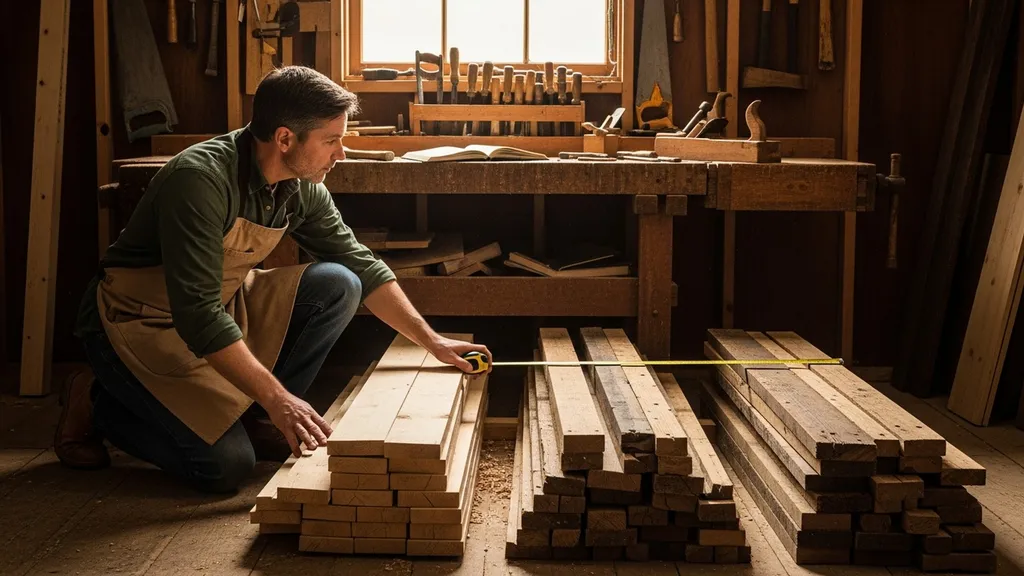
Practical guide to FSC-certified lumber and cost-effective alternatives for DIY eco homebuilders. Compare carbon, cost, and sourcing tips.
Sustainable Lumber: FSC Certified and Alternatives
Choosing sustainable lumber is one of the quickest ways a DIY eco builder can lower a project's carbon footprint while keeping costs under control. This guide explains what sustainable lumber means, how FSC certification works, and practical alternatives—reclaimed wood, PEFC-certified supplies, and engineered timber—so builders can match material performance, carbon, and budget for small homes, tiny houses, and retrofits.
TL;DR:
- Reclaimed or local timber can cut embodied carbon by roughly 50–80% versus new imported engineered products; expect variability by source and transport.
- If buying new material, prefer FSC or PEFC certified framing; certified stock often carries a 5–30% price premium but reduces sourcing risk and verifies chain of custody.
- For DIY framing use kiln-dried SPF or Douglas fir for predictable strength; choose engineered panels (CLT, LVL, plywood) when you need long spans or material efficiency.
Related guides: Hempcrete or Insulated Concrete Forms — When to Choose Each for Green Building, Bamboo Flooring vs Reclaimed Hardwood: Sustainable Choices for Eco-Friendly Interiors, Spray Foam vs Cellulose Insulation — Pros, Cons and Carbon Impact for Homes, Blandex vs Plywood: Which Should You Use? Pros, Cons & Expert Verdict, The Ultimate Guide to Recycled Aggregate Concrete for DIY Builders (2026), How to Choose Budget-Friendly Green Materials (2026), and The Ultimate Guide to Sustainable Building Materials and Products for Home Builders and DIYers.
Why sustainable lumber matters for DIY eco homes
Imagine choosing framing for a 400 ft² tiny house. The timber you pick affects upfront cost, onsite handling, thermal bridging, and the home's embodied carbon — the greenhouse gases released across material production, transport, and manufacturing. Compared with concrete and steel, wood usually shows lower embodied carbon in lifecycle assessments: typical solid timber ranges from about 200–600 kgCO2e/m3 depending on species, processing, and transport, while concrete and steel commonly fall between 1,000–3,000 kgCO2e/m3 and 6,000–20,000 kgCO2e/m3 respectively in many LCA studies. These ranges vary by study; consult regional datasets for precise design decisions.
Wood also stores carbon while in use. Standing forests sequester carbon; sustainably harvested timber can lock some of that carbon in the building for decades. Research from the U.S. Forest Service highlights wood's potential as a renewable material when combined with responsible forest management and appropriate end-of-life planning. For DIY builders pursuing Passive House or net-zero goals, choosing lower embodied carbon materials helps reduce upfront emissions that operational energy improvements alone cannot erase.
Sourcing matters beyond carbon. Poorly managed harvesting can harm biodiversity, reduce habitat connectivity, and increase erosion or wildfire risk. Conversely, well-managed forests maintain age diversity, protect riparian zones, and help reduce wildfire fuel loads. Market signals — such as certified supply chains — can encourage better practices. For a broader view comparing timber to other low-carbon materials, see the site's sustainable materials guide.
For practical projects, the takeaways are straightforward: use local, well-documented sources where possible; prefer certified options when buying new; and consider reclaimed wood to reduce emissions and add character.
What 'FSC certified' means: standards, labeling, and chain of custody
The Forest Stewardship Council (FSC) is a third-party certification system that sets standards for forest management and for tracking wood through the supply chain. FSC principles require legal harvesting, respect for Indigenous and community rights, maintenance of forest biodiversity, and plans for regeneration. Mills, processors, and distributors can hold chain-of-custody (CoC) certificates that track certified material from forest to final product.
Common FSC labels you’ll see:
- FSC 100%: Material comes from FSC-certified forests.
- FSC Mix: Product contains a mix of FSC-certified, recycled, and controlled wood.
- FSC Recycled: Made entirely from reclaimed or recycled wood.
Understanding the CoC label is important. A distributor’s invoice should show the seller’s CoC number and the claim (e.g., “FSC Mix”). Buyers can verify certificate numbers on the FSC database to confirm the chain of custody. The Natural Resources Defense Council outlines practical steps for consumers in its "How to Buy Good Wood" guide, including asking suppliers for certificate IDs and origin regions: https://www.nrdc.org/stories/how-buy-good-wood.
Market penetration varies by region. In parts of Europe and North America, FSC and PEFC together cover a significant share of the market; estimates fluctuate but a typical range for FSC market share is around 10–30% depending on product category and country. PEFC and SFI (Sustainable Forestry Initiative) are other common schemes; they differ in governance, standards, and regional acceptance. Buyers should compare requirements rather than assume all labels mean the same thing.
Watch for common buying mistakes: accepting "eco lumber" without documentation, confusing post-consumer recycled products with "sustainably harvested" claims, or failing to verify CoC numbers. A seller should provide a certificate number and chain-of-custody documentation on request. For a short visual explainer of FSC auditing and labels, watch this quick video to see sample certificates and label types: For a visual demonstration, check out this video on chain of custody certification for timber and wood:
Top alternatives to FSC-certified lumber
PEFC and SFI certification: how they differ from FSC
PEFC (Programme for the Endorsement of Forest Certification) and SFI are other widely used certification schemes. PEFC is often more regionally oriented and built on national systems; SFI focuses on North American forest objectives and includes fiber sourcing programs. Pros: broader availability in some regions and sometimes lower cost premiums. Cons: standards and stakeholder governance differ from FSC, and some buyers prefer FSC for stronger Indigenous rights language. Use PEFC-certified wood where FSC stock is unavailable, but always ask for the chain-of-custody details.
Reclaimed and salvaged timber: sources and quality considerations
Reclaimed wood comes from barns, deconstructed houses, demolition salvage yards, and municipal salvage programs. Pros: very low embodied carbon when reused on-site, rich patina and character, and often competitive pricing for large beams. Cons: variable supply, hidden defects (nails, rot), and additional labor for cleaning, de-nailing, and re-milling. Inspect reclaimed boards for structural soundness, check moisture content (aim for kiln-dried stability if used structurally), and source documentation where possible.
Common sources: deconstruction contractors, architectural salvage yards, auctions, and Craigslist/marketplace listings. Expect to pay more per board foot for specialty reclaimed flooring or beams; structural reclaimed framing can be inexpensive if you can handle processing.
Local, small-scale sustainably-managed forests
Some small timber producers follow best-practice management without third-party labels. Pros: short transport distances and direct relationships with mills; potential for lower cost and traceable origin. Cons: lack of an independent audit; you’ll need to ask the right questions and verify harvest practices. Ask for forest management plans, harvest maps, and references from local forestry extension services.
Engineered wood options and their sourcing (CLT, LVL, plywood)
Engineered products like cross-laminated timber (CLT), laminated veneer lumber (LVL), oriented strand board (OSB), and plywood can be material-efficient and reduce waste for long spans or panels. Pros: consistent material properties, less on-site labor for large panels, and optimized use of smaller dimension logs. Cons: adhesives and pressing processes add embodied energy and potential emissions, and some products are imported. When choosing engineered options, look for mills using low-formaldehyde adhesives, third-party certification for the source fiber, and regional manufacturing to limit transport.
For guidance on OSB performance versus plywood for sheathing and subfloors, see our article on OSB performance. The American Society of Landscape Architects also offers an overview of sustainable wood options and forest management practices: https://www.asla.org/focus-areas/residential/sustainable-residential-design/using-low-impact-materials/sustainable-woods.
Environmental and cost comparison: FSC vs alternatives
Below is a compact comparison table with approximate ranges. Numbers are estimates for planning purposes; consult regional LCA databases for final design choices.
| Source type | Typical embodied carbon (kgCO2e/m3) | Typical cost per board foot (USD) | Availability for DIY builders | Pros | Cons |
|---|---|---|---|---|---|
| Reclaimed wood (local) | 20–200 | $1–$6 | Moderate, variable | Very low embodied carbon, character | Variable quality, extra labor |
| FSC certified softwood (new) | 200–600 | $0.8–$2.5 | Widely available in many regions | Verified sourcing, chain of custody | 5–30% price premium, transport affects carbon |
| PEFC/SFI certified | 200–700 | $0.7–$2.2 | Good regional availability | Often lower cost than FSC, regional reach | Standards differ, buyer preferences vary |
| Engineered wood (CLT, LVL) | 300–1,200 | $2–$6+ | Limited regionally | Material efficiency, long spans | Higher embodied energy, adhesives |
| Imported tropical hardwood (certified or not) | 800–1,500+ | $3–$12 | Variable | Durable for decking, finish | High transport emissions, sourcing risks |
Estimates: embodied carbon ranges come from multiple LCA sources and government datasets; see the U.S. Forest Service discussion on wood as a sustainable material for context and regional variation: https://research.fs.usda.gov/treesearch/37431. Transportation can dominate final embodied emissions for imported products; local sourcing often beats certified imports in lifecycle carbon if transport is long.
Real-world cost examples by region: in North America, SPF (spruce-pine-fir) framing lumber often runs lower cost than Douglas fir; cedar for cladding carries a premium. Reclaimed barn beams sourced within 100 miles may cost $1–$4/board foot after de-nailing and milling. Certified lumber premiums vary: small retailers may add 10–30% for guaranteed certified stock; larger contractors can negotiate lower premiums through volume purchases.
Choosing the right sustainable lumber for your project
Match material properties to structural performance and durability needs. Use this short decision flow:
- Small structure or tiny house: favor locally-sourced SPF or Douglas fir framing for predictable strength and cost.
- Long spans or panelized construction: consider LVL or CLT for fewer connectors and faster assembly.
- Exterior cladding and decking: choose naturally durable species (cedar, larch, tropical hardwoods with proper certification) or use preservative-treated alternatives where allowed.
- Finish and interior surfaces: reclaimed flooring adds character but check VOCs from finishes.
Questions to Ask Suppliers (short Checklist):
- "What is your chain-of-custody or certificate number?" Request CoC ID and confirm on the certifier's website.
- "What is the country and region of harvest?" Short transport distances lower embodied emissions.
- "Is the wood kiln-dried, and what is the moisture content?" For framing, 12–16% MC is common; finish materials often require lower MC.
- "What species is this and grade?" Strength and durability depend on species (e.g., SPF vs Douglas fir).
Red Flags and How to Spot Greenwashing:
- Claims like "eco lumber" or "sustainably harvested" with no certificate or origin statement.
- Mislabeling recycled content — ask for documentation showing post-consumer vs post-industrial content.
- Stickers or photos of certificates that lack a CoC number or show expired dates; verify numbers on certifier sites.
For engineered sheathing decisions (OSB vs plywood), read the detailed OSB performance comparison in our OSB performance and a full review of plywood alternatives at plywood alternatives.
Buying, storing, and using sustainable lumber on a budget
Where to Source:
- Local sawmills and remanufacturers often sell offcuts and lower-grade boards at good prices.
- Reclaimed yards and deconstruction contractors sell salvaged beams and flooring.
- Municipal salvage auctions and Habitat for Humanity ReStores can yield bargains.
- Cooperative buying groups let DIY builders pool orders for certified stock and reduce per-unit premiums.
Storage and seasoning tips:
- Keep lumber elevated off the ground with stickers (thin strips) to allow airflow.
- Cover tops to shed rain but leave sides open for ventilation — moisture that can’t escape causes mold and warp.
- Use a moisture meter to check MC before installation; a few percentage points difference matters for interior finishes and cabinetry.
- For reclaimed wood, re-sawing and kiln-drying can stabilize material but adds cost.
Waste reduction and framing strategies:
- Accurate cut lists and layout planning reduce scrap. Use panelized cuts to minimize offcuts.
- Advanced framing techniques reduce studs and headers; see our advanced wall framing guide for step-by-step methods that save lumber and improve insulation continuity.
- Reduce waste further with careful sequencing: store sheathing close to where it will be installed to avoid double handling.
Small investments that pay off:
- Moisture meter ($30–$150) to avoid installing wet lumber.
- Portable planer or jointer rental for reclaimed board finishing.
- Simple jigs and stop-blocks to speed repetitive cuts and reduce errors.
Government and academic reviews note wood’s lower production energy compared with many alternatives; see SUNY ESF's evaluation for details on environmental performance and management: https://www.esf.edu/eis/eis-wood-building-material.php.
Practical case studies for DIY builders
Tiny house: reclaimed barn beams and low-cost cladding
Project summary: 160 ft² tiny house on a rural lot. The builder sourced reclaimed barn joists and reclaimed floorboards from a local deconstruction yard within 75 miles. For wall studs they used second-growth SPF reclaimed studs where available and supplemented with new kiln-dried SPF from a regional mill for consistent sizing.
Materials and why chosen:
- Reclaimed beams for main floor joists — saved roughly 40–60% on material cost compared with new LVL beams and cut embodied carbon by an estimated 60% versus imported engineered beams.
- New kiln-dried SPF for studs — predictable mechanical performance and easy to source.
- Exterior cladding: low-cost fiber cement board for durability and low maintenance.
Lessons learned:
- De-nailing and re-milling took longer than expected; plan at least two weekend days for processing reclaimed stock.
- Moisture checks before installation prevented cupping in floorboards.
- Permitting required an engineer’s letter for some reclaimed beams that had been re-used as structural elements; always check local code.
For framing details and on-site steps used in this project, consult the framing guide.
Passive-house retrofit: FSC framing plus engineered panels
Project summary: 900 ft² retrofit aiming for high airtightness and low thermal bridging.
Materials and why chosen:
- New FSC-certified spruce-pine framing to ensure verified sourcing and CoC for client requirements.
- Prefabricated CLT panels for upper floor and roof to speed assembly and reduce on-site labor.
- Continuous exterior insulation to control thermal bridging and pair with timber framing.
Outcomes and trade-offs:
- CLT reduced on-site time by several days and simplified airtightness detailing, but added to embodied carbon versus simple stud walls due to panel fabrication (partially offset by reduced framing volume).
- Buying FSC framing from a regional distributor added about 10% cost over non-certified stock; the client valued procurement transparency and resale marketability.
- Structural engineer involvement was required for CLT connections and diaphragm design.
These examples show that reclaimed wood often wins for low carbon and character on small projects, while certified new timber and engineered panels suit projects requiring predictable performance, speed, or client procurement criteria.
The Bottom Line
Sustainable lumber choices reduce embodied carbon and sourcing risks while fitting different budgets and project types. Prioritize local reclaimed or small-regional suppliers for the lowest carbon and cost; choose FSC or PEFC certified lumber when buying new and traceability matters; use engineered timber where spans or panelization justify the embodied energy.
Quick checklist for calls or site visits:
- Ask for chain-of-custody or certificate number and verify it.
- Check moisture content with a meter before installation.
- Prefer kiln-dried studs for interior framing; reserve reclaimed for non-critical visible elements unless engineered or verified.
- Compare transport distance — local wins when certification requires long imports.
- Use advanced framing and accurate cut lists to reduce lumber needs.
Frequently Asked Questions
Is FSC certification worth the extra cost for a small DIY build?
For many small DIY projects, FSC certification is worth the premium if the buyer values verified sourcing, wants to support better forest management, or needs documentation for resale or grant criteria. Expect a 5–30% premium depending on product type and regional availability. If low embodied carbon is the only priority and local reclaimed wood is available nearby, reclaimed material may deliver lower lifecycle emissions at lower cost.
How can I verify that lumber is truly FSC certified?
Request the seller's chain-of-custody (CoC) certificate number and verify it on the FSC database. Invoices should include the CoC number and the specific claim (FSC 100%, FSC Mix, or FSC Recycled). If a supplier cannot provide a certificate number or documentation of origin, treat the claim with caution. The NRDC's guide to buying good wood explains verification steps: https://www.nrdc.org/stories/how-buy-good-wood.
Is reclaimed wood always the most sustainable option?
Reclaimed wood often has the lowest embodied carbon because it avoids new processing and reduces waste, but "most sustainable" depends on context. If reclaimed material must be trucked long distances, or if you need species and grades that reclaimed sources cannot reliably supply, certified new timber from a regional supplier may be preferable. Check structural suitability and moisture content; reclaimed wood commonly needs more prep work.
Can I use uncertified local timber safely in a structural project?
Yes, but with caution. Uncertified local timber can be safe if properly graded, dried, and engineered. For load-bearing members, have species, grade, and sizing reviewed by a structural engineer or use stamped lumber from a mill that provides testing or grading information. Municipal permitting authorities may require documented structural properties or engineer sign-off when using unconventional or ungraded materials.
Do engineered wood products have higher carbon impacts than solid timber?
Engineered wood products can have higher embodied energy per cubic meter because of pressing, adhesives, and drying processes. However, they often reduce overall material volume and allow design efficiencies (longer spans, fewer connectors) that can lower total project emissions. The choice depends on the application: use engineered panels when their structural advantages outweigh the higher manufacturing impacts, and prefer regional manufacturers to reduce transport emissions.